Disclaimer: This post may contain affiliate links. As an Amazon Associate, we earn from qualifying purchases.
Last updated on October 2, 2026
When a cat refuses to use the litter box, it turns into a daily problem fast. You’re cleaning floors, checking corners, and wondering what changed.
The way your cat avoids the box is your best clue. Where they go, and what they do instead, usually points straight to the cause. This guide decodes each pattern, then covers the fixes that match.
A cat that refuses to use the litter box is usually reacting to the box setup, stress or something physical that makes the box uncomfortable. The fastest fix is to read the pattern first, then change the one thing that pattern points to.
First, Rule Out Pain
If your cat is straining, going very often, crying in the box or suddenly stopped using it, start with a vet visit. Pain or discomfort can create litter-box avoidance, so the medical cause needs to be addressed before you assume it’s purely behavioral.
If your cat is straining with little or nothing coming out, especially a male cat, go to an emergency vet now.
Quick Picks
Best Big Open Box for a Reset: IRIS USA XXL Open Top
Best Unscented Fine-Grained Litter: Dr. Elsey’s Ultra Unscented
Best Enzyme Cleaner for Accidents: Hepper Advanced Bio-Enzyme
What Your Cat’s Behavior Means
Peeing or pooping right next to the litter box
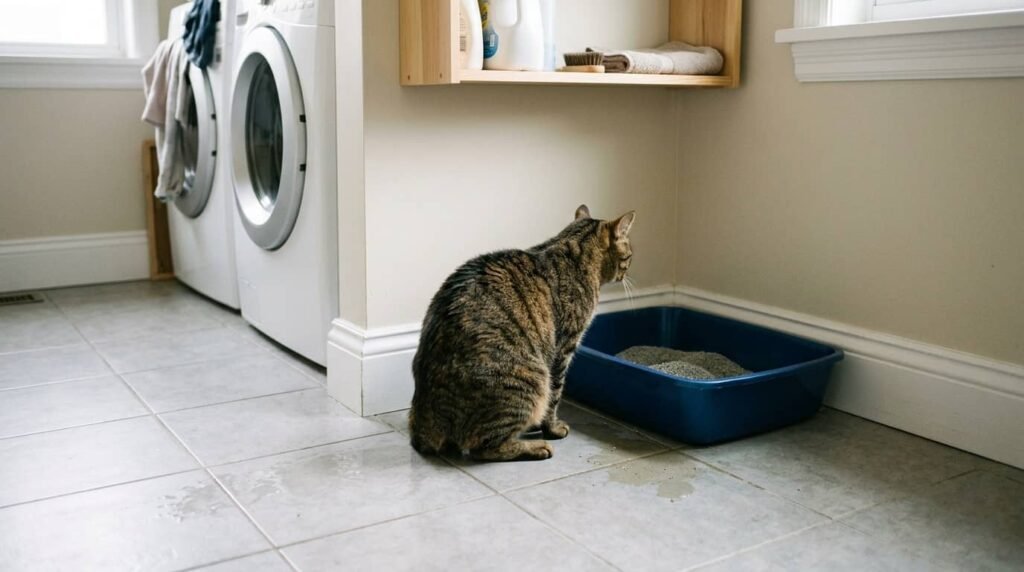
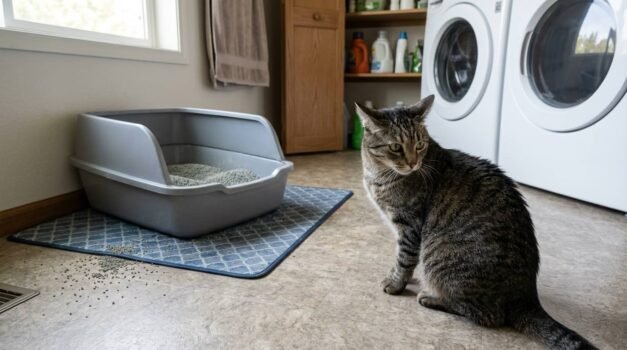
When a cat avoids the litter box, they often go right next to it instead of inside.
When accidents happen right beside the box, it often points to a problem with the box, litter or setup rather than the location itself. The box may be too small, too dirty or uncomfortable.
Sudden refusal after using the box normally
This usually points to pain, stress or a recent change like new litter, a different location or a new pet. Our guide on what to do when your cat stopped using the litter box walks through finding the change step by step.
Using the box for pee but not poop, or the other way around
Some cats don’t like using the same space for both. It often happens when there aren’t enough boxes, or when one box becomes too dirty for a second use.
Peeing on beds, clothes or soft surfaces
Your cat may have developed a preference for that soft surface, may be avoiding something about the litter box, or may be reacting to stress. If the pattern keeps happening, the location itself is an important clue. Our guide to a cat peeing on the bed covers this pattern in detail.
Spraying on walls or vertical surfaces
This is different from normal peeing. If your cat stands with a raised, quivering tail and sprays backward onto a wall, that’s marking. Marking can be associated with stress, social conflict or changes in the home.
Going into the box, then leaving without using it
Something about the box feels uncomfortable or unsafe. If your cat seems hesitant or keeps trying without success, it can also point to pain, which is a reason to call your vet.
How to Fix It
Change one thing at a time, starting with whatever your cat’s pattern points to. That way you’ll know what worked.
Reset the box. A larger, open box, unscented fine-grained litter and a quiet spot address several of the most common setup problems. Our setup checklist for why your cat is not using the litter box covers box size, number of boxes, litter and location in detail.
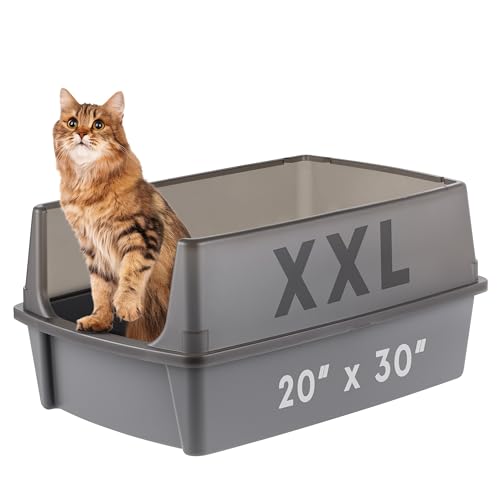

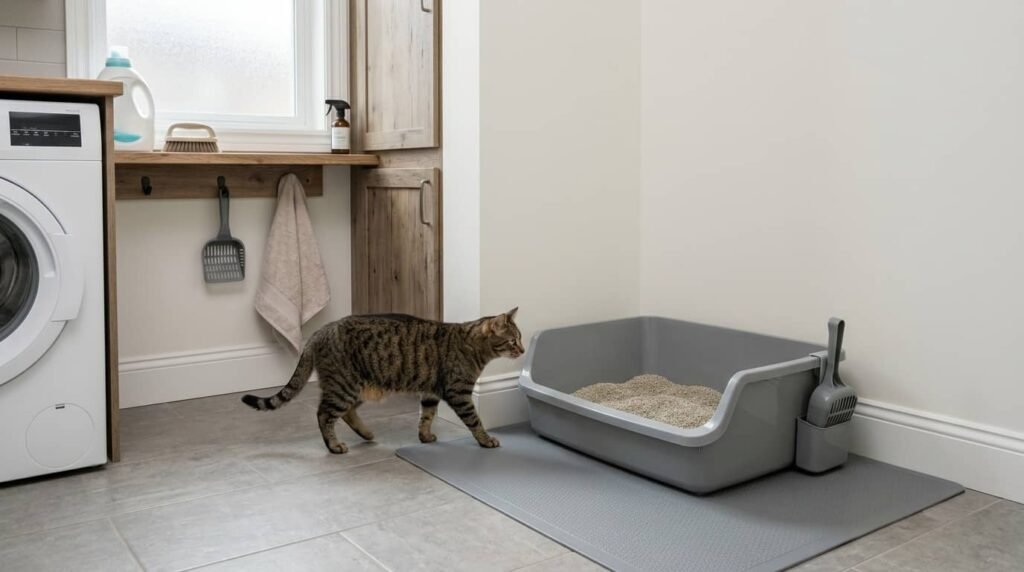
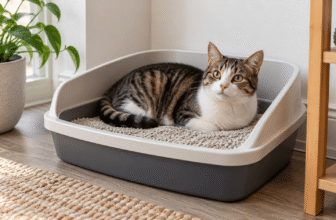
A clean, open litter box in a quiet, accessible space helps most cats feel comfortable using it.
Clean accident spots properly. If a spot still smells like urine, your cat will keep going back.
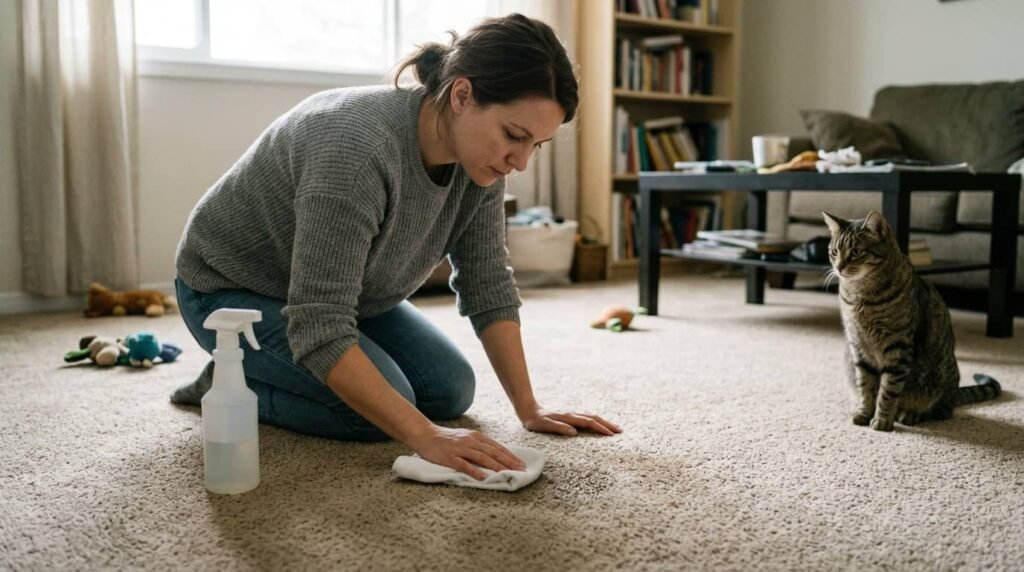
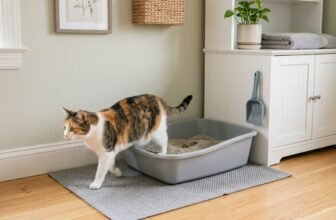
Thorough cleaning helps remove odor so your cat doesn’t return to the same spot.
An enzyme cleaner like the Hepper Advanced Bio-Enzyme Pet Stain and Odor Eliminator breaks the odor down instead of covering it.

Add a box. Adding another box can help, especially in multi-cat homes or when accidents keep happening in one area. Put it in a different location from the first one. See how many litter boxes per cat you need.
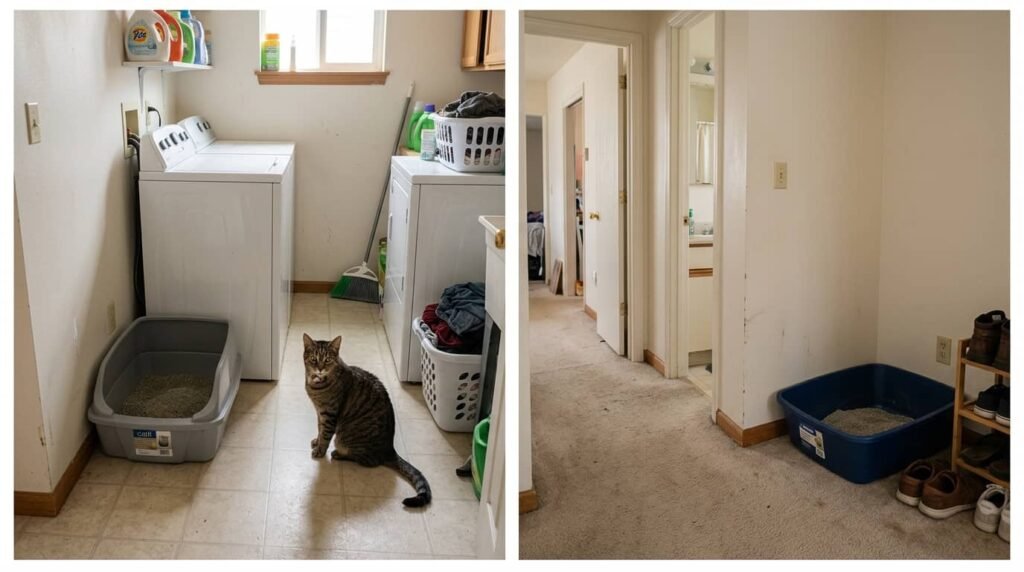
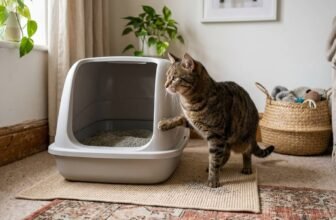
Placing litter boxes in different rooms helps reduce stress and makes them easier for cats to access.
Reduce stress. New pets, schedule changes, loud areas near the box and outdoor cats seen through a window can all make the box feel unsafe. In multi-cat homes, spreading boxes across rooms keeps one cat from blocking another.
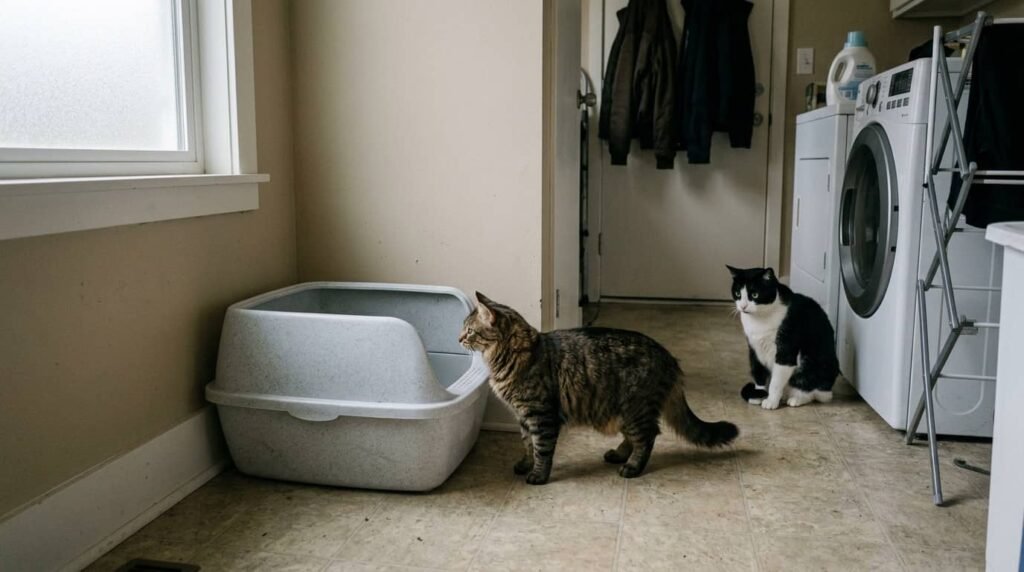
In multi-cat homes, one cat can make another feel unsafe using the litter box.
Frequently Asked Questions
Why does my cat refuse a new litter?
Texture and scent matter a lot to cats. If the problem started after a switch, go back to the old litter, then change over gradually if you still want to switch. Our guide on how to transition cat litter covers the steps.
Why won’t my new kitten or rescue cat use the litter box?
A new cat may need time to adjust to the box, litter and location. Make sure the entrance is easy to reach, use an unscented litter and keep the box somewhere quiet and accessible. For kittens, the sides should be low enough to step over comfortably. Our litter box for kittens guide covers setups for young cats.
Will my cat start using the litter box again?
Many cats do once the underlying cause is identified and the setup or trigger is addressed. How quickly that happens depends on why the avoidance started and how long it has been going on.
Should I punish my cat for not using the litter box?
No. Punishment usually makes the problem worse. Cats don’t avoid the box out of spite. They’re reacting to discomfort, stress or a setup problem.
What if my cat keeps going in the same spot?
The smell is probably still there, or the spot feels safe to your cat. Clean it with an enzyme cleaner and block access for a while. Placing a litter box on that spot temporarily can also help reset the habit.