
Disclaimer: This post may contain affiliate links. As an Amazon Associate, we earn from qualifying purchases.
Cat peeing on bed? Here’s how to stop it fast and prevent it from happening again.
One accident can turn into a repeat problem if the smell isn’t fully removed or the cause isn’t fixed.
This usually isn’t random behavior. Cats pee on beds for specific reasons like stress, litter box issues, or medical problems. The key is handling the situation immediately and then fixing the cause so it doesn’t keep happening.
Quick Answer
Cats pee on beds because of stress, litter box problems, or medical issues. The fastest way to stop it is to completely remove the smell with an enzyme cleaner, limit access to the bed if needed, and fix the underlying cause so it doesn’t keep happening.
What to Do Immediately (Right After It Happens)
When your cat pees on the bed, what you do in the first few hours matters. If the smell stays in the mattress or bedding, your cat will keep coming back to the same spot.
1. Remove everything and wash it properly

Washing bedding thoroughly helps remove lingering odor that can cause repeat accidents.
Take off all bedding right away, including sheets, blankets, and mattress covers.
Wash everything with a strong detergent, and if possible, add an enzyme-based laundry product. Regular detergent can leave behind scent that your cat can still detect, even if it smells clean to you.
Avoid using fabric softeners or anything heavily scented. That can sometimes make the problem worse.
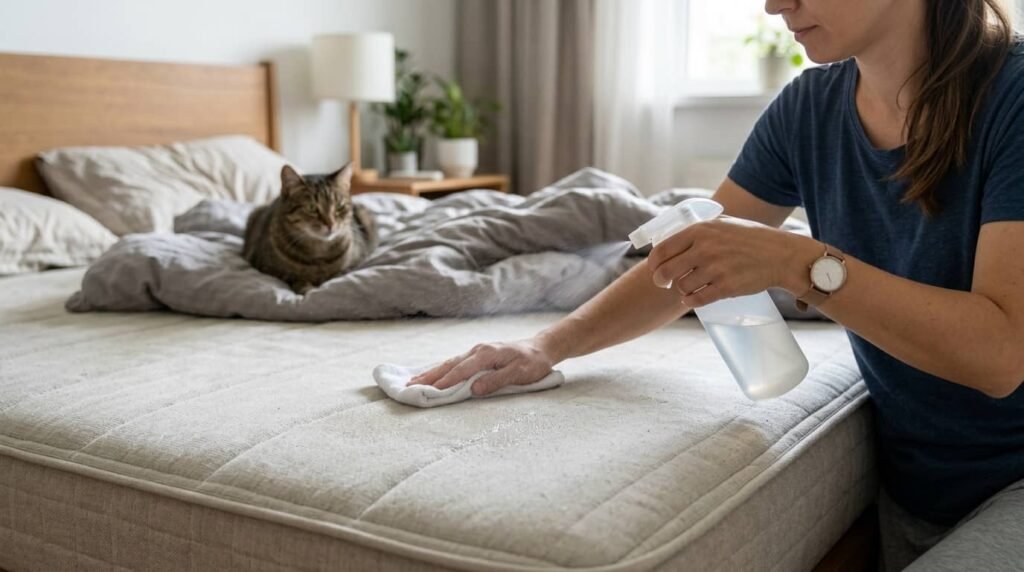
2. Treat the mattress, not just the surface

Cleaning the mattress thoroughly is key to stopping repeat accidents.
This is where most people get stuck. Cat urine doesn’t stay on the surface. It soaks deep into the mattress.
Use an enzyme cleaner and apply enough to reach the same depth as the urine. Lightly spraying the top won’t fix it. The area needs to be fully saturated and then left to air dry.
If you’ve never used one before, enzyme cleaners are designed to break down the odor at a level regular cleaners can’t reach. A common example is something like Nature’s Miracle stain and odor remover, which is widely used for situations like this. For deeper or older stains, a stronger formula like a urine destroyer can work better, especially if the urine has soaked into the mattress.
Do not use heat at this stage. Steam cleaners or hot air can lock in the smell instead of removing it.
This is one of the most common reasons cats keep returning to the same spot. If odor has been an ongoing issue, it helps to look at how to fully remove litter box and urine smells from your home.
3. Block access to the bed temporarily
If your cat has already done this once, there’s a chance it will happen again before you fix the cause.
Close the bedroom door if possible. If that’s not an option, cover the bed with something waterproof or non-absorbent during the day.
This is a simple way to break the cycle while you work on the real solution.
4. Check the litter box right away
Before assuming anything else, look at the litter box setup.
Make sure:
- it’s clean
- it’s easy to access
- there are enough boxes if you have multiple cats
A dirty or hard-to-reach litter box is one of the fastest triggers for this kind of behavior.
5. Watch for signs of a medical issue
If this behavior is sudden, especially in a cat that normally uses the litter box, a medical problem could be the cause.
Pay attention to:
- frequent trips to the litter box
- straining or discomfort
- small amounts of urine
If you notice any of these, a vet visit should be your next step.
Common Situations (And What They Usually Mean)

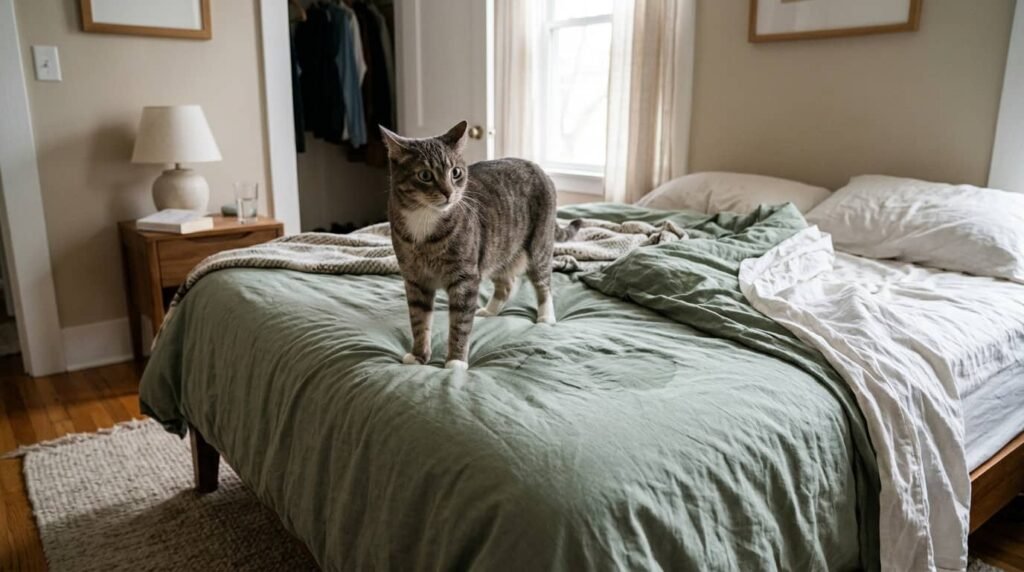
A cat peeing on the bed often becomes a repeat problem if the smell isn’t fully removed.
Not every situation is the same. The details matter, and small differences can point to very different causes.
Cat peeing on bed but still using the litter box
This usually means it’s not a full litter box rejection.
In many cases, it comes down to:
- litter preference
- box cleanliness
- or the cat wanting separate spots for peeing and pooping
Try adding a second litter box in a different location or testing a different type of litter. Even small changes here can make a difference.
Cat peeing on bed all of a sudden
If this starts out of nowhere, there’s usually a clear trigger.
Common ones include:
- changes in routine
- new pets or people in the home
- moving or rearranging furniture
Sudden changes can also point to a medical issue, especially if your cat has used the litter box consistently before. This is one situation where it’s worth taking seriously right away.
Cat peeing on the owner’s side of the bed
Beds carry a strong scent, especially on one side.
When a cat targets a specific spot, it’s often linked to:
- separation stress
- attachment to one person
- or changes in that person’s schedule
In this case, the behavior is less about the bed itself and more about scent and comfort.
Cat peeing on the bed at night or while you’re sleeping
This one feels personal, but it usually isn’t.
Nighttime accidents are often linked to:
- anxiety
- limited access to the litter box
- or a box that isn’t clean enough overnight
Make sure your cat can easily reach the litter box at night and that it’s freshly cleaned before bed.
Cat peeing on soft surfaces like blankets or clothes
This usually comes down to texture.
Soft, absorbent materials feel more comfortable for some cats, especially if the litter in the box feels rough or unpleasant under their paws.
This can happen if:
- the litter type is uncomfortable
- the box is too small
- or the surface inside the box isn’t appealing
Switching to a softer litter or a larger box can help redirect this behavior. A fine, unscented clumping litter like Dr. Elsey’s Ultra is often a better match for cats that prefer softer surfaces.
How to Stop It Long-Term
Cleaning the bed solves the immediate problem, but it won’t stop it from happening again unless you fix the cause.
The goal here is to remove the trigger and make the litter box the better option every time.
1. Improve the litter box setup
Start with the basics. A small issue here can lead to repeated accidents.
Make sure:
- the box is large enough for your cat to turn around comfortably
- it’s in a quiet, low-stress location
- it’s cleaned consistently
If you have more than one cat, add an extra box. A good rule is one per cat, plus one more.
Even small changes like switching litter or moving the box to a calmer spot can make a noticeable difference. If your setup might be part of the problem, it helps to look more closely at litter box placement and overall setup.
2. Make the bed less appealing temporarily
If your cat keeps returning to the same spot, it helps to break the habit.
You can:
- keep the bedroom door closed
- use a waterproof cover during the day
- remove soft layers like blankets when you’re not using the bed
This doesn’t fix the cause, but it prevents the behavior from repeating while you work on it.
3. Reduce stress in the environment
Stress is one of the most common triggers, especially when the behavior starts suddenly.
Look for changes like:
- new pets or people
- changes in schedule
- moving or rearranging furniture
Try to keep your cat’s routine consistent. In some cases, adding more playtime, quiet spaces, or something simple like a pheromone diffuser can help create a calmer environment. Products like Feliway are designed for this and are often used when stress-related behavior starts showing up.
4. Fix problems one step at a time
It’s tempting to change everything at once, but that can make things harder to figure out.
Instead:
- make one change
- give it a few days
- watch for improvement
This makes it easier to identify what’s actually working.
5. Don’t ignore repeat behavior
If your cat keeps peeing on the bed even after cleaning and basic changes, there’s usually a deeper issue.
At that point, it’s worth:
- taking a closer look at the litter box setup
- reviewing recent changes in the home
- or checking again for possible medical causes
The sooner you address it, the easier it is to stop the pattern.

Products That Actually Help
You don’t need a lot of products to fix this problem, but the right ones can make a big difference. These are the ones that actually help based on what causes the behavior.
Enzyme cleaner (for removing the smell completely)
If the smell stays in the mattress or bedding, your cat will keep coming back to the same spot.
That’s why enzyme cleaners matter. They break down the odor at a level regular cleaners can’t reach. A product like Nature’s Miracle Urine Destroyer Plus works well for deeper or older stains, especially when urine has soaked into a mattress. Even though it’s sometimes labeled for dogs, it works the same way on cat urine because it’s targeting the odor itself, not the animal.
This is one of the most important steps, because if the smell isn’t fully removed, nothing else will stick.
Waterproof mattress protector (to prevent repeat damage)
Even after fixing the issue, accidents can still happen.
A waterproof mattress protector keeps urine from soaking into the mattress again, which makes cleanup much easier and prevents long-term odor from building up.
Something like the PlushDeluxe bamboo mattress protector is a good example. It’s designed to be fully waterproof while still feeling soft and breathable, so it doesn’t have that plastic or noisy feel that some covers have. It also fits like a regular fitted sheet, which makes it easy to put on and keep in place.
This is less about solving the problem and more about protecting your mattress while you work through it.
Litter that matches your cat’s preference
If your cat is avoiding the litter box because of texture or comfort, switching litter can help redirect the behavior.
Finer, unscented clumping litters like Dr. Elsey’s Ultra tend to work better for cats that prefer soft surfaces and consistent footing. It’s designed to clump well and stay low-dust, which helps keep the box cleaner and more comfortable to use.
Pheromone diffuser (for stress-related behavior)
When stress is part of the cause, calming the environment can help reduce repeat accidents.
A simple plug-in diffuser like Feliway can help create a more stable environment. It’s commonly used for stress-related behaviors like spraying, hiding, or sudden changes in litter box habits, and works best alongside the other steps you’ve already taken.
FAQ
Why is my cat peeing on my bed instead of the litter box?
Cats usually do this because of stress, litter box issues, or a medical problem. It’s not random behavior. There’s almost always a reason, and the key is figuring out what changed.
Will my cat keep peeing on the bed once it starts?
It can become a habit if the smell isn’t fully removed. Cats tend to return to spots that still carry their scent, which is why thorough cleaning is so important early on.
Does punishment help stop this behavior?
No. Punishing a cat for peeing on the bed usually makes the problem worse.
It can increase stress and lead to more accidents instead of fixing the cause.
How do I know if it’s a medical issue?
If the behavior starts suddenly or you notice signs like straining, frequent trips to the litter box, or small amounts of urine, it’s worth getting it checked.
Medical issues often show up as sudden changes in behavior.
How long does it take to stop this behavior?
It depends on the cause. Some situations improve within a few days after cleaning and adjusting the litter box, while others take longer if stress or habits are involved.
The sooner you fix the cause, the faster it stops.
Final Thoughts
Cat peeing on the bed is frustrating, but it’s usually fixable once you understand what’s causing it.
Start by removing the smell completely, then focus on the litter box setup and any recent changes in your cat’s environment. Small adjustments often make a bigger difference than expected.
If you stay consistent and address the cause early, this is a problem that most cats grow out of quickly.