Disclaimer: This post may contain affiliate links. As an Amazon Associate, we earn from qualifying purchases.
Last updated on October 2, 2026
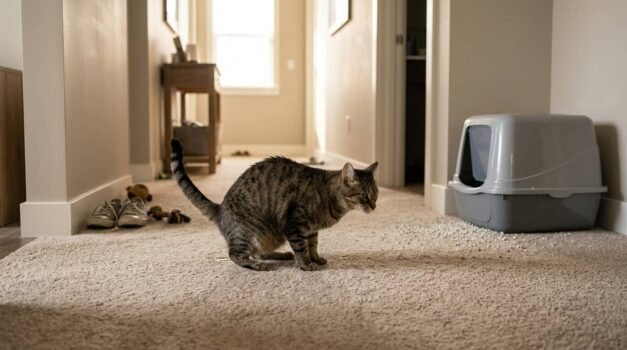
Why is my cat peeing outside the litter box? Common reasons include a health problem, something about the litter box setup, stress or territorial marking. Your cat isn’t doing it out of spite.
The spot your cat chooses is one of the best clues you have. This guide covers what each location can point to, the health signs to check first, and how to clean urine so your cat doesn’t keep going back to the same spot.
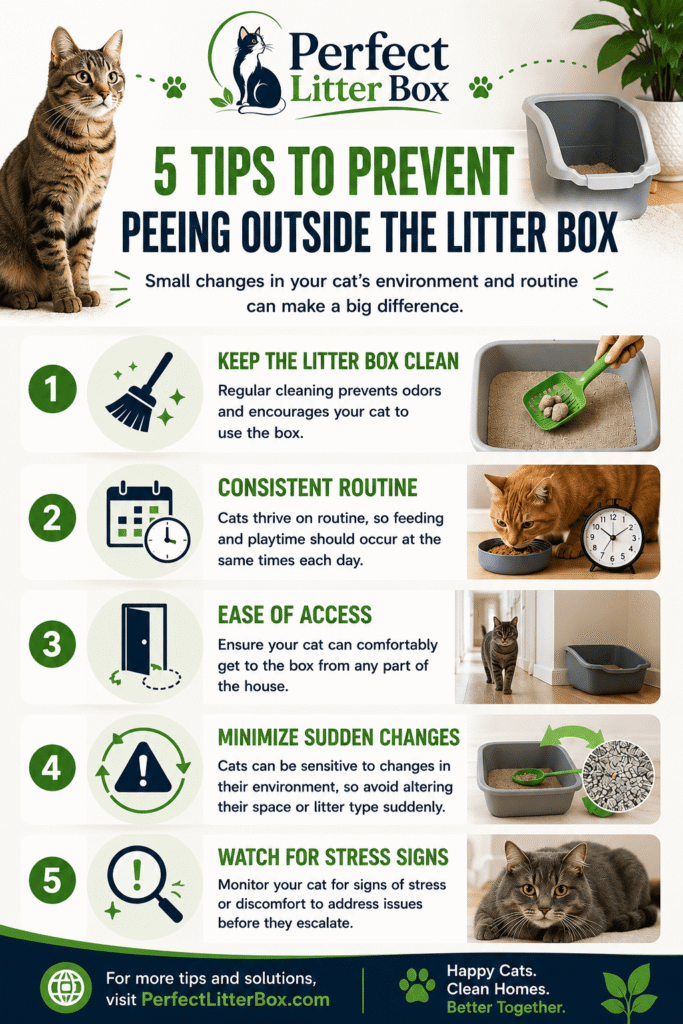
Cats pee outside the litter box because of medical problems, litter box issues, stress or territorial behavior. Rule out health first, then use the location of the accidents as a clue to the cause.
Check for a Health Problem First
If your cat suddenly starts peeing outside the box, start with a vet visit. Pain or discomfort when peeing can make a cat avoid the box.
Watch for:
- going in and out of the box often
- straining or taking a long time
- small amounts of urine
- crying or seeming uncomfortable while peeing
- licking the genital area more than usual
If your cat is straining with little or nothing coming out, especially a male cat, go to an emergency vet now.
If your vet finds nothing, move on to the location clues below.
Quick Picks
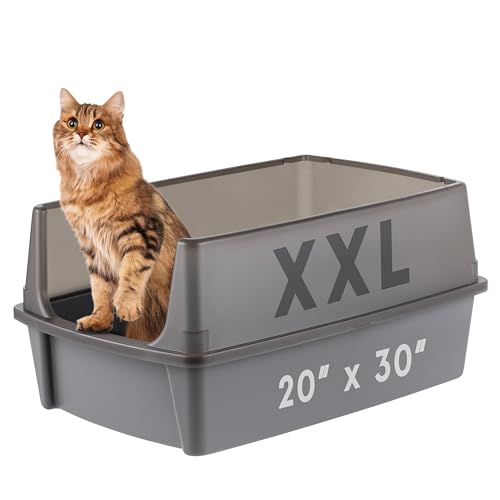
Best Big Open Box: IRIS USA XXL Open Top
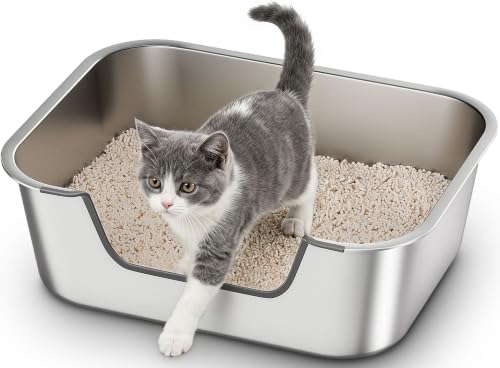
Best Low Entry Box: Qiuma Stainless Steel Low Entry
Best Enzyme Cleaner for Urine: Hepper Advanced Bio-Enzyme
What the Location Can Tell You
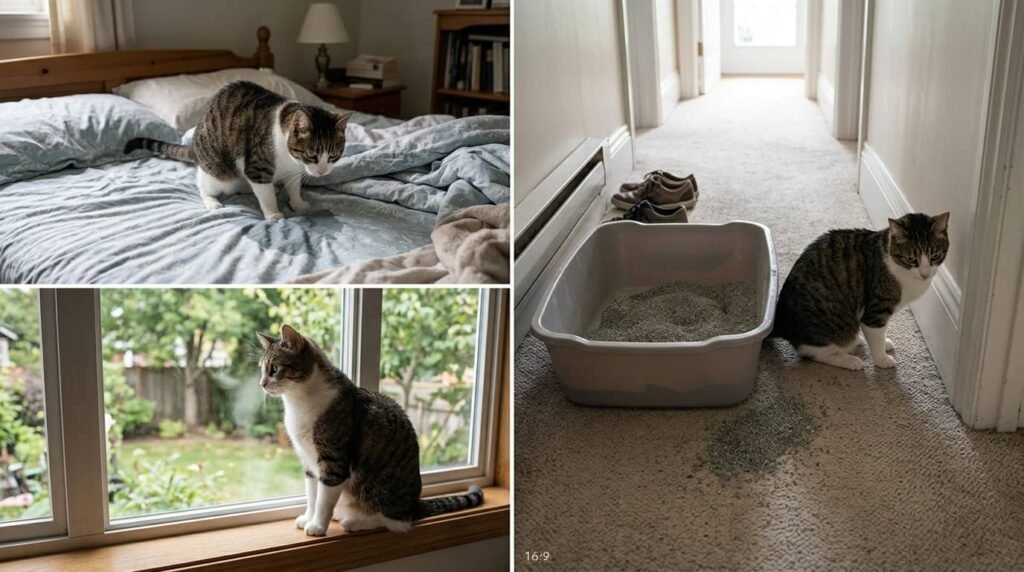
Where your cat pees can help you figure out what the problem is.
On the bed, couch or clothes
Your cat may have developed a preference for that soft surface, may be avoiding something about the litter box, or may be reacting to stress. Our guide to a cat peeing on the bed covers this pattern in detail.
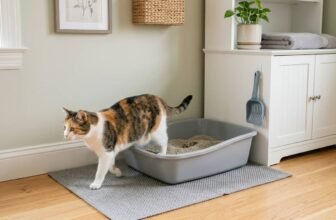
Right next to the litter box
Your cat is going to the right place but not getting in. That often points to the box itself: too small, not clean enough, sides too high to step over, or a cover your cat doesn’t like. If urine is going over the edge from inside the box, our guide to the best litter box for cats that pee over the edge covers that separately.
In several different spots
Accidents scattered around the house can point to urgency, stress or a setup that isn’t working, especially in multi-cat homes where one cat may block another from the box. A health check matters most with this pattern.
Near doors, windows or walls
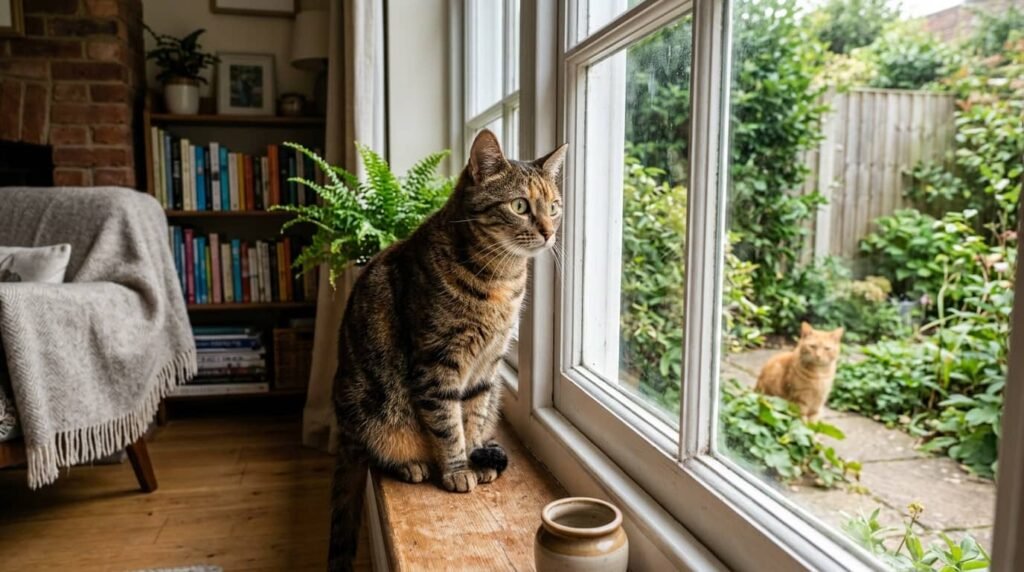
Seeing other cats outside can trigger stress and territorial behavior indoors.
This often points to territory. If your cat can see or smell other cats outside, it may mark near entry points. Closing blinds, blocking the view and moving the litter box away from windows can help.
Spraying or peeing?
Spraying is marking. Your cat backs up to a vertical surface with a raised, quivering tail and releases a small amount of urine. Peeing is a squat that empties the bladder onto a flat surface. Spraying needs a different approach, covered in our guide to the best litter box for cats that spray.
Fix the Litter Box Setup
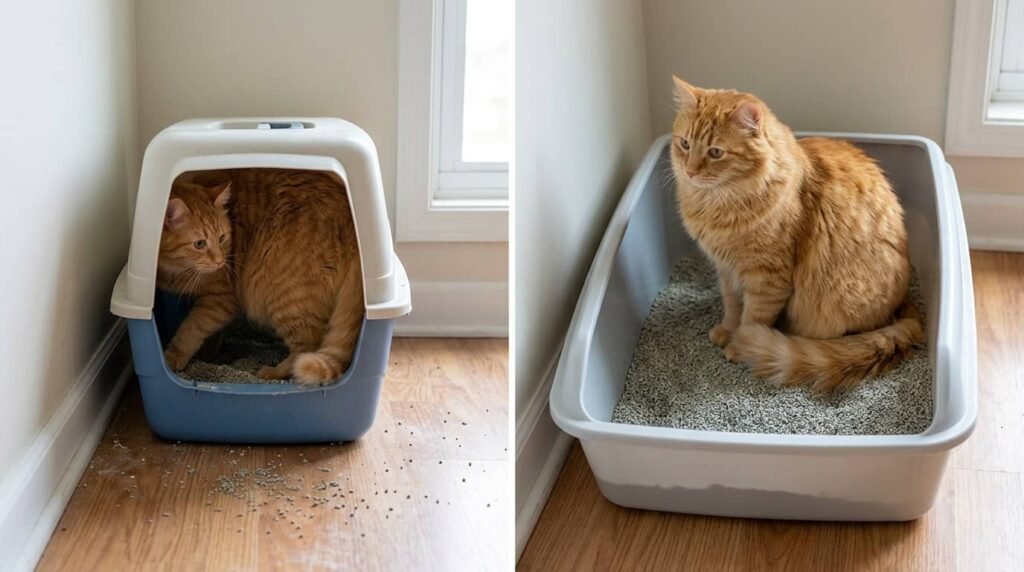
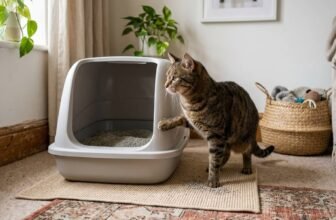
Some cats avoid covered litter boxes because they feel cramped or trapped.
If the location points to the box, start here.
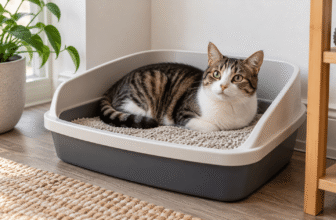
A bigger, open box. A cramped or covered box can push a cat out. The IRIS USA Extra Large Open Top Litter Box gives room to turn, with 14-inch sides to keep litter in.
An easy way in. For cats that have difficulty stepping over a higher edge, a low front can make access easier. The Qiuma Stainless Steel Low Entry Litter Box has a front about 3.15 inches tall in a compact 17.5 by 13.6 inch pan, and reviewers with senior cats say the low entry helped.
Unscented litter, scooped daily. AAHA notes that most cats prefer unscented clumping litter. If you change litter, do it gradually.
Enough boxes in quiet spots. The usual guideline is one box per cat plus one extra, away from noisy appliances and busy walkways. See how many litter boxes per cat you need.
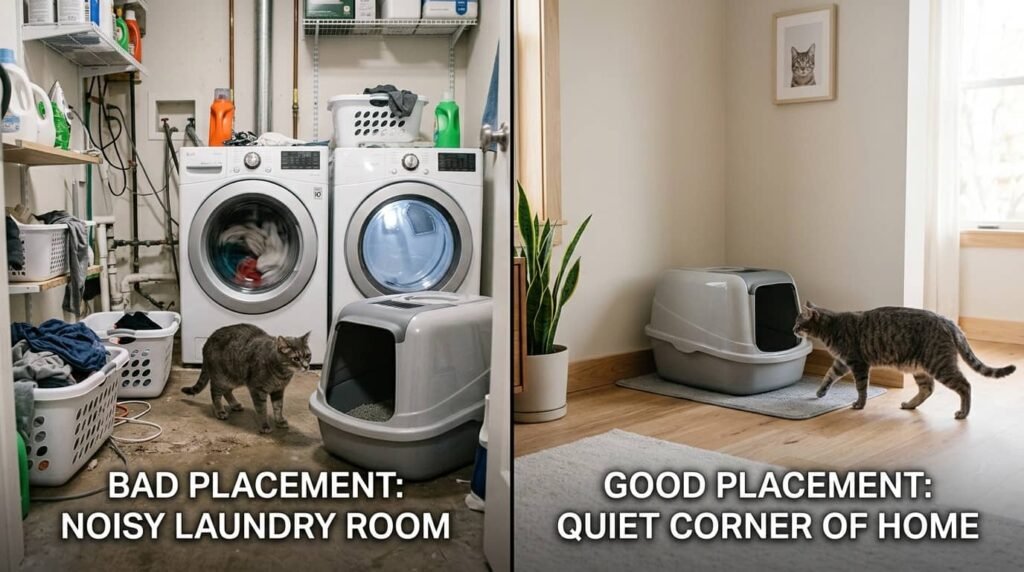
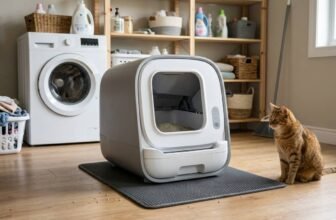
Litter box placement can make a big difference. Cats prefer quiet, low-traffic areas.
For the full setup checklist, see our guide on why your cat is not using the litter box. If the problem started after something changed at home, our guide on what to do when your cat stopped using the litter box helps you track down which change caused it.
Clean the Spot Properly
If any urine smell is left, your cat can keep finding it and going back, even after you can’t smell it anymore.
Skip ammonia-based cleaners. Ammonia is part of the odor of old cat urine, and cleaners containing it can make the area smell more like a urine spot to your cat.
Use an enzyme cleaner. It breaks the odor down instead of covering it. The Hepper Advanced Bio-Enzyme Pet Stain and Odor Eliminator is a good option, and most reviewers say it works on cat urine.

Blot first, then treat. Blot up as much as you can without rubbing, then apply the enzyme cleaner according to the label so it reaches the affected area. Let it sit for the recommended time and dry fully.
Then make the spot less appealing. Block access for a while, or place a litter box there temporarily and move it back gradually once your cat is using it.
Frequently Asked Questions
Why is my cat suddenly peeing outside the litter box?
A sudden change is a reason to rule out a health problem first, then look for anything that recently changed in the box setup or household.
Should I punish my cat for peeing outside the box?
No. Punishment adds stress and usually makes the problem worse.
How long does it take to fix?
It depends on the cause. Some cats improve soon after the problem is fixed, while others take longer, especially if the habit has been going on for a while.
When should I get more help?
If you’ve ruled out health problems, fixed the setup and cleaned properly and it’s still happening, go back to your vet or ask about a cat behavior specialist.