Disclaimer: This post may contain affiliate links. As an Amazon Associate, we earn from qualifying purchases.
Last updated on October 16, 2026
Does cat litter melt ice? No. It won’t turn ice to water the way rock salt does.
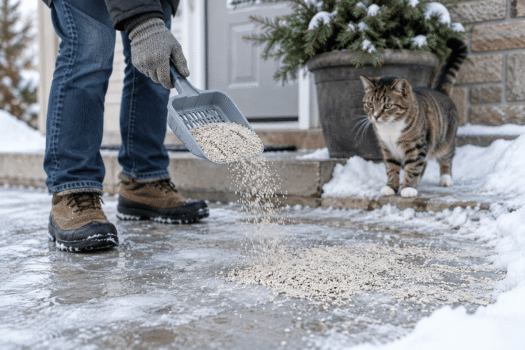
What it can do is give you grip. The gritty bits sit on top of the ice, so your boots and tires have something to hold onto. Here’s which litter works, how to spread it, and where it falls short.
Quick Picks
Non-Clumping Clay Litter: Tidy Cats 24/7 Performance Non-Clumping
De-Icer With Built-In Grit: Safe Paw Ice Melt
For Wet Boots at the Door: Stalwart All Weather Boot Tray
Does Cat Litter Melt Ice? What It Actually Does
Salt melts ice because it lowers the temperature water needs to freeze. Cat litter doesn’t change that, so the ice stays put.
Instead, litter works like sand. The grit adds friction on top of the ice. It also soaks up a little meltwater, though it absorbs less once temperatures drop well below freezing.
Which Cat Litter Works Best on Ice
If you’re using cat litter for temporary traction, choose fresh, non-clumping clay litter. Tidy Cats 24/7 Performance Non-Clumping is one example of this type of litter. Dry granules can provide temporary grip, but clay absorbs moisture and may turn muddy or slippery when wet.
Skip clumping litter. It’s made to soak up liquid and stick together, so on wet ice it turns into a pasty mess instead of grit. Our guide to clumping vs non-clumping cat litter explains the difference.
Always use litter from a fresh bag. Used litter from the box holds cat waste, and you’d spread it right where people walk. Our guide on how to dispose of cat litter covers what to do with that instead.
How to Use Cat Litter on Ice
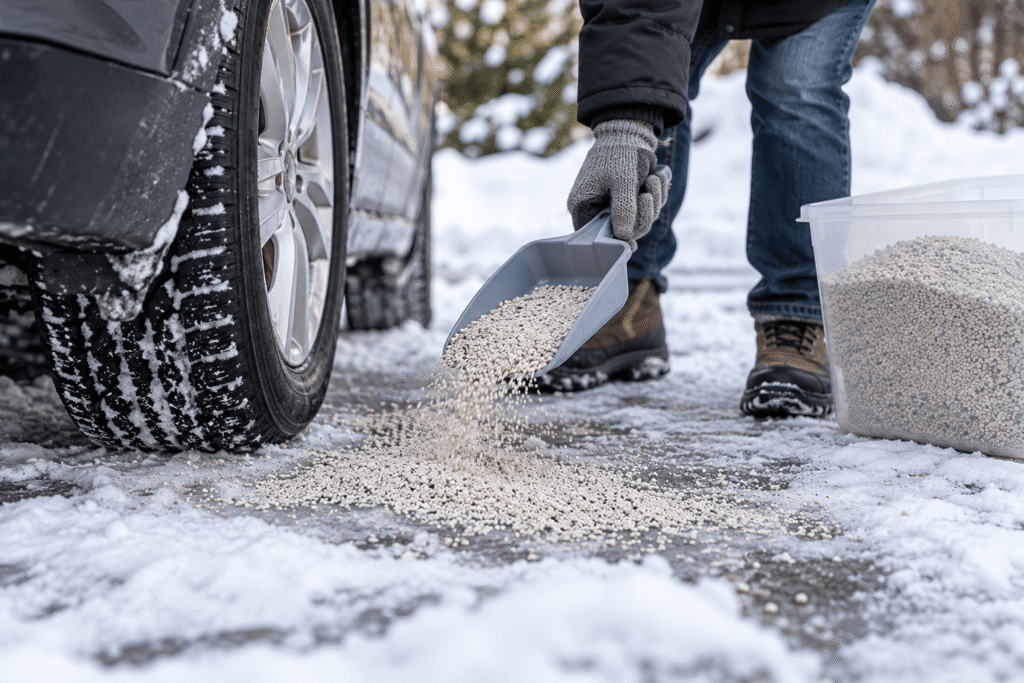
The National Weather Service lists sand or kitty litter for traction in its winter car kit checklist. Here’s how to use it:
- Sprinkle a thin, even layer over icy steps, walkways and the spots where you step out of the car.
- On a driveway, pour it into the tire tracks so your wheels have grip.
- Add more as it scatters. Foot traffic and wind spread it out, so one layer won’t last all winter.
Cat Litter vs Rock Salt vs Sand
| Option | Melts Ice? | Adds Traction? | Cleanup | Good to Know |
|---|---|---|---|---|
| Cat litter (non-clumping) | No | Yes | Sweep up after the thaw | Best as a stopgap |
| Rock salt | Yes | Some, while it works | May leave residue and salty runoff | Can damage concrete over time |
| Sand | No | Yes | Sweep up after the thaw | Provides grit without turning into wet clay |
If you need to melt ice, choose a de-icer suitable for the surface and temperature. For temporary traction, sand is usually the better option, although dry non-clumping litter can help when it’s what you have available.
A De-Icer That Also Adds Grip

Safe Paw Ice Melt is a salt-free, chloride-free de-icer made with a proprietary crystalline amide formula. It includes a traction agent, so it helps add grip while working to melt ice. Safe Paw markets it as pet-friendly and advertises effectiveness down to -2°F.
Performance depends on conditions. In Bob Vila’s testing, it melted ice at about 15°F but struggled in colder weather. The company also recommends following its application instructions. If you’re concerned about a particular surface, check the product label before spreading it.
Downsides of Using Cat Litter on Ice
It doesn’t remove the ice. Once the grit scatters or gets buried by fresh snow, the slippery surface is still there underneath.
It also sticks to boots, so expect to track some inside. A boot tray by the door catches it. The Stalwart All Weather Boot Tray has a raised edge to hold meltwater, and reviewers say it fits about three pairs of boots.
Once the ice melts, leftover grit can wash into gutters and drains.
Frequently Asked Questions
Does cat litter work in very cold weather?
Yes, for grip. It absorbs less water in deep cold, but the grit still adds traction because it doesn’t depend on melting anything.
Is cat litter a good choice if I have pets?
Plain, unused non-clumping clay litter can provide traction without relying on a salt-based de-icer. That doesn’t mean every litter product is suitable around pets. Check the product’s ingredients and keep pets from eating the scattered material. Ask your veterinarian if you’re uncertain about a particular winter product.
Will cat litter damage my concrete?
Cat litter doesn’t chemically melt ice the way rock salt does, but it can leave wet clay residue on concrete. Sweep it up after the thaw. Don’t assume every litter formula is suitable for outdoor surfaces.
Can I use cat litter to get my car unstuck in the snow?
Dry non-clumping cat litter may help tires find traction on snow or ice. Clear excess snow around the tires first, then scatter some litter where the drive wheels need grip. Accelerate gently and avoid repeatedly spinning the tires.