Disclaimer: This post may contain affiliate links. As an Amazon Associate, we earn from qualifying purchases.
Last updated on October 16, 2026
How to dispose of cat litter is straightforward: bag it, tie it securely and put it in the trash. Whether you’re tossing a daily scoop, emptying the whole box or clearing an automatic litter box drawer, the basic process is the same. Here’s how to handle each one and what to avoid.
Don’t assume a litter is flushable. Never flush clay litter. If you have a septic system, the EPA says cat litter should never be flushed into it. For other litter, follow the package directions and your local wastewater rules. When in doubt, bag it and put it in the trash. Our flushable cat litter guide covers the details.
Daily Scoops
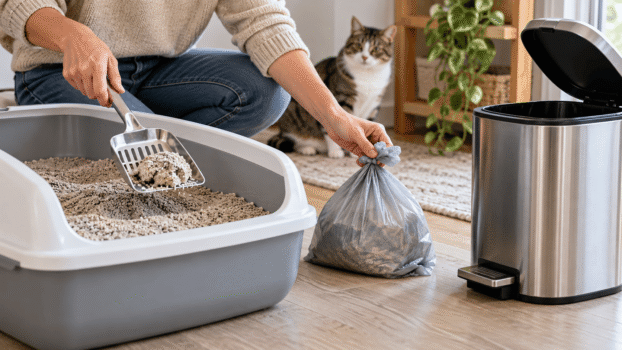
- Scoop clumps and waste into a small bag.
- Tie the bag securely without squeezing or shaking it.
- Put it in a lidded trash can, or straight into your outdoor bin.
If the outdoor bin is a long walk away, a litter disposal pail next to the box holds scooped waste between trips. Our Litter Genie review compares the pails, and our cat litter disposal system guide covers bins that take regular bags. For choosing scoop bags, see our biodegradable cat litter bags guide.
Emptying the Whole Box
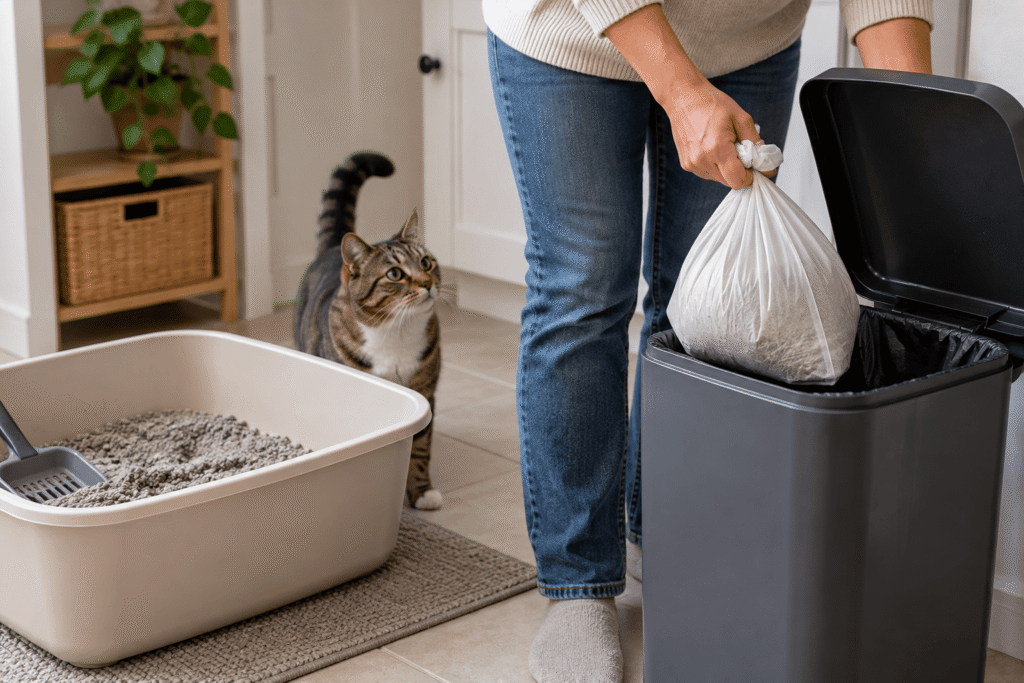
Used litter is heavy, especially clay, so don’t pour a full box into one thin bag.
- Use a sturdy trash bag, and double-bag it if your litter is heavy.
- Pour slowly, close to the bag, to keep dust down.
- Split a big box into two bags if one would be too heavy to carry or might tear.
- Tie each bag tightly before it goes in the bin.
If you use a litter box liner, lift it out, tie it closed and bag it. Our litter box liners guide covers whether liners are worth using.
Automatic Litter Box Drawers
Automatic boxes collect waste in a drawer or bin, often with a bag inside. Follow your machine’s directions for the bag type and for when to empty it. Lift the bag out, tie it, and put it in the trash like any other scooped waste. Our guide on how to clean an automatic litter box covers the rest of the routine.
Apartment and Outdoor Bin Tips
- If your building has a trash chute or shared bins, check the building’s rules for pet waste.
- Keep bagged litter in a bin with a tight lid, so it doesn’t draw animals or smells.
- In warm weather, take it out more often.
What Not to Do With Used Cat Litter
- Don’t dump it in the yard, a garden bed or the woods.
- Don’t put it down storm drains or gutters.
- Don’t put used cat litter or cat waste in a home compost pile, even if the litter is plant-based. If your local waste program accepts pet waste separately, follow its instructions.
- Don’t put used cat litter or litter-filled bags in curbside recycling. Used litter generally belongs in the trash unless your local waste program specifies otherwise.
- Don’t flush it unless the package and your local rules both say you can, and never with clay litter or a septic system.
Frequently Asked Questions
Can you put cat litter in the regular trash?
Yes. Bagged and tied, used cat litter goes in your regular household trash in most places. Check your local rules if you’re unsure.
What’s the best bag for cat litter?
For daily scoops, a small bag you can tie shut works. For a full box, use a sturdy trash bag and double up if it’s heavy.
Is plant-based litter disposed of differently from clay?
Usually not. For everyday disposal, both can be bagged and placed in the trash. Some plant-based litters are marketed as flushable, but that doesn’t automatically mean they’re suitable for your plumbing or permitted by local wastewater rules.