Disclaimer: This post may contain affiliate links. As an Amazon Associate, we earn from qualifying purchases.
Last updated on October 3, 2026
The best way to clean a litter box is to work in the right order, because stuck litter and residue can leave odor behind after a quick rinse.
Empty the box, scrape it while it’s still dry, wash it with warm water and unscented soap or a cleaner made for litter boxes, rinse, dry it completely, then refill to the depth on your litter bag.
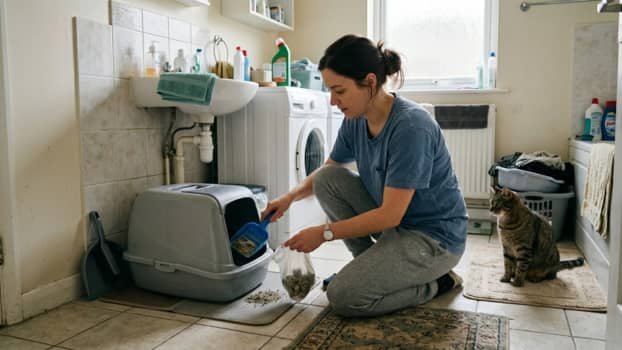
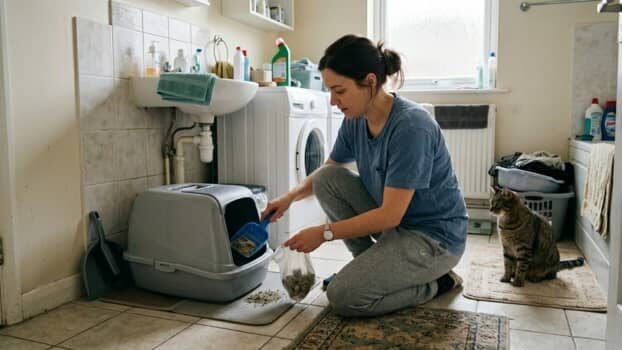
A consistent cleaning routine keeps the box pleasant for you and your cat.
Quick Picks
- Litter box cleaner: Absolutely Clean Litter Box Cleaner
- For stuck-on residue: Nature’s Miracle Litter Box Scrubbing Wipes
- For scraping the bottom: Metal Cat Litter Scoop with Dual Sifting Holes
What to Clean a Litter Box With (and What to Skip)
The ASPCA recommends washing litter boxes with warm water and unscented soap, baking soda or no soap. Pet-specific litter box cleaners are another option when their directions say they’re suitable for the box material you’re cleaning.
What you leave out matters just as much. PetSafe warns against bleach, harsh chemicals and citrus-scented cleaners because the smells can repel cats from the box, and its guides add lavender and peppermint to the list. An expert quoted by Kinship also advises skipping bleach, ammonia and vinegar.
The Best Way to Clean a Litter Box, Step by Step
Step 1: Empty It and Scrape It Dry
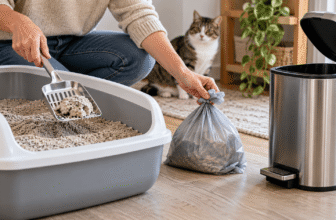
Dump all the litter into a trash bag. Before any water touches the box, scrape the bottom and corners to loosen stuck clumps.
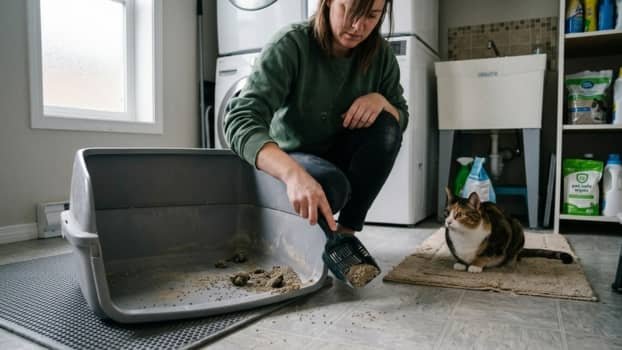
Scraping the litter box while it’s still dry helps remove buildup that becomes harder to clean later.
Scraping first matters, because wet clumping litter can turn into a paste that’s much harder to remove. A rigid metal scoop with a thin front edge makes this quick.
Step 2: Wash It
Wash the box with warm water and unscented soap, or a litter box cleaner made for your box material. Use a sponge or brush you keep only for the litter box.
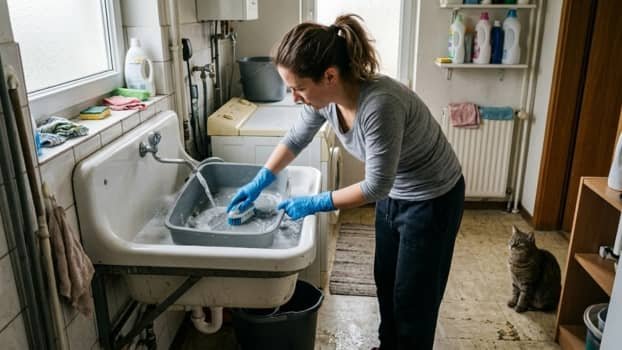
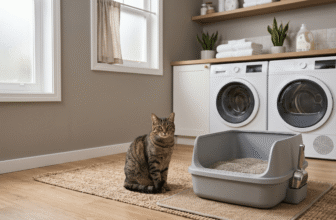
Warm water and a dedicated brush reach into the corners where residue collects.
Step 3: Rinse Thoroughly
Rinse until no soap or cleaner is left. Leftover residue can leave a smell your cat notices even when you don’t.
Step 4: Dry It Completely
Let the box dry fully before adding litter. With clumping litter, adding fresh litter to a damp box can make it stick to the bottom.
Step 5: Refill to the Depth on Your Bag
Add fresh litter to the depth your litter package recommends. Brands differ, so there’s no single number that works for every litter.
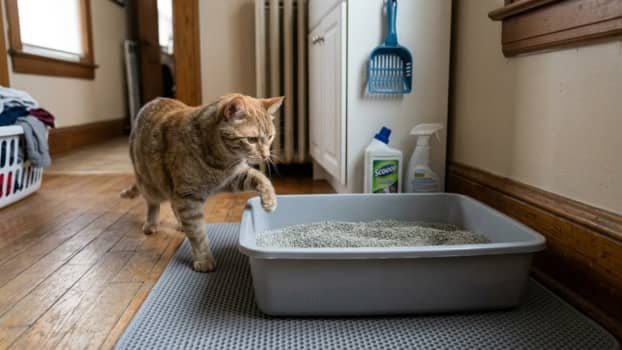
Refill to the level on your litter package once the box is fully dry.
How Often to Clean a Litter Box
Scoop at least daily. The ASPCA recommends washing the litter box weekly. For when to replace the litter itself, follow the directions on your litter package.
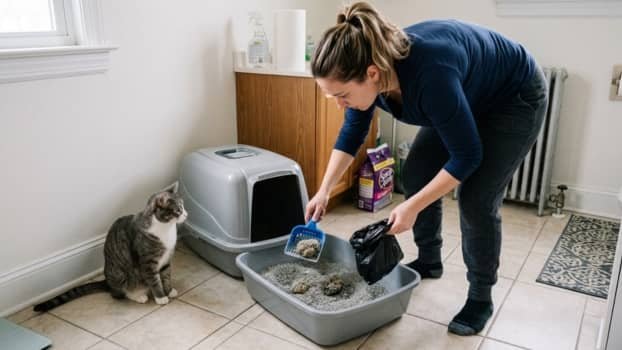
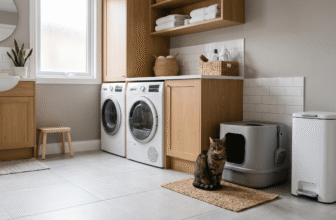
Daily scooping keeps the box manageable between full washes.
Our guide on how often to scoop a litter box covers the daily routine in more detail.
Why Your Litter Box Still Smells After Cleaning
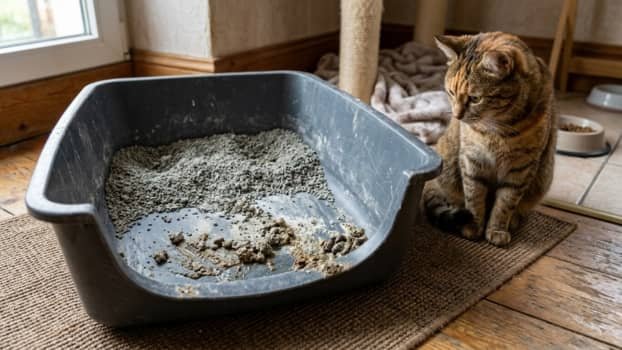
Stuck litter and residue in corners and seams can hold odor after a quick clean.
The plastic is worn. Scratches from scooping and claws create grooves that hold residue and odor, even after a full wash. If a scratched box smells again soon after cleaning, it’s time to replace it. Stainless steel resists scratching better than plastic and is less likely to retain lingering odor. Our guide to stainless steel vs plastic litter boxes compares the two.
Residue is hiding in corners and seams. These spots trap stuck litter. Scraping before you wash and scrubbing into the corners is what clears them.
The box wasn’t fully dry. With clumping litter, moisture left behind can make fresh litter stick to the bottom.
The litter is below the bag’s level. Too thin a layer can let clumps reach and stick to the bottom of the box. Keep it at the level your litter package recommends.
Cleaning an Automatic Litter Box
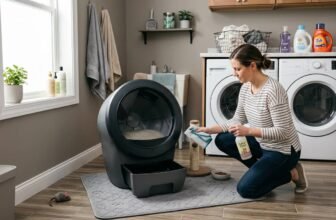
Follow your box maker’s cleaning instructions, since parts and sensors vary by model. PetSafe, for example, says to clean its ScoopFree sensors with rubbing alcohol on a cotton swab, and not to use bleach. Our guide on how to clean an automatic litter box walks through the process.
Products That Make Cleaning Easier
Absolutely Clean Litter Box Cleaner
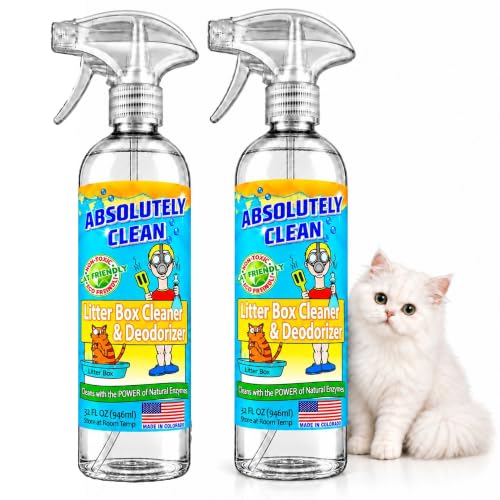
Why It Stands Out: It’s made specifically for litter boxes, and reviewers confirm it works on stainless steel, plastic and automatic boxes. Most owners say it handles stuck-on residue, spills and lingering odors well.
Possible Downsides: It’s an extra cleaning product to store and use compared with plain unscented soap. Follow the label directions for your box material and let the box dry completely before refilling.
Best For: Weekly washes when soap alone isn’t lifting residue.
Nature’s Miracle Litter Box Scrubbing Wipes

Why It Stands Out: The textured surface cuts down on scrubbing when litter is stuck on. Four reviewers confirm using them on automatic boxes, including Litter-Robot and Breeze. Owners also use them on stainless boxes, scoops, mats and rims, and say they dry quickly.
Possible Downsides: They’re single-use, so they’re an ongoing purchase. They suit spot cleaning and touch-ups better than a full wash.
Best For: Quick cleanups between full washes, and automatic boxes you can’t easily rinse.
Metal Cat Litter Scoop with Dual Sifting Holes
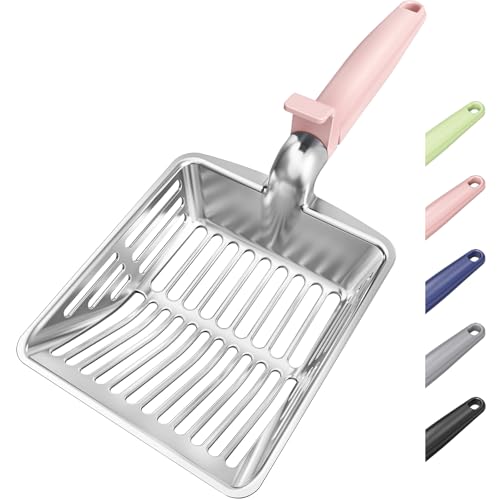
Why It Stands Out: Its ultra-thin front edge scrapes stuck clumps off the bottom of the box, which is exactly what Step 1 needs. Reviewers repeatedly say it holds up far better than the plastic scoops they used before.
Possible Downsides: It’s a large scoop, so it can feel bulky in a small box.
Best For: Scraping stuck litter before a wash, and everyday scooping with clumping litter.
FAQ
Can you use bleach to clean a litter box?
It’s best avoided. PetSafe warns against using bleach on its litter boxes because the smell can repel cats. An expert quoted by Kinship also advises avoiding bleach, ammonia and vinegar. Never mix bleach with ammonia or other cleaners.
Is dish soap okay for cleaning a litter box?
Yes, as long as it’s unscented. The ASPCA recommends warm water and unscented soap, and strong scents can put cats off the box.
When should you replace a plastic litter box?
Go by its condition, not its age. Replace it when it’s deeply scratched or still smells soon after a full wash.