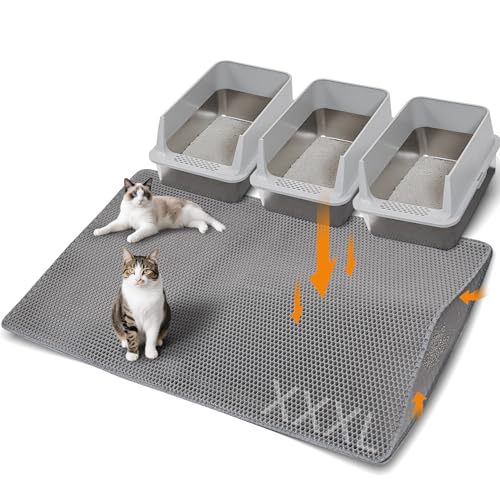
Best Litter Box for Messy Cats (Stop Litter Scatter & Accidents)

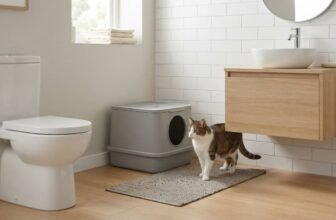
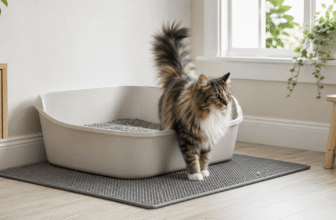
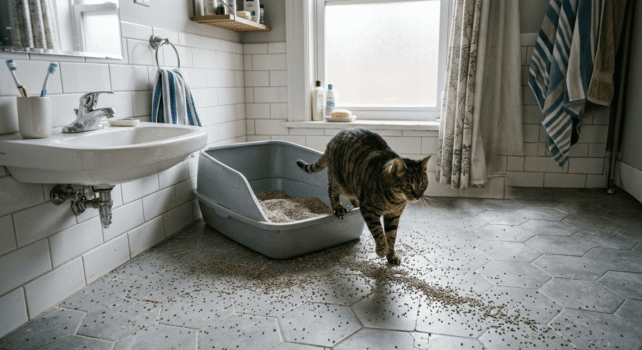
Best litter box for messy cats showing litter tracking and scatter on a bathroom floor as a cat walks away from an open high-sided litter box

Disclaimer: This post may contain affiliate links. As an Amazon Associate, we earn from qualifying purchases.

Last updated on June 28, 2026

A messy litter box setup can turn into a daily frustration. Litter ends up on the floor, urine spills over the edge, and cleaning takes longer than it should.

In most cases, the issue isn’t the litter. It’s that the litter box doesn’t match how the cat actually uses it.

Some cats kick litter hard, others pee high, and some track litter out on their paws. Each of those problems needs a different type of box.

Quick Answer

The best litter box for messy cats depends on how your cat is making a mess. High-sided boxes help contain litter scatter, extra-large boxes give cats more room to move, and high-walled or enclosed designs can help prevent urine from going over the edge.

If odor or cleanup is part of the problem, switching to a stainless steel litter box can also make a noticeable difference because the surface is easier to keep clean.

This guide breaks down the most common messy litter box problems and shows which types of litter boxes actually fix them.

Why Cats Make a Mess in the Litter Box

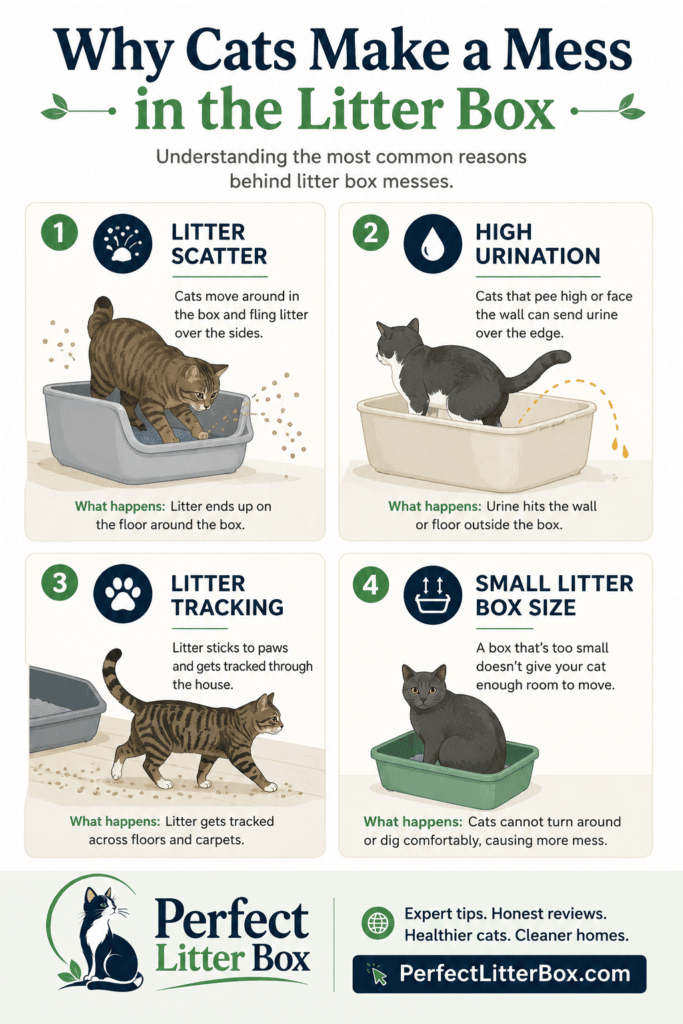
Infographic showing common litter box problems in cats including litter scatter, high urination, litter tracking, and small litter box size

These are the most common patterns behind litter box mess. Here’s what that actually looks like in a real home.

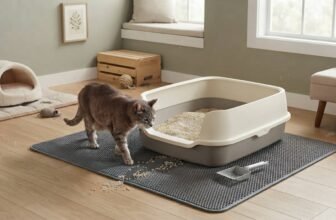
Examples of litter box problems in cats including litter tracking, kicking litter, and messy litter box behavior in a home

A messy litter box usually comes down to how the cat uses the box. The problem isn’t random. It follows patterns.

Once you understand what your cat is actually doing, it becomes much easier to fix the mess.

Cats That Kick Litter Everywhere

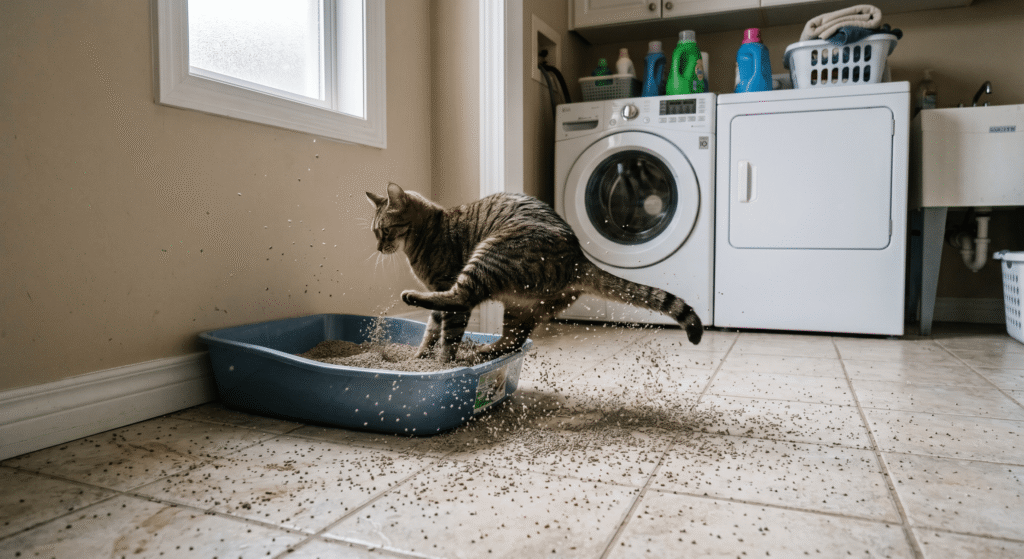
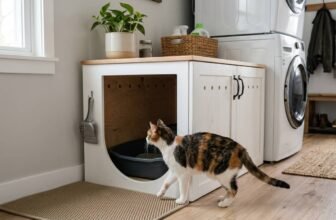
Cat kicking litter out of a low-sided litter box in a laundry room causing litter scatter on the floor

Some cats dig aggressively when covering their waste. They push litter backward or to the sides, and if the walls are too low, it ends up on the floor.

This often gets worse when the box is too small, because the cat hits the sides quickly and throws litter out while trying to dig.

Cats That Pee Over the Edge

Some cats squat higher than expected or aim toward the edge of the box. This can send urine over the side, especially in standard low-walled litter boxes.

This is more common with larger cats or cats that stand slightly while urinating. If this is happening consistently, it helps to look at setups designed specifically for that problem, like those covered in this guide to litter boxes for cats that pee over the edge.

In these cases, taller walls or a more enclosed design can help keep everything contained.

Cat using a high-sided open litter box in a bathroom to contain high urination without mess

Cats That Track Litter Around the House

Tracking happens after the cat leaves the box. Fine litter sticks to their paws and gets carried onto the floor. If that’s happening, these litter tracking solutions can help reduce how far it spreads.

This isn’t always a problem with the box itself. It often comes down to litter type, exit design, and how much loose litter is sitting on the surface.

Cats That Need More Space to Move

Large cats or active diggers often struggle in smaller boxes. They turn, dig, and reposition multiple times before settling.

When the space is too tight, litter gets pushed over the edge or the cat ends up too close to the side.

Once you identify which pattern your cat falls into, the right type of litter box becomes much easier to choose.

Match the Litter Box to the Problem

The best litter box for messy cats depends on how your cat is actually making a mess. Fixing the wrong problem won’t change anything.

Once you match the box to your cat’s behavior, the difference is usually immediate.

Best Litter Box for Cats That Kick Litter

High-sided open litter box for messy cats preventing litter scatter on a clean laundry room floor

Cats that kick litter need higher walls. Low-sided boxes make it easy for litter to get thrown out while digging.

A high-sided open litter box helps contain the mess without making the box harder to use. The taller walls catch most of the litter before it reaches the floor.

This is usually the simplest and most effective fix for litter scatter.

Best Litter Box for Cats That Pee Over the Edge

If urine is going over the side, the box needs more vertical coverage. Standard litter boxes are often too low for cats that squat high or stand while urinating.

Boxes with taller walls usually fix the problem first. Some cats still need a fully enclosed design if they consistently spray high. If you do use an enclosed box, one-piece designs work better than boxes with a separate lid, since seams can leak.

This is one of the most common reasons a litter box setup fails, even when it looks large enough.

Best Litter Box for Cats That Track Litter

Tracking usually happens after the cat leaves the box. Changing the box alone won’t always fix it.

Boxes with a step, entry platform, or textured exit area can help knock litter off paws before the cat walks away.

Litter choice also plays a role. Finer, lightweight litter tends to stick more and spread further around the house.

Best Litter Box for Cats That Need More Space

Large cats and active diggers need more room than most standard boxes provide.

A bigger litter box allows them to turn, dig, and position comfortably without pushing litter over the edge.

When space is limited, mess usually follows. Increasing the size of the box often fixes multiple problems at once.

Below are several litter boxes that solve these specific problems, based on how cats actually use them.

Best Litter Boxes for Messy Cats (Matched to Real Problems)

Not all messy cats are the same. The best litter box depends on what kind of mess your cat is making.

Below are a few options that match specific behaviors, so you’re not guessing.

Best Litter Box for Cats That Kick Litter Everywhere

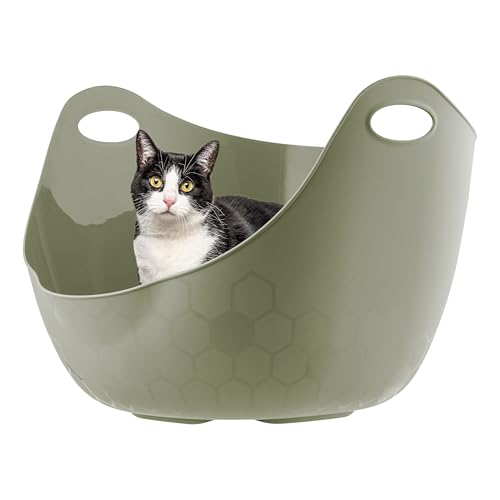
Amazon Basics High-Sided Open Litter Box

This is one of the simplest fixes for litter scatter, and it works better than most people expect.

The walls are tall enough to catch most of the litter that gets kicked backward or to the sides, which is where the mess usually happens. At the same time, the front entry is lower, so your cat doesn’t have to jump in awkwardly.

The open design also helps if your cat avoids covered boxes. Some cats dig more aggressively when they feel enclosed, so switching to a high-sided open box can actually reduce the mess.

This type of box works best if the problem is litter being thrown out, not urine going over the edge.

View on Amazon

Best Litter Box for Heavy Diggers and Scatter

IRIS USA Large High-Sided Litter Box

Some cats don’t just kick a little litter out. They dig hard enough to throw it several feet.

This design adds a wraparound scatter shield that extends above the base walls. That extra height makes a noticeable difference when a cat is digging aggressively.

The interior still feels open, so cats can turn and move naturally without feeling boxed in. That balance is important because tight spaces often make digging worse.

If your floor ends up covered in litter after every use, this style usually solves it without needing a fully enclosed box.

View on Amazon

Best Litter Box for Big Messy Cats

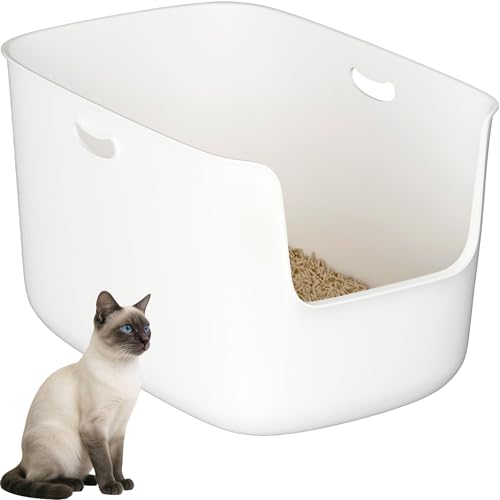
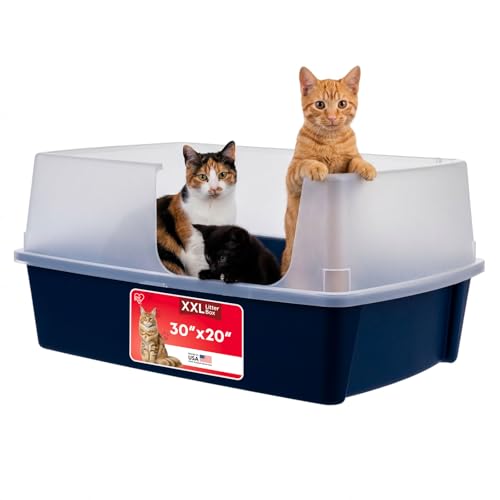
IRIS USA XXL Extra Large Litter Box (30″)

A lot of litter mess comes from a box that’s simply too small.

When a larger cat tries to turn around in a tight space, they end up pushing litter over the edges or positioning themselves too close to the sides.

This box fixes that by giving them enough room to move properly. The larger footprint reduces edge contact, and the tall sides help contain both litter and urine.

It’s also a strong option for multi-cat homes where the box gets heavy use throughout the day.

If the mess feels constant no matter what you try, switching to a larger box like this is often the turning point.

View on Amazon

Best Litter Box for Odor and Easy Cleaning

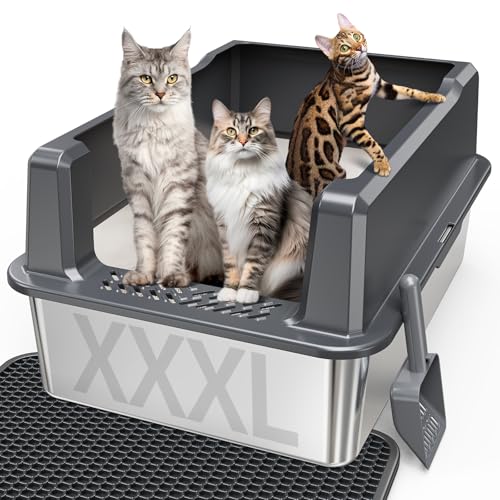
OneBug Stainless Steel XL Litter Box

Cleaning becomes part of the problem when litter sticks to the surface or smells linger after scooping.

This is where stainless steel makes a difference.

The smooth surface lets clumps slide off instead of sticking, so scooping is quicker and less frustrating. It also doesn’t hold odor the way plastic can after repeated use.

This type of box works well if your main issue is cleanup and smell, not just litter scatter.

It’s a simple upgrade, but it changes how the box feels to maintain day to day.

View on Amazon

Best Litter Box for High Pee-ers and Spray

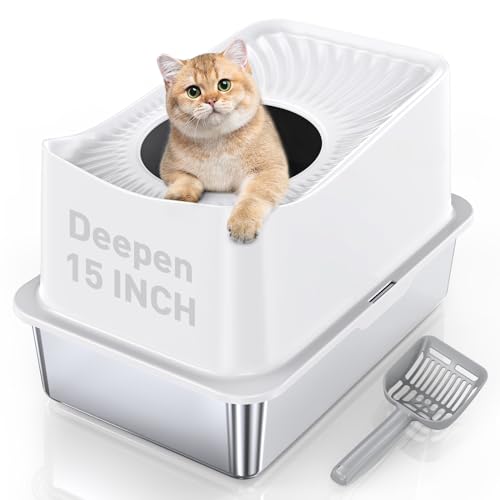
WoofiGo Enclosed Stainless Steel Litter Box

Some cats don’t aim downward. They pee high enough that it goes over the edge of standard litter boxes.

If your cat is spraying on walls or vertical surfaces instead of aiming downward, this guide to litter boxes for cats that spray explains what actually works for that behavior.

That’s where most setups fail.

This design combines high walls with an enclosed structure, which helps keep urine contained inside the box instead of on the floor or wall behind it.

The entry area also includes a small step that helps catch litter from paws as the cat exits, which can reduce tracking.

Enclosed boxes aren’t right for every cat, but for high pee-ers, they’re often the only thing that actually works.

View on Amazon

What to Look for in the Best Litter Box for Messy Cats

Before choosing a box, it helps to match the design to the actual problem.

Wall Height


Walls around 10 to 14 inches high do a much better job of containing both litter and urine.

Lower sides are usually the reason mess ends up outside the box in the first place.

Interior Size

A larger interior reduces mess more than most people expect.

Cats need room to turn and dig without hitting the sides immediately. When they feel cramped, they push litter out while trying to reposition.

Entry Design

A lower front entry makes a big difference, especially for older or heavier cats.

If getting into the box feels awkward, cats tend to rush or stand in odd positions, which leads to more mess.

Material

Plastic works fine, but it can become harder to clean over time.

Stainless steel avoids that issue and tends to stay cleaner with less effort, especially in high-use setups.

Frequently Asked Questions

What is the best litter box for messy cats?

The best litter box for messy cats depends on the type of mess. High-sided boxes help with litter scatter, extra large boxes give cats more room, and enclosed designs can help with urine going over the edge.

Why does my cat keep kicking litter out of the box?

Some cats dig more aggressively than others when covering their waste. If the sides of the box are too low, litter gets pushed over the edge. A box with taller walls usually solves this quickly.

Why is my cat peeing over the side of the litter box?

This usually happens when the walls are too low or the box is too small. Some cats also stand slightly while urinating. Taller walls or an enclosed design can help keep everything contained.

Do covered litter boxes stop mess?

They can help with some types of mess, especially urine spray and litter scatter. However, some covered boxes have seams where the top and bottom connect, and urine can leak through those gaps. Some cats also avoid fully enclosed boxes.

How do I stop litter from tracking around the house?

Tracking is often caused by fine litter sticking to paws. Using a box with a step or entry platform can help, but litter type also plays a big role. Heavier litter tends to stay in the box more than lightweight options.

Related Litter Box Solutions

If you’re still dealing with a specific type of mess, a few targeted changes can make a bigger difference than switching boxes again.

  • If litter keeps getting kicked onto the floor, these high sided litter boxes are designed specifically to contain scatter.
  • If your cat needs more space or feels cramped, this guide on extra large litter boxes for big cats covers larger setups that reduce mess.
  • If odor and cleaning are the main issue, a stainless steel litter box can stay cleaner and easier to maintain over time.
  • If litter is spreading through the house, these litter tracking solutions focus on keeping floors clean after your cat leaves the box.
  • If you’re considering a more enclosed setup, this guide explains when a closed litter box helps and when it can create new problems.

Each of these focuses on one specific issue, which makes it easier to fine-tune your setup without guessing.

Final Thoughts

Finding the best litter box for messy cats comes down to matching the box to how your cat actually uses it.

A box that works perfectly for one cat can fail completely for another. Kicking, high urination, tracking, and space issues all need different solutions.

In many cases, switching to a larger box or one with higher sides solves the problem right away. For more stubborn issues, the design of the box, the litter you use, and how everything is set up around it all play a role.

If the mess hasn’t improved, it’s usually a sign that the box doesn’t match your cat’s behavior yet. Once it does, the difference is noticeable almost immediately, and daily cleanup becomes much easier.

Perfect Litter Box
Logo
DMCA.com Protection Status