Disclaimer: This post may contain affiliate links. As an Amazon Associate, we earn from qualifying purchases.
Last updated on October 3, 2026
A litter box for dogs usually works differently from a cat’s, because dogs generally aren’t expected to dig and bury their waste.
A “litter box for dogs” usually means one of four indoor setups: a dog litter pan, a pee pad holder, a high-walled tray or an artificial grass system. Pick by your dog’s size, the surface it’s used to, and how much cleanup you’re willing to do.
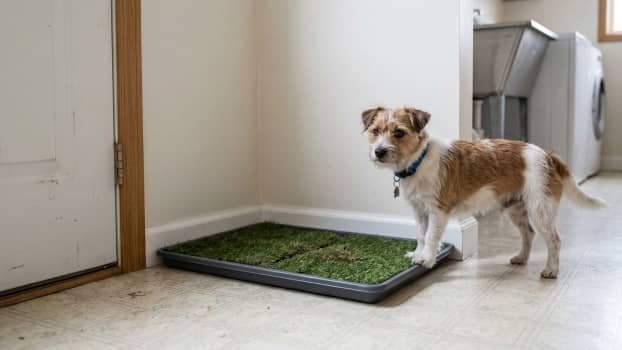
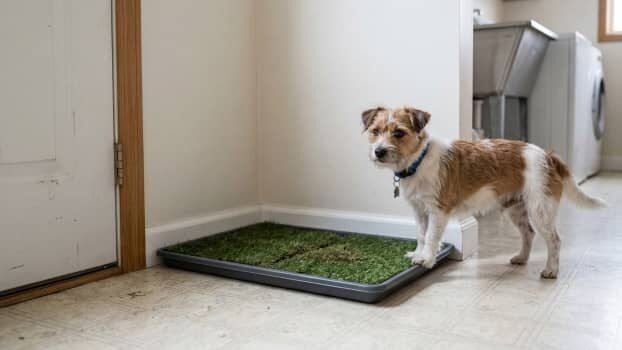
A simple indoor potty setup for dogs, placed in a corner for easy access and cleanup.
Quick Picks
- Want an actual dog litter box: PuppyGoHere Large Dog Litter Box
- Use disposable pee pads: Amazon Basics Pad Holder
- Male dog or need high walls: HQ4US 4LEGS High-Wall Pad Holder
- Dog prefers a grass-like surface: LOOBANI Grass Pad
The Four Kinds of Litter Box for Dogs
Dog litter pans look like a big cat litter box with a low entry. You fill them with paper litter, wood pellets or a puppy pad. They’re the closest thing to a true litter box.
Pee pad holders are flat trays that lock a disposable pad in place. They’re the simplest setup, and they stop the pad from sliding or bunching.
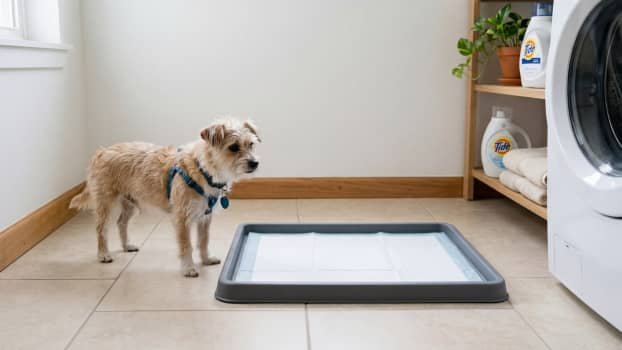
A simple pee pad holder keeps the pad in place and creates a defined indoor potty area.
High-walled trays add raised sides around the pad. They catch spray from dogs that lift a leg or aim toward the edge.
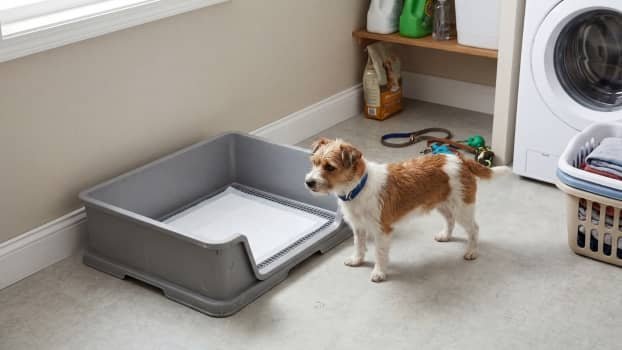
A high-wall pad holder helps contain spray around the edges.
Grass systems put artificial turf over a drainage tray, so liquid drains below the surface. They suit dogs used to going on grass outside.
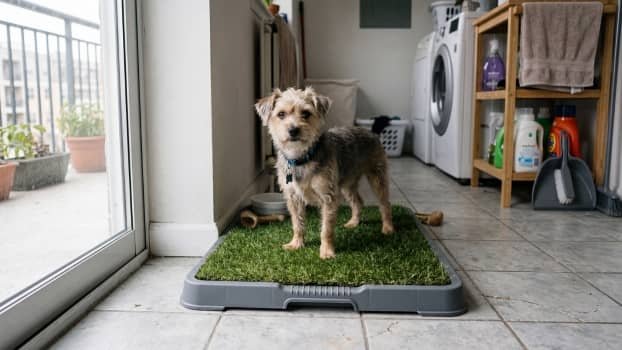
A grass pad system lets liquid drain into a tray below while giving dogs a grass-like surface indoors.
There’s also real grass, sold as trays of live sod through delivery services. Unlike artificial turf, it needs periodic replacement, so it’s an ongoing service rather than something you buy once.
Match the Setup to Your Dog
Size comes first. Your dog needs room to turn and squat with all four paws inside. Owners of small trays often say their dog misses the edge or walks around it.
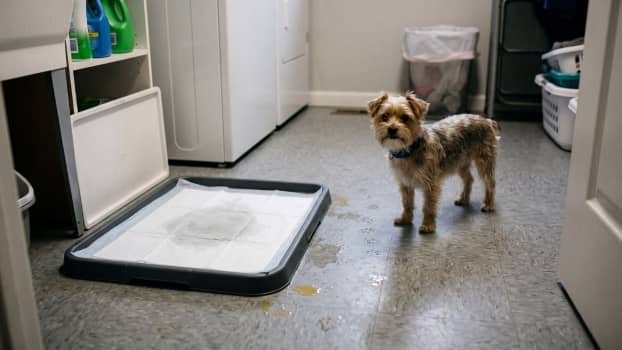
A tray that’s too small or too flat often leads to leaks around the edges.
Leg-lifters benefit from walls. A dog that lifts a leg can spray past a flat pad. A walled tray or deeper pan can help contain it.
Pad chewers may do better with a holder. If your dog chews, drags or bunches loose pads, a holder keeps the pad in place and makes it harder to pull up.
Dogs used to grass may prefer a familiar surface. If your dog normally goes on grass outside, an artificial- or real-grass setup may feel more familiar than a pad.
Litter Box for Dogs: The Picks
PuppyGoHere Large Dog Litter Box
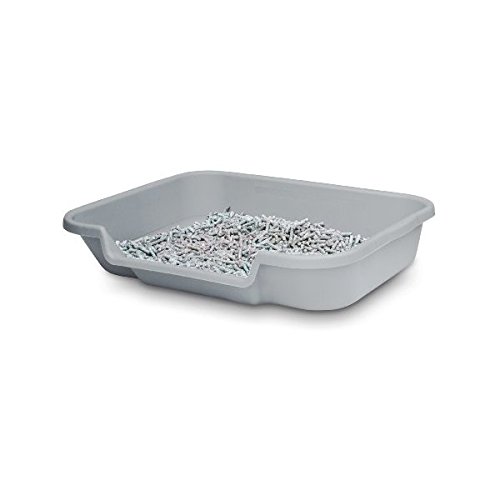
Why It Stands Out: It’s a true dog litter box: a one-piece 24 x 20 x 5 inch pan rated for dogs up to 20 lb. You can fill it with paper litter, wood pellets or a puppy pad. The low entry makes stepping in easy. One owner with a small leg-lifting dog says its sides keep pee in where flat pad holders failed, and another simply rinses it in the tub.
Possible Downsides: This Large is intended for dogs up to 20 lb. PuppyGoHere also sells a Small for dogs up to 6 lb and a Jumbo for dogs up to 35 lb. One owner says the pan slides on hard floors and fixed it with stick-on bumpers. The 5 inch sides won’t stop a dog that kicks hard.
Best For: Small dogs and puppies, especially if you’d like to use litter or pellets instead of pads.
Amazon Basics Pad Holder
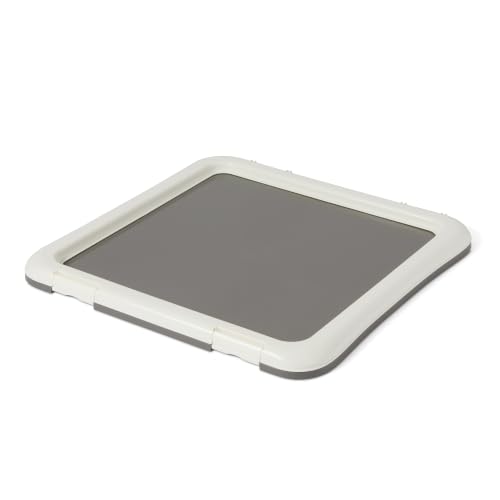
Why It Stands Out: It secures a pee pad with a latch, helping keep it flat instead of sliding or bunching. It can also make the pad harder for a dog to pull up. Maintenance is simple: replace the pad and wipe the tray.
Possible Downsides: The edges are low, so a dog that aims toward the side can still get pee on the tray or floor. Sizes vary, so check the dimensions on the listing against your dog and your pads.
Best For: Dogs that already use pads and stay centered on them.
HQ4US 4LEGS High-Wall Pad Holder
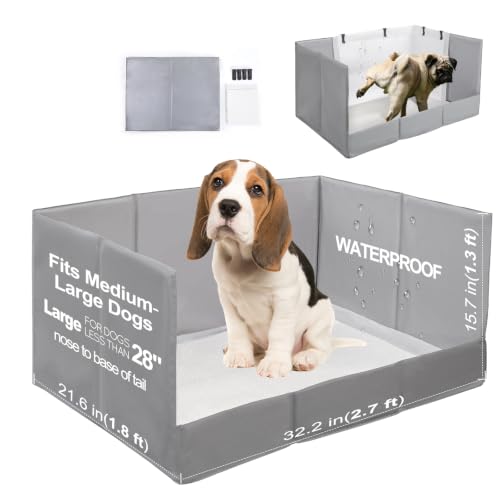
Why It Stands Out: It adds tall walls around a pad, with clips to hold the pad in place. The Large is about 32.2 x 21.6 x 15.7 inches, and HQ4US says to choose the size by your dog’s body length. The seamless liner is designed to reduce the gaps where liquid could escape, and it folds flat with no assembly, so it travels well.
Possible Downsides: It takes up more floor space than a flat holder. Pads still need replacing before they become saturated or start to smell.
Best For: Male dogs that lift a leg, and dogs that miss the edges of a flat tray.
LOOBANI Grass Pad
No products found.Why It Stands Out: It’s a 35 x 23 inch, three-layer system: artificial grass on top, washable absorbent pads in the middle, and a collection tray below. Liquid drains through instead of sitting on the surface.
Possible Downsides: Reusable turf adds washing and drying that a disposable pad doesn’t. Odor can build if the turf, absorbent layer or collection tray isn’t cleaned often enough, so follow the manufacturer’s cleaning instructions.
Best For: Dogs used to going on grass, and balconies or patios where rinsing is easy.
Getting Your Dog to Use It
Pick one consistent spot for the setup so your dog has a clear place to go. If you move it later, your dog may need help learning the new location. Reward your dog right after it uses the setup correctly.
Keeping It From Smelling
- Pads: change them before they’re fully soaked, and wipe the tray underneath.
- Pans: empty or scoop the litter, then wash the pan with soap and water.
- Grass: wash the turf thoroughly and let it dry completely before reusing.
FAQ
Can I use pads and grass at the same time?
Yes. Some owners keep pads as a backup while their dog learns to use grass, then drop the pads once grass is the habit.
Can a big dog use an indoor setup?
Yes, but the setup has to be big enough. Size up rather than squeezing a large dog onto a small tray.
Do I have to use dog litter in a dog litter pan?
No. Pans like the PuppyGoHere work with paper litter, wood pellets or puppy pads, so you can match whatever your dog already uses.