Disclaimer: This post may contain affiliate links. As an Amazon Associate, we earn from qualifying purchases.
Last updated on June 28, 2026
Finding the best litter box for senior cats can feel frustrating, especially when a cat that has used the box for years suddenly starts having accidents or avoiding it altogether.
In most cases, the problem is not behavior. As cats age, they deal with stiff joints, weaker balance, and changes in how they squat or position themselves. A litter box that worked perfectly before can become difficult, uncomfortable, or even painful to use.
That is when problems start showing up, like peeing right outside the box, struggling to step in, or turning awkwardly and missing the litter entirely. These are all signs that the setup no longer matches how your cat moves.
The right litter box can fix a lot of these issues, but it has to match your cat’s specific problem. Some cats need a lower entry. Others need more space to turn. Some need better containment because they no longer stay in a full squat while urinating.
Quick Answer
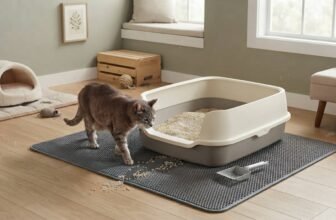
The best litter box for senior cats is one with a low entry (around 3 to 5 inches), a large interior space, and high back or side walls to contain mess without blocking access. Open designs usually work best because they are easier to enter, less stressful, and allow the cat to move naturally.
For most situations, a large low-entry litter box with a high back provides the best balance between accessibility and containment. Stainless steel options can also help with cleaning and odor, especially if your cat urinates more frequently.
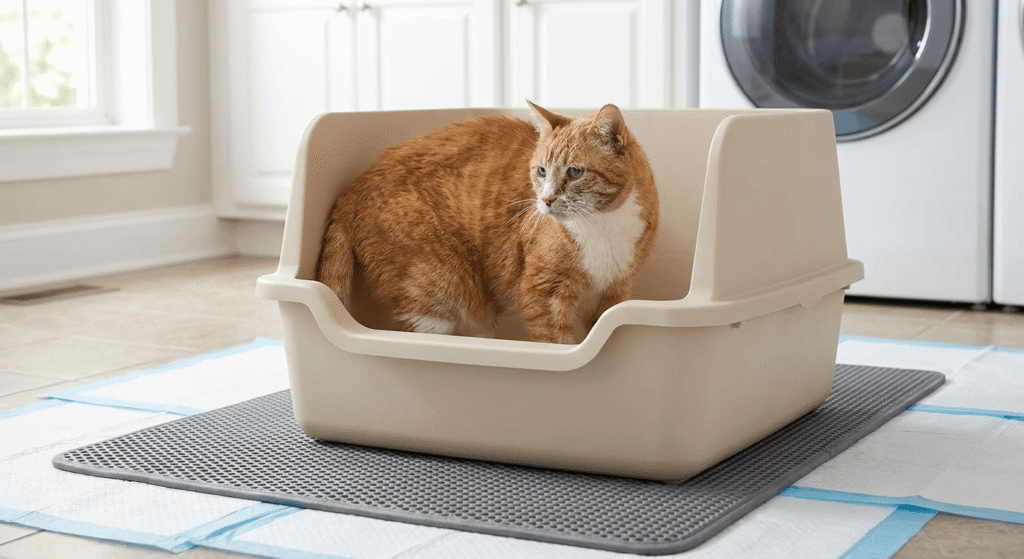
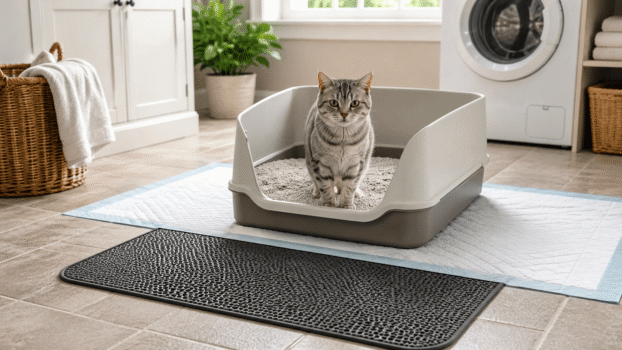
If your cat has more specific issues, the ideal choice changes. Cats with severe arthritis may need the lowest possible entry. Larger cats need more turning space. Cats that pee higher or lose their squat benefit from taller back walls or a layered setup using puppy pee pads or a waterproof litter mat around the box.
The key is matching the litter box to how your cat actually uses it, not just choosing something labeled for senior cats.
Quick Picks
Best Overall:
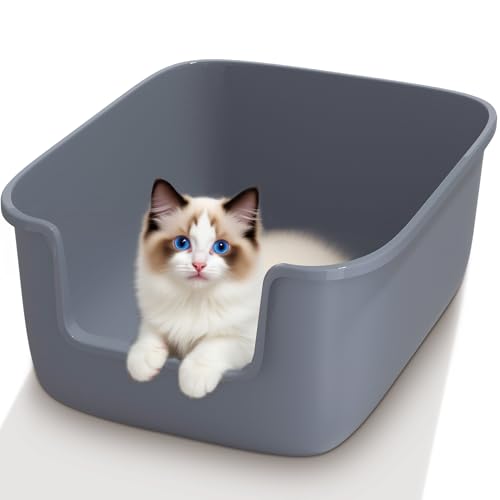
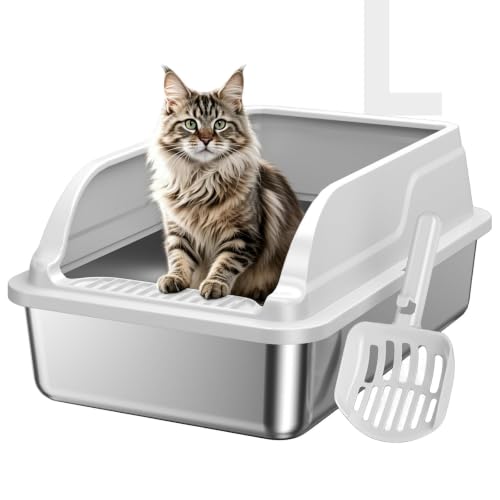
Vealind Extra Large Low Entry High-Sided Litter Box
Easy to step into with high back walls to contain mess, making it a strong all-around choice for most senior cats.
Best for Severe Mobility Issues:
KittyGoHere Low Entry Litter Box
Very low entry that reduces strain for cats with arthritis or weak back legs.
Best for Large Senior Cats:
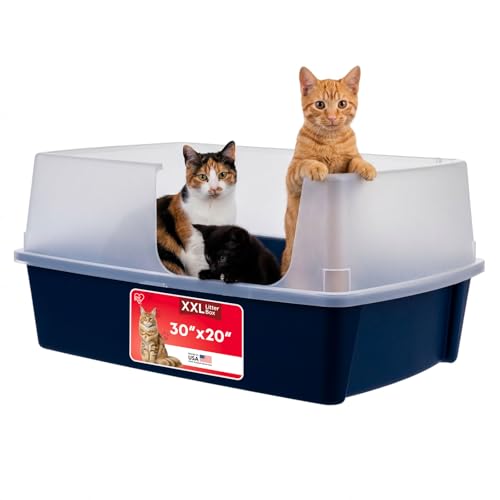
IRIS USA Extra Large Litter Box (XXL)
Extra floor space makes it easier for stiff cats to turn and position comfortably.
Best Stainless Steel Option:
Qiuma Stainless Steel Low Entry Litter Box
Does not absorb odor and is much easier to clean for high-use situations.
Best Low Entry Stainless Option:
Low Entry Stainless Steel Litter Box (3.2” Entry)
Combines a clearly low entry with smooth surfaces that are easy to maintain.
Best Budget / DIY Option:
Under-Bed Storage Container
A simple, low-profile alternative that offers more space and flexibility than many commercial boxes.
Best Litter Boxes for Senior Cats
Choosing the best litter box for senior cats is not just about picking something labeled “low entry.” Older cats often deal with stiff joints, weaker balance, and changes in how they use the litter box, and those small differences can completely change what actually works.
Some cats struggle to step into the box. Others get inside but can’t turn comfortably. Some start peeing before they are fully positioned, or gradually rise while urinating, which leads to messes going over the edge. These are real, everyday problems that a standard litter box simply doesn’t handle well.
The best litter box for a senior cat needs to match how that cat actually uses the box today. That usually means a combination of low entry for easy access, enough space to turn without strain, and walls that are high enough in the right places to contain accidents without blocking entry.
The options below are selected based on those real-world needs. Each one solves a specific problem, whether that is severe mobility issues, difficulty turning, messy urination, or cleaning challenges that come with older cats.
Top Litter Box Picks for Senior Cats
Instead of listing random products, these litter boxes are chosen based on how they perform in actual situations. Some are better for cats that cannot step into a tall box. Others are designed for cats that make a mess because they cannot hold a low squat or position themselves properly.
You will also notice that some of these boxes look simple. That is intentional. In many cases, simple open designs work better for senior cats because they remove obstacles and make it easier for the cat to move naturally.
Each option below includes exactly what it is best for, so you can quickly match the box to your cat’s specific problem.
1. Vealind Extra Large Low Entry High-Sided Litter Box
This is one of the most balanced options for senior cats because it solves two problems at the same time: easy entry and mess containment.
The front opening is low enough for cats with stiff joints or reduced mobility to step into without hesitation. At the same time, the back and side walls are high, which helps catch urine from cats that no longer hold a full squat or tend to pee higher as they age.
The larger footprint also makes a big difference. Senior cats often struggle to turn or position themselves in smaller boxes, and that is when accidents happen. This design gives enough room to move naturally without forcing awkward angles.
Best for: Senior cats that need easy access but also tend to make a mess inside the box.
2. KittyGoHere Low Entry Litter Box
This is one of the best options for cats with severe mobility issues. The entry is extremely low, which makes it much easier for cats with arthritis or weak back legs to step in without pain.
There are no high edges to climb over, and the open design reduces hesitation. This is especially helpful for cats that have started avoiding the litter box because getting inside has become uncomfortable.
The trade-off is that the sides are lower than other options, so it is not ideal for cats that pee high or tend to miss. In those cases, pairing this with puppy pee pads around the entrance can prevent floor messes.
Best for: Senior cats with arthritis, stiffness, or difficulty stepping into a standard litter box.
3. IRIS USA Extra Large Litter Box (XXL)
This box stands out because of its size. Many senior cats do not just need a lower entry, they need more space to move once they are inside.
The wide interior makes it easier for stiff cats to turn around, reposition, and avoid stepping in waste. This becomes especially important for cats that urinate more frequently or produce larger clumps.
The open design also keeps things simple. There are no tight spaces or enclosed areas that could make a senior cat feel trapped or uncomfortable.
Best for: Large senior cats or cats that struggle to turn around in standard litter boxes.
4. Qiuma Stainless Steel Low Entry Litter Box
This is a strong option if cleaning and odor control are becoming a problem. Senior cats often urinate more frequently, and plastic boxes can start to hold smell even with regular cleaning.
The stainless steel surface does not absorb odor and is much easier to wipe clean. When urine hits the sides, it slides down instead of sticking, which reduces buildup over time.
The low entry keeps it accessible, while the solid structure makes it feel stable under the cat’s weight.
Best for: Senior cats that produce more urine or situations where odor and cleaning are becoming difficult to manage.
5. Low Entry Stainless Steel Litter Box (3.2” Entry)
This type of box is ideal for situations where entry height needs to be very specific. The lower front opening makes it easier for cats that hesitate or struggle with even small steps.
At the same time, the metal construction helps keep cleaning manageable, especially in homes where the litter box is used more frequently.
It is a simple design, but that simplicity is what makes it effective for senior cats.
Best for: Cats that need a clearly low entry combined with easy cleaning and odor control.
6. Under-Bed Storage Container (DIY Litter Box)
A simple under-bed storage container can work better than many commercial litter boxes for senior cats.
These containers are wide, low, and easy to step into. They also give much more interior space, which helps cats that struggle to turn or position themselves inside smaller boxes.
If needed, you can cut a lower entry point on one side to make access even easier. Because there are no seams or complex shapes, cleaning is also straightforward.
This setup works especially well when combined with a waterproof litter mat or puppy pee pads to protect the surrounding floor.
Best for: Budget setups or situations where standard litter boxes are too small or restrictive.
Why Senior Cats Struggle With Litter Boxes
Litter box problems in older cats usually come down to physical changes, not behavior. A box that worked for years can suddenly become difficult to use as your cat ages.
One of the biggest reasons is joint pain. Cats with arthritis or stiffness often struggle to step over high edges or hold a low squat position. Even a small entry height can feel like a barrier when their back legs are weak.
Balance also becomes an issue. Some cats lose stability while squatting and gradually rise while urinating. That changes the direction of the urine and often leads to messes hitting the sides or going over the edge.
There is also the issue of urgency. Older cats often urinate more frequently, especially with conditions like kidney disease. When a cat has to go quickly, even a short delay caused by a difficult entry can lead to accidents right outside the box.
In some cases, cats also start avoiding the box entirely because they associate it with discomfort. If stepping in or using the box hurts, they will look for an easier place instead.
Why Most Litter Boxes Fail Senior Cats
Most litter boxes are designed for younger, agile cats. Once mobility changes, those designs stop working.
The first problem is entry height. Standard litter boxes often have sides that are too tall, forcing the cat to step up or jump. For a senior cat, that can be uncomfortable enough to avoid the box.
At the same time, lowering the entry creates a different problem. Many low-entry boxes also have low walls all around, which does nothing to contain urine from cats that no longer squat fully.
Size is another major issue. Smaller boxes make it harder for stiff cats to turn or position themselves. This leads to awkward angles, missed spots, and stepping in waste.
Some boxes also slide when the cat steps in or out. That movement can make an already unstable cat hesitant to use the box. Placing a non slip rubber mat or even a thick yoga mat underneath can help keep the setup stable.
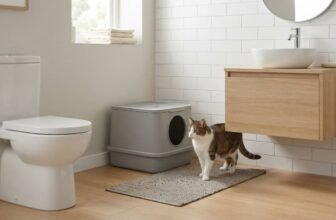
Covered boxes create their own problems. They reduce visibility, limit movement, and can make the space feel cramped. For a cat with reduced confidence or mobility, that can be enough to avoid using it altogether.
What Actually Works for Senior Cats
Fixing litter box problems in senior cats is about matching the setup to how the cat moves and uses the box now, not how they used it years ago.
If odor is becoming harder to manage, especially with more frequent urination, this litter box odor guide covers simple ways to keep the area clean without adding extra work.
Low Entry With Supportive Design

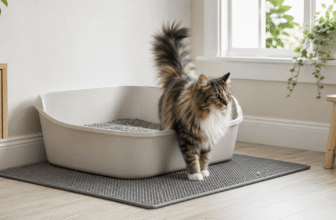
The front of the box should be low enough for easy access, usually around 3 to 5 inches. This allows the cat to step in without strain or hesitation.
At the same time, the rest of the box should still provide enough structure to guide the cat inside rather than allowing them to stand at the edge and miss.
High Back and Side Walls
Many senior cats do not maintain a full squat while urinating. As they rise, the urine travels higher than expected.
A box with a higher back or sides helps contain that without making the entry harder. This balance is what prevents messes without creating new access problems.
More Interior Space

Turning space becomes more important with age. A larger box allows the cat to step in, reposition, and exit without twisting their body in uncomfortable ways.
This also reduces the chance of stepping in waste or accidentally aiming toward the edge.
Stable, Non-Slip Setup

Senior cats need stability. If the box moves when they step in, they may hesitate or avoid it completely.
Using a non slip rubber mat underneath the box keeps it in place and gives the cat better footing as they enter and exit.
Layered Protection Around the Box

Even with the right litter box, small accidents can still happen. Cats may start urinating before fully entering or miss slightly when exiting.
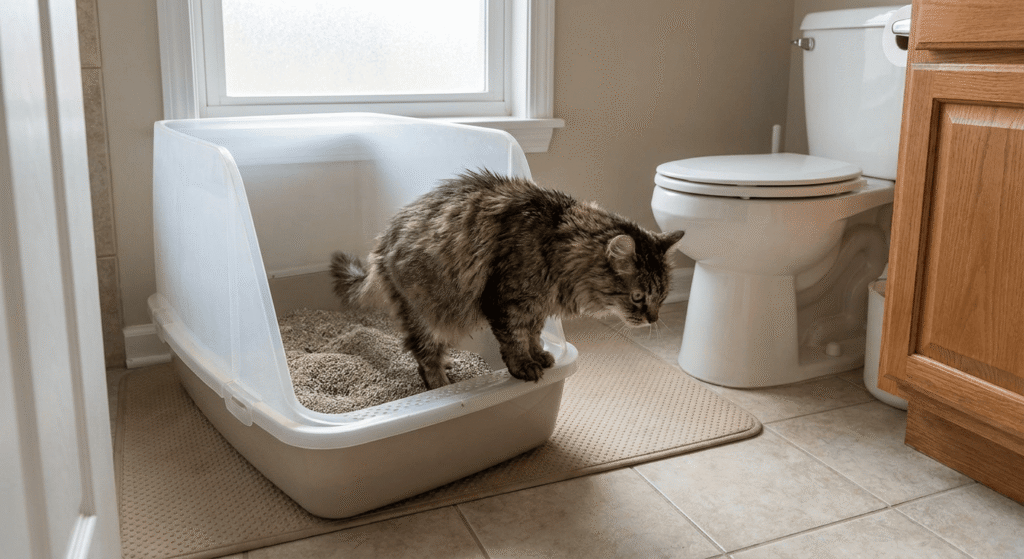
Placing puppy pee pads around the entrance and using a waterproof litter mat underneath the box helps protect the floor and makes cleanup easier.
Easy Cleaning Matters More
Senior cats often use the litter box more frequently, which means cleaning becomes more important. Smooth surfaces and simple designs make a big difference in how easy it is to maintain.
Using litter box cleaning wipes for quick daily cleaning and an enzyme cleaner for deeper cleanup helps keep the area manageable and reduces odor buildup.
How to Choose the Right Litter Box for Your Senior Cat
The best litter box for senior cats depends on what your cat is actually struggling with. Age alone does not tell you what to buy. The real solution comes from matching the box to the specific problem you are seeing.
If Your Cat Struggles to Step Into the Box
Look for the lowest entry possible. Cats with arthritis or weak back legs need a front opening that is easy to step over without lifting too high.
In more severe cases, even a small step can cause hesitation. That is where ultra low-entry boxes or a simple setup like a storage container with a cut-out entrance can make a big difference.
If Your Cat Pees Over the Edge
This usually happens when a cat cannot hold a full squat and gradually rises while urinating. The solution is not just a low entry, it is a low entry combined with higher back or side walls.
If the box alone is not enough, adding puppy pee pads behind or around the box helps catch anything that escapes.
If Your Cat Cannot Turn or Position Properly
Choose a larger box with more interior space. Tight boxes force awkward positioning, which leads to missed spots or stepping in waste.
Extra space allows the cat to move naturally and reduces accidents caused by poor positioning.
If Your Cat Misses the Box by an Inch
This is common with older cats that have reduced awareness or urgency. They reach the box but do not fully step inside before going.
Placing puppy pee pads at the entrance and along the sides creates a buffer zone that protects your floors.
If Your Cat Seems Unsteady
Stability matters more than it seems. If the box shifts when your cat steps in, they may avoid it.
Using a non slip rubber mat or thick yoga mat underneath keeps the box in place and gives better traction.
Special Situations to Consider
Large Senior Cats
Bigger cats often struggle more with standard litter boxes. When the space is too small, they cannot turn comfortably, which leads to awkward angles and accidents.
An extra large box with a low entry solves this by giving both accessibility and enough room to move.
Multi-Cat Homes
In homes with multiple cats, access and comfort become even more important. A senior cat may avoid a box if another cat blocks it or creates stress around it.
Adding extra boxes in quiet, easy-to-reach locations helps reduce pressure and gives the senior cat more control over where they go.
Senior Cats That Also Pee Standing Up
Some senior cats develop both mobility issues and changes in how they urinate. They may enter the box easily but then rise while peeing, sending urine toward the sides or over the edge.
In these cases, a low-entry box with higher back walls works best. You can also combine this with a waterproof litter mat or puppy pee pads for extra protection.
If this is a major issue, it helps to look at setups designed specifically for cats that pee standing up.
Frequently Asked Questions
What is the best litter box height for senior cats?
The front entry should usually be around 3 to 5 inches high. This allows easy access without forcing the cat to step too high. The back and sides can be taller to help contain mess.
Are covered litter boxes good for senior cats?
Covered boxes are usually not ideal. They can feel cramped, harder to enter, and limit movement. Most senior cats do better with open designs.
Do senior cats need bigger litter boxes?
Yes. Extra space makes it easier to turn, position, and avoid stepping in waste. This becomes more important as mobility decreases.
How can I protect the floor around the litter box?
Using puppy pee pads near the entrance and a waterproof litter mat under the box helps catch accidents and makes cleanup easier.
When should I see a vet?
If your cat suddenly changes litter box habits, strains to urinate, or starts having frequent accidents, it is important to rule out medical issues. Many litter box problems in senior cats are linked to health conditions.
Related Litter Box Problems (And Solutions)
Best Litter Box for Cats That Spray
Best Litter Box for Cats That Pee Standing Up
Final Thoughts
Finding the best litter box for senior cats is less about buying a specific product and more about understanding what your cat is struggling with.
Once you match the box to your cat’s mobility, positioning, and habits, most litter box problems become much easier to manage. Small changes like lowering the entry, increasing space, or adding simple floor protection can make a noticeable difference.
In many cases, the right setup turns a frustrating daily problem into something manageable again. The key is focusing on what your cat needs now, not what worked in the past.