Disclaimer: This post may contain affiliate links. As an Amazon Associate, we earn from qualifying purchases.
Last updated on October 2, 2026
A closed litter box looks like an easy upgrade. The lid hides the mess, keeps more litter in the box, and makes the corner look tidier. But it doesn’t suit every cat, and it brings a few problems of its own.
This guide covers where a covered box helps, where it falls short, the main types, and how to switch without your cat refusing to use it.
A closed litter box is better at keeping litter in the box and hiding the mess, but it holds odor inside and can feel cramped. Some cats like the extra enclosure, while others prefer the visibility and escape routes of an open box.
Quick Picks
Best Hooded Box: Amazon Basics No-Mess Hooded Enclosed
Best Top Entry: IRIS USA Top-Entry Square
Best Stainless Steel Enclosed: Marchul Enclosed Stainless Steel
Best for Switching Gradually: Yangbaga 3-in-1 Covered Box
What Is a Closed Litter Box?
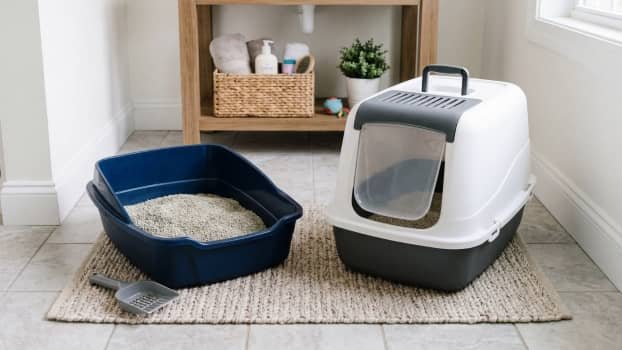
An open litter box compared with a closed litter box with a lid.
A closed litter box is a litter tray with a hood or lid over the top. You’ll also see it called a covered, enclosed or hooded litter box. They all mean the same thing: the litter sits inside an enclosure with an opening for your cat.
Most have a base tray, a removable hood, an entry opening or flap door, and sometimes vents or a carbon filter.
Closed vs Open Litter Box at a Glance
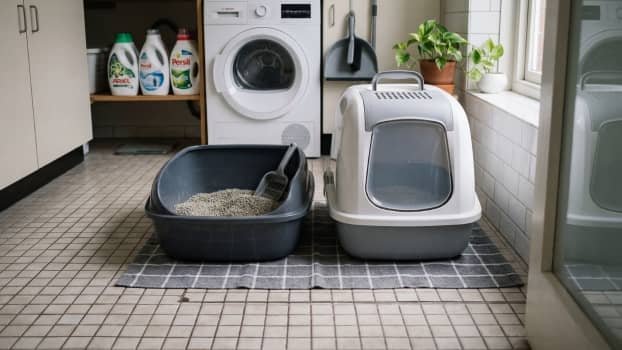
Open litter boxes provide more visibility, while closed litter boxes help contain litter and odor.
| Feature | Closed Litter Box | Open Litter Box |
|---|---|---|
| Litter scatter | Walls and lid keep most of it inside | More litter escapes over the sides |
| Odor | Held inside the box, so scooping matters more | Spreads into the room but doesn’t build up inside |
| Cat comfort | More privacy, less room and visibility | More space and a clear view |
| Cleaning | May need to lift the lid to scoop | Quick and easy to reach |
Where a Closed Litter Box Helps
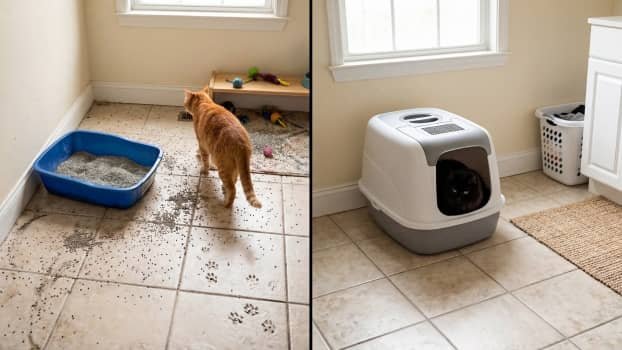
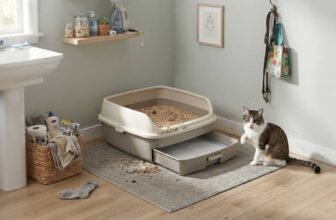
Open litter boxes often allow litter to scatter onto the surrounding floor.
Less litter on the floor. Cats dig hard when covering their waste. With a lid, most of that litter hits the walls and falls back in instead of landing on your floor.
A cleaner look. The box and its contents are out of sight, which matters in small apartments or when the box sits in a living space.
Privacy. Some cats feel more secure with walls around them, especially if the box is somewhere busy.
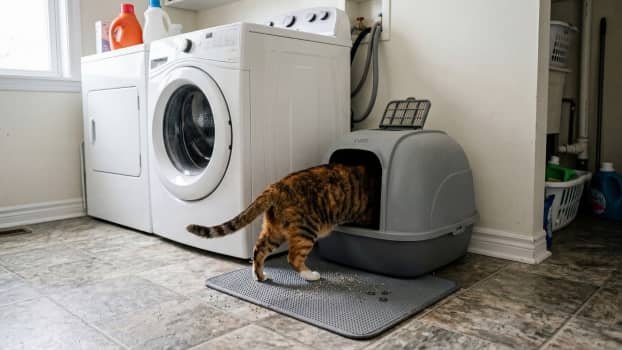
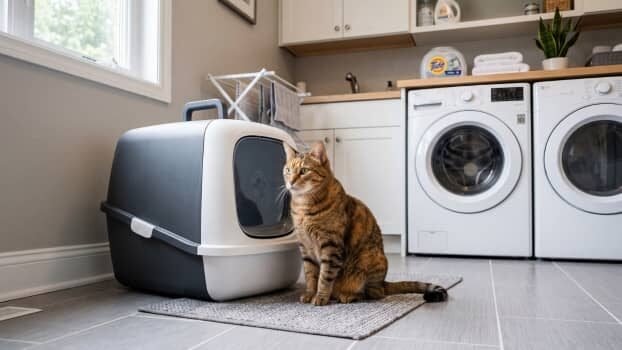
A closed litter box gives cats a more private place to use the litter box.
Where a Closed Litter Box Falls Short
It can feel cramped. The hood takes up room, so many covered boxes are smaller inside than they look. AAHA recommends a box at least 1.5 times your cat’s length from nose to tail. Larger cats often need an extra-large covered model.
Odor stays inside. The lid keeps smell out of the room, but it also holds it in where your cat is standing. A box can smell fine to you and much worse to your cat, so daily scooping matters more with a lid.
You see less of what’s in the box. With the lid on, it’s easier to miss changes in how much or how often your cat is going. Glance inside when you scoop, and mention any sudden change to your vet. If your cat starts lying in the box instead of just using it, our guide on why a cat lays in the litter box explains when to call a vet.
Some cats are less comfortable inside. Some cats may feel less comfortable in a covered box, especially in multi-cat homes where they can’t easily see another cat approaching.
Types of Closed Litter Boxes
Hooded litter boxes
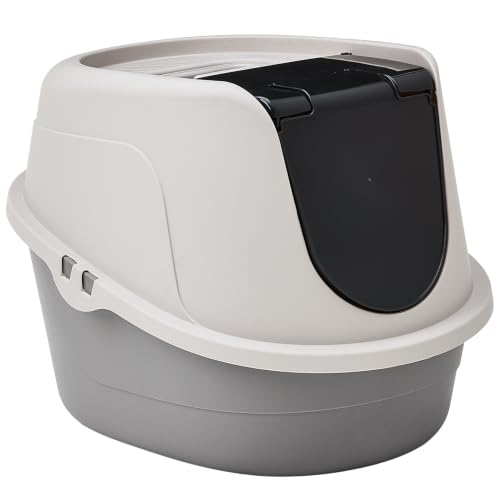
The most common type: a plastic hood that clips onto a base, with a front opening. They feel familiar to most cats, so they’re the easiest place to start. The Amazon Basics No-Mess Hooded Enclosed Litter Box has a high back wall that one reviewer credits with solving a cat’s back-spraying problem, and owners report it working for everything from a mother cat with kittens to a Maine Coon. See our best covered litter box picks for more options.
Top-entry litter boxes
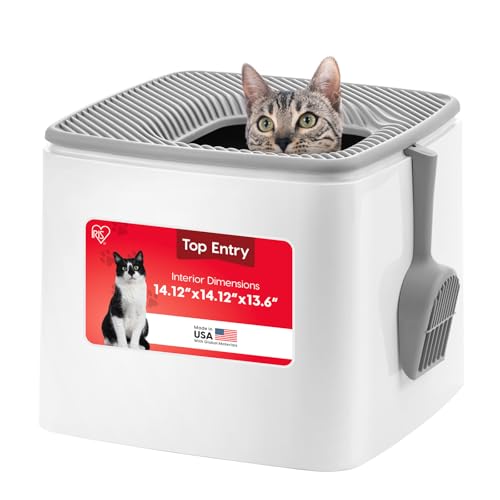
Your cat jumps onto the lid and climbs down inside. When they leave, the textured lid catches litter from their paws. This style can help with tracking and can make the litter harder for dogs to reach, but it may not suit cats that have difficulty jumping or climbing, including some senior or mobility-limited cats. The IRIS USA Top-Entry Square Litter Box has a grooved lid that reviewers credit with catching nearly all the litter on their cats’ paws. Our best top entry cat litter box guide covers more.
Stainless steel enclosed boxes
If odor inside the box is the worry, the material matters. Stainless steel doesn’t absorb odor the way older plastic can. The Marchul Enclosed Stainless Steel Litter Box is one example. One reviewer said they went from scooping daily to once or twice a week after switching, though daily scooping is still the better routine for keeping a covered box fresh.

Furniture-style enclosures
These hide a regular litter box inside a cabinet or bench, so it looks like furniture. See our guide to litter box furniture.
Enclosed automatic boxes
Many self-cleaning boxes are fully enclosed and move waste into a sealed drawer. Our best automatic litter box guide compares them.
How to Switch Your Cat to a Closed Litter Box
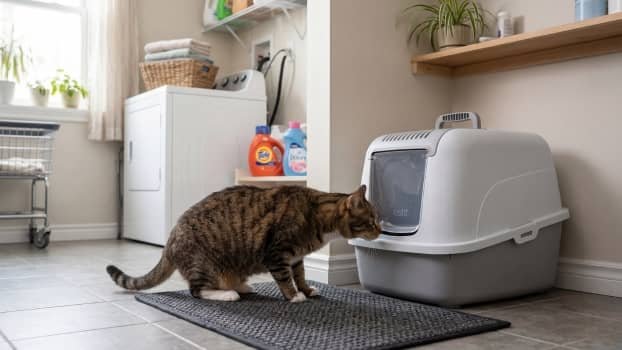
Cats may take time to investigate and adjust to a new closed litter box.
Cats like routine, so a sudden switch can lead to accidents. Go in stages:
- Place the new box next to the old one.
- Start with the lid off until your cat is using the box comfortably.
- Add the lid but leave any flap door off or propped open.
- Close the door once your cat is using the box comfortably with the lid on.
Keep the same litter and location while you do this. If your cat resists, slow down.
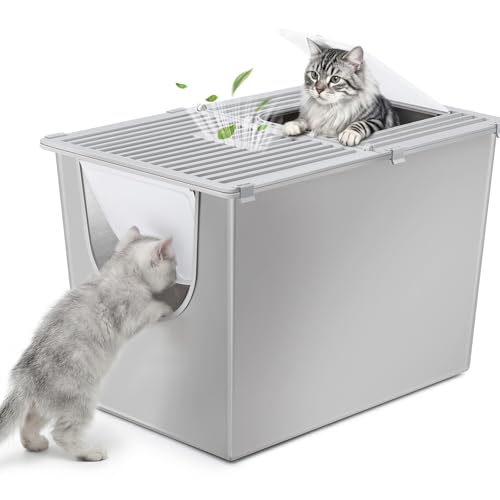
A box that converts between styles makes this easier. The Yangbaga Covered Cat Litter Box switches between fully enclosed, semi-open and fully open, so you can take the lid on and off as your cat adjusts.
Setup Tips That Make a Covered Box Work
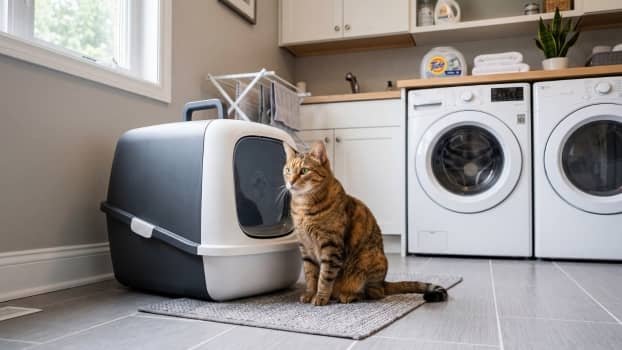
A closed litter box helps contain litter scatter and gives cats more privacy.
Put it somewhere quiet, away from busy walkways and noisy appliances. Scoop at least daily, since the lid holds odor in. Use enough litter for your cat to dig and cover comfortably, following the litter manufacturer’s directions. In multi-cat homes, use enough boxes. See how many litter boxes per cat you need.
Frequently Asked Questions
Are closed litter boxes better for odor?
They keep odor out of the room, but not out of the box. Odor control still depends mostly on your litter and how often you scoop. Our best cat litter for odor control guide covers litters that hold up well in covered boxes.
Do cats like closed litter boxes?
Some do and some don’t. Cats who like privacy often take to them well, while cats who want to see around them may avoid them. Preference varies from cat to cat.
Is a closed litter box okay for kittens?
It can be, as long as the entrance is easy for the kitten to reach and the box is roomy enough. Some kittens may prefer an open box, so if you’re unsure, offer both and let your kitten show you which one they use comfortably.
How often should you clean a closed litter box?
Scoop at least once a day, and empty and wash the whole box every few weeks, depending on how much it’s used.