Disclaimer: This post may contain affiliate links. As an Amazon Associate, we earn from qualifying purchases.
Last updated on October 1, 2026
A stainless steel litter box is the upgrade many people consider when a plastic box keeps smelling even after cleaning. Plastic can become scratched over time, and those worn surfaces can be harder to clean completely.
Quick Answer:
Yes, a stainless steel litter box can control lingering odor better than a worn plastic one, because stainless steel is non-porous and resists scratching better than plastic. It also lasts a long time, but it comes in fewer designs and doesn’t fix every litter box problem.
If odor is still a problem, you can also read this guide on litter box odor solutions to fix the root cause.
A few popular stainless steel litter boxes to look at:
- EGMEHOAD XXL: an open stainless pan that one owner praised for having no seams or divots inside.
- WoofiGo High Sided: a stainless pan inside tall plastic walls, with an open top.
- AIPERRO High Sided: a stainless pan with 9-inch walls that fit on top. Owners say it contains litter and spray well, though some wish the sides were higher. It comes with a scoop.
This guide walks through the pros, cons, and practical things to know about a stainless steel litter box, so you can decide if switching from plastic makes sense.
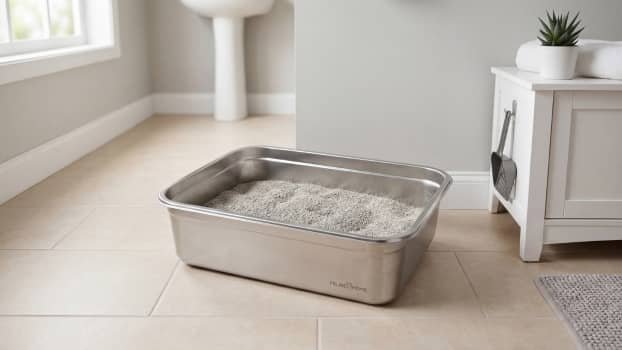
A stainless steel litter box can help reduce odor and make litter box cleaning easier.
Why Many Cat Owners Start Looking for a Stainless Steel Litter Box
Most setups start with a basic plastic litter box. It’s easy to find and works well in the beginning.
The first issue is usually odor. Even with regular scooping and cleaning, some boxes start to smell over time. The surface looks clean, but the smell never fully goes away.
Scratches are a big part of that. Cats dig and cover their waste every time they use the box, and over time those movements leave small grooves in the plastic. Those grooves hold onto residue and odor, which is when people start looking at a stainless steel litter box.
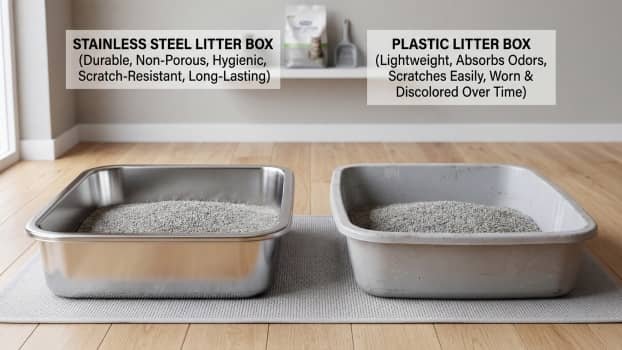
Stainless steel litter boxes have a smooth non-porous surface, while plastic litter boxes can absorb odor and develop scratches over time.
If cleaning still feels like a chore, this guide on the best way to clean a litter box can help simplify the routine.
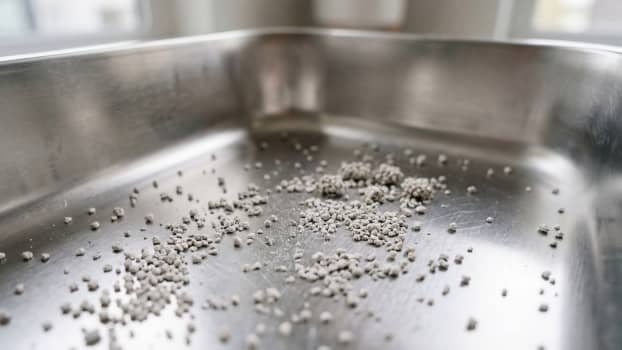
The smooth non-porous surface of a stainless steel litter box helps prevent waste and odor from sticking.
Pros of a Stainless Steel Litter Box
The biggest advantage is how well it holds up over time. Plastic boxes eventually wear down, while stainless steel tends to stay in good condition for years with normal use.
One example is the EGMEHOAD XXL stainless steel litter box. One owner fostering kittens alongside her own cats specifically praised it for having no stamps, seams or divots inside where litter could get trapped.
Better Odor Control
Because stainless steel is non-porous, it doesn’t absorb moisture or odor. Smells stay in the litter instead of lingering in the box itself. The guide to the best cat litter for odor control covers which litters pair best with stainless steel.
Long-Term Durability
Stainless steel is much harder than plastic, so it resists scratches, stains, and warping. With normal use, it can last for many years without needing replacement.
Easier Cleaning
Waste and litter dust rinse off quickly from the smooth surface, which makes routine cleaning faster and simpler.
Cons of Stainless Steel Litter Boxes
A stainless steel litter box has real advantages, but it isn’t always the right choice. These are the downsides worth knowing before you switch.
Fewer Design Options
Plastic litter boxes come in almost every style: covered, corner, top-entry, and high-sided designs.
Stainless steel options are improving, but the variety is still smaller. Many models are simple open pans, which may not work as well for cats that kick litter or prefer more privacy.
Some High-Sided Designs Can Leak at the Joint
Some high-sided stainless boxes use a steel pan with separate walls attached above it. That creates a joint where the pieces meet, and one owner in our research reported urine leaking through the tray seams.
If seams worry you, look for a pan described as one piece, with no stamps, seams or divots inside.
Walls Are Often Lower Than the Tallest Plastic Boxes
Among the open boxes we’ve researched, the tallest stainless models have lower walls than the tallest plastic models. For a cat that pees standing up, wall height can matter more than material. Our high wall litter box guide compares heights.
Noise Can Be Slightly Different
When a cat digs or scratches in a metal box, it can create a faint scraping noise that plastic boxes don’t make.
For most cats this isn’t an issue, but it can be noticeable in very quiet homes.
Practical Tips for Switching Litter Boxes
If you decide to try a stainless steel litter box, a gradual transition makes the change easier for your cat.
Keep the Litter the Same
Cats are usually more sensitive to litter changes than the box itself. Changing the box and the litter at the same time can confuse them, so switch one thing at a time.
Place the New Box Next to the Old One
Let your cat explore the new box at their own pace. Keeping both boxes available for a few days makes the adjustment smoother.
Choose the Right Size
Cats prefer litter boxes that are large enough to turn around and dig comfortably. A box that’s too small can lead to litter box avoidance.
If you have a larger cat, you may also want to look at some of the best extra large litter boxes designed to give cats more space.
Maintain the Same Cleaning Routine
Cats respond well to consistency. Keeping the same scooping and cleaning schedule helps them adapt to the new box more quickly.
Features to Look for in a Stainless Steel Litter Box
The material gives you durability and odor resistance, but the size and design of the box still matter.
High Sides
Cats often dig and kick litter while covering their waste. A litter box with higher sides helps keep litter contained and reduces how much ends up on the floor.
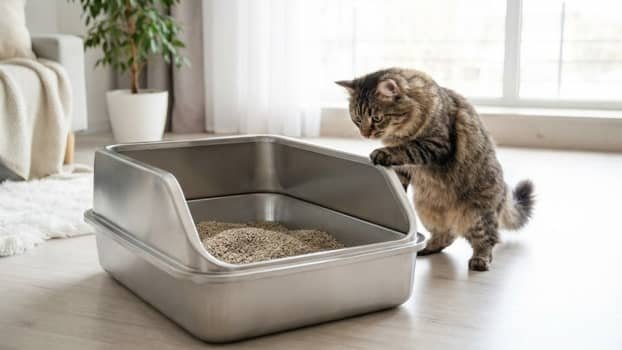
High-sided stainless steel litter boxes help contain litter for cats that dig or kick.
High-sided boxes are especially helpful for enthusiastic diggers, cats that kick litter out of the box, and homes where litter often ends up on the floor.
If your cat tends to scatter litter, a high-sided stainless steel litter box can make a noticeable difference. One example is the WoofiGo stainless steel high sided litter box, an open-top stainless pan inside tall plastic walls. For a broader look at keeping litter from spreading, this guide on litter tracking solutions covers box type, mat, and litter choices together.
Cats also prefer enough space to turn around and dig comfortably, especially bigger breeds and multi-cat homes.
Smooth Rounded Corners
Rounded corners make a litter box easier to clean. Waste and litter are less likely to collect in tight seams, which makes rinsing and wiping simpler.
Anti-Slip Base
Some models include rubber feet or anti-slip pads. These help prevent the box from sliding on tile, hardwood, or other smooth floors.
Optional High-Sided Shields or Lids
Some designs include detachable side guards or lids that help contain litter and provide extra privacy.
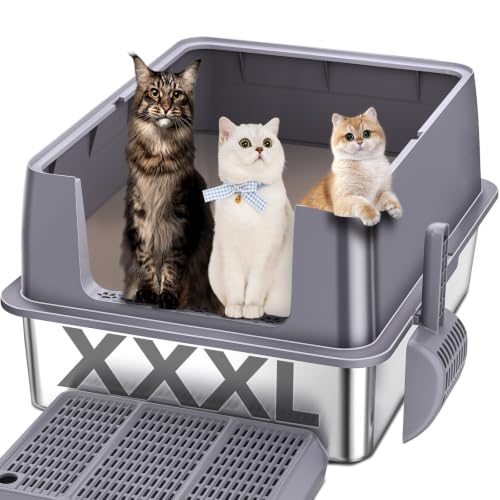
Where to Compare Stainless Steel Litter Boxes
For full reviews and comparisons, see our stainless steel cat litter box reviews.
Frequently Asked Questions
Do stainless steel litter boxes smell less than plastic ones?
Often, yes. Stainless steel doesn’t absorb moisture or odor the way worn plastic can, so smells are less likely to linger in the box itself.
Are stainless steel litter boxes safe for cats?
A well-made stainless steel litter box can be suitable for cats. Look for smooth, rounded edges and enough room for your cat to turn comfortably.
Do stainless steel litter boxes rust?
Most are made from rust-resistant stainless steel, but rust-resistant isn’t the same as rust-proof. Drying the box after washing helps.
Can you use regular cat litter in a stainless steel litter box?
Yes. Stainless steel works with clumping clay, plant-based and other common litters. Some owners say clumps release more easily from the smooth metal than from scratched plastic.
Do cats mind using a stainless steel litter box?
Most cats adjust quickly, especially if the litter stays the same. A short transition period can help if your cat is sensitive to changes.
Are stainless steel litter boxes worth it?
They can be if your plastic box keeps holding odor even after cleaning or has become heavily scratched. If your main problem is tracking, box size or wall height, changing the material won’t solve it.