Litter Tracking Solutions That Actually Keep Floors Clean

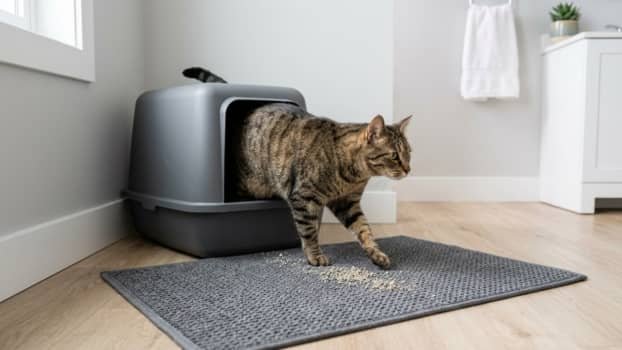
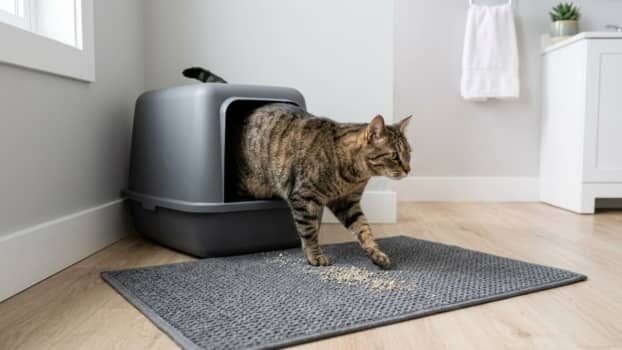
Cat stepping out of litter box onto mat as part of litter tracking solutions

Disclaimer: This post may contain affiliate links. As an Amazon Associate, we earn from qualifying purchases.

Litter ends up everywhere once it starts sticking to paws. It shows up on the floor, in the hallway, and somehow even in rooms far from the litter box. At first, it is just a few pieces, but it quickly turns into something you notice every day.

The most effective litter tracking solutions are using a large litter mat, switching to low tracking litter, and choosing a high-sided or top-entry litter box.

Litter tracking comes down to two things. How easily litter sticks to your cat’s paws, and how far it gets carried after they leave the box. Fine, lightweight litter tends to cling and spread, especially when a cat kicks or jumps out quickly.

The good news is that you do not need a complicated setup to fix it. A few simple changes, like using a better mat, adjusting the box design, or switching litter type, can reduce most of the mess without making your cat uncomfortable.

Cat stepping out of litter box onto mat as part of litter tracking solutions

A large litter mat helps catch litter from your cat’s paws before it spreads across the floor

Why Litter Tracking Happens

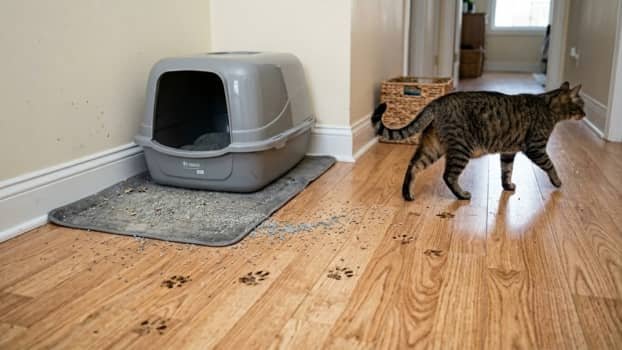
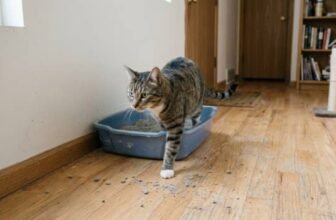
Cat walking away from litter box leaving litter scattered on floor

Without a mat or proper setup, litter can easily spread across the floor as your cat walks away

Litter tracking starts inside the box, not outside of it. The mess you see on the floor is just the result of what happens during digging, covering, and stepping out.

The biggest factor is how litter interacts with your cat’s paws. Fine, lightweight litter settles into the grooves of the paw pads and between the toes. Once it sticks there, it gets carried out of the box with every step.

Some cats also kick litter more aggressively than others. During the digging and burying phase, litter gets pushed toward the edges of the box. If the sides are low, it goes straight onto the floor before the cat even steps out.

Speed plays a role too. A cat that walks calmly out of the box drops most of the litter nearby. A cat that jumps or bolts spreads it much farther, sometimes several feet past the box.

Long hair makes things worse. Fur around the paws and back legs holds onto litter the same way fabric holds onto sand. Instead of falling off right away, it gets tracked across multiple rooms.

Even the setup around the box matters. When the litter box opens directly into a hallway or open space, there is nothing to slow things down. Litter just keeps traveling until it falls off naturally.

Once you look at it this way, the problem becomes easier to fix. You are not just cleaning up litter. You are stopping it from sticking, containing how far it can spread, and giving it a place to fall off before it reaches the rest of your home.

Features That Actually Stop Litter Tracking

Most litter tracking solutions work by fixing one of three problems. Litter sticks to paws, litter gets thrown out of the box, or litter spreads too far after the cat leaves.

Once you understand that, it becomes much easier to choose the right setup.

1. Surfaces That Pull Litter Off Paws

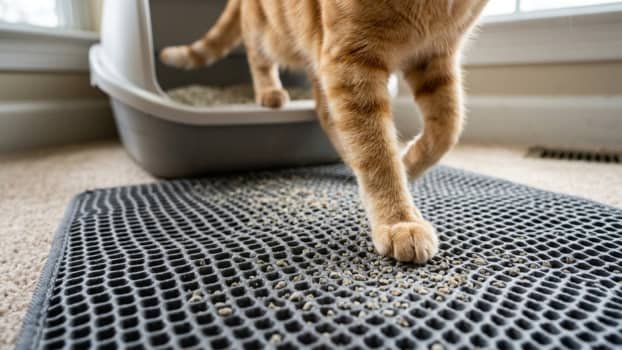
Close up of cat paw stepping on litter mat trapping litter particles

A textured litter mat pulls litter off your cat’s paws before it spreads across the floor

This is where litter mats make the biggest difference. The goal is to give loose litter a place to fall off before your cat reaches the rest of the house.

Textured mats use grooves, coils, or soft fibers to catch litter as your cat walks across them. Each step helps pull particles off the paws, especially if the surface has enough grip without feeling uncomfortable.

Size matters more than most setups account for. A small mat only catches what drops right away, while a larger mat creates a proper landing area where litter has time to fall off naturally.

One example is the GORILLA GRIP Cat Litter Box Mat, which uses thick coil mesh and deep grooves to grab litter as your cat steps across it. The larger surface also helps keep more of the mess contained in one spot instead of spreading across the floor.

Softer materials can also improve results. Cats are more likely to walk fully across a mat that feels comfortable, which gives it more chances to do its job.

2. Designs That Contain the Mess Inside the Box

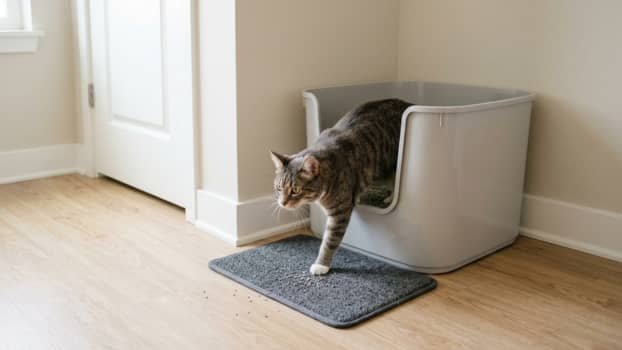
Cat stepping out of high sided litter box onto mat to reduce litter tracking

A high sided litter box helps keep litter inside while a mat catches anything that sticks to your cat’s paws

A lot of litter never makes it to the mat because it gets kicked out during digging.

High sided litter boxes help by keeping that mess contained. Instead of flying over the edge, litter hits the walls and falls back inside. This makes a big difference for cats that dig aggressively or push litter toward the sides.

Enclosed and top entry designs go a step further. They force the cat to move through a more controlled exit, which reduces how much litter escapes all at once. Some designs even include a textured surface or filter area where litter can fall off before the cat fully steps out.

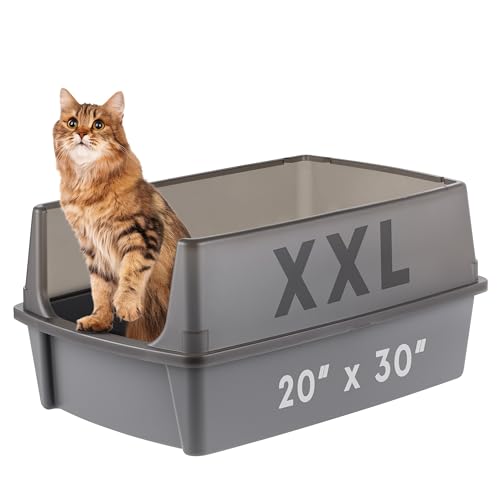
One example is the AIPERRO Stainless Steel Litter Box, which combines high sides with an enclosed lid and a sloped exit area that helps keep litter inside the box. The added structure limits how far litter can be kicked or carried out.

These types of designs work especially well for cats that tend to dig hard or jump out quickly after using the box.

3. Litter That Does Not Stick Easily

Some litter tracks more simply because it is designed that way.

Fine, dusty litter tends to cling to paws and fur, especially after digging. Once it sticks, it gets carried out of the box and spread across the floor with each step.

Larger or heavier particles are less likely to stick. They fall off more easily, which means less litter leaves the box in the first place. This includes pellet litters, as well as certain clay litters that use a slightly larger grain size.

One example is Dr. Elsey’s Clean Tracks Clumping Clay Cat Litter, which uses a medium grain texture designed to reduce how much litter clings to paws. It still clumps like a traditional clay litter, but tracks less than finer varieties.

Switching litter can make a noticeable difference on its own, especially if you are currently using a very fine or dusty formula. The main tradeoff is texture, so gradual changes usually work better if your cat is picky.

Some cats also track more simply because the litter box feels too small. When there is not enough space, litter gets pushed toward the edges more easily during digging. You can see a few better options in this guide to extra large litter boxes for big cats.

4. Layout That Limits How Far Litter Travels

Where you place the litter box affects how far litter spreads.

If the box opens directly into a wide space, litter has nothing to slow it down. It gets carried farther with each step.

Placing the box in a more enclosed area creates distance between the box and the rest of the home. Even a short walkway or corner setup gives litter more chances to fall off before your cat reaches clean floors.

If you also have a dog in the house, placement becomes even more important. In some cases, you may need a setup that blocks access completely. You can see how that works in this guide to dog proof litter box solutions.

Pairing this with a large mat makes the effect much stronger especially when combined with proper litter box placement.

Each of these features solves a different part of the problem. When you combine them, the results are much more noticeable.

Best Litter Tracking Solutions

At this point, the goal is not just to understand the problem. It is to set up your litter area in a way that actually keeps the mess contained day to day.

The most effective approach is combining a few simple changes instead of relying on just one fix.

1. The Low Effort Upgrade

If you want the quickest improvement with minimal changes, start with a larger litter mat and better placement.

A wide mat placed directly outside the box gives litter a place to fall off before it spreads. Pair that with a slightly more enclosed location, like a corner or along a wall, and you immediately reduce how far litter travels.

A larger mat makes a noticeable difference here. One example is the GORILLA GRIP Cat Litter Box Mat, which uses deep grooves and a wide surface area to trap litter as your cat walks across it.

This setup works well if your current box and litter are otherwise fine, but you are dealing with constant cleanup around the area.

2. The Contained Setup

If litter is getting kicked out of the box itself, the focus should be on containment.

Switching to a high sided or enclosed litter box keeps more of the mess inside during digging. When paired with a mat, it creates a two step system where litter is first contained, then removed from the paws before reaching the floor.

A more enclosed design can make this much easier to manage. One example is the AIPERRO Stainless Steel Litter Box, which uses high sides and a covered structure to reduce how much litter gets kicked out during use.

This setup makes a noticeable difference for cats that dig aggressively or tend to scatter litter while covering.

3. The Low Tracking Combination

If litter is sticking to paws and showing up throughout the house, the issue is usually the litter itself.

Switching to a low tracking formula, especially a medium grain clay or pellet style litter, reduces how much gets carried out in the first place. Adding a mat reinforces this by catching anything that does make it out.

A medium grain option can make a noticeable difference here. One example is Dr. Elsey’s Clean Tracks Clumping Clay Cat Litter, which is designed to reduce how much litter clings to paws compared to finer clay formulas while still forming solid clumps.

This combination works well when you are seeing litter trails across multiple rooms rather than just around the box.

4. The Full Setup That Solves Most Tracking

For the best results, combine all three approaches into one setup.

Use a high sided or enclosed litter box to control scatter. Place a large textured mat outside the exit. Choose a litter that does not cling easily to paws. Then position the box so your cat has to walk across the mat before reaching open floor.

This creates a simple system where litter is contained, loosened from the paws, and dropped before it can spread.

It does not eliminate tracking completely, but it reduces it enough that daily cleanup becomes much easier.

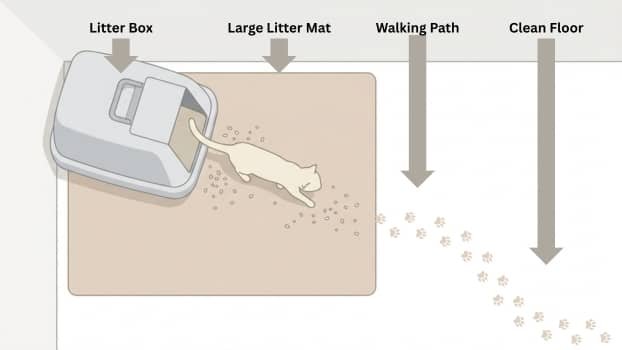
Litter box setup with large litter mat and walking path to reduce litter tracking on floors

A simple litter box setup using a large mat to catch litter before it spreads

Common Litter Tracking Mistakes

Even with the right products, a few small setup mistakes can make litter tracking much worse. Fixing these usually makes a bigger difference than adding more gear.

Using a Mat That Is Too Small

A small mat only catches litter that drops immediately outside the box.

The problem is that most cats step or jump past that first area before litter falls off. That means anything beyond the mat ends up on the floor anyway.

A larger mat gives litter more time to fall off as your cat walks across it, which is why size matters more than most people expect.

Placing the Litter Box in an Open Area

When a litter box opens directly into a large room or hallway, litter has nothing to slow it down.

Each step spreads it farther across the floor, especially if your cat walks quickly after using the box.

Moving the box into a corner or along a wall creates a more controlled path, which helps keep the mess contained to one area.

Overfilling the Litter Box

Adding too much litter makes it easier for cats to kick it over the edges during digging.

Even a high sided box will struggle to keep it in the box if the litter level is too close to the top.

Keeping the litter at a moderate depth reduces how much gets pushed out during use.

Ignoring Long Hair Around the Paws

Long haired cats tend to carry more litter because it gets caught in the fur between their toes and along their back legs.

If that fur is not trimmed occasionally, litter stays stuck longer and gets tracked into other rooms.

A quick trim around the paws can make a noticeable difference.

Using Very Fine or Dusty Litter

Fine litter sticks more easily to paws, especially after digging or when there is moisture in the box.

Once it sticks, it travels farther before falling off.

Switching to a slightly larger grain or low tracking formula reduces how much gets carried out in the first place.

Expecting One Fix to Solve Everything

Litter tracking usually is not caused by just one issue.

Using only a mat or only a different litter often helps a little, but not enough to fully solve the problem.

The biggest improvements come from combining a few simple changes, like better placement, a larger mat, and a litter that does not stick as easily.

Comparison showing litter tracking with a small mat versus a proper setup with a large litter mat

A small mat lets litter spread, while a larger mat keeps it contained near the box

Frequently Asked Questions About Litter Tracking Solutions

How do I stop litter from sticking to my cat’s paws?

Switching to a low tracking litter makes the biggest difference. Medium grain clay or pellet litter is less likely to stick compared to fine, dusty formulas.

Adding a large litter mat also helps by giving loose litter a place to fall off before your cat reaches the rest of the floor.

Do litter mats actually work?

Yes, but size and placement matter.

A small mat will not catch much because cats often step past it before litter falls off. A larger mat placed directly outside the litter box gives litter more time to drop off as your cat walks across it.

What type of litter tracks the least?

Heavier and larger particle litters track less.

Pellet litters usually track the least, followed by medium grain clay litters. Fine clay litter tends to track the most because it sticks easily to paws.

Why does my cat track litter everywhere?

It usually comes down to a combination of factors.

Fine litter clings to paws, low sided boxes let litter escape, and open placement allows it to spread further. Once litter leaves the box, it continues to travel until it falls off naturally.

Is a top entry litter box better for tracking?

Top entry boxes can reduce tracking because they force the cat to step onto the lid before exiting.

That surface helps remove some litter before the cat reaches the floor. They work well for active cats, but may not be suitable for kittens or older cats that need easier access.

Final Thoughts

Litter tracking is frustrating because it feels like it spreads everywhere no matter how often you clean.

The difference comes from changing how the litter leaves the box in the first place. A larger mat, better box design, and the right litter type all work together to keep the mess contained.

You do not need a perfect setup to see results. Small changes like a better mat or a different litter can make a noticeable difference right away.

Perfect Litter Box
Logo