Types of Cat Litter Pros and Cons (Which One Fixes Your Problem)

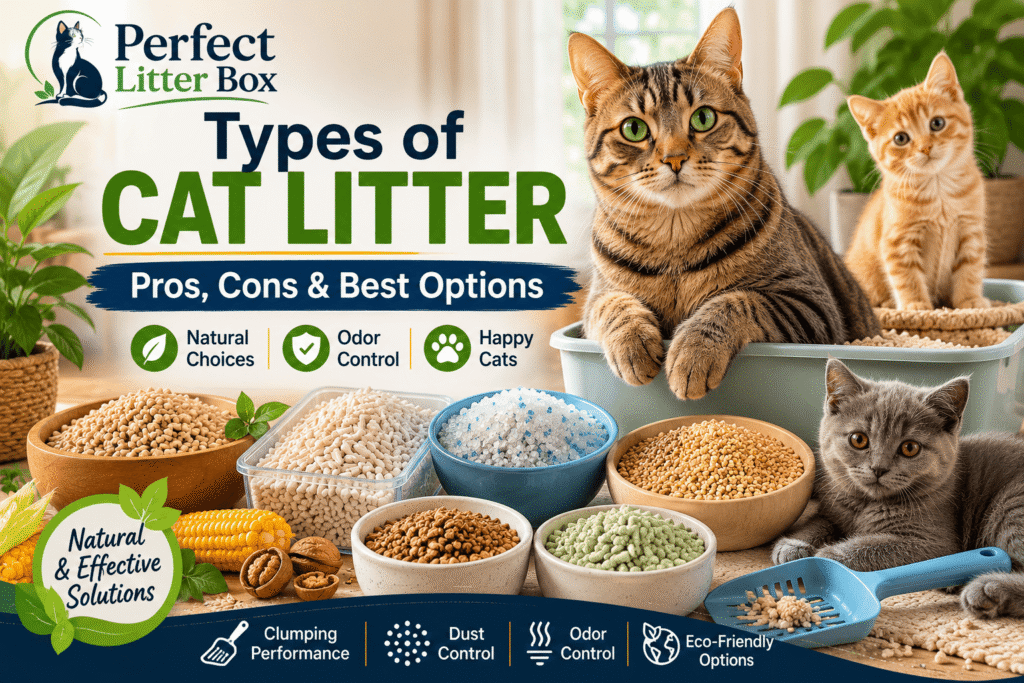
types of cat litter pros and cons comparison with cats and different litter types

Disclaimer: This post may contain affiliate links. As an Amazon Associate, we earn from qualifying purchases.

You usually don’t think about your cat litter until it starts causing problems. That might be a smell that doesn’t go away, dust building up around the box, or litter getting tracked into places it shouldn’t be.

The challenge is that every type of cat litter solves one issue but creates another. Some control odor well but make a mess. Others stay cleaner, but your cat refuses to use them.

This guide breaks down the types of cat litter pros and cons so you can match the right option to the problem you are trying to fix.

Quick Answer

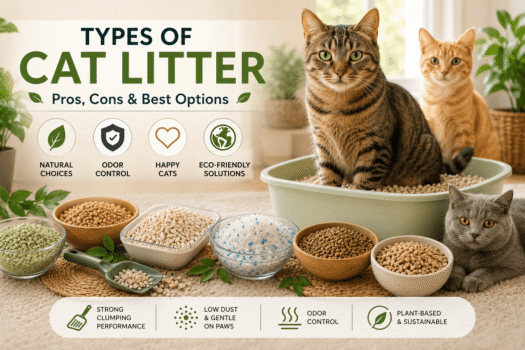
The main types of cat litter are clay, crystal, pine, paper, corn or wheat, walnut, and tofu.

Clay litter is easy to scoop and widely used, but it tends to track and create dust. Crystal litter absorbs odor well and lasts longer, though some cats dislike the texture. Pellet litters like pine and paper reduce tracking and dust, but they do not control odor as strongly. Natural clumping options like corn, walnut, and tofu sit in the middle and vary depending on the brand.

The best choice depends on what you are trying to fix, whether that is smell, tracking, dust, or how often you want to clean the box.

The Cat Litter Comparison Matrix

Litter Type Odor Control Tracking
Clumping Clay High High
Crystal Very High Low to Medium
Pine Pellets Medium Low
Paper Pellets Low Very Low
Corn or Wheat Medium Medium to High
Walnut High Low to Medium
Tofu Medium to High Low

Why Choosing the Right Litter Matters

Litter problems rarely stay contained to the box.

They turn into smell that spreads through the room, dust on nearby surfaces, and constant cleanup. In some cases, the cat avoids the box completely.

Texture plays a big role. Fine, sand-like litter feels natural to cats, which is why clay is so common. That same texture is also what leads to tracking and dust.

Switching litter types often fixes problems that seem unrelated at first. Odor issues usually come from poor absorption, while tracking comes down to particle size and weight.

Understanding what each type is like to use every day makes it much easier to choose the right one.

The Most Common Types of Cat Litter (Pros, Cons, and Real Use)

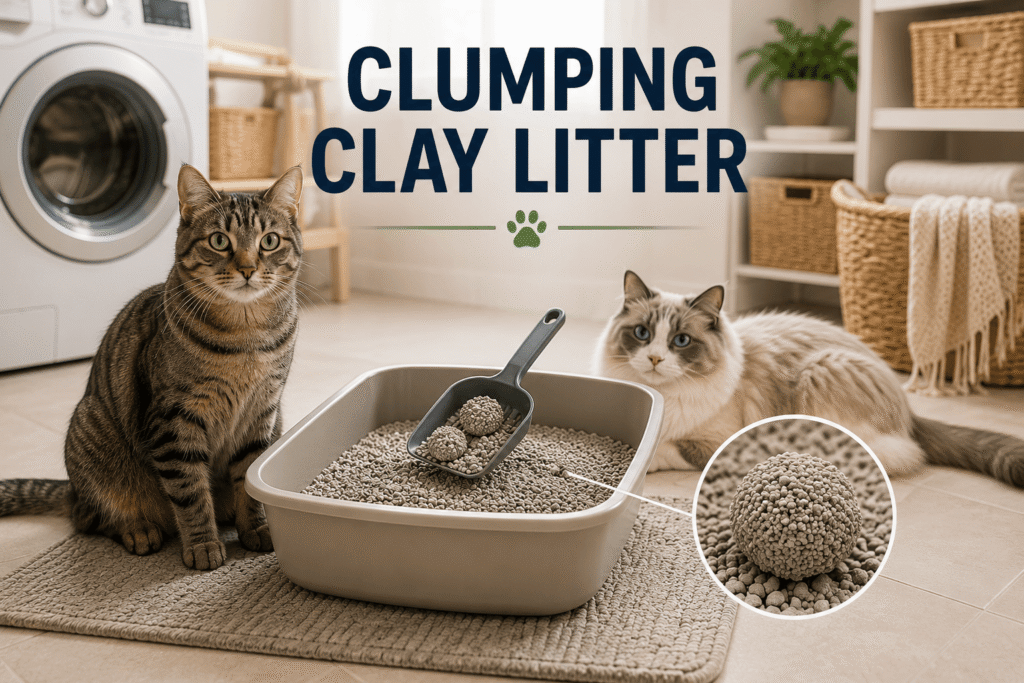
Clumping Clay Litter

clumping clay cat litter comparison Dr Elsey's Ultra vs Arm and Hammer Clump and Seal with cats

Clumping clay is the standard most people start with. It forms solid clumps when wet, which makes daily scooping simple and keeps the rest of the litter usable.

A well-known example is Dr. Elsey’s Ultra Unscented Clumping Clay Litter, which is widely used because it forms hard clumps and controls odor consistently. Another common option is ARM & HAMMER Clump & Seal SLIDE, which is designed to prevent litter from sticking to the box.

Pros
Strong clumping makes cleanup easy
Good odor control when scooped daily
Familiar texture that most cats accept quickly

Cons
Tracks easily due to fine particles
Can create dust, especially when pouring or scooping
Heavy to lift and replace

What it’s like to use daily

Clumping clay is easy to manage at first. Scooping is quick, and the box stays relatively clean if you stay on top of it.

The downside shows up over time. Dust settles around the box, and small particles stick to paws and spread across the floor. In multi-cat setups, odor can build faster than expected if the litter is not refreshed often.

This makes it a poor choice if tracking and dust are your main concerns.

Best for
Simple daily scooping and cats that prefer a soft, sand-like texture

Not ideal for
Homes where tracking and dust are a constant frustration

Check Price on Amazon

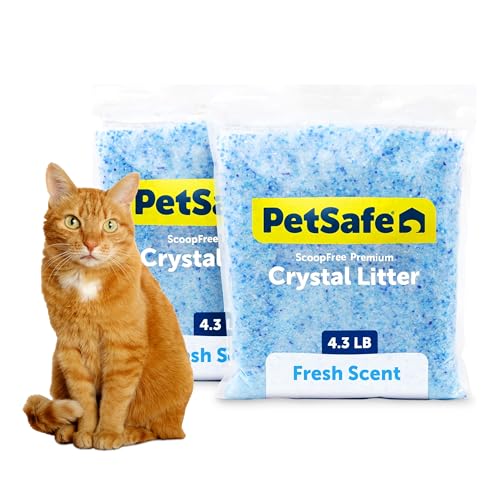
Crystal (Silica) Litter

crystal cat litter PetSafe ScoopFree with cats low dust odor control example

Crystal litter works differently. Instead of forming clumps, it absorbs moisture and dries out waste. This is why it often lasts longer than clay.

A good example is PetSafe ScoopFree Crystal Litter, which is designed to absorb urine and reduce odor without daily clumping.

Pros
Strong odor control, especially in single-cat setups
Lower dust compared to many clay litters
Lasts longer before needing a full change

Cons
Does not clump, so waste stays in the box
Texture can feel rough or unusual to some cats
Higher upfront cost

What it’s like to use daily

Crystal litter feels low maintenance at first because there is less scooping. Liquid is absorbed, and the box looks cleaner longer.

Over time, moisture builds up in the crystals. If the litter is not stirred or replaced, odor can return even though the box still looks clean. In multi-cat homes, it usually needs more frequent changes than expected.

This makes it a better fit for single-cat setups or smaller spaces where odor control is the priority.

Best for
Reducing odor in smaller spaces and cutting down on daily scooping

Not ideal for
Cats that are sensitive to texture or households with multiple cats

Check Price on Amazon

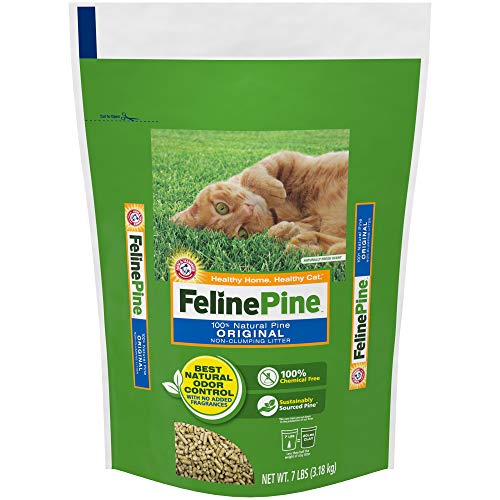
Pine Pellet Litter

pine pellet cat litter comparison feline pine and natures logic with cats low tracking

Pine litter comes in small compressed pellets made from wood. Instead of clumping, the pellets break down into sawdust when they absorb moisture.

A good example is Feline Pine Platinum Non-Clumping Cat Litter, which uses natural pine to absorb liquid and control odor. Another option is Nature’s Logic Pine Pellet Litter, which focuses on low dust and simple ingredients.

Pros
Very low tracking compared to fine litters
Low dust, especially during scooping
Natural odor control from the wood itself
Lightweight and easier to handle than clay

Cons
Does not clump, so cleaning is different
Some cats dislike the pellet texture
Needs a sifting setup or more frequent full changes

What it’s like to use daily

Pine pellets keep the area around the box much cleaner. You will notice less litter on the floor almost immediately.

Cleaning takes a different routine. Instead of scooping clumps, you remove solid waste and let the wet pellets break down. Over time, sawdust collects at the bottom and needs to be cleared out. If it is not removed regularly, it will hold moisture and start to smell.

This makes pine a strong option if tracking is your main problem, but less ideal if you want quick, simple scooping.

Best for
Reducing tracking and keeping floors clean

Not ideal for
Cats that prefer soft, sand-like litter or owners who want traditional scooping

Check Price on Amazon

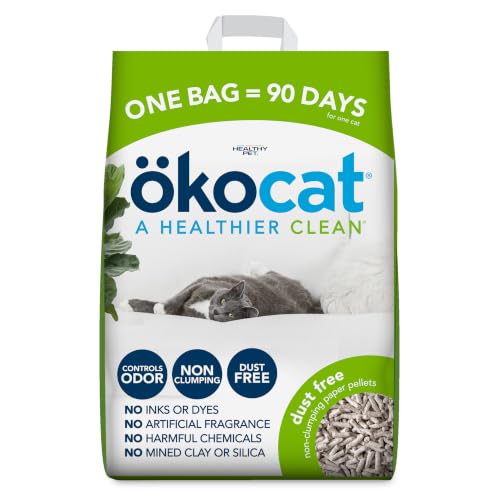
Paper Pellet Litter

paper pellet cat litter fresh news recycled paper with cats low dust gentle paws

Paper litter is made from recycled paper formed into soft pellets. It is often used when dust needs to be kept as low as possible.

A common example is Fresh News Recycled Paper Pellet Cat Litter, which is designed to be low dust and gentle on paws.

Pros
Very low dust, good for sensitive cats or owners
Minimal tracking due to larger pellet size
Soft texture compared to other pellet litters
Made from recycled materials

Cons
Weaker odor control compared to other types
Does not clump, so waste builds up faster
Needs frequent full litter changes

What it’s like to use daily

Paper litter is easy to manage in terms of mess. Very little ends up outside the box, and there is almost no dust in the air.

The tradeoff is odor control. Moisture builds up in the pellets, and the box can start to smell sooner if it is not changed regularly. It works best when you are willing to refresh the litter more often.

This makes it a good choice for low-dust setups, but not for strong odor control.

Best for
Low dust environments and post-surgery or sensitive cats

Not ideal for
Strong odor control or multi-cat households

Check Price on Amazon

Corn and Wheat Litter

corn cob cat litter natures miracle clumping with cats natural plant based litter

Corn and wheat litters are natural alternatives that usually clump, similar to clay, but are made from plant-based materials.

One example is Nature’s Miracle Clumping Corn Cob Litter, which forms clumps while using plant-based ingredients instead of clay.

Pros
Clumps well, similar to clay
Lighter weight than traditional litter
Often lower dust than cheaper clay options
Made from renewable materials

Cons
Can track more than expected
Odor control varies depending on the brand
Can break down faster in humid conditions

What it’s like to use daily

This type feels familiar if you are used to clumping clay. Scooping works the same way, and the box stays relatively clean with regular maintenance.

Over time, some versions soften slightly or lose structure, which can make the box feel less clean. Tracking is still noticeable, especially compared to pellet litters, and odor control is not always as strong as high-quality clay.

This makes it a good middle-ground option, but not ideal if you want to eliminate tracking.

Best for
A clumping option that is lighter and plant-based

Not ideal for
Homes trying to completely eliminate tracking

Check Price on Amazon

Walnut Litter

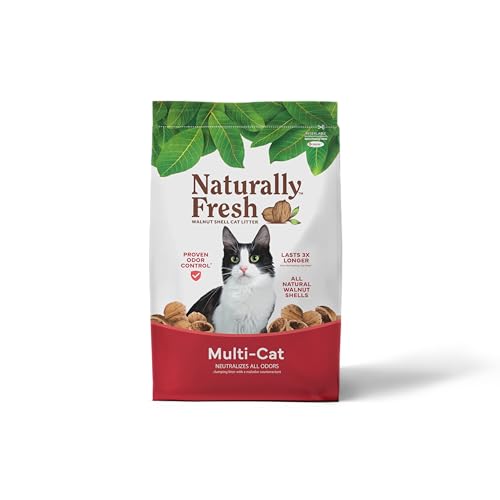
walnut cat litter naturally fresh multi cat with cats low dust odor control

Walnut litter is made from crushed walnut shells and works as a natural clumping option.

A strong example is Naturally Fresh Walnut Shell Cat Litter, which forms firm clumps and focuses on odor control without added fragrances.

Pros
Good odor control compared to many natural litters
Clumps fairly well
Lower dust than many clay litters
Less tracking than fine clay

Cons
Darker color can make it harder to see waste
Can still track, just less noticeable
Less common than other types

What it’s like to use daily

Walnut litter sits between clay and other natural options. It scoops well and keeps odor under control without feeling overly messy.

The darker color hides waste more than lighter litters, which some people prefer while others find less practical. Tracking is reduced compared to clay, but it is not completely eliminated.

This makes it a balanced option if you want better odor control without as much dust.

Best for
A balance between odor control and lower dust

Not ideal for
People who want very low tracking or very light-colored litter

Check Price on Amazon

Tofu Litter

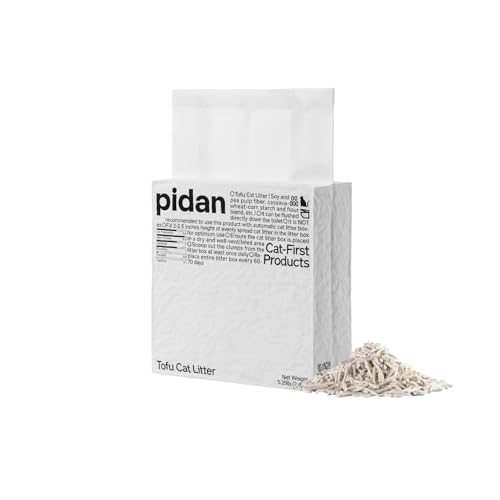
tofu cat litter pidan with cats low dust clumping plant based litter

Tofu litter is made from plant-based fibers and usually comes in small, lightweight pellets that clump when wet.

A popular example is pidan Tofu Cat Litter, which is designed to be low dust and form tight clumps.

Pros
Low dust compared to most litter types
Clumps well and is easy to scoop
Less tracking than fine clay
Lightweight and easier to handle

Cons
More expensive than basic clay
Some versions break apart faster over time
Not all cats accept the texture right away

What it’s like to use daily

Tofu litter feels cleaner to handle than most options. It produces very little dust, and clumps are usually easy to remove without breaking apart.

Over time, some versions can soften slightly, especially if the box is not cleaned often enough. Transitioning slowly is important since the texture is different from traditional litter.

This makes it a strong low-dust alternative to clay, but not the easiest switch for every cat.

Best for
Low dust setups with easy scooping

Not ideal for
Tight budgets or cats that resist new textures

Check Price on Amazon

Clumping vs Non-Clumping Litter

Clumping litter forms solid clumps when wet, which makes it easier to scoop and keep the box clean. Most clay, corn, walnut, and tofu litters fall into this category.

Non-clumping litter absorbs moisture but does not form clumps. Pine and paper litters work this way and require a different cleaning routine.

Clumping litter is usually easier to maintain day to day. Non-clumping litter can reduce tracking and dust but often needs more frequent full changes.

If you want simple cleanup, clumping is the better choice. If you are trying to reduce mess, non-clumping options can work better.

How to Choose the Right Litter Based on Your Problem

types of cat litter pros and cons how to choose the right litter for your needs

Most people are not comparing litter types for fun. They are trying to fix something that is already frustrating.

This is where choosing the right type becomes much easier.

If smell is the main problem

Go with crystal litter or a high-quality clumping clay.

Crystal litter absorbs moisture and dries out waste, which helps control odor longer between cleanings. Options like PetSafe ScoopFree Crystal Litter are designed for this.

Clumping clay is still a strong option if you scoop daily. A product like Dr. Elsey’s Ultra Clumping Litter keeps odor under control as long as waste is removed regularly.

Avoid paper litter here. It does not hold odor well once it becomes saturated.

If litter is all over your floor

Go with pine pellets, paper pellets, or tofu litter.

Pellet-based litters are larger and heavier, so they stay in the box much better. Pine options like Feline Pine reduce tracking almost immediately.

Tofu litter is a good middle ground. It still clumps but does not spread as easily as fine clay.

Clay and corn-based litters tend to track the most because the particles stick to paws and scatter easily.

If dust is bothering you or your cat

Go with paper, tofu, or pine.

Paper litter like Fresh News Recycled Paper Litter produces almost no dust, which makes a noticeable difference in smaller spaces.

Tofu litter is also very low dust and easier to scoop than pellets.

Clay litter, even low-dust versions, still releases fine particles when poured or cleaned.

If your cat is picky or avoiding the box

Start with clumping clay.

Most cats prefer a fine, soft texture because it feels natural under their paws. That is why clay is usually the safest choice when there are behavior issues.

A reliable option like ARM & HAMMER Clump & Seal is often easier for cats to accept compared to pellets or crystals.

If you are switching from clay to another type, do it gradually. Sudden changes are one of the most common reasons cats stop using the litter box.

If you want less daily maintenance

Go with crystal litter.

Crystal litter reduces how often you need to scoop liquid waste and can last longer before a full change. This works best in single-cat homes.

It still needs occasional stirring and regular replacement to prevent odor buildup.

How to Switch Litter Without Causing Problems

Switching litter too quickly can lead to accidents outside the box, even if the new litter is better.

The easiest way to avoid that is to transition gradually.

Day 1 to 3
Use about 75 percent old litter and 25 percent new litter

Day 4 to 6
Move to a 50/50 mix

Day 7 to 10
Use about 75 percent new litter and 25 percent old litter

After that, you can switch fully if your cat is using the box normally.

Watch for hesitation, scratching outside the box, or refusing to enter. If that happens, slow the transition down.

What Each Litter Type Is Like After a Few Days of Use

This is where the differences between litter types become more noticeable.

Clumping clay performs well at first. After a few days, fine dust starts to build up around the box, and small particles spread outside of it. Odor stays controlled if you scoop daily, but it builds quickly if you miss a day.

Crystal litter keeps the box looking clean longer because it absorbs liquid. After several days, moisture builds up in the crystals. If it is not stirred or replaced, the smell can return even though the litter still looks dry.

Pine pellets keep the area around the box cleaner because they do not stick to paws as easily. Over time, the pellets break down into sawdust, which collects at the bottom. If that material is not removed, it will hold moisture and start to smell.

Paper litter stays low mess throughout use, but it becomes saturated faster than other types. Odor builds sooner, especially in smaller litter boxes or multi-cat setups.

Corn and wheat litter feel similar to clay at first. After repeated use, some versions soften and lose structure, which can make the box feel less clean and increase tracking.

Walnut litter holds up better over time than many natural options. It keeps clumps fairly firm, though tracking still happens, just less noticeable.

Tofu litter stays clean and easy to scoop for longer than most lightweight options. After several days, some versions begin to soften slightly, especially if the box is not cleaned often enough.

Which Cat Litter Is Actually Cheapest Over Time

The price on the bag does not tell the full story. What matters is how often you have to replace it.

Here is how the main types compare in real use:

Cheapest long term
Pine pellet litter is usually the lowest cost option. It is sold in large bags, breaks down slowly, and does not need to be replaced as often.

Low cost but adds up
Clumping clay looks cheap upfront, but you go through it quickly. Regular scooping, topping off, and full changes mean you end up using more than expected.

Mid-range cost
Corn, walnut, and tofu litters sit in the middle. They cost more per bag than clay but often last longer and create less waste, so the total cost balances out.

Most expensive over time
Paper litter tends to cost more because it needs frequent full changes and does not last as long once it gets wet.

Varies depending on use
Crystal litter can be cost-effective in a single-cat home because it lasts longer between changes. In multi-cat setups, it usually becomes one of the more expensive options.

The easiest way to think about it is this:

If you want the lowest ongoing cost, go with pine.
If you want convenience, clay and crystal are easier but cost more over time.
If you want a balance, natural clumping litters sit in the middle.

Cost also depends on how often you clean and replace the litter. If you are not sure what schedule works best, this simple guide on how often you should change cat litter breaks it down clearly.

Frequently Asked Questions

What type of cat litter controls odor the best?

Crystal litter usually controls odor the longest because it absorbs moisture instead of forming clumps. High-quality clumping clay is a close second when scooped daily.

Which cat litter tracks the least?

Pellet litters like pine and paper track the least because the pieces are larger and heavier. Tofu litter also reduces tracking compared to fine clay.

Do cats prefer clumping or non-clumping litter?

Most cats prefer clumping litter because the texture is softer and more similar to sand. This is why clay is often the easiest option when introducing a new litter.

Is natural cat litter better than clay?

Natural litters can reduce dust and weight, but they are not always better at controlling odor or preventing tracking. The right choice depends on what problem you are trying to solve.

Is clumping litter safe for kittens?

Clumping litter is not recommended for very young kittens because they may try to eat it, which can cause blockages. Non-clumping options like paper or pine are usually safer until kittens are older.

Final Thoughts

There is no single best type of cat litter.

Each option solves a different problem. Clay is reliable and easy to use. Crystal helps with odor and reduces daily maintenance. Pellet litters reduce mess. Natural clumping litters try to balance everything but vary by brand.

The best approach is to focus on what is currently bothering you. Once you fix that one issue, the rest of your setup usually improves as well.

Perfect Litter Box
Logo