Low Entry Litter Box: A Simple Fix for Cats That Can’t Climb In

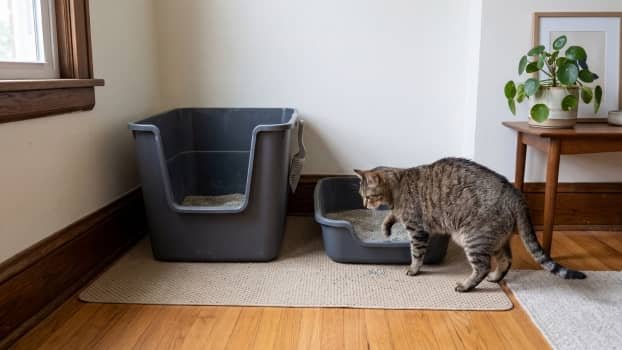
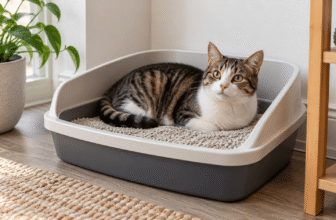
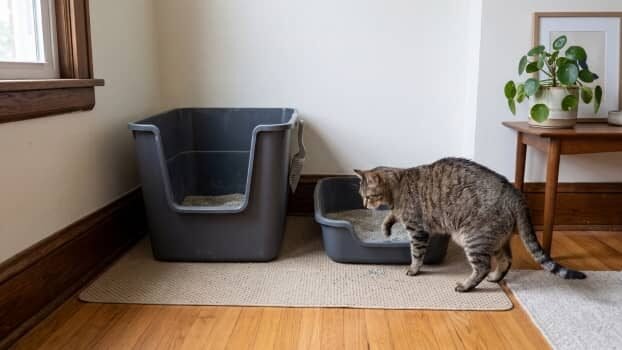
low entry litter box compared to high sided litter box with cat choosing easier entry

Disclaimer: This post may contain affiliate links. As an Amazon Associate, we earn from qualifying purchases.

A low entry litter box can solve litter box accidents caused by mobility issues, especially when cats struggle to step over high sides.

low entry litter box compared to high sided litter box with cat choosing easier entry

A low entry litter box makes it easier for cats to step in compared to higher-sided litter boxes.

It often starts in a subtle way. Your cat walks up to the litter box, pauses, and then either walks away or goes right next to it. Sometimes they step in halfway, then back out again. It can look like stubborn behavior, but in a lot of cases, the problem is much simpler — the box is just too hard to get into.

Standard litter boxes usually have sides around 5 to 7 inches high. For a young, healthy cat, that’s not a problem. But for older cats, kittens, or cats dealing with pain, that small step can feel like a jump.

Switching to a low entry litter box removes that barrier. It allows your cat to walk in comfortably instead of climbing, which can quickly reduce accidents and make the litter box feel usable again.

In this guide, you’ll learn why entry height matters so much, how to tell if your cat is struggling, and what to look for in a low entry litter box that actually works.

Why This Happens (And Why Cats Avoid the Litter Box)

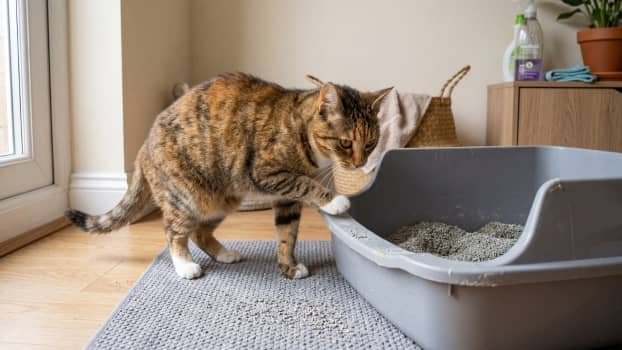
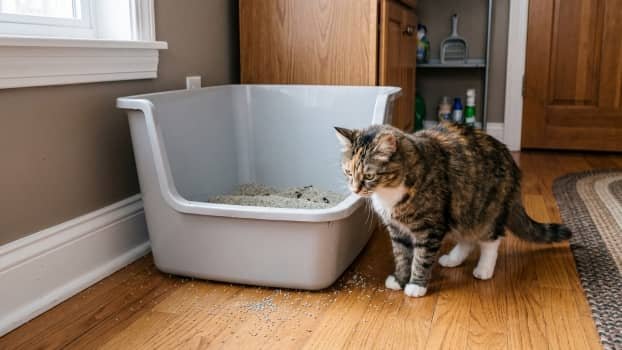
cat hesitating to step into high entry litter box showing difficulty entering

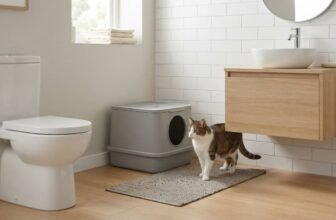
A higher litter box entry can make cats hesitate or step in carefully, especially if mobility is an issue.

Most litter box problems come down to one simple issue: the box is physically hard for the cat to use.

Standard litter boxes usually have sides between 5 and 7 inches high. That means your cat has to step up, balance, and shift weight to climb in. For a healthy cat, that’s easy. But for a cat with joint pain, stiffness, or limited mobility, that movement can be uncomfortable or even painful.

Instead of forcing the movement, cats often choose the easier option of going right outside the box.

This is why accidents often happen right beside the litter box instead of elsewhere in the house.

Signs the Entry Is Too High

You can usually spot the problem by watching how your cat behaves around the litter box.

This is what that behavior often looks like:

cat hesitating to step into high entry litter box showing difficulty entering

Cats often hesitate at the entrance when a litter box feels uncomfortable to step into, even if the entry looks low.

  • standing at the edge and hesitating
  • stepping in halfway, then backing out
  • using the bathroom right in front of the box
  • rushing in and out without digging
  • trying to dig or cover waste from outside the box

These aren’t random behaviors. They’re signs that getting into the box feels difficult or uncomfortable.

Which Cats Struggle the Most

Certain cats are much more likely to have trouble with standard litter boxes:

  • senior cats with stiff joints
  • cats with arthritis or hip pain
  • overweight cats that struggle to balance
  • kittens that can’t easily climb over high sides
  • cats recovering from injury or surgery

Even a small step can feel like a jump in these situations.

Why This Leads to Ongoing Problems

Once a cat starts associating the litter box with discomfort, the problem can quickly get worse.

They may begin avoiding the box altogether or only using it when they have no other choice. That’s when you start seeing repeated accidents, even if the box is clean.

Lowering the entry removes that barrier. Instead of climbing, your cat can simply walk in, which makes the litter box feel usable again.

Once you spot these signs, the next step is choosing a litter box that removes the problem completely.

What to Look for in a Low Entry Litter Box

Not every “low entry” litter box actually solves the problem. Some still have edges that are too high, or they’re too small to be comfortable.

Here’s what actually makes a difference.

Entry Height Matters Most

The entry should be low enough that your cat can walk in without lifting their legs too high.

A good target is:

  • around 3 to 4 inches high

Anything above that starts to feel like a step or small jump, especially for cats with joint pain or stiffness.

If your cat is already hesitating at the box, lowering the entry height is usually the fastest fix.

Box Size Is Just as Important

A low entrance won’t help much if the box itself is too cramped.

Cats need enough space to:

  • turn around comfortably
  • dig without hitting the sides
  • avoid stepping in waste

A simple rule:
The box should be about 1.5 times your cat’s length

For an average cat, that usually means something close to:

  • 24 inches long
  • 18 inches wide

Larger boxes are especially important for older cats that move more slowly and need extra room.

Low Front, Higher Sides

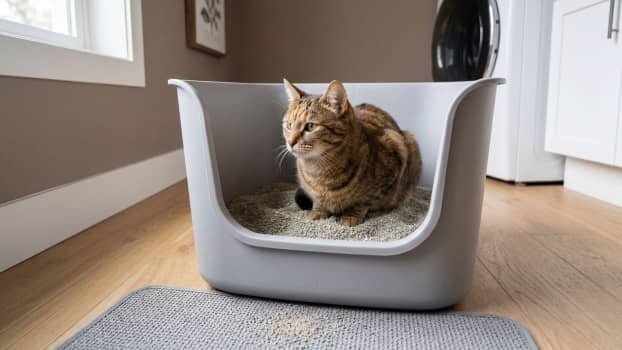
low front high sided litter box with cat inside on mat

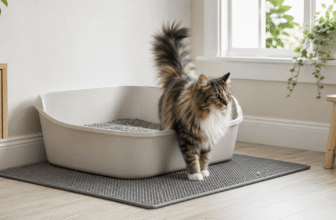
A low front entry makes it easier for cats to step in, while higher sides help keep litter and mess contained.

The best design isn’t low all the way around.

Look for:

  • a low front entry
  • higher sides or back

This gives your cat easy access while still helping contain:

  • litter scatter
  • urine spray

Completely low-sided boxes can work, but they tend to get messy quickly.

Open vs Covered Boxes

Open litter boxes are usually the better choice here.

Covered boxes:

  • make entry more awkward
  • feel more enclosed
  • can discourage cats that are already hesitant

An open design makes it easier for your cat to:

  • see the space
  • step in confidently
  • move without restriction

Material and Cleaning

Material doesn’t change accessibility, but it does affect maintenance.

  • Plastic is lightweight and common, but it can start to hold odor over time
  • Stainless steel doesn’t absorb smell and is easier to keep clean

If odor has been a problem already, switching materials can make a noticeable difference.

Types of Low Entry Litter Boxes

Not every low entry litter box is built the same. Some are designed specifically for accessibility, while others are simple workarounds that solve the problem just as well.

The right choice depends on your cat’s situation. A senior cat with joint pain may need something different than a kitten or a cat recovering from surgery. Before choosing a product, it helps to understand the main types available and how each one works in real use.

Examples of Low Entry Litter Boxes That Actually Work

There aren’t as many true low entry litter boxes as you might expect. Most standard boxes still have sides that are too high, even when labeled “large” or “easy entry.”

These examples show what to look for and how different designs work in real use.

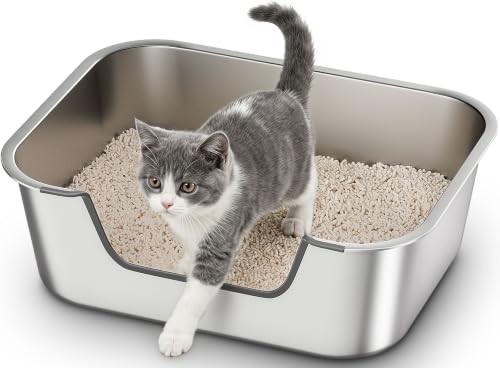
Stainless Steel Low Entry Litter Box

low entry stainless steel litter box with front opening for cats

View on Amazon

This is one of the few litter boxes that actually gets the entry height right.

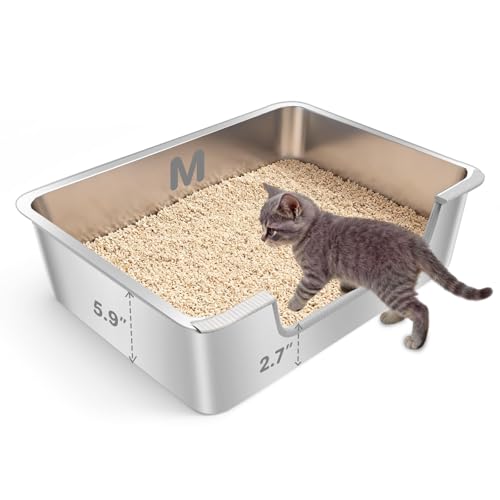
The front opening sits at about 3.15 inches, which makes a noticeable difference for cats that hesitate or struggle to step over higher sides. Instead of climbing, your cat can walk straight in without shifting their weight awkwardly.

The rest of the box stays higher, which helps contain litter and prevents urine from going over the edge. That combination is what makes this type of design work well in real situations.

This model comes in multiple sizes, including larger options that give more room to turn. The size matters more than it seems, especially for cats that move slowly or have trouble repositioning inside the box.

The stainless steel construction is another strong point. It doesn’t hold onto odor the way plastic can, and the smooth surface makes cleanup quicker. A quick rinse or wipe is usually enough to keep it clean.

When this type works best

This style is a good fit if your cat:

  • hesitates at the edge of the litter box
  • has started going just outside the box
  • struggles with joint stiffness or balance
  • needs something easy to step into without extra effort

What to be aware of

The smaller size versions can feel tight, especially for larger cats or cats with limited mobility. If your cat turns slowly or seems cramped, going with one of the larger size options makes a big difference.

Because the front is open and lower, you may also notice more litter tracking. A mat in front of the box usually fixes that.

Check Price on Amazon

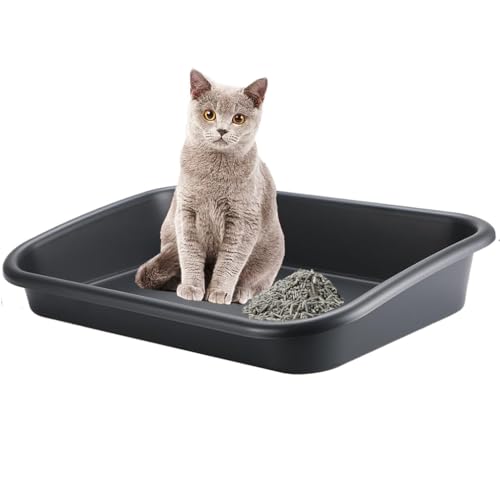
Extra Large Plastic Low Entry Litter Box

extra large low entry litter box for big cats plastic tray

View on Amazon

This type of low entry litter box focuses on space more than anything else.

At around 24 inches long and over 20 inches wide, it gives your cat plenty of room to move, turn, and settle without feeling cramped. That extra space makes a noticeable difference for larger cats or cats that move more slowly inside the box.

The front edge is lowered so your cat can walk in easily, while the rest of the box stays just high enough to help keep litter contained. It’s a simple design, but it solves the core problem without adding anything complicated.

Because it’s made from ABS plastic, it’s lightweight and easy to move, which helps if you need to clean or reposition the box regularly.

When this type works best

This style is a good fit if your cat:

  • needs more space to turn comfortably
  • is a larger breed or slightly overweight
  • struggles with balance when entering smaller boxes
  • prefers open, simple setups

It’s also a practical option for multi-cat homes where space inside the box becomes an issue.

What to be aware of

The lower front can allow more litter to come out, especially with cats that dig aggressively. A mat in front of the box usually solves this.

Plastic is also more likely to hold odor over time compared to metal, so regular cleaning becomes more important the longer you use it.

Check Price on Amazon

High-Sided Stainless Steel Low Entry Litter Box

high sided stainless steel low entry litter box for messy cats

View on Amazon

This type of low entry litter box is built for one specific problem: mess.

The front opening is still lowered so your cat can walk in easily, but the sides are much higher than a standard box. At around 13 inches tall, the walls help contain litter and prevent urine from going over the edge, which is a common issue with open trays.

This makes a big difference if your cat kicks litter aggressively or tends to urinate against the sides instead of down into the litter.

The stainless steel design also helps with cleaning. Waste doesn’t stick as easily, and the surface doesn’t hold odor the way older plastic boxes often do.

Some versions also include handles or wheels, which can make moving and cleaning easier, especially with larger boxes.

When this type works best

This style is a good fit if your cat:

  • kicks litter out of the box
  • urinates high on the sides
  • creates mess around the litter area
  • needs both easy entry and better containment

It’s also useful in multi-cat setups where mess builds up quickly.

What to be aware of

These boxes are heavier than standard options, especially once filled.

The lower front opening can still allow some litter to come out, so a mat in front is usually still needed.

Price is also higher compared to basic plastic boxes, but this type is usually bought to solve a specific problem rather than as a basic setup.

Check Price on Amazon

Practical Fixes You Can Try Without Buying a New Box

Before replacing your litter box, there are a few simple changes that can solve the problem right away.

In some cases, these fixes work just as well as buying a new low entry litter box.

Lower the Entry on Your Current Box

If your cat is struggling with the height, you can modify your existing box instead of replacing it.

One simple approach is cutting a lower opening into one side of a plastic litter box or storage bin.

This creates:

  • a walk-in entrance
  • higher sides for containment
  • more interior space

If you try this, smooth the edges so your cat doesn’t catch their paws when stepping in.

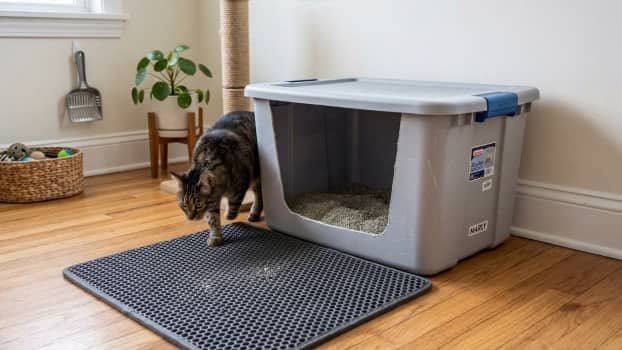
Use a Storage Bin Instead

DIY low entry litter box made from plastic storage bin with cat using it

A simple storage bin can be turned into a low entry litter box by cutting a front opening, making it easier for cats to walk in.

Large storage bins often work better than standard litter boxes.

They’re:

  • wider
  • deeper
  • easier to customize

You can either use one as-is if the sides are low enough, or cut an opening to create your own low entry setup.

This is one of the easiest ways to get a large, accessible litter box without spending much.

Adjust the Litter Depth

Litter that’s too deep can make it harder for cats to step in and move comfortably.

Try keeping it around:

  • 1 to 2 inches deep

This gives your cat a more stable surface and reduces the effort needed to balance inside the box.

Move the Litter Box to an Easier Location

Even a perfect litter box won’t help if it’s hard to reach.

If your cat has to:

  • climb stairs
  • walk long distances
  • squeeze into tight areas

they may avoid it.

Place the litter box somewhere:

  • quiet
  • easy to access
  • on the same level where your cat spends most of their time

Add More Litter Boxes in Multi-Cat Homes

If you have multiple cats, space and access become even more important.

A simple rule:

  • number of cats + one extra box

Spreading boxes across different areas reduces competition and gives each cat easier access.

Use a Mat to Control Tracking

Lower entry boxes can let more litter come out the front.

Instead of raising the entry again, use:

  • a litter mat in front of the box

This catches loose litter without making it harder for your cat to get in.

If tracking is becoming a problem, it helps to look at different litter mat options and how they’re designed to trap litter more effectively.

Why These Fixes Matter

When a cat avoids the litter box, it’s often because something feels uncomfortable or difficult.

Small changes like lowering the entry or improving access can fix the problem quickly, without needing to completely change your setup.

FAQ About Low Entry Litter Boxes

How low should a litter box entry be?

A low entry litter box should have an opening around 3 to 4 inches high.

This allows most cats to walk in without needing to step up or jump. If the entry is higher than that, it can start to cause hesitation, especially for older cats or cats with mobility issues.

Why is my cat peeing right outside the litter box?

This usually happens when getting into the box feels uncomfortable.

If your cat is going right in front of the box instead of somewhere else in the house, the entry height is often the issue. Lowering the front of the box makes it easier to use and can stop this behavior quickly.

If the problem continues, it’s also worth checking litter type and box placement.

Can I turn a regular litter box into a low entry one?

Yes, and it’s often a quick fix.

You can cut a lower opening into one side of a plastic litter box or storage bin to create a walk-in entrance. This gives you the same benefit as a low entry box without needing to replace it.

Plastic is usually easy to work with using basic tools. Metal litter boxes are much harder to modify and aren’t recommended for this kind of change.

Just make sure the edges are smooth so your cat can step in safely.

Are low entry litter boxes messier?

They can allow more litter to come out the front, but this is easy to manage.

Using a litter mat in front of the box usually solves the problem. Boxes with higher sides and backs also help keep litter and urine contained.

Are low entry litter boxes only for senior cats?

No, they’re useful in a lot of situations.

They work well for:

  • kittens learning to use the litter box
  • injured cats recovering from surgery
  • overweight cats that struggle with balance
  • any cat that hesitates at the edge of the box

Any time a cat has trouble stepping into a standard litter box, a lower entry can help.

Final Thoughts

A low entry litter box solves a simple problem. It makes it easier for your cat to get in and use the box comfortably.

When a cat starts avoiding the litter box or going just outside it, the issue is usually physical, not behavioral. If getting into the box feels difficult, your cat will look for an easier option.

Lowering the entry removes that barrier.

Whether you choose a stainless steel design, a larger open box, or a simple modification, the goal is the same. Make the litter box easy to use again.

If your cat is still struggling, it may also help to look at litter box placement or other setup changes that affect comfort and access.

Perfect Litter Box
Logo