Disclaimer: This post may contain affiliate links. As an Amazon Associate, we earn from qualifying purchases.
Last updated on October 4, 2026
A low entry litter box lets your cat walk in instead of climbing over the side. If your cat pauses at the box, steps in halfway and backs out, or goes right beside it, the entry may simply be too high.
This guide covers how to tell if height is the problem, what to look for in a low entry box, three picks that get it right, and fixes you can try with the box you already have.
A low entry litter box has a front opening low enough for your cat to step over comfortably, ideally without having to lift the legs high. Many purpose-built low-entry boxes fall around the 2.5 to 3.5 inch range. Look for a low practical front, enough room inside and containment that fits your cat’s habits.
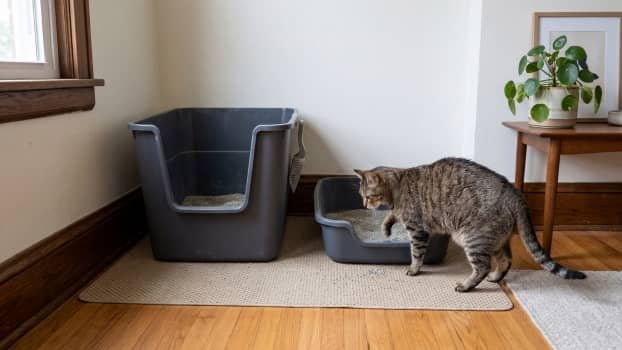
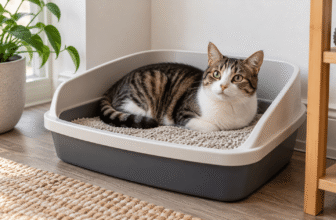
A low entry litter box makes it easier for cats to step in compared to higher-sided litter boxes.
Quick Picks
Lowest Entry for Kittens and Small Cats: IXARO Ultra-Low Entry Stainless Steel
Best Stainless Steel Low Entry: Qiuma Stainless Steel Low Entry
Best Roomy Low Entry for Seniors: BOHESI Extra Large Low Entry
Signs the Entry Is Too High
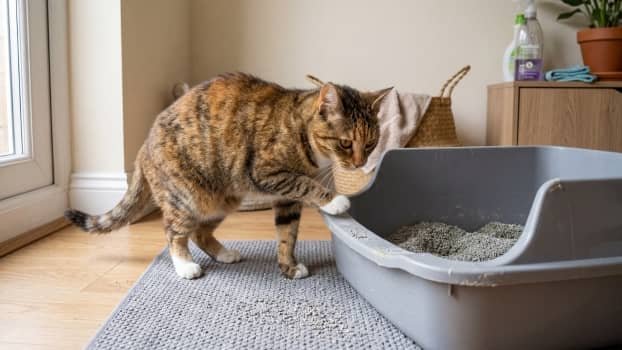
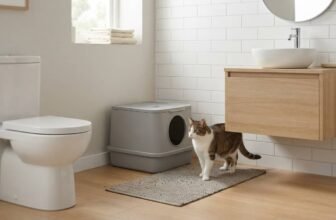
A higher litter box entry can make cats hesitate or step in carefully, especially if mobility is an issue.
Standard litter boxes usually have sides around 5 to 7 inches high. For a young, healthy cat, that’s easy. For a small kitten or a cat that moves stiffly, a higher edge can be harder to step over.
Watch for:
- standing at the edge and hesitating
- stepping in halfway, then backing out
- going right in front of the box
- rushing in and out without digging
- trying to cover waste from outside the box
If your cat also seems stiff, sore or reluctant to move, mention it to your vet. A lower box makes access easier, but it doesn’t address the reason your cat is struggling.
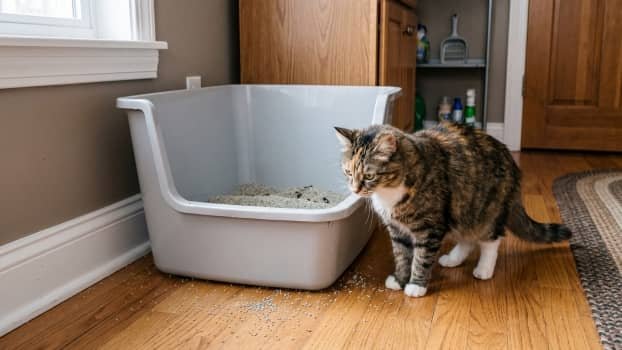
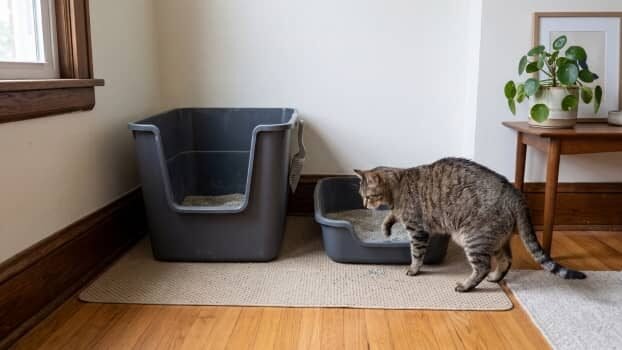
Cats often hesitate at the entrance when a litter box feels uncomfortable to step into, even if the entry looks low.
What to Look For in a Low Entry Litter Box
Entry height. Look for the lowest practical front opening that still keeps litter contained. Around 3 inches is common among low-entry designs, but your cat’s size and movement matter more than a fixed number.
Room inside. AAFP/ISFM guidance recommends a rectangular box about 1.5 times the cat’s length from nose to the base of the tail. A low entrance doesn’t help much if your cat can’t turn around once inside.
A low front with higher sides. For better containment, some low-entry boxes pair a low front with higher sides and back.
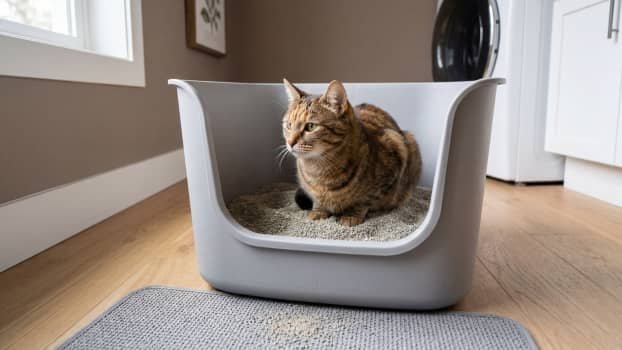
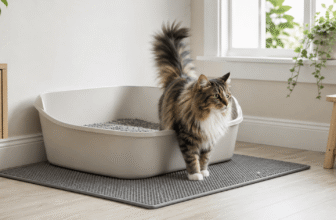
A low front entry makes it easier for cats to step in, while higher sides help keep litter and mess contained.
An open top. An open top can make entry simpler because there is no hood or doorway to navigate.
Material. Plastic is light and easy to move. Stainless steel resists scratching better than plastic and is less likely to retain lingering odor. Reviewers of some stainless boxes also report easier cleanup.
Three Low Entry Litter Boxes That Get It Right
Qiuma Stainless Steel Low Entry Litter Box
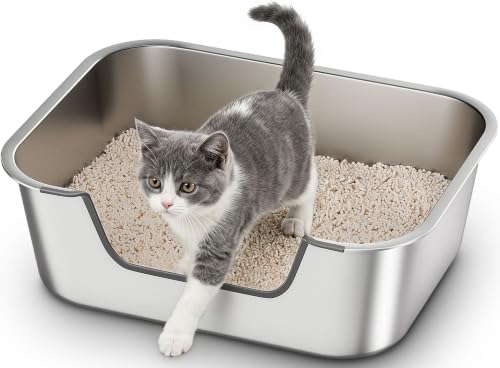
The front entry sits at about 3.15 inches, in a compact 17.5 by 13.6 inch pan with sides that sit higher than the entry. Many reviewers with senior cats and kittens say the low entry made the box easier to use.
Reviewers also say litter sticks less than it did in plastic, so cleanup is faster. One owner of a heavy digger said the high sides kept most of the litter in.
Watch for: the smaller sizes can feel tight for big cats. Choose a larger size if your cat turns slowly.
Best for: Cats that need an easy step in, in a box that’s simple to keep clean.
BOHESI Extra Large Low Entry Litter Box
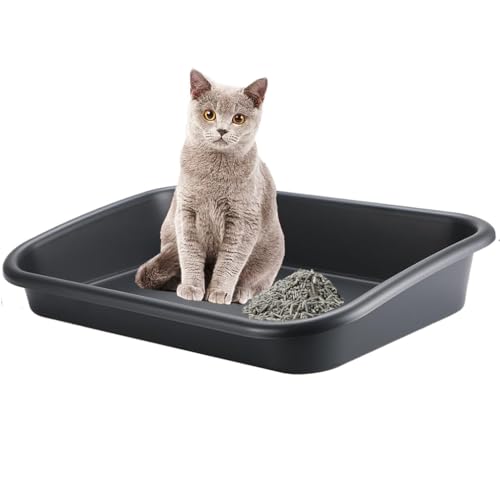
The front ramp is about 2.6 inches tall, in a roomy 23.23 by 16.54 inch footprint. It’s a low pan overall, at about 4.33 inches tall, so it’s chosen here for the easy step in and the space, not for wall height. Making access easier for older cats is the most repeated theme in its reviews, including a 15-year-old cat. Reviewers also describe it as sturdy rather than flimsy.
Watch for: it’s plastic, so it can hold odor over time. Regular washing matters.
Best for: Larger cats and seniors that need both a low step and plenty of room.
IXARO Ultra-Low Entry Stainless Steel Litter Box
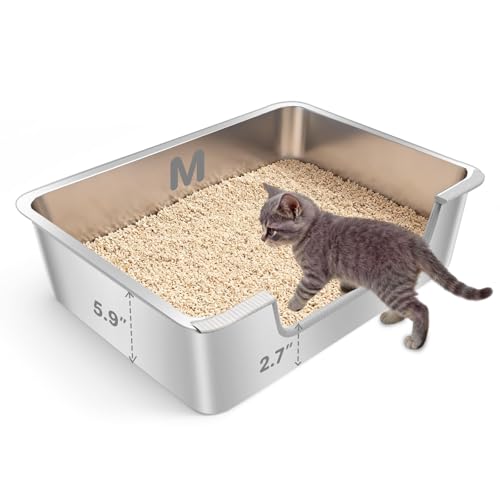
At about 2.7 inches, this is one of the lowest entries you’ll find, with high sides to keep splash in. Several owners of very small or young kittens say it was the only box their kittens could get into without trouble.
Watch for: a lower front means more litter can come out the front, so pair it with a litter mat.
Best for: Small kittens and cats that need the lowest possible step.
Fixes to Try With the Box You Have
Cut a lower entrance. You can cut a walk-in opening into one side of a plastic box or storage bin. Smooth the cut edge so it can’t catch your cat’s paws. Metal boxes are much harder to modify.
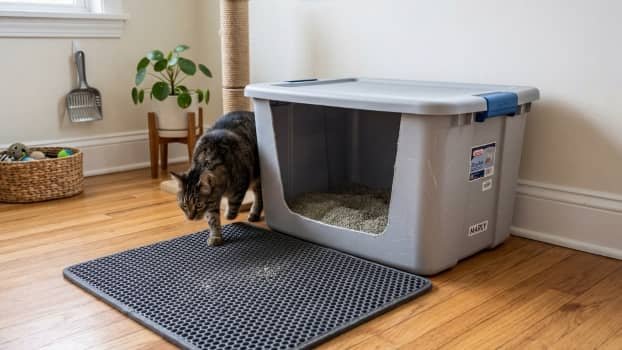
A simple storage bin can be turned into a low entry litter box by cutting a front opening, making it easier for cats to walk in.
Try a storage bin. Large bins are often wider and roomier than standard litter boxes, and easy to customize with a cut entrance.
Make the box easy to reach. A box up a flight of stairs or in a tight corner is harder to use, whatever its height. Keep one on the floor where your cat spends most of its time. In multi-cat homes, see how many litter boxes per cat you need.
Add a mat. Lower fronts let more litter out. A mat in front catches it without making the box harder to enter.
Frequently Asked Questions
How low should a litter box entry be?
Low enough that your cat can step in comfortably without climbing. Around 3 inches is common in purpose-built low-entry boxes, but kittens and cats with limited movement may do better with an even lower opening.
Why is my cat peeing right outside the litter box?
If accidents happen right in front of the box, entry height can be one cause, along with box size, litter, cleanliness and placement. If it keeps happening, our guide on why your cat is not using the litter box walks through the other setup checks.
Are low entry litter boxes only for senior cats?
No. They also help kittens and any cat that hesitates at the edge of a standard box. For older cats specifically, see our best litter box for senior cats and best litter box for arthritic cats guides.
Are low entry litter boxes messier?
They can let more litter out the front. A box with higher sides and back, plus a mat in front, usually keeps it under control.