
Disclaimer: This post may contain affiliate links. As an Amazon Associate, we earn from qualifying purchases.
Last updated on September 29, 2026
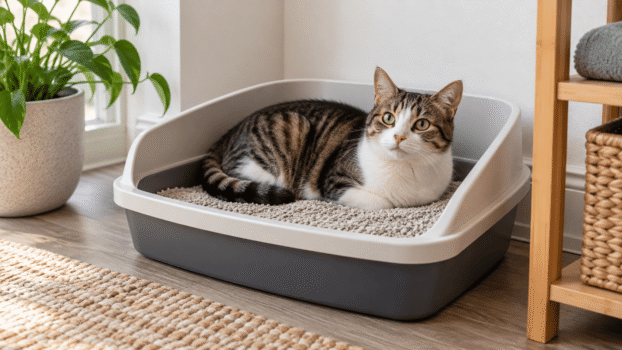
Why is my cat laying in the litter box? If you’ve just found your cat curled up in there, you’re not the first owner to wonder. Sometimes it comes down to stress or feeling safe, but a sudden change can also mean your cat doesn’t feel well.
This guide starts with the one check that tells you which situation you’re in. Then it covers the health and everyday reasons cats do this, and the setup changes that get them sleeping somewhere else.
Why is my cat laying in the litter box? It may be stress, a new home, or the box being the safest spot your cat has, but it can also mean your cat is trying to pee and can’t, which needs a vet right away.
First, Check: Is Your Cat Resting or Straining?
Before anything else, watch what your cat is actually doing. A sleeping cat looks relaxed, with closed or softly blinking eyes and regular breathing.
A cat that keeps squatting, getting up and squatting again is a different story. A cat lying in the litter box may be one that’s trying to pee and can’t.
Go to an emergency vet now if you see any of these, especially in a male cat:
- Straining in the box with little or no urine coming out
- Crying while in the box
- Licking the genitals
- Repeated trips to the box with nothing to show for it
A urinary blockage can be fatal without fast treatment. Don’t wait until morning to see if it passes.
Here’s a quick way to check: look for fresh urine and watch what your cat does in the box. If your cat keeps trying to pee but produces little or nothing, especially if they’re crying or distressed, go to an emergency vet.
Health Reasons to Call Your Vet
If your cat isn’t straining but the behavior is new, book a regular vet visit. Vets say the most common medical reasons cats sleep in the box are urinary discomfort and digestive trouble, like diarrhea or constipation. A cat that feels it needs to go often may simply stay close to the box.
Pain and aging. In an older cat, sleeping in the litter box can be a sign of arthritis. Cognitive decline is another possibility in seniors, especially alongside sleep changes, confusion or new anxiety.
Feeling unwell in general. Many cats hide when they’re sick, and the litter box may just be the hiding spot they pick.
Pregnancy. A cat close to giving birth may occasionally choose the litter box as a nesting spot if she doesn’t have another private place available.
This article isn’t a substitute for a vet. If you’re unsure whether something is wrong, a checkup is always the safe call.
Why Is My Cat Laying in the Litter Box When Nothing Is Wrong?
Once your vet has ruled out a medical cause, the reason is usually about safety and comfort.
It smells like home. The box is full of your cat’s own scent, which feels familiar and safe.
A new home or new family. A newly adopted cat may hide in the litter box while getting used to new surroundings. Cats that spent time in a shelter cage may simply be used to sleeping right next to their toilet.
Stress in the house. A new pet, moved furniture or loud noises like fireworks and storms can send a cat looking for a safe corner.
It’s the only hiding spot. Litter boxes usually sit in quiet, out-of-the-way places. If the box is your cat’s only covered hideaway, it can become the safest spot to escape whatever’s bothering them.
Guarding the box. In multi-cat homes, one cat may sit in the litter box to claim it or keep others out.
What Helps: Setup Changes That Get Your Cat Out of the Box
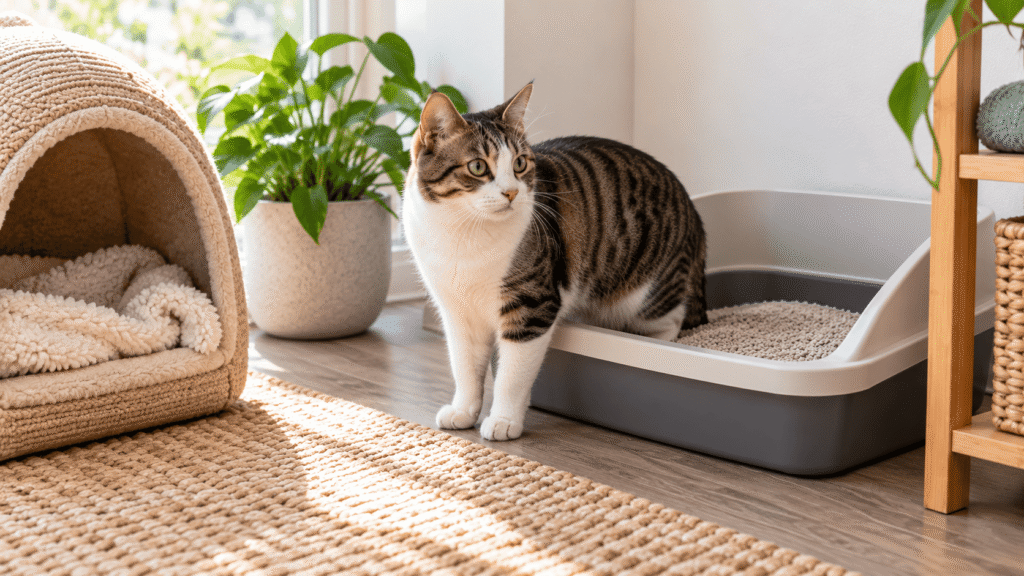
Give them a better hiding spot. If the box is the only enclosed space your cat has, offer another. A covered cat bed or a cardboard box with a blanket, set in the same quiet room, gives your cat somewhere safe that isn’t their toilet.
Add another litter box. The usual rule is one box per cat plus one extra. In a multi-cat home, that means no single cat can guard the only option.
Choose a box your cat can see out of. Cats can be ambushed by other cats as they leave the box, so being able to see around them matters in multi-cat homes. An open-top box like the IRIS USA Extra Large Open Top Litter Box keeps the sightlines open. Its 14-inch sides still contain digging, and one owner replaced four smaller boxes with one of these for three cats.

Make it easy for older cats to get in and out. If your senior cat has trouble climbing in, ask your vet whether a box with a lower side would help. The BOHESI Extra Large Low Entry Litter Box has a front entry about 2.6 inches tall. The most common praise in its reviews is how much easier it makes access for older cats, including a 15-year-old.
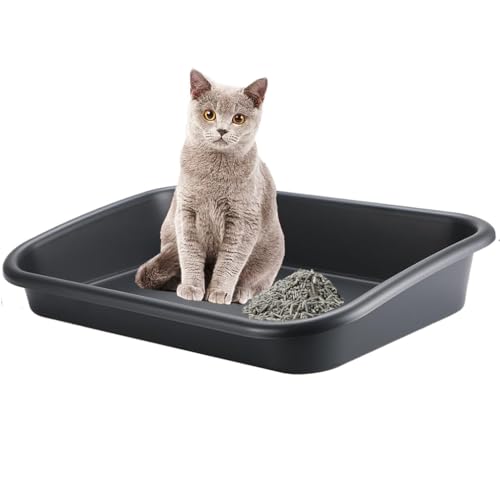
Keep it clean while you work on it. One vet notes it can be normal for cats to relax in the box, as long as you keep it clean. Scooping daily means your cat isn’t lying in waste while you sort out the cause.
Lower the stress. Introduce household changes gradually when you can. Regular play also gives a stressed cat a healthy outlet.
Frequently Asked Questions
Is it bad for my cat to lay in the litter box?
A one-off nap in a clean box may be harmless, especially after a move or during stress. But if it’s new, frequent, or comes with changes in urination, appetite or behavior, call your vet.
Why is my kitten sleeping in the litter box?
Kittens often crash wherever they are after a play session, and the litter box can seem as good a spot as any. Boxes with closed sides can also make kittens feel secure. Most outgrow it once they have a cozy bed nearby.
Should I move the litter box?
Usually not. Once your cat has a location it likes, try not to move the box unnecessarily. Add a hiding spot or a second box instead.
What should I tell the vet?
Bring details, not just “my cat sleeps in the box.” A simple log of box visits and what you find, with times, gives your vet a clearer picture than memory alone. Note whether there were fresh pee clumps, any changes in appetite, and when the behavior started.