Disclaimer: This post may contain affiliate links. As an Amazon Associate, we earn from qualifying purchases.
Last updated on October 2, 2026
The types of cat litter you can buy come down to three systems: clumping, absorbent and pellet. Each one changes how you clean the box, what kind of box works best, and how much mess ends up on your floor.
This guide explains how each system works day to day, which box each one needs, and how to pick the one that fits your routine. For material-by-material pros and cons, see our types of cat litter pros and cons comparison.
The three types of cat litter are clumping litter, which you scoop daily; absorbent litter like crystal and non-clumping clay, which holds urine in the litter and is maintained as the bag directs; and pellet litter, which uses larger pieces and may need a different cleanup routine, especially with wood pellets that break down into sawdust.
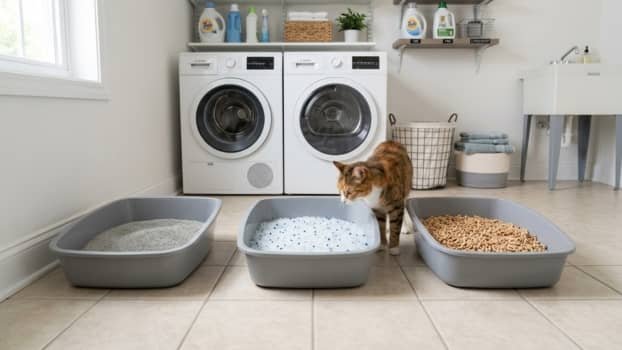
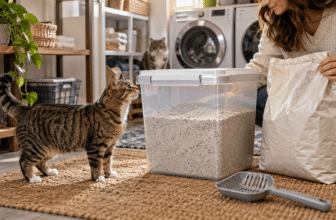
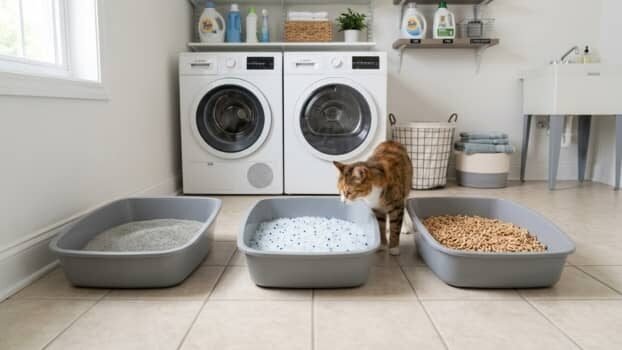
A side by side comparison of clumping clay, crystal, and pellet cat litter, showing how each type looks and helping you choose the right one for your setup.
Quick Picks
Best Clumping Litter: Dr. Elsey’s Ultra Unscented
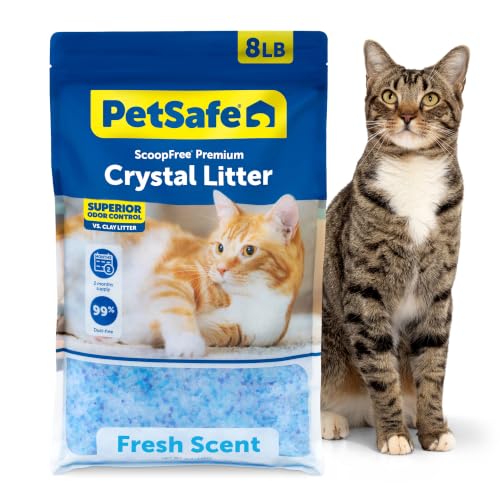
Best Crystal Litter: PetSafe ScoopFree Odor Control Crystal
Best Pellet Litter: Nature’s Logic Pine Pellets
Best Sifting Box for Wood Pellets: Arm & Hammer Large Sifting Litter Box
The 3 Types of Cat Litter at a Glance
| Type | Examples | Daily Routine | Full Change | Box It Needs |
|---|---|---|---|---|
| Clumping | Clay, corn, wheat, walnut, tofu | Scoop urine clumps and solids | Follow the bag; top up as needed | Any standard box |
| Absorbent | Crystal, non-clumping clay | Scoop solids; stir if the directions call for it | Follow the bag, or sooner once saturated | Standard box, or a crystal automatic box |
| Pellet | Pine, wood, paper | Scoop solids; wood pellets may need sifting | Follow the bag | Standard box; a sifting box works especially well for wood pellets |
Clumping Litter
Clumping litter forms solid clumps when urine hits it. You scoop the clumps and solids daily, top up as needed, and follow the bag for full replacement.
Routine: Clumping litter makes it easy to remove urine-soiled litter during daily scooping. How well it controls odor depends on the formula and how the box is maintained.
Box: Any standard box works. A high-sided box helps if your cat kicks litter out. Many automatic litter boxes are designed for clumping litter, but compatibility depends on the machine.
Who it suits: Most homes, multi-cat setups and picky cats. AAHA notes that most adult cats prefer clumping litter.
Watch for: Fine clumping litter sticks to paws and tracks. A litter mat outside the box can help catch what leaves on your cat’s paws.
A reliable starting point is Dr. Elsey’s Ultra Unscented, which forms very firm clumps with no added scent.

Absorbent Litter
Absorbent litter soaks up urine instead of clumping. You still scoop solids daily, but urine stays in the box until the next full change. There are two main versions.
Crystal litter uses silica to pull moisture in and dry out waste. You scoop solids and stir the crystals so they keep working evenly, then replace the whole box when they reach their limit.
Non-clumping clay spreads urine through the litter until it’s saturated, then the whole box gets emptied and refilled.
Routine: Fewer scoops each day, but more depends on the full change. Once absorbent litter becomes saturated or odor remains, follow the bag’s directions for replacement.
Box: A standard box works. Crystal litter is also what some automatic boxes, like the PetSafe ScoopFree Crystal models, are designed around.
Who it suits: Single-cat homes and owners who’d rather stir than scoop. In busy multi-cat boxes, crystals can hit their limit before the bag is used up.
Watch for: Crystals feel rougher than sand, and some cats hesitate or avoid the box after a switch.
A common choice is PetSafe ScoopFree Odor Control Crystal Litter, made for ScoopFree Crystal boxes and usable in a regular box too.
Pellet Litter
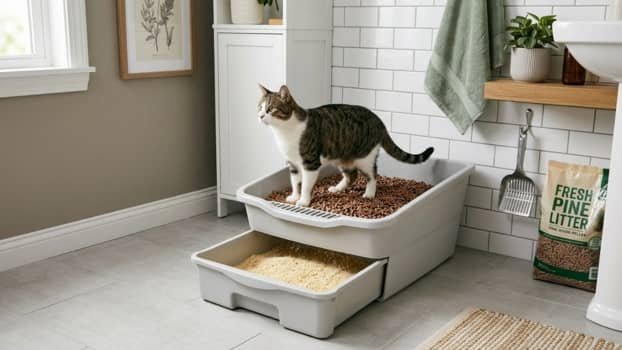
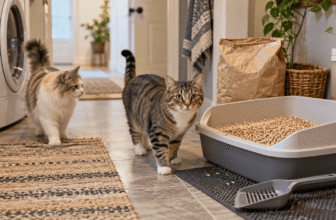
A pellet litter box system separating clean pine pellets from sawdust below, showing how this setup reduces tracking and simplifies cleaning.
Pellet litter uses larger pieces than other types. Pine and wood pellets break down into sawdust when wet. Paper pellets absorb moisture and soften instead.
Routine: You scoop solids either way. With wood pellets, you also sift so the sawdust separates from the intact pellets. With paper pellets, remove soiled material and replace the litter according to the package directions.
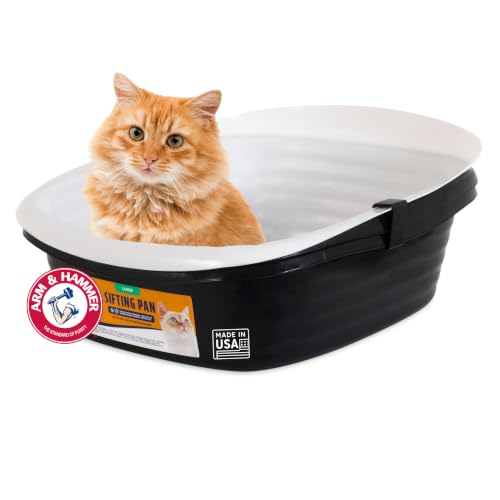
Box: A standard box works, but a sifting box is especially useful with wood pellets because it separates the fine sawdust from the intact pellets. The Arm & Hammer Large Sifting Litter Box comes with one sifting tray and two solid pans. With wood pellets, that style of setup makes it easier to separate broken-down sawdust from intact pellets.
Who it suits: Homes where tracking is the main frustration. Larger pellets may track less than fine-grained litter. Dust varies by product.
Watch for: The texture is very different from sand, and some cats refuse pellets, especially if they’re used to fine litter.
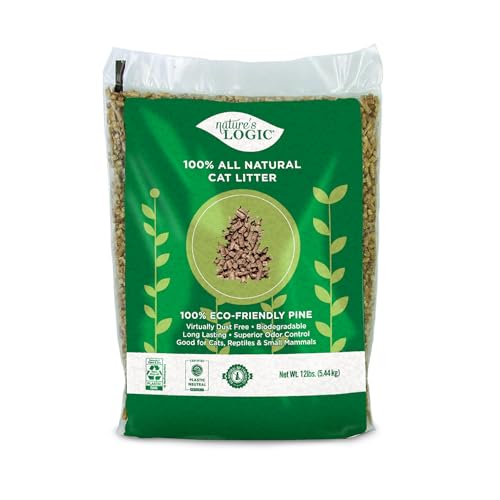
A good starting point is Nature’s Logic Pine Pellets, which is unscented and very low in dust. Our guide to pine pellets as cat litter walks through the setup.
What Litter Problems Usually Tell You
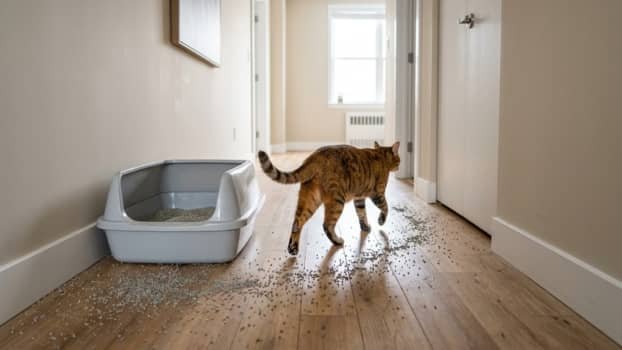
A cat walking away from the litter box with litter stuck to its paws, showing how tracking spreads across the floor.
The smell comes back fast. The litter may be saturated, the formula may not control odor well in your setup, or the box may need more frequent scooping.
Litter is all over the floor. That’s usually particle size. Fine clumping litter tends to track more, while larger pellets usually track less. Our litter tracking solutions guide covers more fixes.
Your cat hesitates before stepping in. Texture may be the cause, especially right after switching to crystals or pellets.
Plant-based litter stays damp or smells musty. Follow the product’s replacement directions and keep the box dry between changes.
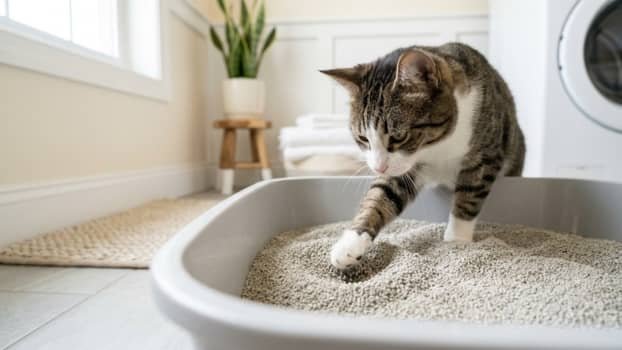
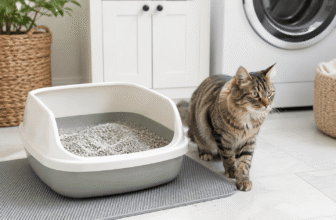
A cat using fine, low dust litter in a clean litter box, showing how softer materials reduce airborne dust during use.
Switching brands won’t fix a problem that’s built into the litter type. If fine clay keeps tracking, for example, another fine clay may behave similarly. But brands within the same type can still differ in dust, scent, grain size and clumping.
How to Choose the Right Type
If you want the simplest daily routine, choose clumping litter.
If you’d rather not scoop urine clumps, crystal litter may suit you, although solid waste still needs daily removal.
If tracking is your biggest problem, choose pellets, and a sifting box if you go with wood pellets.
If your cat is picky, start with unscented clumping litter and change only one thing at a time.
If you have several cats, clumping litter can make daily waste removal easier, and having enough boxes matters regardless of litter type. See how many litter boxes per cat you need.
Frequently Asked Questions
What type of litter box do you use for non-clumping litter?
For crystal litter, a standard box works, or a crystal-based automatic box like the PetSafe ScoopFree Crystal. For pine or wood pellets, a sifting box works best, because it separates the sawdust from the intact pellets. Paper pellets work fine in a standard box.
Will switching brands fix my litter problems?
Sometimes. If the problem is a specific formula, another brand may help. But if the problem comes from the litter type itself, such as pellet texture or the non-clumping cleaning routine, switching brands within that type may not change much.
What should you do if your cat refuses a new litter type?
Mix the new litter into the old one and increase it gradually. If your cat still resists, keep a box of the old litter available while they adjust. Our guide on how to transition cat litter covers the steps.
Can you flush cat litter?
Some litters are sold as flushable, but check the bag and your local plumbing rules first. For most litter, the trash is the safer choice.