Disclaimer: This post may contain affiliate links. As an Amazon Associate, we earn from qualifying purchases.
Last updated on October 5, 2026
Pine pellets for cat litter work very differently from clay. There are no clumps, and the box slowly turns to sawdust, which surprises a lot of first-time owners. Below you’ll see how the routine really works, the trade-offs, what to check on horse bedding pellets, and the pine litters worth buying.
Yes, you can use pine pellets for cat litter. They can suit owners looking for a low-dust, low-tracking natural litter who don’t mind learning a different routine. Cats that dislike a coarse texture under their paws may take time to accept them.
Quick Picks
Best Pine Pellet Litter: Feline Pine Original
Pine Pick for Sifting Boxes: Nature’s Logic Pine Pellet Litter
Best Scoop for Pine Pellets: Wide-Slat Pellet Scoop
How Pine Pellets Work
Pine pellet litter is made by compressing pine wood material into small pellets. Feline Pine, for example, says it uses sawdust byproduct collected from lumber mills. When urine hits a pellet, it soaks in and the pellet falls apart into sawdust. Pellets that stay dry keep their shape.
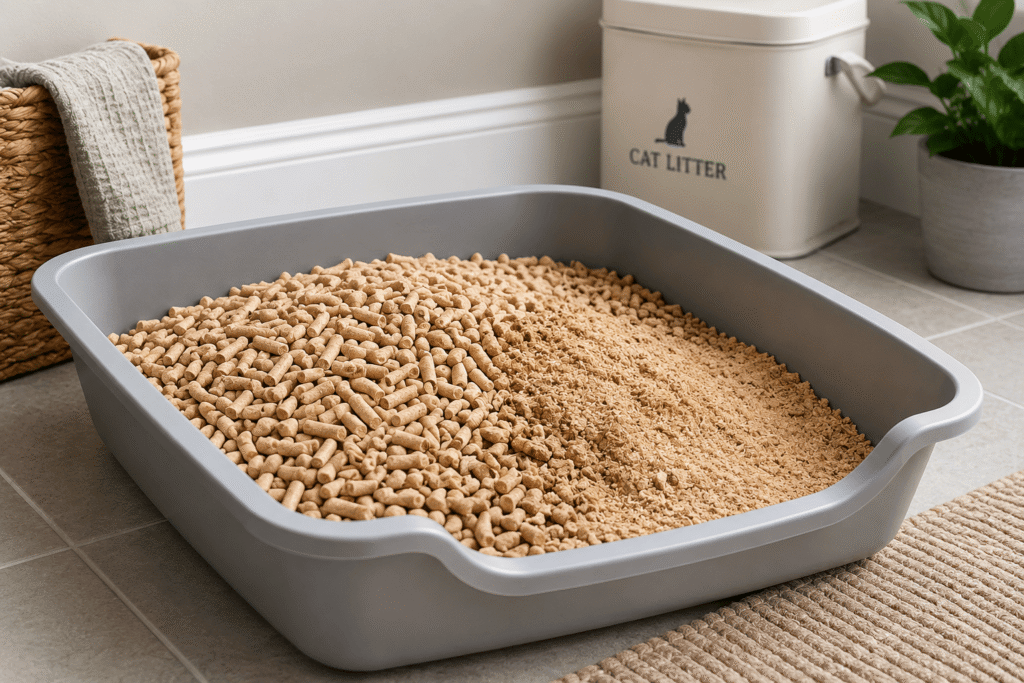
Poop doesn’t get absorbed the same way. It sits on top of the pellets, so you scoop it out like you would with any litter.
The Pine Pellet Routine
Feline Pine gives clear directions for its pellets. Scoop out solid waste daily. Then gently shake the box so the whole pellets rise to the top and the sawdust settles underneath.
Don’t throw the sawdust away each time. Feline Pine says it keeps absorbing moisture and odor. When the box is about 90% sawdust, dump it all and start with fresh litter.
You don’t need special gear for that routine. Some owners prefer a sifting box that lets broken-down sawdust fall through while whole pellets stay above. A wide-slat scoop can also help separate pellets from finer sawdust in a regular box.
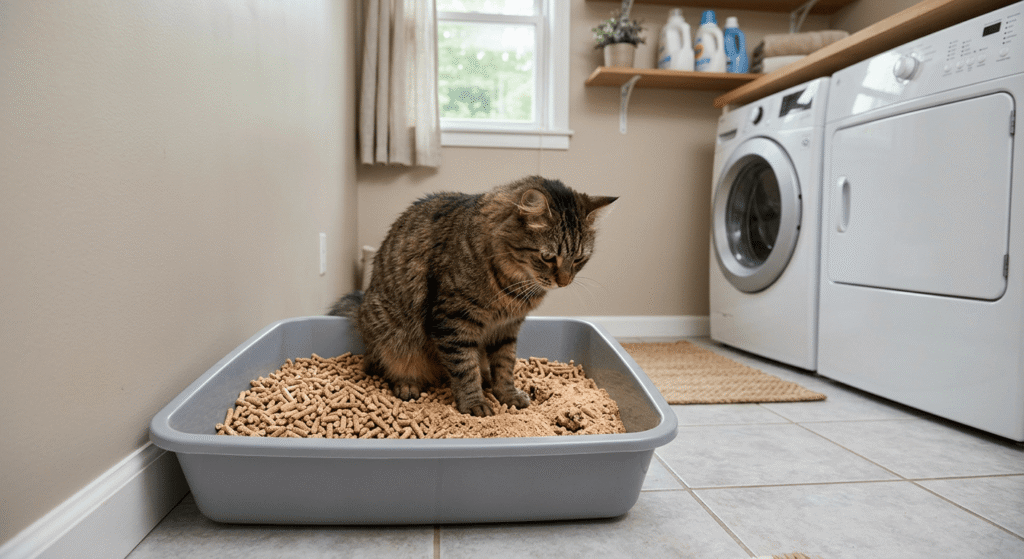
For fill depth, follow the directions on your bag.
The Trade-Offs
There are no clumps. Urine doesn’t come out in a neat ball. If you love the clay routine of scooping wet clumps, pine will take getting used to.
Poop odor needs prompt scooping. Pine handles urine well because it soaks it into the wood. Solid waste sits on the surface, so it’s the part to stay on top of.
The texture is coarse. Pellets feel very different from fine clay underfoot. Some cats take to them right away, and others need a slow switch.
Sawdust can still travel. Whole pellets are too big to cling to paws, so tracking is usually low. Fine sawdust from broken-down pellets can still get carried out, especially from a nearly spent box.
Can You Use Horse Bedding Pellets for Cat Litter?
Horse bedding pellets can also be made from pine, but don’t assume every wood pellet is the same product. Check the bag for its intended use and what the pellets are made from. Heating and stove pellets are sold as fuel, not animal bedding or cat litter.
If you’d rather use a product made and labeled specifically for a litter box, Feline Pine and Nature’s Logic are the options we cover below.
How to Switch to Pine Pellets
Feline Pine has its own switching directions. Pour one inch of Feline Pine into a clean box, then add one to two inches of your old litter on top without mixing. At each litter change after that, use the same amount of Feline Pine and less of the old litter, until the box is all Feline Pine.
For other brands, check the bag first. Our guide on how to transition cat litter covers the rest.
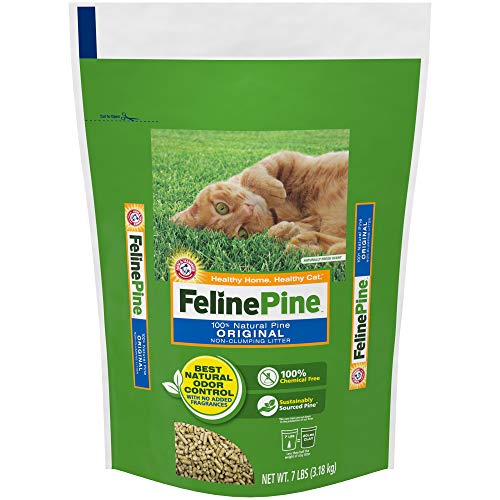
Feline Pine Original
Why It Stands Out
Feline Pine is made from 100% pine and has been around for years. One reviewer reports the same quality over years of use. Owners praise its odor control without added fragrance, and one specifically liked that it has no “perfume-y” smell.
Multiple reviewers say it isn’t dusty, and owners confirm it works well in sifting and filter-bottom pans.
Possible Downsides
The box smells like pine. That’s the wood itself, not added fragrance, but if you want a litter with no scent at all, this won’t suit you.
Best For
Anyone trying pine pellets for the first time who wants clear manufacturer directions to follow.
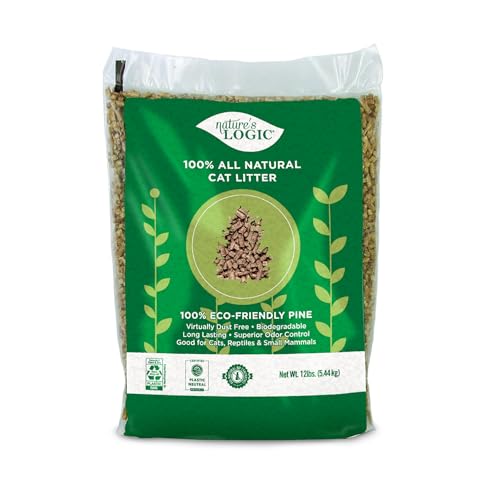
Nature’s Logic Pine Pellet Litter
Why It Stands Out
Most reviewers report strong urine odor control and low dust. Owners confirm it works in sifting-style boxes. One who compared it with another pine pellet brand found it dried faster and sifted more easily.
Another reviewer, comparing it with a cedar pellet litter, said it doesn’t stick to metal or plastic box surfaces.
Possible Downsides
One reviewer who also used PrettyLitter found PrettyLitter better at controlling poop odor, though Nature’s Logic did better on urine, dust and tracking.
Best For
Owners using a sifting box who want pellets that separate cleanly.
Wide-Slat Pellet Scoop
Why It Stands Out
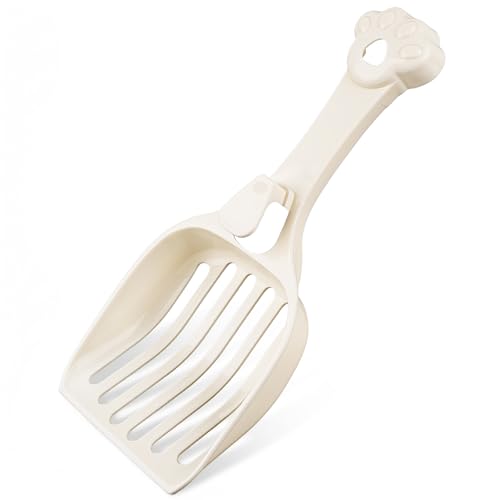
The wide slats let sawdust fall through while whole pellets stay in the scoop. Reviewers confirm it works with several pellet litter brands. One owner who rated three scoops side by side, including Litter Lifter and Catit, put this one clearly on top.
It’s light in the hand, and one reviewer says theirs is still in good shape after years. A built-in hook lets you hang it by the box.
Possible Downsides
The slats are made for pellets. Fine clumping litter and small clumps can slip right through, so it’s not a scoop for clay.
Best For
Owners running pine pellets in a regular litter box instead of a sifting system.
Frequently Asked Questions
What’s the difference between pine pellets and clumping pine litter?
Pine pellets break down into sawdust and never clump. Clumping pine litter is a separate product. Feline Pine says its clumping version adds a clumping agent and mineral oil for dust control. Our wood cat litter guide compares the two types.
Can you use pine pellets in an automatic litter box?
It depends on the machine. Check your box’s manual for the litter types it supports before you pour.
Can you flush pine pellet litter?
Don’t assume a litter is flushable. Clay-based litter shouldn’t be flushed. For non-clay formulas, follow the disposal directions on the package and local wastewater rules.
How much pine pellet litter do I put in the box?
Follow the fill depth on your bag.