DIY Litter Box Enclosure: Ideas, IKEA Hacks, and What Actually Works

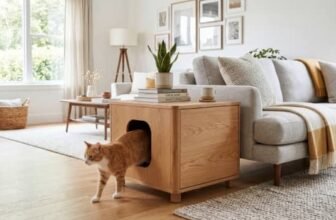
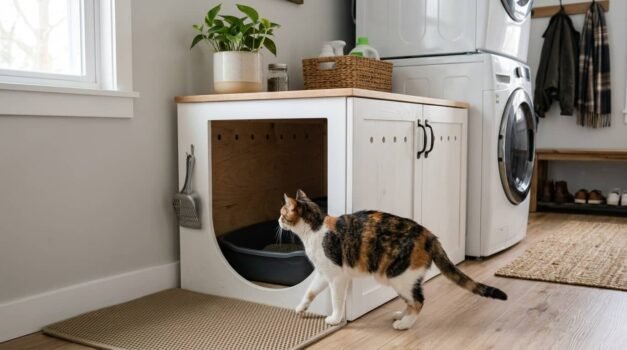
DIY litter box enclosure featured image showing a cat approaching a ventilated furniture-style litter box cabinet in a laundry room setup`

Disclaimer: This post may contain affiliate links. As an Amazon Associate, we earn from qualifying purchases.

Last updated on September 1, 2026

A DIY litter box enclosure is one of the most satisfying home improvement projects for cat owners. The litter box disappears into furniture that looks intentional, the litter area looks more contained, and odor can be easier to manage if the enclosure is ventilated and cleaned regularly.

A DIY litter box enclosure works when the interior is large enough for your cat to move comfortably, there’s enough ventilation to prevent odor buildup, and cleaning access is built in from the start, not an afterthought.

Most DIY failures come down to one of those three things. This guide covers the main approaches, what each requires, and how to avoid the common mistakes.

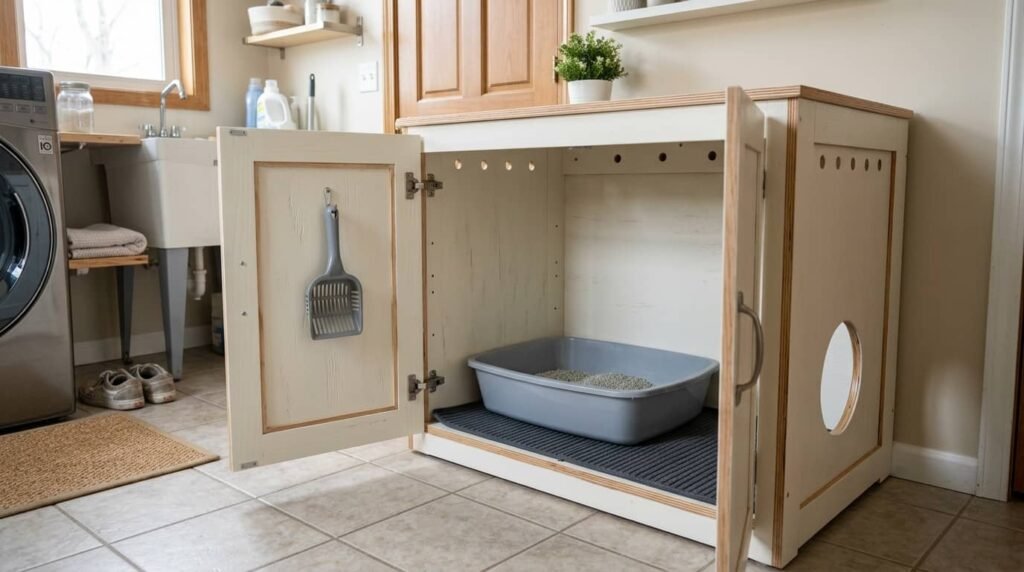
DIY litter box enclosure with open cabinet doors showing ventilation, cleaning access, and a litter box inside a laundry room setup

Before You Build: The Five Things That Determine Success

Interior size. The litter box needs to fit with room to spare. Measure your litter box, then add at least 4 to 6 inches on all sides for the cat to turn around and dig comfortably. Most standard litter boxes need an interior of at least 24×20 inches. If you’re using a large or automatic litter box, measure first and find furniture to fit it, not the other way around.

Entry hole. The entry opening should be at least 6 to 8 inches wide and positioned low enough for your cat to step in without jumping. For senior cats or cats with joint issues, keep the entry height at 3 to 4 inches from the floor. A hole that’s too small creates hesitation, and cats that hesitate at the enclosure entrance may start looking for another place to go.

Ventilation. Enclosed spaces trap ammonia faster than open boxes. Cut ventilation slots or add a small mesh panel on the back or side of the enclosure. A carbon filter behind a ventilation cutout helps even more. Do not build a fully sealed enclosure. Even if it looks cleaner, trapped ammonia makes the box unpleasant for your cat and harder to keep fresh.

Cleaning access. If you can’t scoop comfortably, you’ll scoop less often. The enclosure needs a door, hinged panel, or removable top that gives you full access to the litter box. A door that opens only halfway or requires removing the entire box every time is a design that fails in practice.

Placement. Put the enclosure where your cat already feels comfortable using the box, not just where the furniture looks best. A well-built enclosure in the wrong spot is still a litter box avoidance problem waiting to happen.

DIY Approach 1: IKEA Hacks

IKEA furniture is the most popular starting point for DIY litter box enclosures because the pieces are affordable, modular, and easy to cut with basic tools. Several units work particularly well.

BESTA: The most common choice. The cabinet units come in multiple widths and accept a wide range of door styles. Cut an entry hole in one side panel using a jigsaw. The double-door versions give excellent cleaning access. The interior fits most standard litter boxes comfortably in the larger sizes.

KALLAX: The cube shelving unit works well when a single cube is used as a standalone enclosure. Cut a hole in the front, add a door if needed, and it fits a standard litter box in the larger cube sizes. The floating bench version with legs makes a clean entryway piece.

PLATSA: A newer modular system with configurable frames and doors. More customizable than BESTA but requires more planning. Useful for built-in installations where the enclosure needs to fit a specific space.

HOL: A hollow side table that converts easily with just a hole cut in one side. Very small interior, so best for smaller litter boxes or cats. The top lifts off for cleaning access.

IVAR: Pine shelving units that take well to staining and painting. Used frequently for more rustic or natural looks. Open back allows ventilation without cutting.

For any IKEA hack, line the interior with a waterproof material before placing the litter box. Peel-and-stick vinyl tiles or a thin waterproof liner protect the particleboard from moisture and make cleaning much easier if a miss happens inside the enclosure.

DIY Approach 2: Repurposed Furniture

Old dressers, nightstands, wooden crates, and storage cabinets are all common starting points. The advantage is that a secondhand piece often costs almost nothing, and the result can look more like real furniture than IKEA units do.

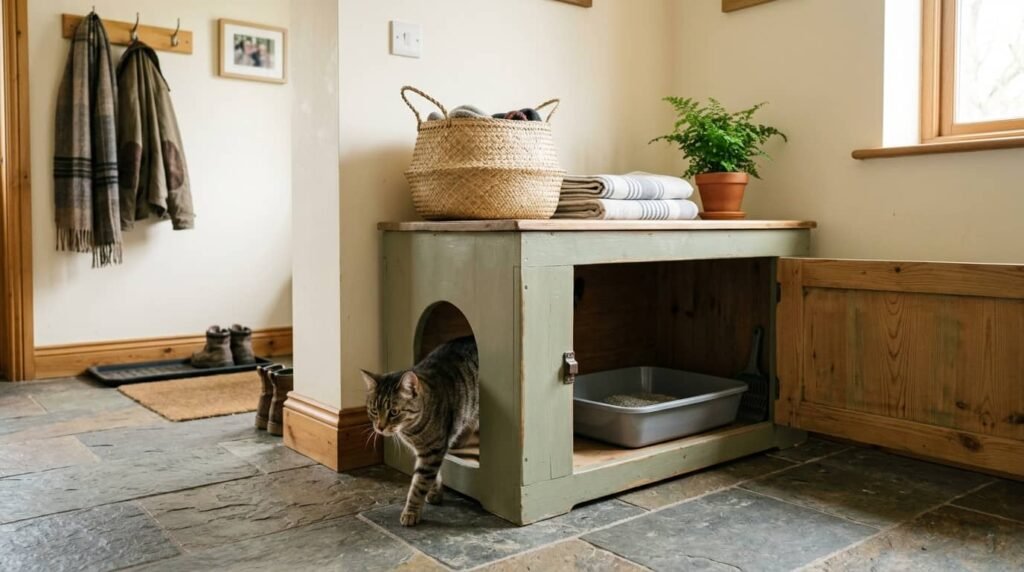
Repurposed furniture litter box enclosure with a cat walking out of a cabinet-style litter box setup in an entryway

The process is the same regardless of the piece: remove any drawers or interior shelves blocking the space, cut an entry hole in the front or side, seal the interior with paint or liner, add a hinge to any existing doors to make cleaning easier, and check that the footprint fits the litter box before committing.

The main challenge with repurposed furniture is ventilation. Old cabinets and dressers are often tightly sealed. Adding a small mesh cutout on the back panel or drilling a series of ventilation holes behind a decorative strip keeps air moving without visible gaps.

DIY Approach 3: Curtain or Tension Rod Cover

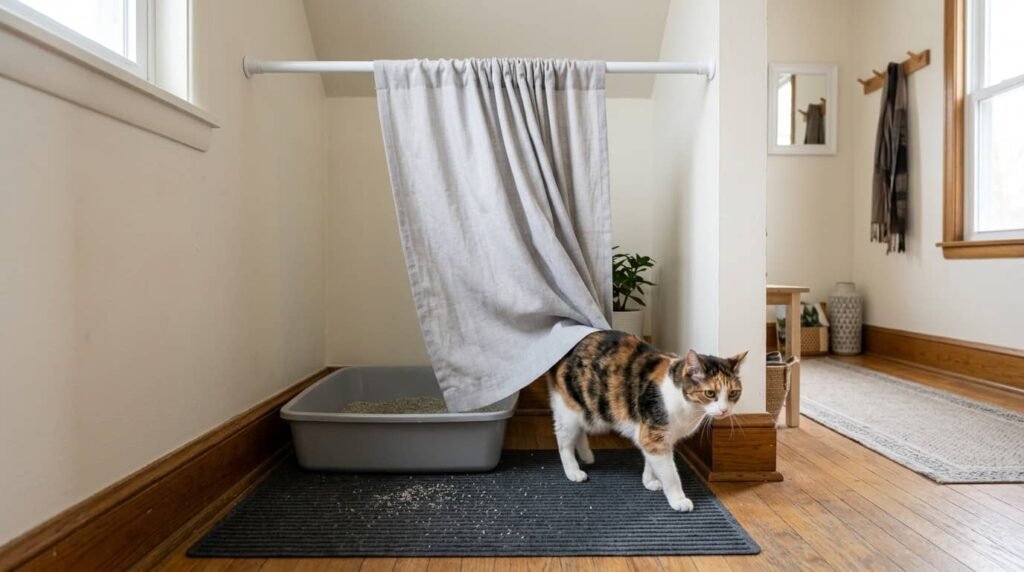
The simplest approach: install a tension rod in a doorway or under a table and hang a curtain that hides the litter box behind it. No cutting, no assembly. The cat walks behind the curtain to access the box.

Curtain tension rod litter box cover showing a cat leaving a simple hidden litter box setup in a hallway nook

This works well in laundry rooms, under bathroom sinks, or in any recessed alcove. It doesn’t provide odor containment and won’t fool anyone who looks directly at it, but it’s the fastest solution and completely reversible. If your main challenge is fitting a litter box into a small bathroom in the first place, our guide to the best litter boxes for small bathrooms covers corner and top-entry designs that use space efficiently before an enclosure is needed.

What to Put Inside

The litter box you use inside a DIY enclosure matters as much as the enclosure itself. Enclosed spaces amplify odor faster than open ones, so choosing a litter with strong odor control is more important here than in an open setup.

A large open litter box works well inside most enclosures because the open design allows the cat to see their surroundings while using it, which reduces the enclosed feeling. An extra large open litter box is the most practical choice for most DIY cabinet enclosures.

For litter, clumping formulas with strong odor control between scoops work best. Boxiecat Unscented and Naturally Fresh Walnut are both worth considering because strong odor control matters more inside enclosed setups. A litter mat inside the enclosure or just outside the entry hole catches scatter before it leaves the cabinet. See the best cat litter mat guide for options.

If you’d rather buy a finished enclosure than build one, this guide covers the best litter box enclosure furniture options including ECOFLEX cabinets, bench styles, and decorative planters.

Common Mistakes to Avoid

Building before measuring the litter box. Always measure the actual litter box first, including height if using an automatic box. Many DIY enclosures end up too small because the builder measured the available space rather than the box dimensions.

No ventilation. A sealed enclosure smells worse than an open litter box within days. Always include some form of airflow, even if it’s just a series of holes drilled on the back panel.

Poor cleaning access. If scooping requires lifting the litter box out of the enclosure every time, it won’t happen as often. Build cleaning access into the design from the start.

Skipping waterproof lining. Particleboard and plywood absorb urine permanently if not sealed. Line or paint the interior before placing any litter.

Entry hole too small or too high. A hole that makes your cat hesitate creates avoidance. When in doubt, make it bigger and lower.

Putting the enclosure in the wrong spot. The furniture placement and the cat’s preferred bathroom location are not always the same. If the cat was using the box in one corner, the enclosure belongs in that corner.

FAQ

What IKEA furniture is best for a DIY litter box enclosure?

BESTA is the most versatile because it comes in multiple widths, accepts custom doors, and has a solid interior that fits most litter boxes. KALLAX works well for single-cube standalone enclosures. PLATSA is better for custom or built-in installations. IVAR suits anyone who wants a pine or painted wood look.

How big does the entry hole need to be?

At least 6 to 8 inches wide and 6 to 8 inches tall for most adult cats. For larger breeds, go bigger. The bottom of the hole should sit 3 to 4 inches from the floor so cats can step in without jumping. A jigsaw cuts a clean hole in most cabinet materials.

How do I reduce smell in a DIY litter box enclosure?

Ventilation and frequent scooping are the two biggest factors. Cut a ventilation slot or mesh panel on the back or side of the enclosure. A small carbon filter behind the ventilation opening helps further. Using a litter with strong odor control matters more in an enclosed space than in an open one.

Can I use an automatic litter box inside a DIY enclosure?

Yes, but measure carefully before building. Automatic litter boxes are often taller and wider than standard boxes. The enclosure needs enough interior height for the dome or globe to function, and cleaning access needs to accommodate the waste drawer. Check the specific dimensions of your machine before building.

Do cats accept enclosed litter boxes?

Many cats do, especially if the enclosure is roomy, ventilated, easy to enter, and introduced gradually. Cats that are anxious or have been startled near the litter area may resist enclosed spaces more than confident cats. If your cat hesitates, leave the enclosure door open for a week while they adjust.

Perfect Litter Box
Logo
DMCA.com Protection Status