Disclaimer: This post may contain affiliate links. As an Amazon Associate, we earn from qualifying purchases.
Last updated on October 6, 2026
Wood cat litter comes in more than one form, and the forms don’t clean up the same way. Some turn to sawdust, and others clump like clay. Below you’ll see the three real types, the routine each one needs, and a couple of litters that sound like wood but aren’t.
The wood litters you’ll most often see fall into three formats: pine pellets that break down into sawdust, clumping pine with an added clumping agent, and clumping wood fiber. Choose the routine you want first, then the type.
The Three Types of Wood Cat Litter
Pine Pellets: They Turn to Sawdust
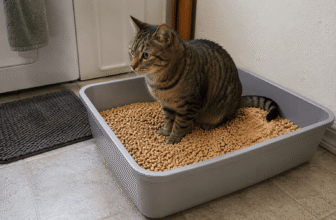
Pine pellets are compressed pine that falls apart into sawdust where urine hits it. Dry pellets keep their shape. There are no clumps to scoop.
Feline Pine’s directions for its Original pellets are to scoop solids, shake the box so whole pellets rise, and leave the sawdust underneath. When the box is about 90% sawdust, you start fresh. Our pine pellets guide walks through the full routine.
Clumping Pine: Pine With a Clumping Agent
Clumping pine is a separate product, not a pellet that happens to clump. Feline Pine says its Clumping formula combines natural pine with a plant-derived clumping agent and mineral oil for dust control.
Urine forms clumps you scoop out, much like clay. It suits owners who like the idea of pine but don’t want the sawdust routine. It’s less widely available than Feline Pine’s pellets, so check what your local stores carry.
Clumping Wood Fiber: A Familiar Scooping Routine
Clumping wood fiber is wood broken down into small granules that bind when wet. ökocat Original is a common example. ökocat says it uses reclaimed wood fiber with no added fragrance, dyes or synthetic chemicals.
You scoop clumps like you would with clay. ökocat makes several textures, from a soft fine fiber to larger low-tracking granules, which our ökocat cat litter review compares.
Litters That Sound Like Wood but Aren’t
Some litters sound wood-based because of a scent or plant name, but that does not make them wood litter. A cedarwood-scented clumping litter is still clay underneath, with a fragrance added.
Bamboo litter is plant-based, but bamboo is a grass, not wood. If you want the routines described above, check the bag’s ingredients rather than the scent name.
Which Wood Cat Litter Fits Your Routine
If you want to keep scooping clumps the way you do with clay, look at clumping wood fiber or clumping pine. If you’re open to a new routine with no clumps, pine pellets are the option. Whatever you choose, follow the fill depth on the bag.
Ready to compare specific products? Our best wood cat litter guide has a pick for each type.
Frequently Asked Questions
Does wood cat litter smell like wood?
Pine litters smell like pine, and that’s the wood itself, not added fragrance. Clumping wood fiber like ökocat has no added scent, though the material has its own natural smell.
Can you use wood cat litter in an automatic litter box?
It depends on the machine and the litter. ökocat says it recommends its clumping wood litters only for manual litter machines, not automatic ones, and says its Low Tracking formula does not work in litter machines because the pellets are too large. Whisker also rules out absorbent wood pellet litter for Litter-Robot. Check your machine’s manual before choosing a wood litter.
Is wood cat litter good for kittens?
AAHA suggests starting kittens with unscented clumping litter, the litter they used before, or both. If you’re choosing a different litter type, that guidance is worth considering.
How do I switch to wood cat litter?
Check the new litter’s bag for directions first. Feline Pine gives its own layering method for its pellets, which our guide on how to transition cat litter explains along with what to do when a bag gives none.