Where to Put a Litter Box in a Small Apartment (What Works)

where to put a litter box in a small apartment bathroom corner with open litter box and cat

Disclaimer: This post may contain affiliate links. As an Amazon Associate, we earn from qualifying purchases.

Living in a small apartment with a cat forces you to deal with one annoying question pretty quickly. Where do you actually put the litter box?

Most advice you’ll find online sounds good until you look around your place and realize none of it applies. There’s no spare room. The bathroom is too tight. The living room is a shared space. And the bedroom starts to feel like the only option left.

That’s where things get frustrating, because every spot comes with a tradeoff. If you hide the box, the smell gets worse. If you leave it out, you have to look at it. If you squeeze it into a corner, it might not even work for your cat.

This guide is built around what actually works in small apartments. Not ideal setups, not picture-perfect homes, just real placements that people use when space is tight.

There’s no perfect place for a litter box in a small apartment. The goal is to pick the spot that causes the least problems.

Quick Answer:

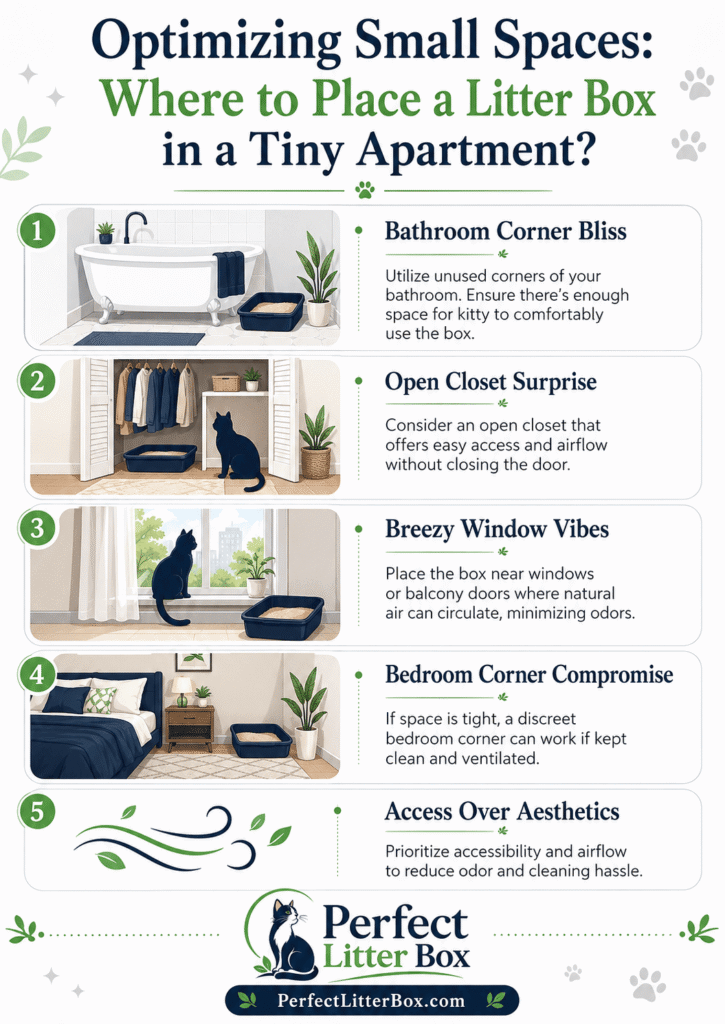
The best place to put a litter box in a small apartment is a low-traffic area with good airflow that you can easily clean every day. Common spots include a bathroom corner, an open closet setup, near a window, or a quiet bedroom corner.

Where to Put a Litter Box in a Small Apartment

The best place to put a litter box in a small apartment is a low-traffic area with good airflow that you can easily clean every day.

That usually ends up being one of these:

  • A bathroom corner, if there’s enough space to actually use it
  • An open closet setup that isn’t sealed shut
  • Near a window or balcony door where air moves
  • A bedroom corner, when there’s no other option

What matters most isn’t hiding the box. It’s making sure air can move around it and that you can keep it clean without hassle.

If you block it off too much or make it hard to reach, smell builds up fast and the whole apartment feels it.

There’s no perfect place for a litter box in a small apartment. The goal is to pick the spot that causes the least problems.

where to put a litter box in a small apartment with bathroom closet bedroom and window placement ideas

Why This Is So Hard in Small Apartments

In a bigger place, you can just stick the litter box in a laundry room and forget about it.

That doesn’t exist here.

Every spot in a small apartment overlaps with something else. Your living room is also your dining area. Your bedroom might be the only quiet space. Even the bathroom can feel cramped once you try to fit a box in there.

So every decision comes with a downside.

Put it in the bathroom and you lose space.
Put it in the living room and everyone sees it.
Put it in a closet and the smell builds up.

That’s why this feels harder than it should be.

You’re not choosing a “good” location. You’re choosing the one that causes the least problems.

The Biggest Mistake: Trying to Hide the Litter Box

The first instinct is always the same. Try to hide it.

Put it in a closed cabinet. Tuck it into a tight closet. Buy one of those covered boxes that looks neat from the outside.

It sounds like the right move, but this is where a lot of setups go wrong.

When you block off airflow, you trap moisture and odor inside the box area. It builds up faster, smells stronger, and lingers longer in a small apartment. Then every time your cat uses it, that smell has nowhere to go except out into the room all at once.

That’s why some “hidden” litter boxes end up smelling worse than ones sitting out in the open.

There’s also the cleaning problem. If the box is hard to reach, it gets scooped less often. Even missing one day makes a difference in a small space.

Airflow Matters More Than Hiding

A slightly visible litter box with good airflow will almost always smell less than a hidden one with none.

That doesn’t mean you have to leave it in the middle of the room. It just means you don’t want to seal it off.

Better setups usually look like this:

  • A closet with a curtain instead of a closed door
  • Furniture with an open back or large cutout
  • A corner near a window where air naturally moves

The goal is simple. Let air move through the space while keeping the box somewhat out of the way.

A Quick Reality Check

If your apartment smells, it’s usually not because the box is visible.

It’s because:

  • Air isn’t moving
  • The box is too enclosed
  • Or it’s not easy enough to clean consistently

Fix those three things and placement gets a lot easier.

Real Setups That Actually Work in Small Apartments

This is where it gets more practical.

These aren’t “perfect” solutions. These are setups people actually use when space is tight and there’s no obvious place to put a litter box.

The Curtain Closet Setup

This is one of the most common solutions when you have any kind of closet space.

Instead of closing the door, you remove it or keep it open and use a curtain. That keeps the box out of sight without trapping air.

What makes this work is airflow. The curtain hides it visually, but air can still move in and out.

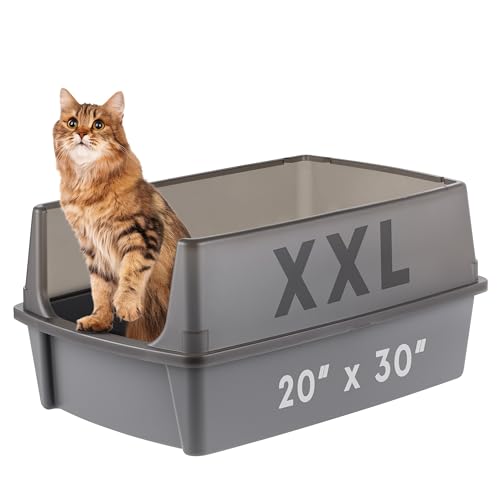
This is also a good place to use a larger litter box, not a tiny one. A lot of setups go wrong here because the box is too small, which leads to mess and smell building up faster.

One option that works really well in this kind of setup is a stainless steel box like this. It’s larger, easy to clean, and it doesn’t hold onto odor the way plastic boxes do. That matters a lot when the box is sitting in a closet space, even with airflow.

If you’re comparing materials, this is where the difference really shows. You can read more about that here: Are stainless steel litter boxes better than plastic ones?

You don’t have to overthink it. Bigger box, easier cleaning, less smell buildup.

The Corner Setup (Using Dead Space)

Every small apartment has at least one awkward corner that doesn’t get used properly.

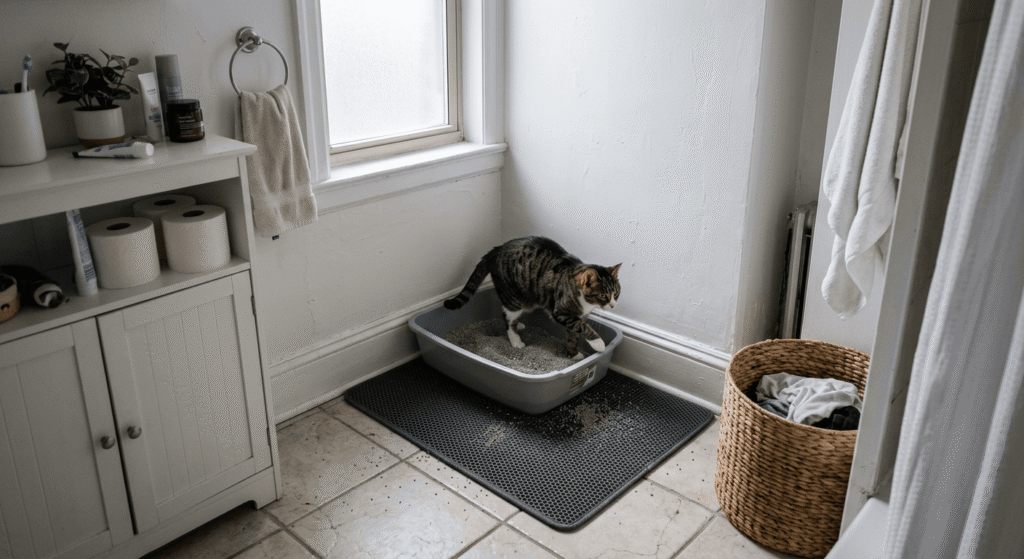
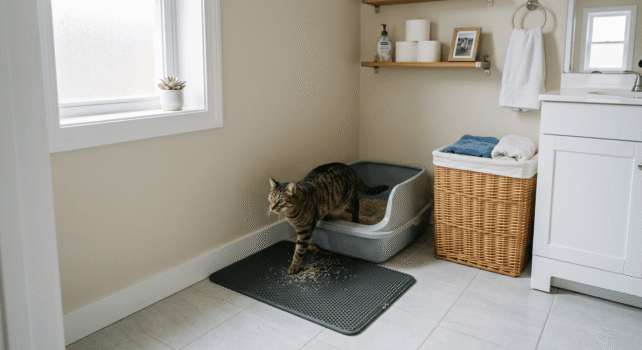
litter box in small apartment bathroom corner with cat using open litter box and litter mat

A litter box placed in a tight bathroom corner, a common and practical solution in small apartments.

That’s usually where the litter box ends up.

This works best when you lean into it instead of trying to hide it completely. Use a corner-friendly box or a high-sided one and build around it.

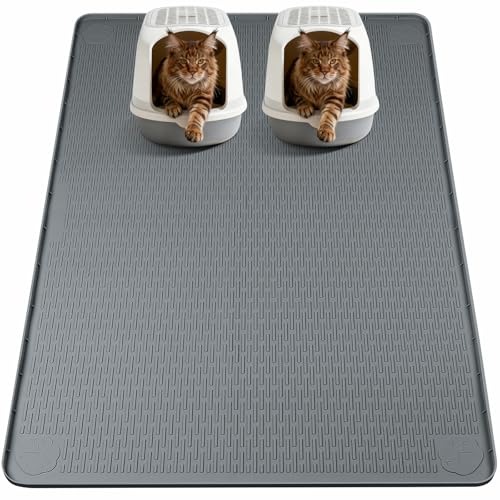
If tracking is an issue, this is where a larger litter mat setup makes a difference. One small mat usually isn’t enough in tight spaces. Overlapping two mats or using a wider one keeps litter from spreading into the rest of the room.

Near a Window or Balcony Door

If you have any kind of natural airflow, use it.

Placing the litter box near a window or balcony door helps move odor out instead of letting it sit in the room.

This is one of the easiest ways to make a noticeable difference without changing anything else.

If smell has been a constant issue, pairing this setup with a better litter type helps even more. Low-dust or odor-locking litter tends to perform better in small spaces where everything is close together.

Modified Furniture (Without Sealing It Off)

A lot of people try to buy furniture that completely hides the litter box.

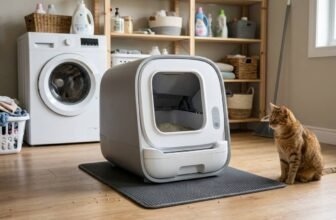
The problem is most of those are sealed boxes with a small entrance hole, which traps smell inside.

A better approach is modifying something you already have.

That could be:

  • removing the back panel of a cabinet
  • cutting a wider side opening
  • leaving one side partially open

This way, it still looks like furniture, but it doesn’t turn into an odor trap.

Where Products Actually Help (Without Overcomplicating It)

You don’t need a bunch of fancy gear, but a few things make a noticeable difference in small apartments:

Those four things matter more than trying to “hide” the box perfectly.

The Studio and Roommate Problem

Sometimes there isn’t a good spot.

If you’re in a studio or sharing an apartment, the usual options don’t really work. The living room is shared space. The kitchen is off-limits. The bathroom might be too small.

So the litter box ends up in the bedroom.

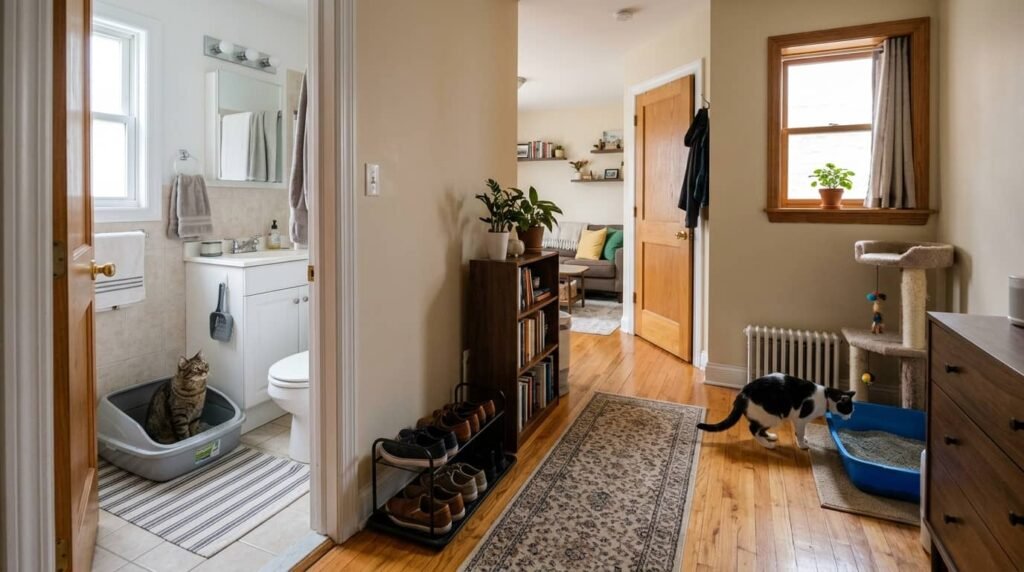
two litter boxes in small apartment with cats using separate bathroom and living area setups

Placing litter boxes in separate areas can make small apartments easier to manage and reduce stress for cats.
It’s not ideal, but it’s normal.

The goal here isn’t to make it perfect. It’s to make it manageable so it doesn’t take over the whole room.

When the Bedroom Is the Only Option

Start by picking the least intrusive corner you have.

Try to keep some distance between the box and where you sleep. Even a few extra feet makes a difference in a small space.

If you can, place it near a window or somewhere air can move. That alone can cut down on lingering smell.

This is also where your setup matters more than the location itself.

A high-sided litter box helps keep everything contained, especially in a tight room. Pair that with a litter that controls odor well and doesn’t kick up a lot of dust.

Low-dust or pellet-style litter tends to work better in bedrooms because it doesn’t hang in the air as much after your cat uses the box.

Making It Livable Day to Day

This part matters more than anything else.

  • Scoop at least once a day
  • Don’t let waste sit overnight
  • Keep the area around the box easy to clean

If the setup is annoying to deal with, it won’t get cleaned as often. That’s when the smell starts to build.

Some people also add a small air purifier nearby, especially in bedrooms. It doesn’t replace cleaning, but it helps keep the air from feeling stale.

A Quick Reality Check

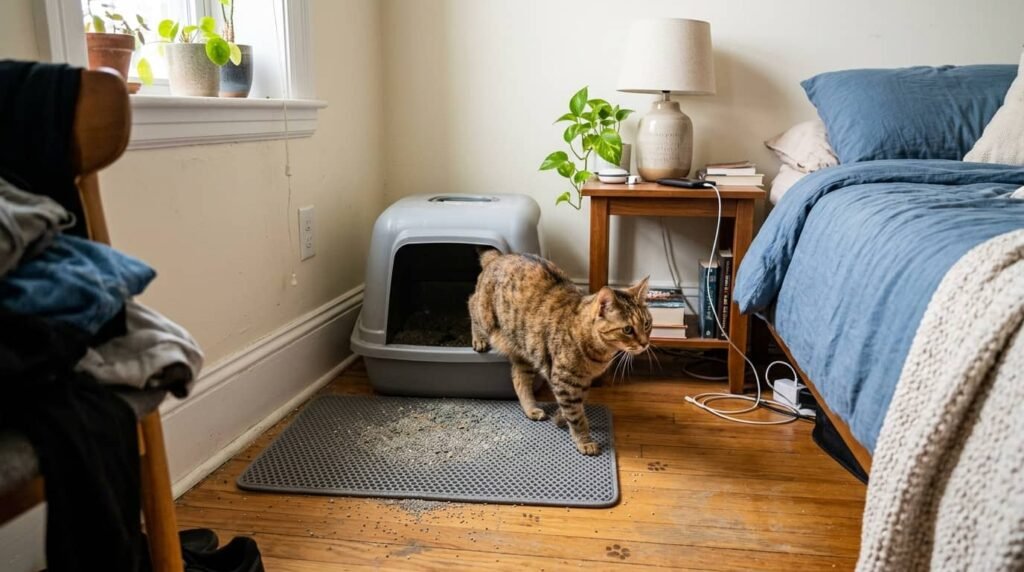
litter box in bedroom corner of small apartment with cat walking out near bed

When space is limited, a bedroom corner can become the most practical place for a litter box.

If your litter box is in your bedroom, you’re going to notice it sometimes.

That’s just part of living in a small space with a cat.

But if airflow is decent, the box is easy to clean, and you’re using the right setup, it won’t take over the entire room.

Stopping the “Dirty Floor” Problem

Even if the litter box itself is clean, the area around it can make your whole apartment feel dirty.

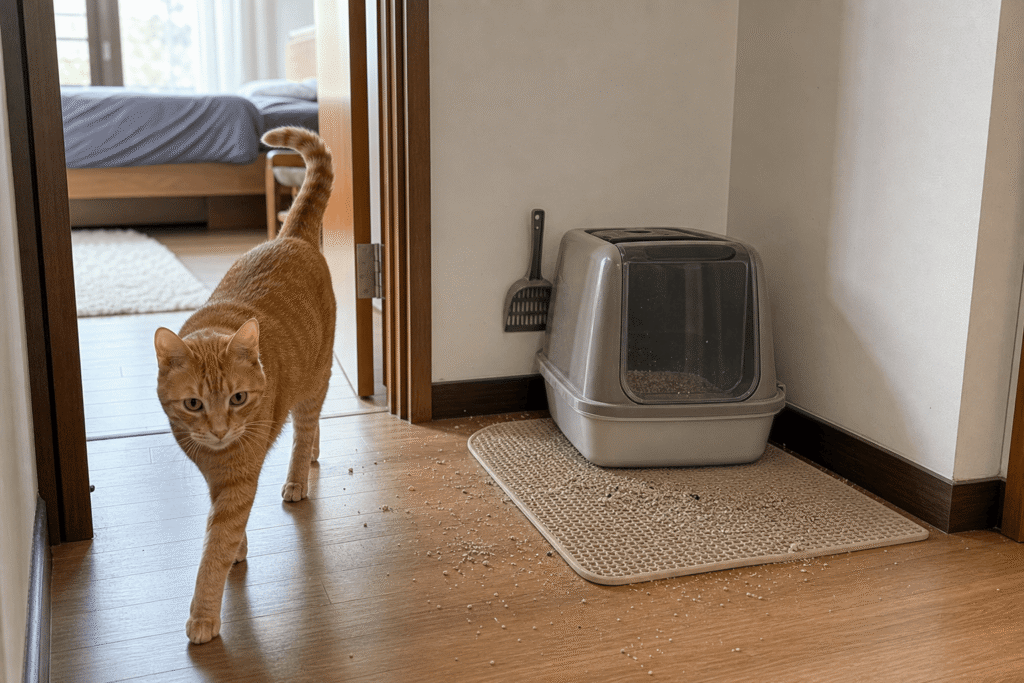
litter box in small apartment hallway with cat walking away and litter scattered on floor

Even when tucked away, litter boxes can still track mess into nearby living spaces.

Litter gets stuck to your cat’s paws, gets tracked across the floor, and somehow ends up in places that don’t even make sense. In a small apartment, that mess spreads fast because everything is so close together.

This is why some setups feel worse than they actually are. It’s not always the smell. It’s the constant grit on the floor.

Why Tracking Gets Worse in Small Spaces

There’s less room for litter to “stay contained.”

In a bigger home, a few scattered pieces don’t matter. In a small apartment, you notice every single one.

And if you have carpet, it gets worse. Litter gets pressed in and doesn’t come out easily, which makes the whole space feel unclean even when you’ve just vacuumed.

What Actually Reduces Tracking

You don’t need anything complicated, but the setup has to work together.

Start with the box itself.

A high-sided litter box helps keep litter inside when your cat digs or kicks. If your cat tends to scatter a lot, this alone makes a noticeable difference.

Then fix what happens when they step out.

A single small mat usually isn’t enough in a tight space. Litter ends up going around it instead of getting caught.

What works better is:

This forces your cat to walk across the surface instead of jumping straight onto your floor.

If you’re placing the box in a corner, it helps to position the opening so your cat has to step forward onto the mat, not sideways onto the floor.

Small Adjustment That Makes a Big Difference

Try facing the opening of the box toward a wall with a small gap.

Your cat steps out, turns, and then walks across the mat instead of launching straight out into the room.

It sounds minor, but it cuts down on how far litter spreads.

If You Have Carpet

This is where you want to be a bit more careful.

Instead of placing the box directly on carpet, put something underneath it.

A simple tray, boot mat, or waterproof base helps catch anything that misses or spills. It also makes cleanup easier and protects the floor underneath.

If tracking is a constant issue, it’s worth going deeper into a full guide on litter tracking problems in apartments and how to fix them.

Bad Advice You Should Ignore

A lot of litter box advice sounds good until you actually try it in a small apartment.

Here are a few things that get recommended all the time but don’t really hold up.

“Just Put It in a Closet”

This only works if the closet stays open or has airflow.

Closing the door traps smell and moisture inside. Then every time your cat uses the box, that smell builds up and hits harder when it finally escapes.

Closets can work, but only if you treat them like an open space, not a sealed one.

“Use a Covered Litter Box”

Covered boxes seem like the obvious fix.

In reality, they often make things worse in small apartments.

They trap smell inside, hold moisture, and can get unpleasant fast if you’re not cleaning constantly. Some cats also don’t like using them, which creates a whole different problem.

If you’re using one, it helps to keep it in a well-ventilated spot and stay on top of cleaning.

“Just Use Deodorizers”

Deodorizers don’t solve the problem. They just try to cover it up.

If the setup isn’t working, adding scent on top of it usually makes the air feel heavier, not cleaner. Some cats also avoid strong smells, which can lead to accidents outside the box.

Odor control comes from airflow, cleaning, and the right setup, not from masking it.

“A Smaller Box Fits Better”

This one causes more problems than people expect.

Trying to squeeze a tiny box into a tight space often leads to:

  • litter getting kicked out
  • cats missing the edges
  • more mess and stronger smell

A slightly larger box that fits your cat properly is almost always easier to manage, even in a small apartment.

What Actually Matters Instead

If you ignore everything else, focus on this:

  • Keep the box easy to reach so you clean it regularly
  • Don’t block airflow
  • Use a setup that contains mess instead of hiding it

That’s what makes the biggest difference day to day.

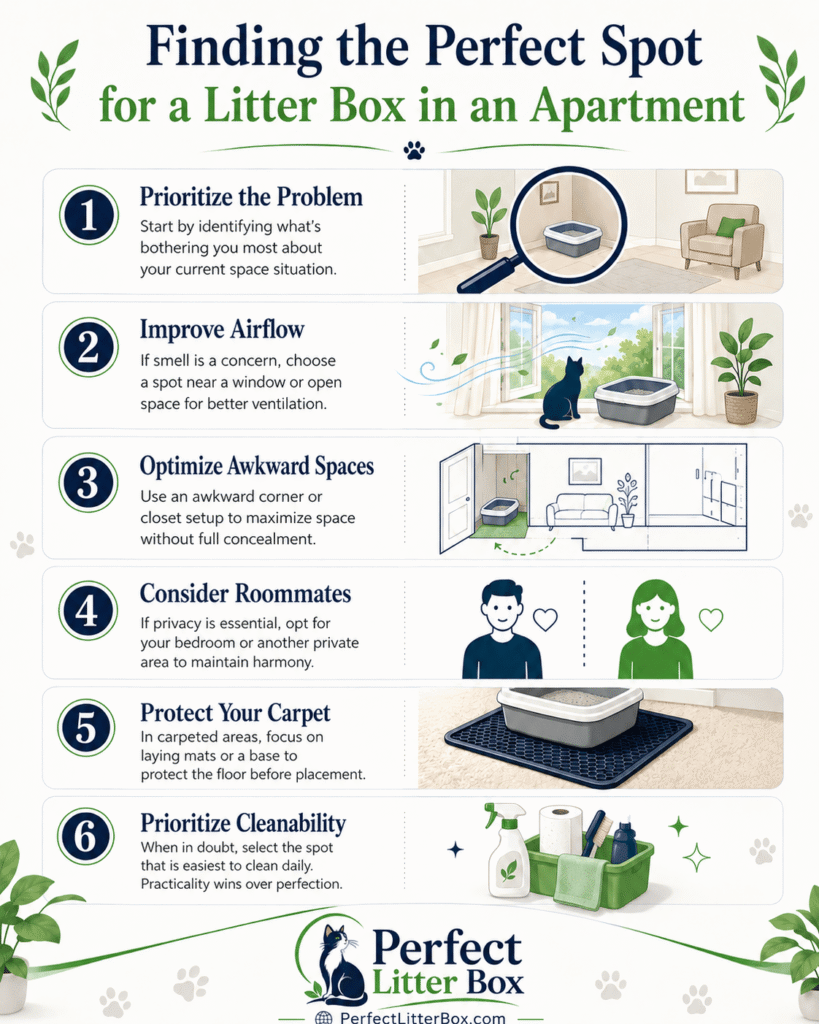
How to Choose the Best Spot in Your Apartment

If none of the options feel right, that’s normal.

At this point, it helps to stop looking for the “best” spot and just pick the one that solves your biggest problem.

Start with what’s bothering you most:

  • If smell is the main issue, put the box where air can move. Near a window or open space usually works better than a closed corner.
  • If space is the problem, use an awkward corner or a closet setup with airflow instead of trying to hide it completely.
  • If you have roommates, the bedroom or a private area is usually the only realistic option.
  • If you have carpet, focus on protecting the floor with mats and a base before worrying about placement.

If nothing feels ideal, choose the spot that’s easiest to clean every day.

That matters more than finding a perfect location.

guide showing where to put a litter box in a small apartment including airflow corners and carpet protection

Where to Keep Litter and Supplies in a Small Apartment

The box is only part of the setup.

In a small apartment, the supplies can get just as annoying if they’re not organized.

Keep everything close to the litter box so you’re not walking across the apartment every time you need to clean it.

A simple setup works best:

  • Store litter in a sealed container nearby so it doesn’t spill or smell
  • Keep the scoop within reach so cleaning takes seconds, not effort
  • Use a small covered bin for daily waste instead of carrying it out every time

The easier it is to deal with, the more consistent you’ll be.

And consistency is what actually keeps the smell under control.

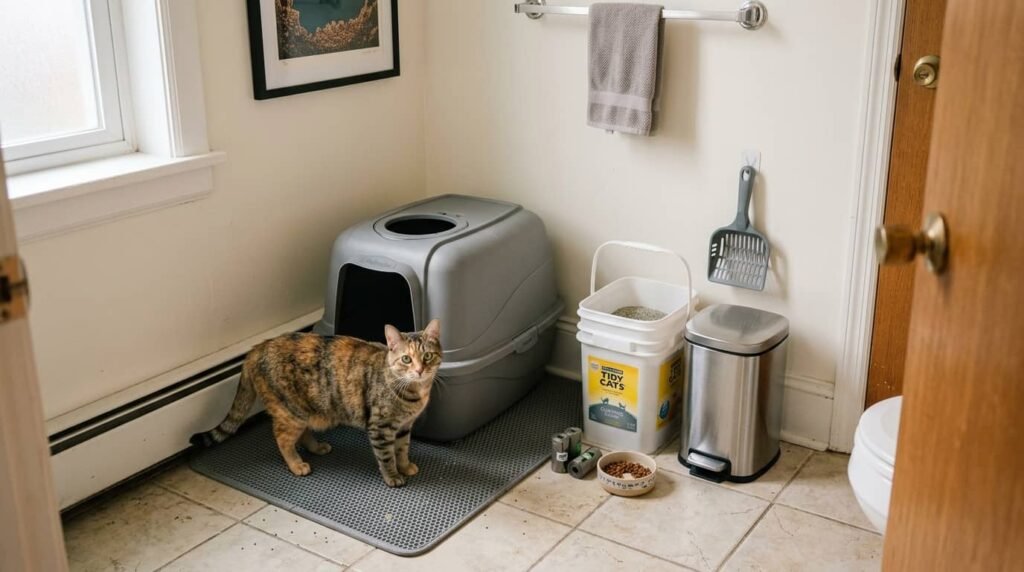
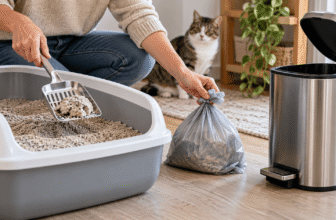
litter box with nearby litter container scoop and trash bin in small apartment bathroom

Keeping litter, a scoop, and a trash bin close by makes daily cleaning much easier in small spaces.

The Best Spot Is the One You Can Maintain

At some point, every setup comes down to the same thing.

If it’s easy to clean, it works.
If it’s annoying to deal with, it slowly turns into a problem.

A hidden setup that’s hard to reach gets ignored.
A simple setup that’s easy to access gets cleaned.

That’s the difference.

So instead of trying to make the litter box disappear, focus on making it manageable.

Enough space for your cat, and a setup you don’t avoid dealing with.

That’s what actually works in a small apartment.

FAQ

Can I put a litter box in my bedroom?

Yes, and in a small apartment it’s often the only option.

Keep it as far from your bed as possible and place it near airflow if you can. Daily cleaning matters more here than anywhere else, since you’ll notice it faster in a smaller space.

Is the bathroom the best place for a litter box?

Only if there’s enough space to use it comfortably.

Small bathrooms can make cleaning harder and limit airflow. If the box feels cramped or awkward to reach, it usually won’t work well long term.

Can you keep a litter box in a closet?

Yes, but only if it’s not sealed off.

Closets work best when the door is removed or left open, or replaced with a curtain. If air can’t move, smell builds up quickly.

How do you hide a litter box without making it smell?

Don’t fully hide it.

Use setups that block the view but not airflow, like curtains, open furniture, or partial barriers. A fully enclosed space usually makes odor worse, not better.

Where should you not put a litter box?

Avoid placing it:

  • Right next to where you eat
  • In high-traffic walkways
  • Inside sealed cabinets or tight enclosed spaces
  • Directly under air intake vents

Those spots either spread odor or make the box harder to use and maintain.

How often should you clean a litter box in a small apartment?

At least once a day.

In a small space, even one missed day makes a noticeable difference. Keeping it clean consistently is what prevents smell from taking over.

What if my apartment is carpeted?

Use a larger mat setup and place something protective under the box.

A waterproof base or tray helps prevent damage and makes cleanup easier. Without that, litter and moisture can get stuck in the carpet.

Is a covered litter box better for small apartments?

Not always.

Covered boxes can trap odor and moisture, especially in tight spaces. An open or well-ventilated setup is usually easier to manage.

Final Thoughts

There isn’t a perfect place to put a litter box in a small apartment.

Every option comes with a tradeoff. You’re either giving up space, dealing with visibility, or managing smell a bit more closely.

What actually works is keeping things simple.

Pick a spot with some airflow, make sure it’s easy to clean, and use a setup that contains mess instead of trying to hide it completely.

Once those three things are in place, the exact location matters a lot less.

It won’t be perfect, but it will be manageable. And in a small apartment, that’s what you’re really aiming for.

Perfect Litter Box
Logo