Disclaimer: This post may contain affiliate links. As an Amazon Associate, we earn from qualifying purchases.
Last updated on October 16, 2026
Choosing the best cat litter for asthmatic cats comes down to two features worth checking closely: dust and added fragrance. Cornell’s Feline Health Center lists dusty litter among suspected triggers for cats with asthma, and VCA lists perfume and other scented products among possible triggers.
Litter doesn’t treat asthma. If your cat has asthma or breathing symptoms, follow your veterinarian’s plan. This guide only compares litter features such as dust and added fragrance.
Quick Picks
Paper Pellet Pick: ökocat Dust Free Paper Pellets
Unscented Clay Pick: Arm & Hammer Ultra Last Unscented
Strong-Clumping Clay Pick: Ever Clean Extra Strong Clumping Unscented
No Fragrance or Dyes Pick: Fresh Step Simply Unscented
Plant-Based Pick: HoneyCare Cassava Tofu Mixed
What to Look For in Cat Litter for Asthmatic Cats
Low dust. Dust rises when you pour and when your cat digs. Dust claims on the bag are the maker’s own, so reviewer reports are a useful second check.
No added fragrance. Scented litter adds perfume to the air around the box. Look for litter labeled unscented or fragrance-free, especially if your vet has suggested avoiding fragrance.
Comparison Table
All five picks are sold as unscented.
| Litter | Type | Clumps? | Dust (per reviewers) |
|---|---|---|---|
| ökocat Paper Pellets | Paper | No | Multiple reviewers report no dust |
| Arm & Hammer Ultra Last Unscented | Clay | Yes | Low, per most reviewers |
| Ever Clean Unscented | Clay | Yes | Low, per reviewers |
| Fresh Step Simply Unscented | Clay with activated charcoal | Yes | Marketed as low dust by Fresh Step |
| HoneyCare Cassava Tofu | Cassava and tofu | Yes | Low, per most reviewers |
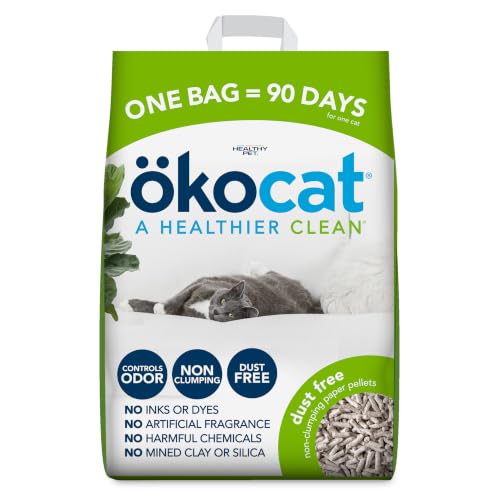
ökocat Dust Free Paper Pellets
Why It Stands Out
Multiple reviewers report no dust when pouring or scooping. It’s unscented.
Possible Downsides
It doesn’t form scoopable urine clumps, so the maintenance routine is different from clumping litter. The pellet texture is also a big change from fine clay.
Best For
Homes where getting dust as low as possible is the priority.
Arm & Hammer Ultra Last Unscented

Why It Stands Out
It’s an unscented clumping clay, and the large majority of reviewers report low dust. One reviewer says it worked well in their Litter-Robot.
Possible Downsides
Clay is heavy to carry and pour, and fine grains can track out of the box.
Best For
Owners who want to stay with a familiar unscented clumping clay.
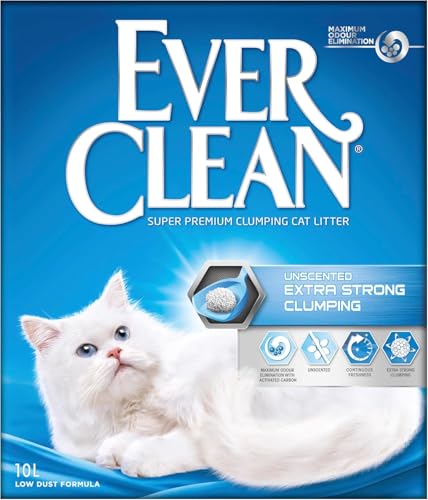
Ever Clean Extra Strong Clumping Unscented
Why It Stands Out
Reviewers report low dust and firm clumps that hold together when scooped. Several say it controls odor well even without a scent, and one reports it sifts cleanly in a Neakasa M1 automatic box.
Possible Downsides
It’s clay too, so expect the same weight and tracking as Ultra Last.
Best For
Owners who want firm clumps from an unscented clay.
Fresh Step Simply Unscented
Why It Stands Out
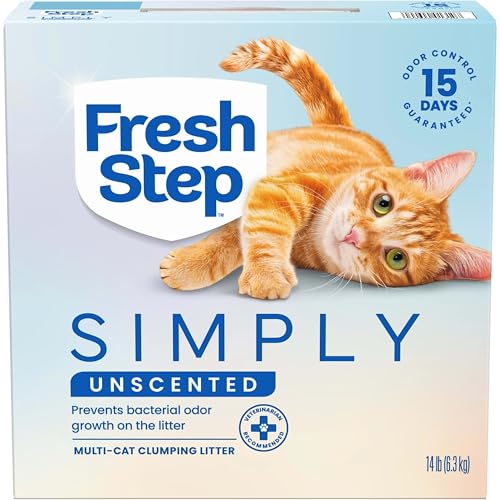
Fresh Step says it’s made without added fragrances or dyes and markets it as low dust. It uses activated charcoal for odor, and reviewers report good odor control even near a busy entryway.
Possible Downsides
The low-dust claim is Fresh Step’s own. Reviewer feedback focuses more on odor than on dust.
Best For
Owners who specifically want a litter with no added fragrance or dyes.
HoneyCare Cassava Tofu Mixed

Why It Stands Out
Reviewers confirm it’s unscented, and most who mention dust say it’s low. Multiple reviewers report firm clumps and relatively low tracking.
Possible Downsides
It comes in a 6 lb bag, so you’ll restock more often than with clay. The pellet-style texture is different from fine clay, so some cats may need a separate-box test before you switch fully.
Best For
Owners who want a low-dust clumping litter that isn’t clay.
Ways to Reduce Airborne Litter Dust
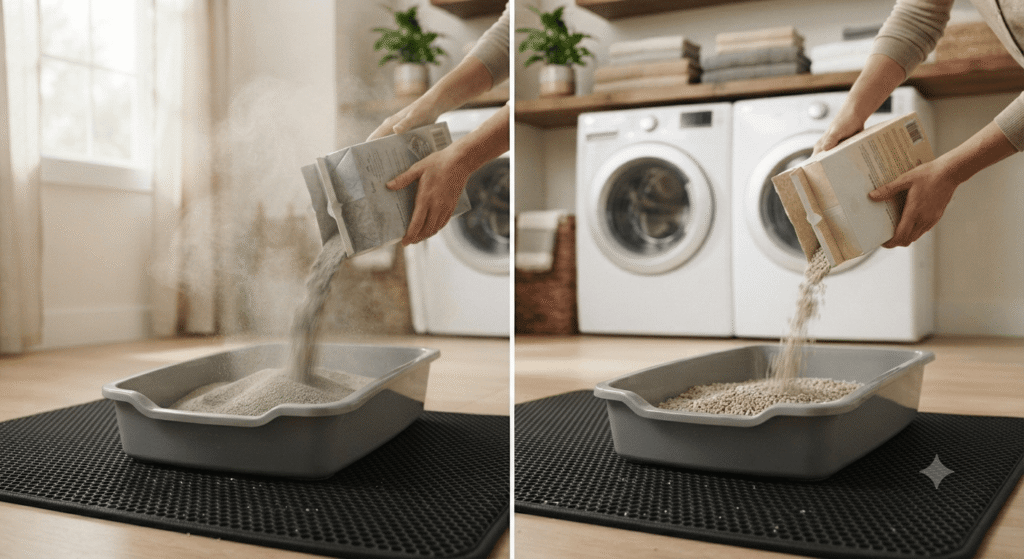
- Pour litter close to the box rather than from high above it.
- Handle and scoop it gently to avoid stirring up extra dust.
- Follow your vet’s advice about the litter-box location and other airborne irritants in the home.
For more low-dust picks, see our best dust free cat litter guide.
Frequently Asked Questions
Is clumping or non-clumping litter better for a cat with asthma?
There isn’t one best category. Compare dust and added fragrance, and ask your vet what they suggest for your cat.
Should I use a covered litter box for a cat with asthma?
There isn’t one box style that’s right for every cat with asthma. If dust or airborne irritants are a concern, ask your vet whether the box setup should be part of your cat’s management plan.
How do I switch my cat to a new litter?
Check the bag first. If it gives no directions, set up a second box with the new litter beside the old one so your cat can choose. Our guide on how to transition cat litter covers it.
What if my cat’s breathing seems worse?
If your cat is struggling to breathe, breathing with obvious effort or otherwise appears to be in respiratory distress, seek veterinary care right away. Don’t rely on a litter change to address breathing difficulty.