Disclaimer: This post may contain affiliate links. As an Amazon Associate, we earn from qualifying purchases.
Last updated on October 6, 2026
Wheat cat litter clumps using the starch in the grain itself, so it scoops much like clay without being clay. Most wheat litter on Amazon comes from one brand, sWheat Scoop, and its formulas differ more than the bags suggest. Below you’ll see how wheat litter works, what owners report, and which sWheat formula fits your home.
Wheat cat litter is a clumping, plant-based alternative to clay. sWheat Original is the plain wheat formula, Multi-Cat is positioned for busier boxes, Triple Action adds corn and added odor-control ingredients, and Easy Maintenance is the wheat-and-corn blend.
Quick Picks
Plain Wheat Pick: sWheat Scoop Original
Busy-Box Pick: sWheat Scoop Multi-Cat
Strongest Clumping Claim: sWheat Scoop Triple Action
Wheat and Corn Blend: sWheat Scoop Easy Maintenance Wheat & Corn
How Wheat Cat Litter Works
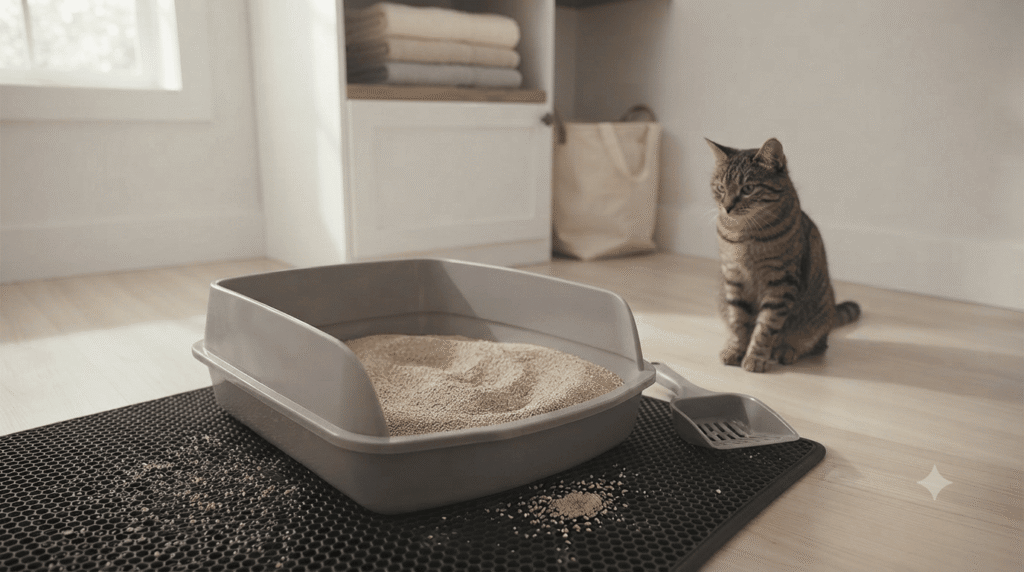
Wheat is high in starch. When urine hits the granules, the starch soaks it up and binds them into a clump you can scoop. sWheat says its Original formula is 100% USA-grown wheat with no added dyes, perfumes or chemicals.
sWheat says natural enzymes in the wheat help neutralize odors. Several reviewers describe a mild, sweet hay smell rather than perfume.
What to Expect Day to Day
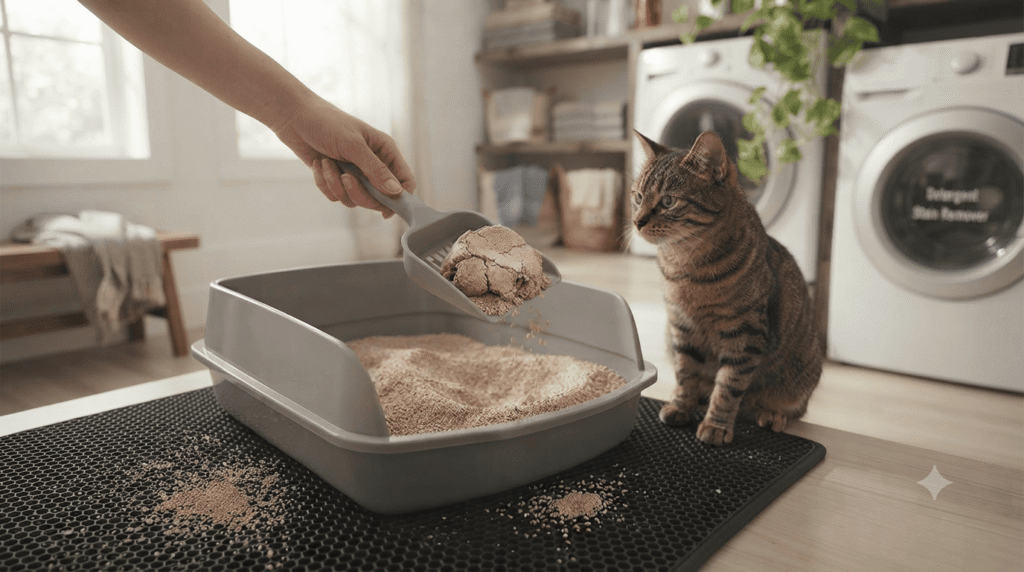
sWheat’s directions are to fill the box to 4 inches, scoop twice daily, and top up to keep that level. It suggests more depth for multiple cats.
sWheat says to keep unused litter sealed in a cool, dry place.
The sWheat Scoop Formulas Compared
| Formula | What’s in It | What sWheat Says It Adds |
|---|---|---|
| Original | Wheat | The base formula |
| Multi-Cat | Wheat | Stronger odor control and clumping than Original |
| Triple Action | Wheat, corn and odor control agents | 3X stronger clumping than Original |
| Easy Maintenance Wheat & Corn | Wheat and corn | A plant-based odor-control system in a blend |
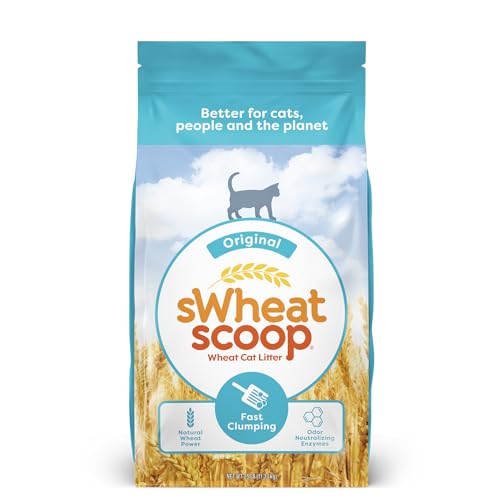
sWheat Scoop Original
Why It Stands Out
It’s sWheat’s plain wheat formula: just wheat, with no added dyes, perfumes or chemicals, per sWheat. Reviewers of the sWheat line report strong clumping and odor control, and one has used it for more than ten years.
Possible Downsides
If you want sWheat’s stronger clumping or multi-cat positioning, the brand points you to Multi-Cat or Triple Action instead.
Best For
One-cat homes that want the simplest wheat formula.
sWheat Scoop Multi-Cat

Why It Stands Out
Reviewers report strong clumping and odor control, including a 12-cat household. One owner who switched from clay shared detailed notes on how dust, tracking and odor compare.
Possible Downsides
It is still a wheat-only formula. If you want sWheat’s wheat-and-corn blend or its Triple Action odor-control formula, those are separate options.
Best For
Multi-cat homes that want a wheat-only formula with sWheat’s stronger odor-control positioning.
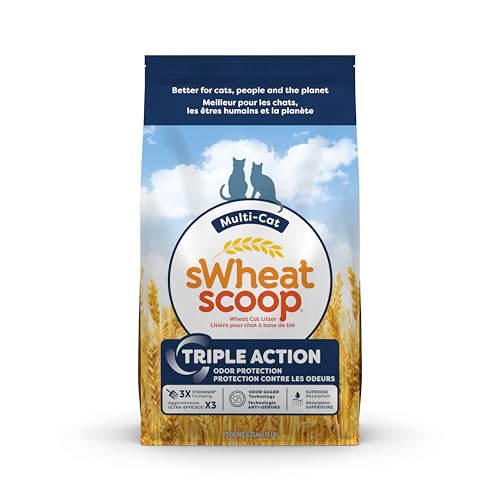
sWheat Scoop Triple Action
Why It Stands Out
sWheat says its Odor Guard technology attacks odor three ways and that it clumps three times stronger than Original. It’s unscented, with no added fragrance.
Possible Downsides
Its ingredient list includes corn and odor control agents, so it isn’t a plain wheat litter.
Best For
Owners who want sWheat’s strongest clumping claim and don’t mind corn in the blend.
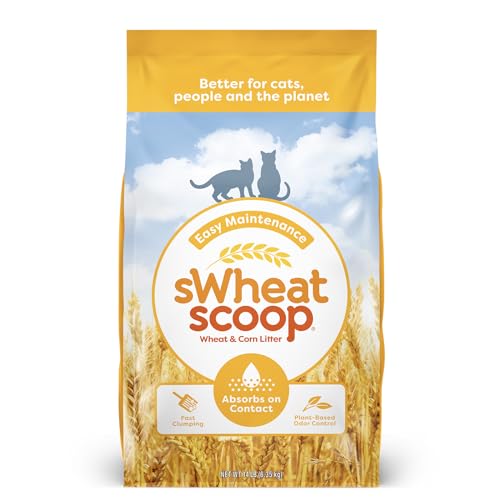
sWheat Scoop Easy Maintenance Wheat & Corn
Why It Stands Out
Most reviewers report strong clumping, and one calls it the best clumping litter they’ve used. Another says it solved an odor problem that crystal, Breeze, pine pellets and clay hadn’t.
Possible Downsides
It’s a wheat-and-corn blend with an added plant-based odor-control system. If you want a wheat-only formula, Original or Multi-Cat is the closer match.
Best For
Owners who want a wheat and corn blend rather than wheat alone. Our corn cat litter guide explains how corn litters work.
How to Switch to Wheat Litter
sWheat gives its own switching directions. Start with 3 inches of sWheat Scoop in a clean box, then add 1 inch of your current litter on top. The next time you replace the litter, use ½ inch of the old litter on top, then move to 100% sWheat Scoop.
For other brands, check the bag first. Our guide on how to transition cat litter covers the rest.
Frequently Asked Questions
Does wheat cat litter attract bugs?
Wheat is a grain, so storage matters. sWheat says to keep unused litter sealed in a cool, dry place.
Can you use wheat litter in an automatic litter box?
It depends on the machine. Whisker, for example, recommends clumping clay for the Litter-Robot. Check your manual, and see our best cat litter for automatic litter boxes guide.
Is wheat cat litter good for kittens?
AAHA suggests starting kittens with unscented clumping litter, the litter they used before, or both. If you’re choosing a different litter type, that guidance is worth considering.
Can you flush wheat cat litter?
Don’t assume a litter is flushable. Clay-based litter shouldn’t be flushed. For non-clay formulas, follow the disposal directions on the package and local wastewater rules.