Best High Wall Litter Box for a Cat Peeing Over the Edge of the Litter Box

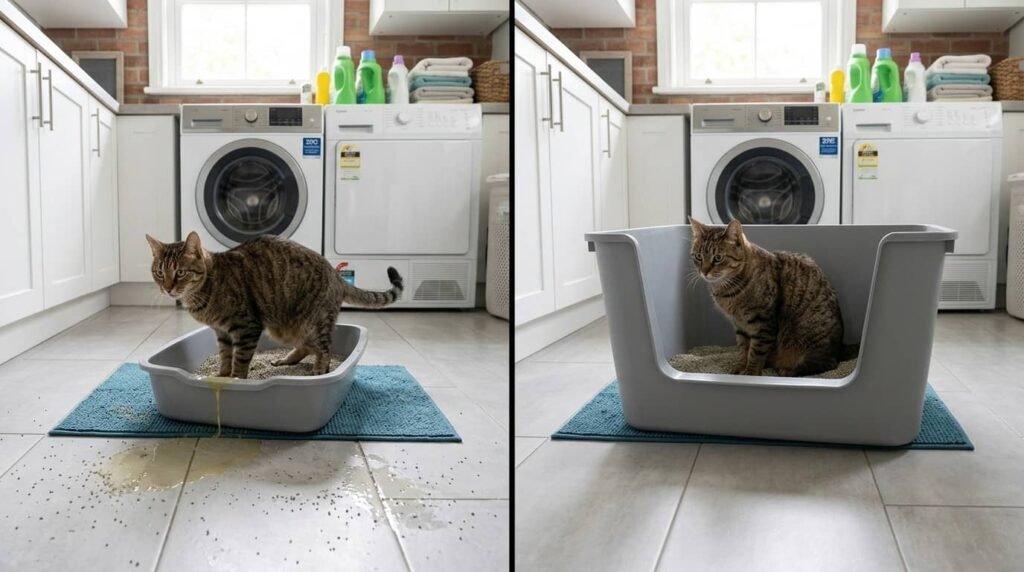
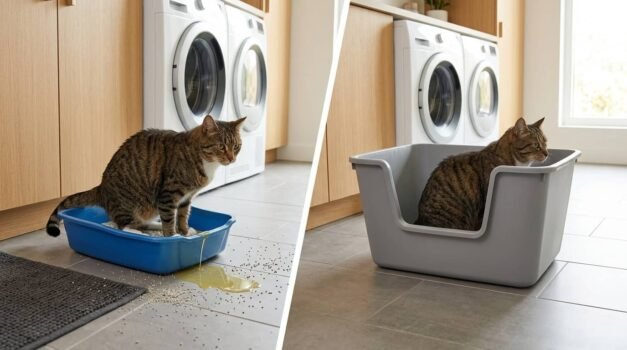
cat peeing over edge of litter box vs high wall litter box preventing mess

Disclaimer: This post may contain affiliate links. As an Amazon Associate, we earn from qualifying purchases.

There’s nothing more frustrating than setting up a clean litter box, watching your cat use it, and then finding urine running down the wall or pooling behind the box anyway.

This usually isn’t your cat being difficult or avoiding the box. When a cat is peeing over the edge of the litter box, they are still trying to use it. The problem is how they are positioned while they go.

A high wall litter box can help contain the mess, but not every “high-sided” box actually fixes it. Some still leak, some are too small, and some designs make the problem worse, depending on how your cat pees.

The real solution is to match the litter box to what your cat is actually doing in it. Once you understand that, you can stop the mess instead of constantly cleaning it up.

Quick Answer: Best High Wall Litter Box for Cats Peeing Over the Edge

A high wall litter box can stop a cat from peeing over the edge, but only if the box is large enough, has seamless sides, and matches how your cat actually pees.

Cats usually pee over the edge because they stand while going, back up too close to the wall, or aim toward the entrance. In these cases, a deeper box with taller sides or a larger footprint keeps urine inside instead of spilling out.

If the box has snap-on walls or seams, urine can leak through and run down the outside. A one-piece high wall litter box or a large storage bin style box usually works much better for this problem.

cat peeing outside litter box compared to high sided litter box preventing mess on floor

Why Standard Litter Boxes Lead to Mess (and What Fixes It)

Best High Wall Litter Box Options for Cats Peeing Over the Edge

If your cat is peeing over the edge of the litter box, the fastest way to fix it is to use a high wall litter box that matches how your cat actually pees.

Here are the options that actually work.

Best Overall High Wall Litter Box (Most Situations)

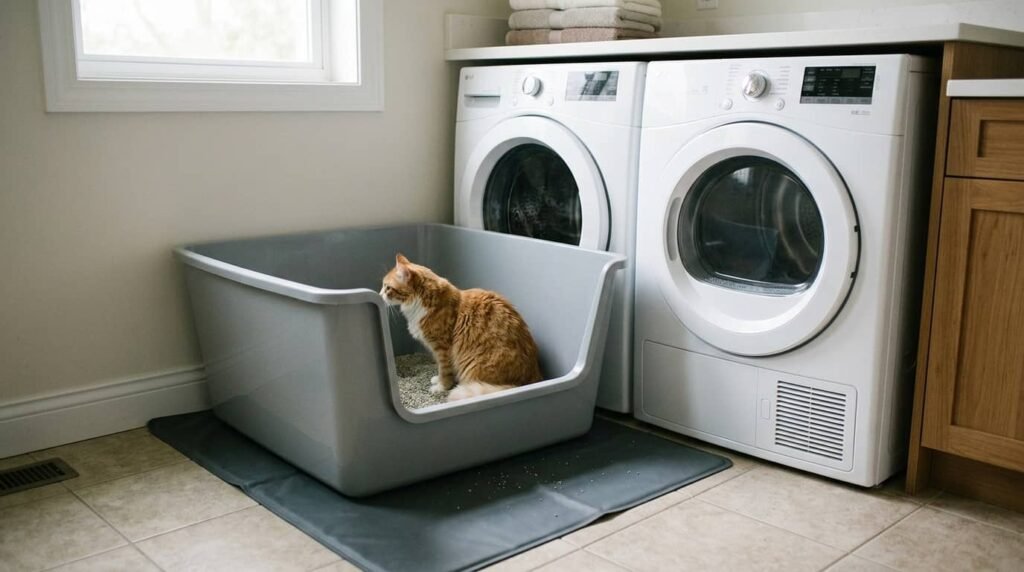
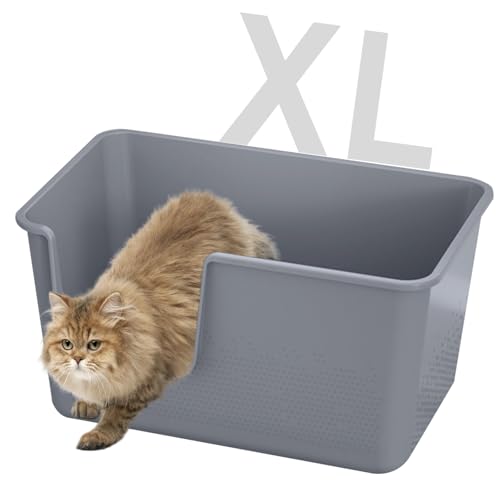
extra large high wall litter box for cats peeing over the edge wide open design

A large litter box with both high sides and plenty of floor space solves this problem in most cases.

The TownTime extra-large high sided litter box is a strong example. It measures about 24.6 inches long and nearly 17 inches wide , which gives your cat enough room to stay fully inside the box instead of ending up right at the edge.

This extra space fixes one of the most common problems: cats backing up too far. The tall sides help contain the stream, while the wide base keeps your cat positioned correctly.

This is one of the most reliable setups for large cats or cats that shift position while peeing.

The only downside is that it takes up more space and uses more litter.

View on Amazon

Best for Cats That Stand While Peeing

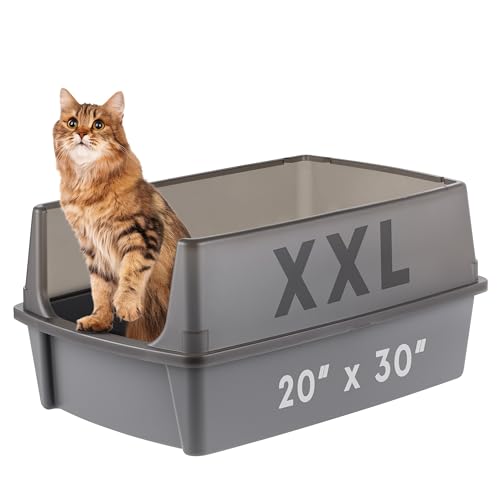
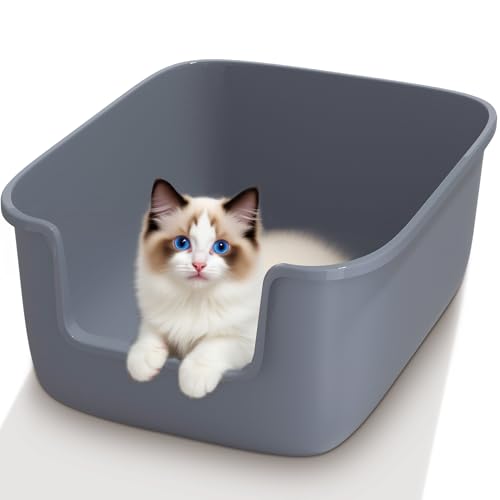
tall high sided litter box for cat peeing over the edge with 13 inch walls

Some cats start in a squat, then lift their back end as they go. When that happens, the urine hits much higher than most litter boxes are designed for.

The TAILRYTH high sided litter box works well here because it has tall 13.8-inch walls and a simple open design. There are no seams or attachments near the top, so when urine hits the wall, it stays inside instead of leaking out.

This is a good fit for cats that consistently pee high or raise their back end while going.

It is slightly narrower than some larger boxes, so it may not be ideal for very large cats.

View on Amazon

Best for Tight Spaces

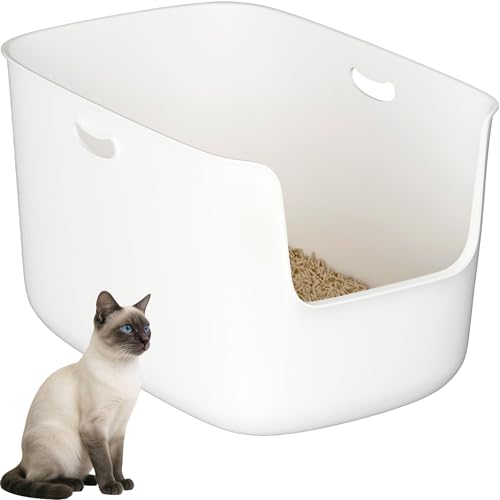
narrow high wall litter box for small spaces and cats peeing over the edge

If you don’t have room for a wide litter box, a slightly narrower design can still solve the problem.

The SpaceTime extra-large high sided litter box gives you tall sides and enough length to help with positioning, while keeping the footprint more compact at about 22.6 by 14.7 inches .

It still contains higher streams and helps reduce mess, but the narrower width means it works best in smaller spaces rather than for large cats that need more room to turn.

View on Amazon

Best Stainless Steel Option (No Odor Buildup)

stainless steel high wall litter box for cats peeing over the edge no odor buildup

If your current litter box still smells even after cleaning, switching materials can help.

The Yangbaga stainless steel litter box is a good option because it uses a one-piece metal design with no seams . That means urine cannot soak into the surface or leak through joints.

It also has enough space for most cats to turn comfortably, which helps prevent edge positioning at the same time.

This is a strong long-term option if you are dealing with both odor and urine going over the edge.

The only limitation is that the walls are slightly lower than some plastic high wall boxes, so it may not be enough for extreme high pee cases.

View on Amazon

When an Enclosed Litter Box Might Help

An enclosed litter box can help in one specific situation: when a cat sprays upward or toward the sides instead of down into the litter.

In those cases, the lid acts as a barrier and keeps the urine contained.

However, enclosed boxes come with trade-offs. The interior space is usually smaller, and the design can make it harder for a cat to turn or position comfortably.

For most cats that are simply peeing over the edge, an open high wall litter box works better because it allows more natural movement.

Why Cats Pee Over the Edge of the Litter Box

Cats usually pee over the edge because of how they position their body inside the box, not because they are avoiding it.

One common reason is standing while peeing. Some cats start in a normal squat, then slowly lift their back end as they go. The stream rises higher than the box walls, especially in shallow or standard litter boxes.

Another issue is backing up too far. If the box is too short, your cat ends up with their rear right against the edge. Even a normal squat can send urine over the rim when there is not enough space inside.

Some cats also aim toward the entrance. They step in, turn around, and face outward while peeing. If the front opening is low or wide, the urine goes straight out instead of hitting the inside wall.

Box size plays a bigger role than most people expect. A litter box can have high sides but still be too small, which forces awkward positioning. That is when you start seeing pee on the wall, floor, or just outside the box.

There are also cases where posture changes for a reason. Joint stiffness, weight gain, or discomfort can make it harder for a cat to squat fully. That often leads to standing or hovering, which increases the chance of missing the box.

The key point is this: when a cat is peeing over the edge, the box is failing to contain how they naturally go. Fixing the design usually works better than trying to correct the behavior.

What Type of Pee-er Is Your Cat?

cat litter box behaviors standing peeing backing up facing entrance causing urine outside box

Standing, backing up, or facing outward can all cause a cat to pee over the edge of the litter box.

Most cats that pee over the edge follow one of a few patterns. Once you recognize it, choosing the right box becomes much easier. The way your cat moves inside the litter box usually tells you exactly why the mess is happening.

Once you figure out which type your cat is, it becomes much easier to choose a high wall litter box that actually works.

The Cat That Stands While Peeing

This cat steps into the box normally, but as they start to go, their back end slowly rises. By the time they finish, the stream is hitting much higher than expected.

This is one of the most common reasons urine goes over the edge. Standard litter boxes are simply not tall enough to contain it.

What works better here is a high wall litter box with tall, seamless sides so the urine hits the wall and runs back down into the litter instead of escaping.

The Cat That Backs Up to the Edge

This cat walks into the box, then reverses until their rear is right against the wall. Sometimes their tail even goes over the edge.

If the box is too short, their body does not fully fit inside. Even with normal posture, urine can end up going straight over the back or side.

In this case, a longer litter box is more important than just taller sides. Extra floor space keeps your cat fully inside the box while they go.

The Cat That Faces the Entrance

This cat turns around and pees toward the opening instead of the back wall. You might notice urine collecting just outside the front of the box.

This usually happens because the cat wants a clear view of the room while they are in a vulnerable position.

Boxes with low or open fronts make this problem worse. A higher entry or a shielded opening helps keep everything contained.

The Cat That Partially Sprays

This one can be confusing. The cat is not fully spraying on walls around the house, but their urine comes out at more of an angle instead of straight down.

It often looks like normal litter box use, except some of the urine hits the side and goes over.

A high wall litter box can help here, but only if the sides are tall enough and there are no gaps or seams for urine to escape through.

The Cat That Can’t Squat Comfortably

If your cat is older or stiff, they may not be able to get into a full squat. That changes the angle of the urine and increases the chance of it going over the edge.

In this situation, a very high entry can make things worse. The goal is a box with a low entry but higher sides around the back and sides.

Most cats fall into one of these patterns. Once you recognize it, you stop guessing and start choosing a litter box that actually matches what your cat is doing.

Features That Actually Fix This Problem

large high wall litter box with tall sides and wide base preventing cat urine from going over edge

Tall sides and more space help keep urine inside the litter box.

A high wall litter box only works if the design matches how your cat is peeing. Height alone is not enough. The wrong design can still leak, even if the sides look tall.

Here are the features that actually make a difference.

Seamless Walls (No Snap-On Rims)

This is one of the most overlooked problems.

Many high-sided litter boxes are made with a base and a clip-on top section. It looks like a simple upgrade, but urine can hit that seam and seep through it. From there, it runs down the outside of the box and collects underneath where you may not notice right away.

A one-piece litter box avoids that completely. The walls are continuous, so anything that hits them stays inside and drains back into the litter.

If your current box has a detachable rim and you are finding mystery puddles underneath, this is often the reason.

Enough Floor Space

A tall box does not help if your cat cannot position themselves properly.

When the box is too small, cats end up too close to the edge or partially outside the box, which leads to urine escaping even with high walls.

That is when urine escapes, even if the walls are high.

A larger footprint gives your cat room to turn, squat, and stay fully inside the box. For many cats, this solves the problem even before wall height becomes important.

Wall Height That Matches the Stream

Some cats pee higher than you would expect, especially if they stand while going.

In those cases, standard litter box walls are simply too low. The urine clears the edge before it ever hits the inside wall.

A true high wall litter box should be tall enough that the stream hits the side and runs back down into the litter. For cats that stand, this usually means significantly taller sides than a typical box.

Smart Entry Design

The entry point is where many boxes fail.

If the front opening is too low or too wide, cats that face the entrance will send urine straight out. Even with high sides on the rest of the box, the front becomes a weak point.

A better design has:

  • a higher front lip
  • a curved or partially enclosed entry
  • or a layout that encourages the cat to face the back instead

This helps keep everything contained without forcing the cat into a fully enclosed space.

Low Entry for Cats That Need It

High walls can create a new problem for older or stiff cats.

If stepping into the box is difficult, they may rush, hover, or avoid going all the way inside. That leads to even more mess, not less.

For these cats, the best setup is a low entry on one side with higher walls around the back and sides. This keeps the box easy to use while still containing urine.

Materials That Don’t Trap Odor

Plastic litter boxes can start to hold odor over time, especially if urine regularly hits the sides.

That lingering smell can make a cat uncomfortable using the box, which can lead to rushed or awkward positioning.

Materials like stainless steel or thicker, smooth plastic are easier to clean and less likely to hold odor. This keeps the box more inviting and reduces the chance of sloppy use.

When these features come together, the difference is noticeable right away. The goal is not just a taller box. It is a box that actually works with how your cat moves and pees.

Practical Fixes That Help Right Away

Even with the right high wall litter box, a few small changes can make a big difference.

Start with litter depth. If the litter is too shallow, urine can hit the wall harder and spread instead of being absorbed quickly. A slightly deeper layer helps contain it better.

Placement also matters. If your cat tends to face outward while peeing, try positioning the litter box so the open side faces a wall instead of the room. That alone can reduce mess.

Cleaning frequency plays a role as well. A dirty box can make a cat rush or avoid stepping fully inside, which leads to poor positioning. Keeping the box clean encourages normal use.

If you are still seeing small amounts of urine escaping, adding a simple splash guard or placing a waterproof mat behind the box can help contain anything that misses.

These small adjustments often make the difference between occasional mess and a completely clean setup.

infographic showing how to stop cat peeing over edge of litter box with simple fixes like deeper litter and better placement

FAQ

Why does my cat pee over the edge of the litter box?

This usually comes down to positioning, not behavior problems. Cats may stand while peeing, back up too close to the wall, or face the entrance, which causes urine to go outside the box.

Will a high wall litter box fix this completely?

In most cases, yes. A properly sized high wall litter box with enough space and seamless sides will contain the urine. The key is choosing one that matches how your cat actually pees.

Is a covered litter box better for this problem?

Only in specific cases. Covered boxes can help with cats that spray upward, but they often reduce space and can make positioning worse. Open high wall litter boxes work better for most situations.

How tall should a high wall litter box be?

For cats that pee high, walls around 12 to 14 inches usually work well. Cats that stand while peeing may need taller sides than average.

What if my cat suddenly started peeing over the edge?

If this is a new behavior, it can be linked to discomfort, stiffness, or changes in the environment. In that case, look at both the litter box setup and any changes in your cat’s health or routine.

Final Thoughts

A cat peeing over the edge of the litter box is almost always a setup problem, not a behavior issue.

Once the litter box matches how your cat actually pees, the problem usually stops. For most cats, that means a larger box with higher sides and enough space to move comfortably.

The key is not just choosing any high wall litter box, but choosing one that fits your cat’s specific habits. When you get that right, the mess goes away and the litter box becomes easy to manage again.

Perfect Litter Box
Logo