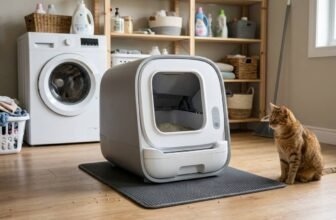
How Often Should You Change Cat Litter? (Simple Schedule)

how often should you change cat litter in a real home setup

Disclaimer: This post may contain affiliate links. As an Amazon Associate, we earn from qualifying purchases.

Plastic litter boxes tend to smell faster than most people expect, and changing the litter “every few weeks” doesn’t always fix the problem.

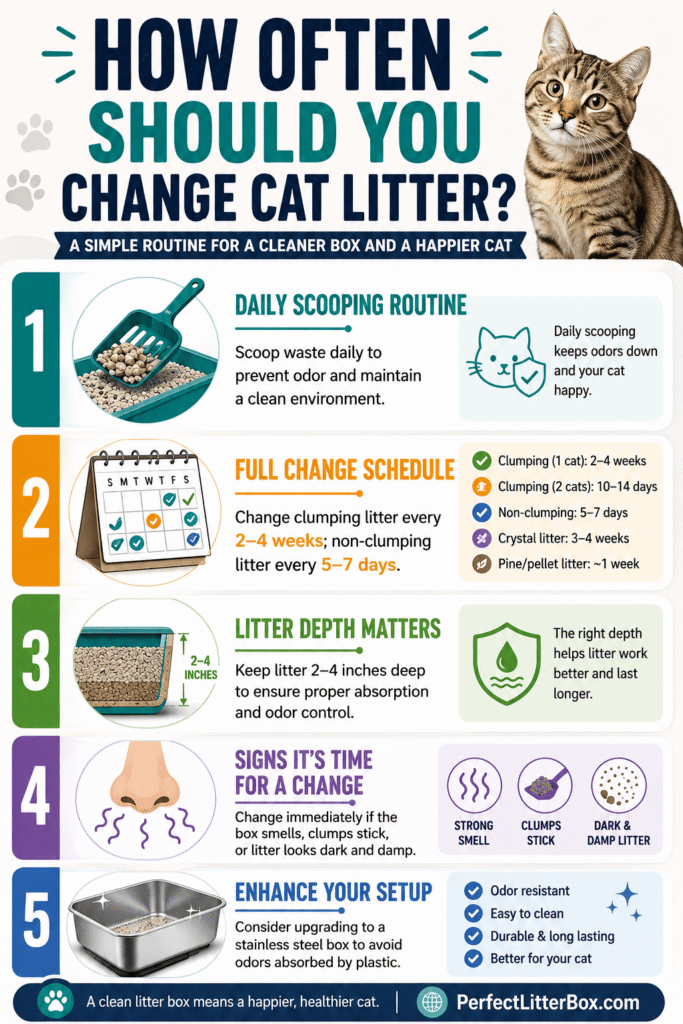
How often should you change cat litter? You should scoop daily and fully change cat litter every 1 to 4 weeks, depending on the litter type, number of cats, and how the box actually smells and looks.

The problem is that most advice stops there. It gives a rough timeline but doesn’t explain what to do when your litter box smells after a few days, or why adding fresh litter doesn’t seem to help anymore.

This guide breaks it down in a practical way. You’ll learn a simple schedule that works, how to adjust it based on your setup, and the clear signs that tell you it’s time to change the litter, even if it hasn’t been that long yet.

Quick Answer

How often should you change cat litter?
Scoop waste daily and fully change cat litter every 1 to 4 weeks. Non-clumping litter usually needs to be changed more often, often once or twice a week.

Here’s a simple breakdown that works in real life:

  • Clumping clay litter (1 cat): every 2 to 4 weeks
  • Clumping litter (2 cats): every 10 to 14 days
  • Non-clumping litter: every 5 to 7 days
  • Crystal litter: every 3 to 4 weeks
  • Pine or pellet litter: about once a week

This is just a starting point. Some litter boxes need to be changed sooner.

If the box smells right after scooping, clumps stick to the bottom, or the litter turns dusty or dark, it’s time to fully change it, even if you haven’t reached the usual schedule yet.

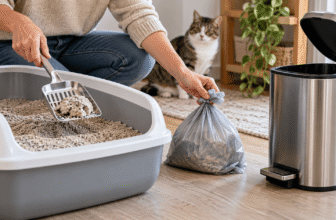
person scooping cat litter box daily to maintain cleanliness

Why Cat Litter Needs to Be Changed

Litter doesn’t just get “used up.” It slowly breaks down every day, even if you scoop regularly.

Urine is the main problem. Even with clumping litter, small amounts stay behind after you scoop. Over time, that moisture builds up and starts to create a strong ammonia smell.

Clumping litter also loses its structure. At first, it forms solid clumps that are easy to remove. After a couple of weeks, it starts to crumble. That leaves behind damp, dirty particles that spread through the clean litter.

Non-clumping litter works differently, but it fills up even faster. Instead of forming clumps, it absorbs urine until it can’t hold any more. Once that happens, the entire box starts to smell and needs to be changed.

There’s also a point where adding fresh litter stops helping. Old litter holds onto odor and bacteria, so mixing in new litter only hides the problem for a short time.

That’s why a full litter change is necessary. Scooping keeps the box usable day to day, but it doesn’t reset it completely.

What Affects How Often You Should Change Cat Litter

The schedule in the quick answer is a starting point. In real life, a few key factors decide how fast your litter box fills up and starts to smell.

Number of Cats

More cats means more waste going into the same space.

A single cat using one box can often go a couple of weeks with clumping litter. Add a second cat, and that same box can start smelling in half the time.

If multiple cats share one box, the litter gets saturated faster. Even if you scoop often, moisture builds up underneath the surface.

Type of Litter

Different litters handle waste in completely different ways.

Clumping clay lasts longer because you can remove most of the urine in solid clumps. That’s why it can go a few weeks before a full change.

Non-clumping litter absorbs everything and holds onto it. Once it reaches its limit, the whole box needs to be dumped.

Crystal litter absorbs moisture well at first, but once the crystals are saturated, odor shows up quickly.

Pellet litter breaks down into sawdust as it absorbs urine, which means you need to remove the waste layer and refresh the box more often.

Litter Box Size

A small litter box fills up faster than a large one.

When there’s less space, waste is more concentrated. That leads to faster odor buildup and more frequent full changes.

Larger boxes spread waste out and give litter more room to absorb moisture, which can extend how long it lasts.

Litter Depth

Litter depth makes a bigger difference than most people expect.

If the layer is too shallow, urine reaches the bottom of the box and sticks. That’s when you start getting strong smells even after scooping.

Keeping about 2 to 4 inches of litter helps absorb moisture properly and makes clumps easier to remove. It also slows down how quickly the entire box becomes saturated.

Cleaning Routine

How often you scoop directly affects how often you need to change the litter.

If waste sits in the box for too long, it breaks down and spreads moisture and odor through the surrounding litter.

Scooping once a day is the minimum. Twice a day keeps the box cleaner and can stretch the time between full changes.

Practical Signs It’s Time to Change the Litter

A schedule helps, but the litter box usually tells you when it’s done. These signs matter more than the calendar.

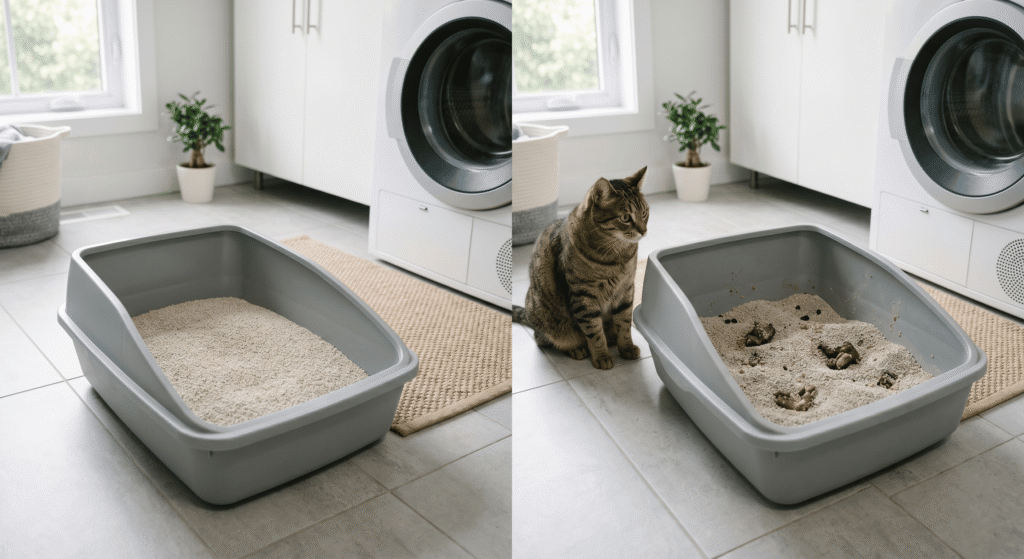
side by side comparison of clean and used cat litter showing clumps and litter condition

A realistic comparison showing how cat litter changes from clean to used and when it’s time for a full change.

The Box Smells Right After Scooping

After you scoop, the box should smell mostly neutral.

If there’s still a strong ammonia smell right away, the litter underneath is already saturated. At that point, adding fresh litter won’t fix it. The whole box needs to be changed.

Clumps Stick to the Bottom

Clumping litter should lift out cleanly.

If clumps start sticking to the bottom or breaking apart when you scoop, moisture has built up in the base layer. That leftover residue keeps spreading odor through the rest of the litter.

The Litter Looks Dark or Feels Damp

Fresh litter has a consistent color and texture.

When it starts to look darker, uneven, or slightly wet in areas, it means waste has spread beyond the clumps. This is especially noticeable in high-use spots where cats tend to go repeatedly.

The Litter Turns Dusty

As litter breaks down, it creates fine dust.

That dust isn’t just messy. It’s a sign that the litter has lost its structure and can’t absorb waste properly anymore. At this stage, odor usually follows quickly.

Your Cat Starts Avoiding the Box

Cats are sensitive to smell and texture.

If the litter box isn’t clean enough, some cats will hesitate, go less frequently, or start using other areas instead. When behavior changes like this, the litter often needs a full reset.

A Simple Litter Box Routine That Actually Works

A good routine keeps the litter box clean without overthinking it. Instead of guessing, you’re following a simple cycle that resets the box before problems start.

Daily: Scoop and Check

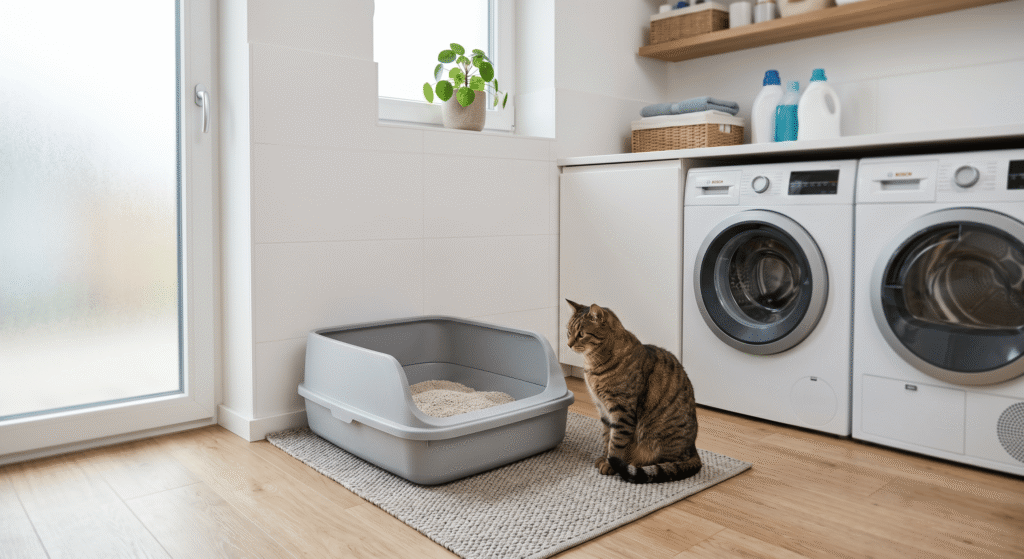
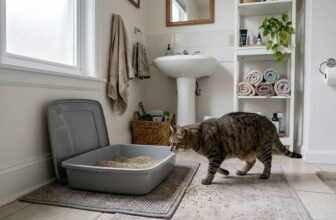
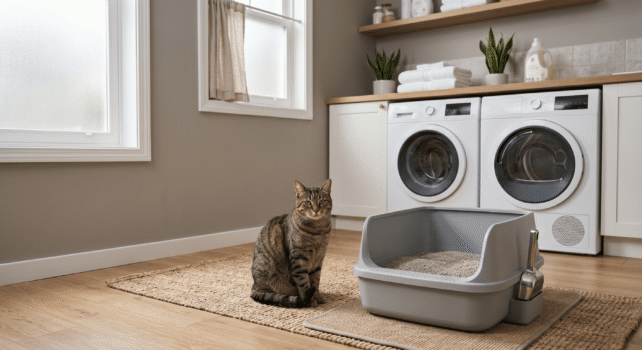
cat sitting next to litter box in laundry room during daily litter box routine

A typical litter box setup during daily use, showing how litter looks between scooping and full changes.

Scoop at least once a day. Twice a day works better, especially if the box gets heavy use.

While scooping, take a quick look at the litter:

  • Are clumps holding together?
  • Is anything sticking to the bottom?
  • Does it smell stronger than usual?

This quick check tells you if the litter is still in good shape or starting to break down.

Every Few Days: Top Up the Litter

After a few days of scooping, the litter level drops.

Add fresh litter to bring it back to about 2 to 4 inches deep. This helps keep clumps forming properly and prevents urine from reaching the bottom of the box.

This step extends how long the litter lasts, but it doesn’t replace a full change.

Every 1 to 4 Weeks: Full Change and Clean

At some point, topping up stops working. That’s when you fully empty the box.

Dump all the litter, wash the box with mild soap and warm water, dry it completely, and refill with fresh litter.

If you notice strong smells, sticking clumps, or damp litter before the usual timeframe, don’t wait. Change it early.

Why the “Top-Up Method” Only Works for So Long

Adding fresh litter feels like it should reset the box, but it doesn’t.

Old litter still holds onto moisture and odor underneath. Over time, that builds up and spreads through the entire box. Fresh litter just covers it temporarily.

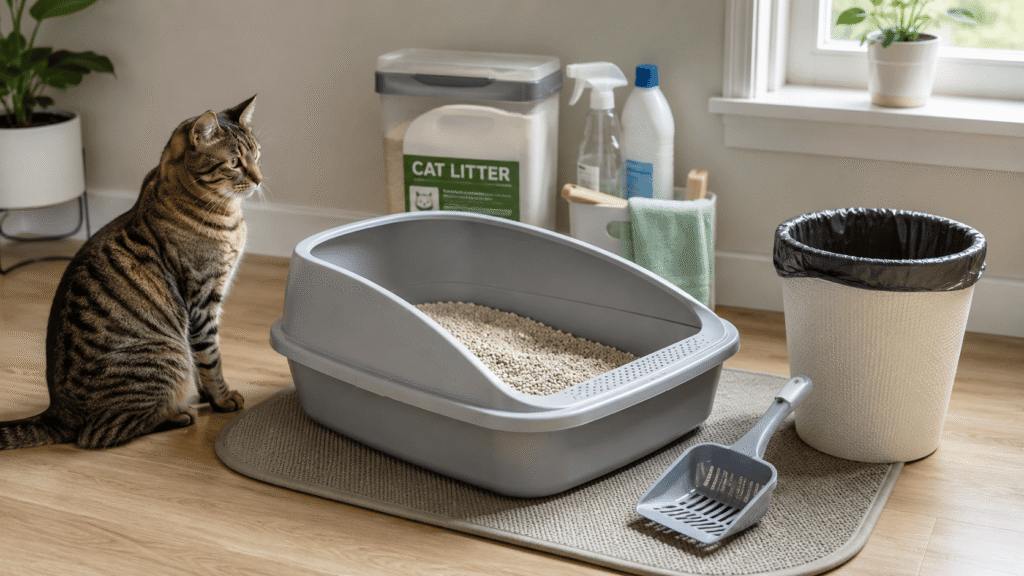
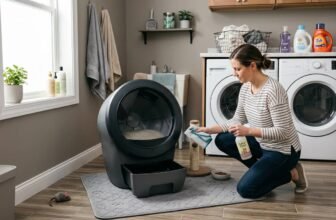
cat litter box setup with scoop trash bin and cleaning supplies in laundry room

A complete litter box setup showing the tools used for daily scooping and regular cleaning.


You can also read our guide on litter box odor solutions if smell keeps coming back even after cleaning.

This is why some boxes start smelling again quickly, even after adding more litter.

If this keeps happening, it’s usually a sign that:

  • the litter needs a full change sooner
  • or the box itself is holding onto odor

Plastic litter boxes can start to trap smell over time, especially if the surface gets scratched. When that happens, even clean litter doesn’t stay fresh for long.

This is where switching to a smoother, non-porous box can make a noticeable difference. Stainless steel litter boxes are a common upgrade because they don’t hold onto odor the same way plastic does.

Products That Can Help You Change Litter Less Often

A good routine keeps things under control, but some setups make a noticeable difference in how long litter actually lasts. If you feel like you’re changing litter often and still dealing with smell or mess, the issue is usually one of these.

Stainless Steel Litter Box

If the litter box smells even after you fully clean it, the box itself can be part of the problem.

Plastic surfaces wear down over time and start holding onto odor. Once that happens, fresh litter doesn’t stay fresh for long.

A stainless steel litter box avoids that completely. The surface is smooth and non-porous, so it doesn’t absorb smell or residue. It also makes cleaning easier because waste doesn’t stick to the bottom the same way.

stainless steel litter box with high sides for odor control and easy cleaning

A simple high-sided model like this one is a good example. It contains mess well and stays easier to maintain over time.

View on Amazon

Strong Clumping Cat Litter

If your litter breaks apart when you scoop, that’s a big reason it doesn’t last very long.

Loose or crumbly clumps leave behind damp pieces that spread through the box. That buildup is what causes odor to return quickly, even when you’re scooping regularly.

A stronger clumping litter helps prevent that. It forms solid clumps that lift out cleanly, so less waste stays behind.

clumping clay cat litter forming solid clumps for easy scooping and odor control

A well-known option like this one is a good example of how that should work. It forms hard clumps, controls odor well, and helps keep moisture from reaching the bottom of the box.

View on Amazon

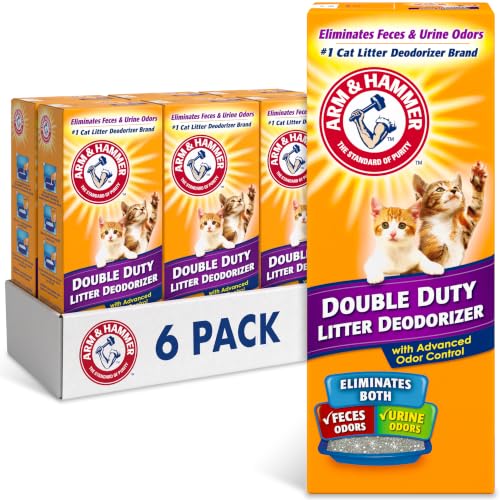
Litter Box Deodorizer

If the litter box starts to smell before it’s time for a full change, a deodorizer can help stretch things out a bit longer.

These don’t replace cleaning, but they slow down odor buildup between changes, especially in smaller spaces or multi-cat setups.

Simple baking-soda-based options tend to work best. You sprinkle a small amount into the litter, and it helps neutralize odor instead of covering it up.

A product like this is a good example. It’s designed to control both urine and feces odor and can help keep the box fresher between full cleanouts.

How Often Should You Change Cat Litter Based on Your Setup

The general rule is helpful, but your actual schedule depends on how your litter box is used. These examples give you a more realistic starting point.

One Cat, Clumping Litter

With one cat and a decent-sized litter box, clumping litter usually lasts the longest.

You can expect to fully change the litter every 2 to 4 weeks, as long as you’re scooping daily and keeping the depth around 2 to 4 inches.

If the box starts to smell earlier or clumps stop forming cleanly, shorten that to around 10 to 14 days.

One Cat, Small Litter Box

Smaller boxes fill up faster because waste is concentrated in a tighter space.

Even with good clumping litter, you may need to fully change the litter every 10 to 14 days to keep odor under control.

If you’re constantly topping up but the smell comes back quickly, the box is reaching its limit sooner than expected.

Two Cats Sharing One Box

When two cats use the same box, everything speeds up.

More urine and waste means the litter becomes saturated faster, even if you scoop often. In this case, a full change every 7 to 14 days is more realistic.

If possible, adding a second box can extend how long each one lasts.

Non-Clumping Litter

Non-clumping litter doesn’t separate waste, so the entire box gets dirty more quickly.

You’ll usually need to change it every 5 to 7 days, sometimes sooner if odor builds up.

Waiting longer tends to lead to strong smells and a damp, heavy litter box.

Crystal Litter

Crystal litter absorbs moisture well at first, but it has a limit.

Most setups last around 3 to 4 weeks for one cat, but once the crystals are saturated, the smell shows up quickly and the entire box needs to be replaced.

Pellet Litter Systems

Pellet systems work differently because the pellets break down into sawdust.

You’ll usually need to remove the waste layer and refresh the box about once a week, depending on use.

If the bottom layer becomes heavy or starts to smell, it’s time for a full change.

The Simple Rule That Ties It All Together

Start with the schedule that fits your setup, then adjust based on what you see and smell.

If the litter is holding clumps well, staying dry, and not producing odor after scooping, you’re within the right range.

If not, shorten the cycle. The litter box always gives you a clear signal when it’s time to reset it.

FAQ

Why does my litter box still smell after I change the litter?

If the smell comes back right away, the litter box itself is often the issue.

Plastic can hold onto odor over time, especially if it has scratches. Even after washing, that smell can transfer back into fresh litter. In this case, switching to a non-porous box or replacing the box can solve the problem.

It can also happen if the litter layer is too shallow, allowing urine to reach the bottom.

How much litter should I put in the box?

A good depth is about 2 to 4 inches.

This allows clumping litter to form solid clumps and prevents urine from reaching the bottom of the box. If the layer is too thin, the litter breaks down faster and odors build up sooner.

Keeping the depth consistent also helps extend how long the litter lasts between full changes.

Can I just keep adding fresh litter instead of changing it completely?

No, adding fresh litter only works for a short time.

Old litter still holds moisture and odor underneath. Over time, that buildup spreads through the entire box. Even if the surface looks clean, the base layer is already saturated.

At that point, a full change is the only way to reset the box.

How often should I replace the litter box itself?

Plastic litter boxes usually need to be replaced every 6 to 12 months.

Over time, scratches trap odor and make the box harder to keep clean. If the box smells even after washing, it’s a sign it needs to be replaced.

Other materials tend to last longer because they don’t absorb odor the same way.

What happens if I don’t change cat litter often enough?

The biggest issue is odor, but it can also lead to behavior problems.

If the litter box becomes too dirty, some cats will avoid it and start going elsewhere. Dirty litter can also create an unhealthy environment due to bacteria buildup.

Keeping a consistent routine prevents both smell and litter box issues.

Final Thoughts

So how often should you change cat litter?

For most setups, the answer is every 1 to 4 weeks, but the real answer depends on what’s happening in your litter box.

A simple routine makes the biggest difference. Scoop daily, keep the litter at the right depth, and don’t rely on topping up for too long. Once the litter starts to smell, feel damp, or stop clumping properly, it’s time for a full change.

The goal isn’t to follow a strict schedule. It’s to keep the box clean enough that odor doesn’t build up and your cat continues to use it without hesitation.

If you pay attention to the condition of the litter and adjust when needed, you’ll avoid most common problems and won’t have to guess when it’s time to change it.

Perfect Litter Box
Logo