Disclaimer: This post may contain affiliate links. As an Amazon Associate, we earn from qualifying purchases.
Litter box odor doesn’t just come from the box itself. It builds up in the waste you scoop every day, especially if it sits in a trash can or bag nearby.
A cat litter disposal system is supposed to fix that. It gives you a place to store waste between cleanings without letting the smell take over the room.
The problem is, not all of them work the way you expect. Some control odor well at first but struggle after a few days. Others rely on expensive refill systems or fill up too quickly, especially in multi-cat homes.
This guide covers the best cat litter disposal system options, how they actually perform in real use, and what to watch for before you choose one so you don’t end up dealing with the same smell in a different container.
Quick Answer
A cat litter disposal system helps control odor by sealing waste in a closed container, but the best option depends on your setup. Systems with airtight seals and simple bag designs work well for daily use, while multi-cat homes often need larger capacity or alternative solutions to avoid frequent emptying and smell buildup.
What a Cat Litter Disposal System Actually Does
A disposal system doesn’t eliminate odor completely. It reduces how much smell escapes between trips to the trash.

Most systems work by sealing waste inside a container using:
-
- a trap door or flap
- a sealed lid
- or a bag system that closes off odor
This keeps the smell contained instead of letting it sit in an open trash can.
The idea is simple. You scoop the litter, drop the waste inside, and empty the container every few days instead of taking it outside right away.
That works well in smaller homes or apartments where walking to an outdoor bin every day isn’t convenient.
How a Cat Litter Disposal System Works

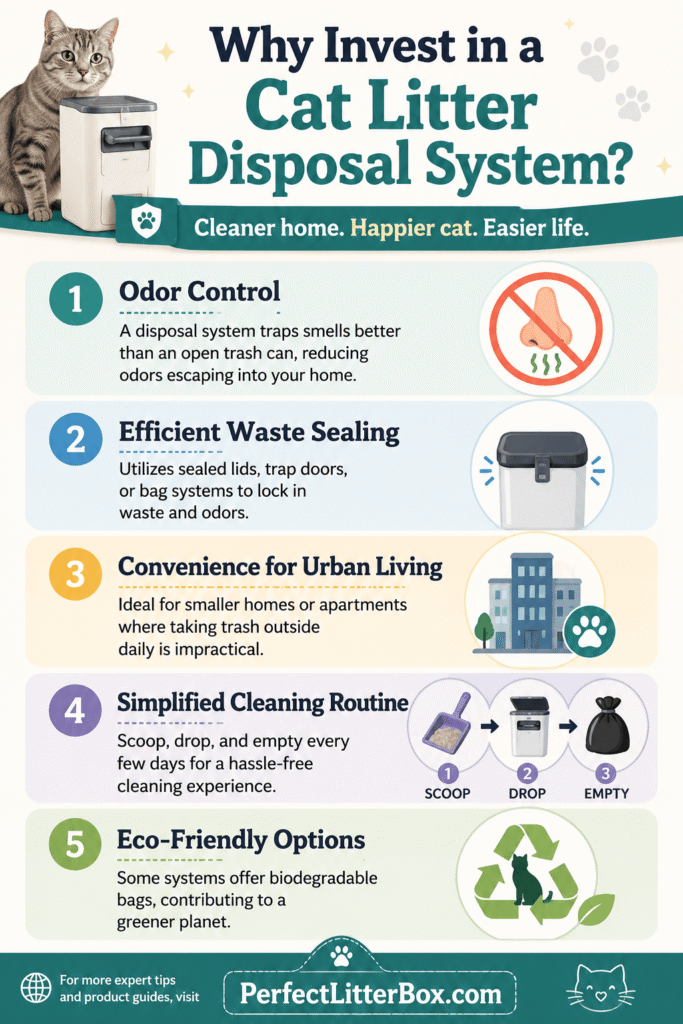
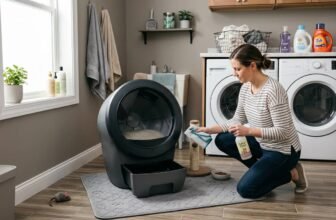
A typical routine showing how litter is scooped, sealed, and stored using a disposal system.
Most litter disposal systems follow the same basic process.
You scoop the litter as usual, drop the waste into the container, and use a lid, handle, or sealing system to trap odor inside. Instead of taking waste outside every time, it stays contained until the bin is full.
This setup makes daily cleaning quicker and reduces how often you need to deal with trash.
How a Cat Litter Disposal System Works
Most litter disposal systems follow the same basic process.
You scoop the litter as usual, drop the waste into the container, and use a lid, handle, or sealing system to trap odor inside. Instead of taking waste outside every time, it stays contained until the bin is full.
This setup makes daily cleaning quicker and reduces how often you need to deal with trash.
Why People Use One in the First Place
The main reason is not convenience alone. It’s about controlling smell between cleanings.
Without a disposal system, waste usually ends up in:
- a regular trash bag
- a small bin near the litter box
- or a bag that gets taken outside daily
All of those options can start to smell quickly, especially in warm or enclosed spaces.
A good disposal system slows that process down. It gives you a way to store waste temporarily without letting odor spread through the room.
Where Expectations Don’t Match Reality
This is where most people get disappointed.
A disposal system doesn’t mean:
- zero smell
- no maintenance
- or unlimited capacity
Odor can still build up inside the container, especially if it isn’t emptied often enough.
Some systems also trap smell so well that when you open them, you get a strong burst of odor. This catches people off guard because it’s not something most product descriptions mention.
That’s why choosing the right type matters. The goal isn’t to eliminate smell completely, but to manage it better than a regular trash setup.
Why Some Cat Litter Disposal Systems Still Smell

A disposal system can reduce odor, but it doesn’t remove the source of the smell. It just contains it.
Over time, that smell builds up inside the container, and depending on the design, it can still escape in a few different ways.
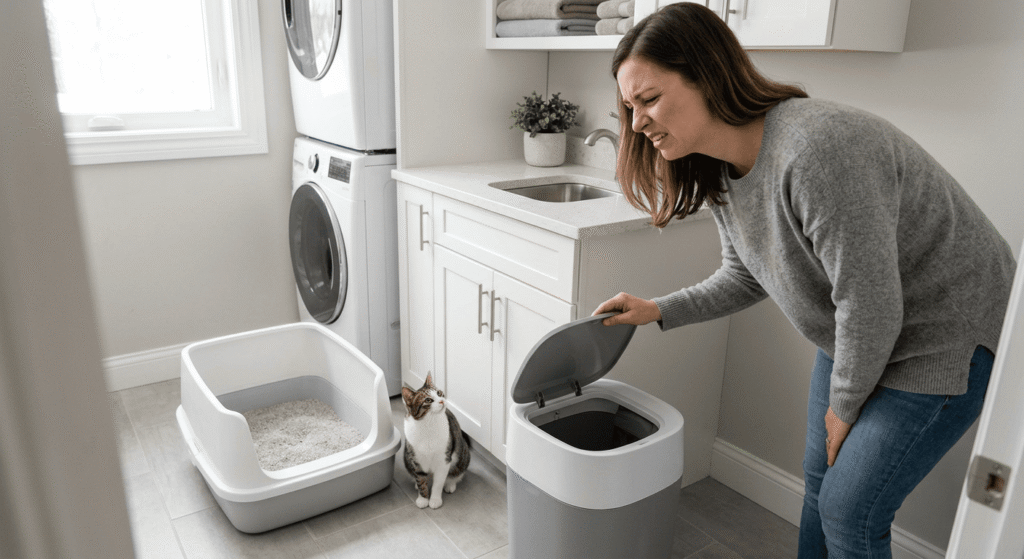
One of the most common issues is what people often notice the first time they use one. The container stays closed most of the time, but as soon as you open it to add waste, a strong burst of odor comes out. This happens because the smell has been trapped inside and gets released all at once.
Moisture also plays a role. Clumped litter holds urine, and when it sits in a sealed container, it doesn’t dry out the way it would in an open trash bag. That can make the smell stronger after a day or two, especially in warmer or more humid spaces.
Another problem is overfilling. When the container gets too full, the sealing mechanism doesn’t work as well. Odor starts leaking out, and in some cases, the waste gets pushed up closer to the opening, which makes the smell more noticeable every time you use it.
There’s also the material itself. Most disposal systems are made of plastic, and over time, plastic can start to hold onto odor. Even after emptying and replacing the bag, a faint smell can stay behind if the container isn’t cleaned regularly.
This doesn’t mean these systems don’t work. It just means they have limits. They’re designed to manage odor for a few days at a time, not store waste indefinitely without any smell.
The Hidden Cost of Litter Disposal Systems
At first, most disposal systems seem reasonably priced. The container itself usually isn’t that expensive, and it feels like a one-time purchase.
The ongoing cost is where things change.
Many of these systems rely on proprietary refill cartridges instead of standard trash bags. That means you’re locked into buying their specific refills if you want the system to work properly.
Those refills don’t always last as long as expected.
In a single-cat setup, they might last a few weeks. In a multi-cat home, they can fill up much faster, especially if you’re scooping daily. That turns what looked like a small expense into something you’re replacing more often than planned.
Over time, the cost of refills can end up matching or even exceeding what you spend on litter itself.
There’s also the issue of durability. If a bag tears or the system jams, you can end up using more refills than expected just to deal with the mess.
Some people try to work around this by using regular trash bags or alternative liners, but not every system makes that easy. In some designs, the bag system is built into how the container seals, so switching to something else reduces how well it controls odor.
This doesn’t make disposal systems a bad choice. It just means the long-term cost is part of the decision, not just the price of the container.
When a Cat Litter Disposal System Isn’t Worth It
A disposal system can make daily cleanup easier, but it’s not always the best solution for every setup.
In multi-cat homes, capacity becomes a problem quickly. Even larger containers can fill up fast, especially if you’re scooping multiple times a day. When that happens, you end up emptying it just as often as a regular trash bag, which removes most of the convenience.
It can also be frustrating if you’re trying to keep costs low. The ongoing expense of refill cartridges adds up over time, and for some setups, using standard bags in a simple sealed bin ends up being more practical.
Certain types of litter can make things harder too. Pellet systems and high-volume litters create more waste, which fills the container faster than expected. That means more frequent emptying and less benefit from having a dedicated system in the first place.
There are also situations where a disposal system doesn’t improve odor control as much as expected.
If the litter box itself isn’t cleaned regularly, or if the litter is already holding moisture, the smell will still build up no matter what container you use. Following a consistent routine, like the one outlined in this guide on how often you should scoop a litter box, usually makes a bigger difference than switching products.
In smaller spaces, the system itself can become the source of odor if it’s not emptied often enough. Instead of solving the problem, it just moves it to a different spot in the room.
For some setups, a simple routine works just as well. Scooping into a small bag and taking it out daily, or using a well-sealed trash can, can be just as effective without the added cost or maintenance.
The best cat litter disposal system makes sense when it fits your routine and your space. If it doesn’t, it can end up being more work than it saves.
What to Look For in a Cat Litter Disposal System
Not all disposal systems work the same way. The small differences in design can make a big impact on how well they control odor and how easy they are to live with day to day.
Sealing Mechanism
This is what controls how much smell escapes.
Some systems use a trap door that opens when you drop waste in, while others rely on a tight-sealing lid or a twisting bag system. A better seal usually means less odor in the room, but it can also lead to that strong burst of smell when you open it.
Simple designs with fewer moving parts tend to hold up better over time and are less likely to jam or get dirty.
Bag System and Refills
This is one of the biggest long-term factors.
Some systems require specific refill cartridges, while others let you use standard trash bags. Cartridge systems can be convenient, but they lock you into ongoing costs.
If you want something lower maintenance, look for a system that works with regular bags or makes it easy to switch without affecting how it seals.
Some systems are built entirely around their refill cartridges, like the Litter Genie style designs you’ll see here, while others are more flexible and let you use standard bags. That difference alone can change how expensive the system is to use over time.
Capacity vs. Weight
A larger container sounds better at first, but it can become a problem when it’s time to empty it.
Waste adds up quickly, especially with clumping litter. A full container can get heavy and awkward to carry, and that increases the chance of bags tearing or spilling.
A slightly smaller system that you empty more often is often easier to manage than a large one that becomes difficult to handle.
Opening Design
This is something most people don’t think about until they use it.
Some systems require you to push waste through a flap, while others have a wider opening that makes it easier to drop everything in cleanly. A narrow or awkward opening can lead to mess and buildup around the edges over time.
A simple, easy-to-access opening makes daily use much smoother.
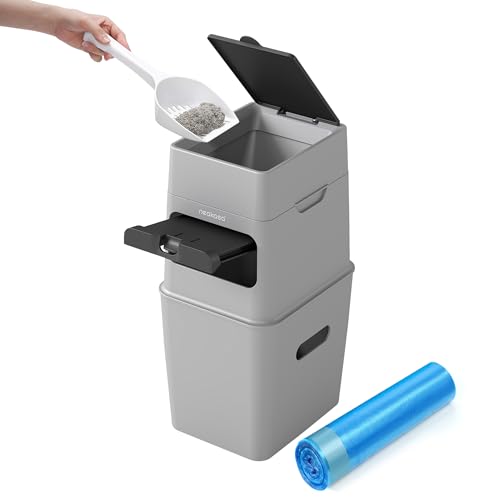
Wider opening designs, like the Neakasa PooGuard you can see here, tend to be easier to use and stay cleaner over time compared to narrow drop-in openings. The larger opening makes it easier to scoop without hitting the sides, which helps reduce buildup and keeps the system cleaner between emptying.
Durability and Cleaning
These systems deal with waste every day, so they need to hold up over time.
Plastic containers can start to hold odor if they’re not cleaned occasionally, and the same applies to the litter box itself. A deeper clean every so often, like the method explained in this guide on the best way to clean a litter box, helps prevent long-term odor buildup.
Fewer seams, fewer moving parts, and smoother surfaces all help here.
Choosing the right system comes down to how you use your litter box day to day. The best option is the one that fits your routine, not just the one with the most features.
Best Cat Litter Disposal System Options
A good litter disposal system should make daily scooping easier, not more complicated. The right one keeps odors contained, cuts down on trips to the trash, and fits into your routine without adding extra steps.
The options below each solve a slightly different problem, so the best choice depends on what matters most to you, whether that is odor control, cost, or ease of use.
Litter Genie Platinum Pail (Stainless Steel)
Why It Stands Out
This is an upgraded version of the classic litter genie cat litter disposal system, built with a stainless steel body instead of plastic.
That difference helps reduce lingering odor over time, especially compared to plastic containers that can start to smell even after cleaning. It also uses a sliding handle system that seals waste into a multi layer bag after each use.
Real World Use
Using it is straightforward.
You scoop the litter, drop it in, and pull the handle to seal everything away. There is no need to tie off bags every day or carry waste outside constantly.
It holds around 8 days of waste for one cat, which works well in apartments or smaller homes.
Possible Downsides
The refill system is the main drawback.
You have to use their specific bags, and that ongoing cost adds up over time, especially with multiple cats.
The capacity is also moderate, so heavier use means more frequent emptying.
Best For
This is a good fit if odor control is your top priority and you want something that keeps things contained with minimal effort.
Litter Genie Standard Pail
Why It Stands Out
This is the most common version and the one most people start with.
It uses the same sealing system as the Platinum model but comes in a more basic plastic design, making it more affordable.
Real World Use
Daily use is nearly identical.
You scoop, drop the waste in, and pull the handle to seal it off. It can hold up to about 14 days of waste for one cat, depending on how often the box is used.
It is simple, compact, and easy to place next to a litter box.
Possible Downsides
Like the Platinum version, you are locked into using refill bags.
Over time, those costs can add up, and the plastic body can start to hold odor if it is not cleaned occasionally.
Best For
This works well if you want a simple, proven system without spending too much upfront.
Neakasa PooGuard Litter Disposal Bin
Why It Stands Out
This model focuses more on usability, especially the wider opening.
Instead of a narrow drop in slot, it gives you more space to dump litter cleanly, which makes daily scooping easier and less messy.
It also includes a viewing window so you can see when it is getting full.
Real World Use
The wider opening makes a noticeable difference.
You do not have to aim as carefully, and it is easier to empty larger clumps without hitting the sides. The sealing system helps control odor, and each bag can last about a week depending on use.
It is also compact enough to fit beside most litter boxes.
Possible Downsides
It still uses refill style bags, so there is an ongoing cost.
The capacity is smaller than some other options, which means more frequent emptying in multi cat setups.
Best For
This is a good option if you want something that is easier to use day to day and less awkward than narrow opening systems.
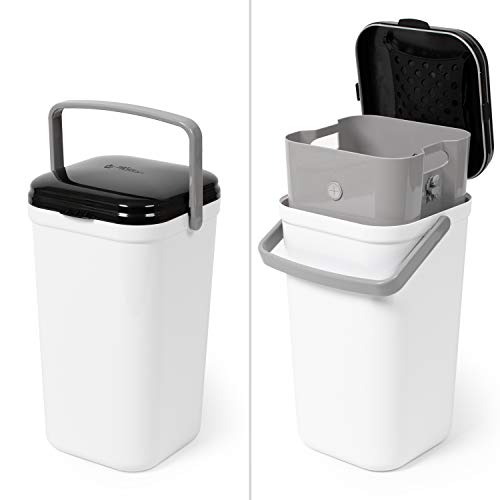
PetFusion Portable Cat Litter Disposal System
Why It Stands Out
This one takes a different approach.
Instead of locking you into refill cartridges, it lets you use your own bags, which can save money over time. It also uses a locking lid, gasket seal, and charcoal filter to help control odor.
Real World Use
It works more like a sealed bin.
You open the lid, drop the waste in, and close it again. The opening is wide and easy to use, and the inner bin makes it simple to remove and replace bags.
Each bag can hold up to about two weeks of waste depending on how much it is used.
Possible Downsides
Because it opens like a regular lid, you will notice a stronger smell briefly when you open it.
The plastic body can start to hold odor over time if it is not cleaned occasionally.
Best For
This is a strong choice if you want to avoid ongoing refill costs and prefer a simpler system that still keeps odors contained.
Best Cat Litter Disposal System Comparison
| Product | Key Feature | Best For |
|---|---|---|
| Litter Genie Platinum | Stainless steel design with strong odor sealing | Maximum odor control in small spaces |
| Litter Genie Standard | Simple and affordable sealing system | Everyday use on a budget |
| Neakasa PooGuard | Wide opening with viewing window | Easy, mess-free daily scooping |
| PetFusion Disposal System | Uses standard trash bags with sealed lid | Avoiding ongoing refill costs |
Which Cat Litter Disposal System Should You Choose?
Choosing the right system depends mostly on how you manage your litter box day to day.
If odor control is your main concern, a sealed system like the Litter Genie Platinum tends to work best. It keeps waste contained between cleanings and reduces how much smell escapes into the room.
If you want something simple and affordable, the standard Litter Genie is usually enough. It uses the same basic system but costs less upfront.
If ease of use matters more, especially during daily scooping, a wider opening design like the Neakasa PooGuard makes things quicker and less messy.
If you want to avoid ongoing refill costs, the PetFusion system is a better fit. It gives you more flexibility since you can use your own bags instead of buying specific refills.
The best option is the one that matches how often you scoop, how many cats you have, and how much maintenance you are comfortable with.
Alternatives to Cat Litter Disposal Systems
A dedicated disposal system can make things easier, but it is not the only way to manage litter waste. In some setups, a simpler approach works just as well.
Sealed Trash Can with Lid
A small trash can with a tight sealing lid can do a similar job without the need for refill cartridges.
Something like the Cesun small bathroom trash can you can see here works well because it has a step pedal and a soft close lid, which helps keep odor contained between uses. The hands free design also makes it easier to use right after scooping without touching the lid.
This type of setup works best if you already take out trash regularly and want to avoid the ongoing cost of refill systems.
Daily Bag and Dispose Routine
Scooping waste into a small bag and taking it outside each day is still one of the most effective ways to control odor.
It takes a little more effort, but it prevents waste from sitting in any container long enough to build up smell. This is especially useful in smaller spaces where even sealed bins can start to smell over time.
For this approach, simple pet waste bags like the Pet N Pet rolls you can see here work well, especially since they are thicker than basic bags and less likely to tear when handling clumped litter.
Hybrid Setup
Some setups combine both approaches.
For example, using a small sealed bin during the day and emptying it every evening. This reduces trips back and forth while still preventing waste from sitting too long.
This can be a good middle ground if a full disposal system feels unnecessary but you still want something more convenient than taking out every scoop.
Frequently Asked Questions
Is a cat litter disposal system worth it?
A cat litter disposal system is worth it if you want to reduce odor between cleanings and avoid taking waste outside every day. It’s especially useful in apartments or smaller spaces where smells build up quickly.
If you already have a routine that works, like taking waste out daily, the benefit is smaller.
How often should you empty a litter disposal system?
Most systems need to be emptied every few days to once a week, depending on how many cats you have.
Single-cat homes can usually go longer, while multi-cat setups fill up much faster and may need emptying every few days to prevent odor buildup.
Do litter disposal systems completely eliminate smell?
No, they don’t eliminate odor completely.
They reduce how much smell escapes into the room, but odor still builds up inside the container. You may also notice a stronger smell briefly when opening the lid or adding waste.
Are refill bags expensive?
Refill bags can become expensive over time, especially if you are using the system daily.
In some cases, the long-term cost of refills can be similar to or higher than the cost of litter itself. That’s why some people prefer systems that allow standard trash bags.
Can you use regular trash bags instead of refill cartridges?
It depends on the system.
Some disposal systems are designed specifically for their own refill cartridges and don’t work well with regular bags. Others, like bin-style containers, are more flexible and allow you to use standard trash bags.
Final Thoughts
Once you find the best cat litter disposal system, it can make a noticeable difference in how you manage odor and daily cleanup, but the right choice depends on your setup.
Some systems focus on sealing odor as much as possible, while others prioritize ease of use or lower long-term cost. There isn’t one option that works best for everyone.
The most important thing is choosing a system that fits how often you scoop, how many cats you have, and how much maintenance you’re willing to handle.
In many cases, even a simple setup can work just as well when it’s used consistently.