Disclaimer: This post may contain affiliate links. As an Amazon Associate, we earn from qualifying purchases.
Last updated on October 31, 2026
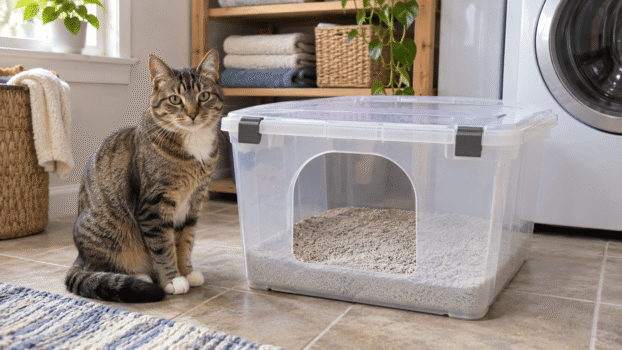
A DIY litter box made from a plastic storage tote gives your cat a bigger, taller box than most pet stores sell. It’s a great fix for cats that kick litter everywhere, pee over the edge, or just need more room.
All you need is a tote, a marker, and a cutting tool. This guide covers how big to make it, how to cut it cleanly, and how to get your cat to switch.
To make a DIY litter box, pick a plastic storage tote about 1.5 times your cat’s length. Mark an entrance on one short side with the bottom edge 5 to 6 inches off the floor. Cut it out, sand the edges smooth, wash the tote, and add 2 to 3 inches of litter.
What You’ll Need
- A large plastic storage tote. The Sterilite 80 Qt Gasket Box is a sturdy, BPA-free option with over 14 inches of inside wall height.
- A permanent marker and a plate or bowl to trace a curved entrance
- Painter’s tape
- A sharp utility knife, a fine-tooth saw, or a rotary tool like a Dremel
- A drill (optional, but it helps stop cracks)
- Medium sandpaper
- Safety glasses and cut-resistant gloves
- A large litter mat for in front of the entrance
How Big Should a DIY Litter Box Be?
A good rule of thumb is a box 1.5 times your cat’s length, measured from the nose to the base of the tail. A 16-inch cat would need a box about 24 inches long.
The Sterilite 80 Qt has a 23.5 by 17.5 inch interior. Measure your cat first to make sure there’s enough room to turn around comfortably. For a long cat, like a big Maine Coon, look for a tote at least 30 inches long.
For walls, 12 to 15 inches works well for cats that pee high or dig hard. That’s taller than most store-bought boxes.
Front Entry or Top Entry?
A front-entry box is the easiest for most cats. You cut a doorway into one short side and leave the top open, or put the lid back on for a covered box.
A top-entry box has a hole cut in the lid, and the cat jumps in from above. It keeps the most litter inside, but it’s best for young, agile adults. Kittens, seniors, and cats with stiff joints do better with a front entry.
How to Make a DIY Litter Box From a Tote
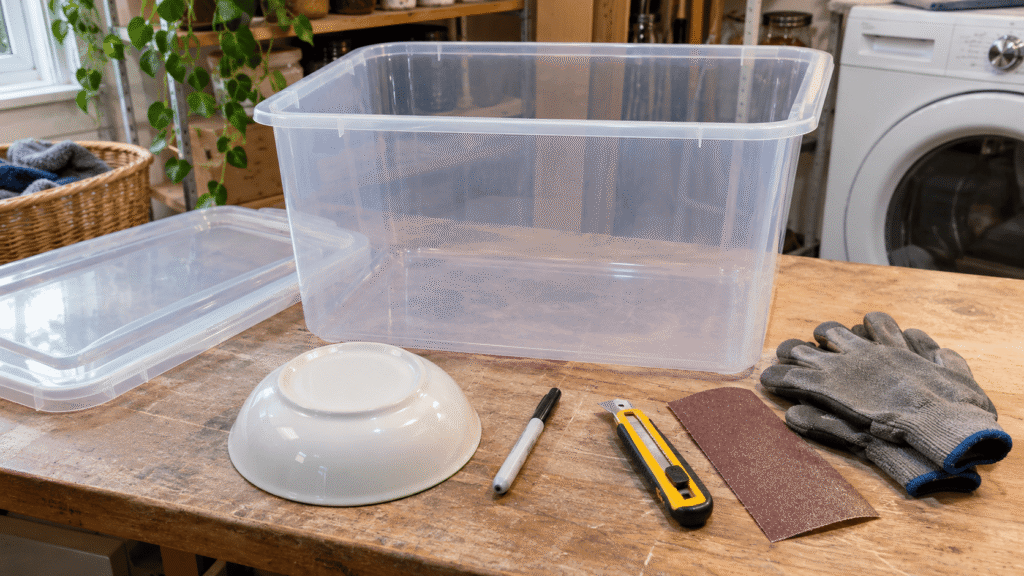
1. Mark the entrance
Measure 5 to 6 inches up from the floor on one short side. That’s where the bottom edge of the doorway goes. It keeps litter in while letting most cats step over easily. For a senior cat, go down to 3 or 4 inches. A ready-made low entry litter box is another easy option.
Make the opening wide and tall enough for your cat to walk through without squeezing or crouching. Measure your cat before you draw it, then trace a plate across the top for a rounded doorway.
2. Secure the tote
Set the tote on a stable surface so it can’t slide. Run painter’s tape along the outside of your cutting line to help support the plastic.
3. Drill the corners
If you have a drill, put a small hole at each corner of your outline. This keeps cracks from spreading as you cut.
4. Cut it out
Wear your gloves and glasses, and keep pets in another room. Score the line a few times with the utility knife and then cut through, or follow the line slowly with the rotary tool.
Support the plastic with your free hand as you cut, and stop if it starts to crack. A fine-tooth saw often works better than a knife on thicker plastic.
5. Sand every edge
Sand the cut until you can run your hand along it with no sharp spots or burrs. This is the step that makes the box safe for your cat, so take your time.
6. Wash and fill
Wash the tote with mild dish soap and warm water to clear out plastic dust. Dry it, then add 2 to 3 inches of your cat’s usual litter.
Getting Your Cat to Use the New Box
Put the new box right next to the old one, in the same spot. Use the same litter your cat already likes, so the only change is the box.
Once your cat is using the new one, you can remove the old box. A litter mat in front of the doorway catches anything that comes out on paws. To hide the box from view, you can also build a DIY litter box enclosure around it.
Rather Skip the DIY? Ready-Made Options
IRIS USA Extra Large Litter Box XXL
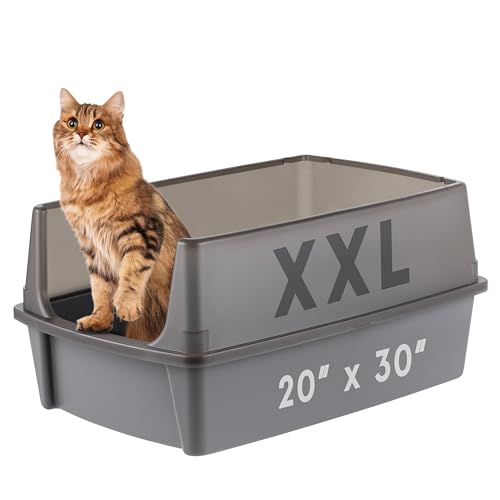
This box gives you the same tall-sided idea with no cutting. It has 14-inch walls and a 6.5-inch curved entrance, giving cats more room to turn around while the high sides help contain scattered litter.
Know before you buy: it’s an open-top box, so it suits cats that prefer an uncovered space.
Best for: big cats and cats that pee high.
WoofiGo Large Top Entry Litter Box
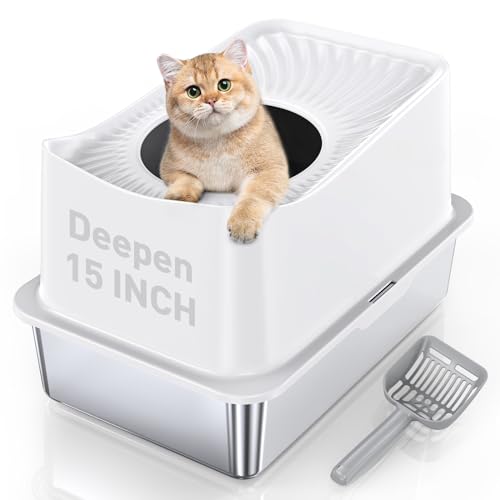
This box has a stainless steel pan with 15-inch walls. Stainless steel offers a durable, easy-to-clean alternative to plastic.
Know before you buy: top entry suits agile adult cats best.
Best for: cats that pee high, and owners who prefer stainless steel.
Frequently Asked Questions
Is a storage tote safe to use as a litter box?
Yes, as long as the edges are sanded smooth. A BPA-free tote is a good choice, and plastic is easy to wash.
What kind of tote works best?
A tote with straight walls and a flat bottom gives your cat the most room. Softer, slightly flexible plastic is easier to cut than hard, brittle plastic.
How often should I replace a DIY litter box?
Replace it when the bottom gets deep scratches from scooping. Scratched plastic is harder to get fully clean.
Can I put the lid on a DIY litter box?
Yes, if your cat is comfortable with a covered box. Keep the entrance open and make sure there’s good airflow. Many cats prefer an open box, so leave the lid off if your cat seems hesitant.
Can I use liners in a DIY litter box?
Yes. Jumbo drawstring liners fit most large totes. Fold the extra over the rim and tape it on the outside so your cat can’t snag it.