Disclaimer: This post may contain affiliate links. As an Amazon Associate, we earn from qualifying purchases.
Last updated on October 31, 2026
Bugs in litter box tray usually mean something is staying wet and dirty long enough for insects to breed. It’s gross, but it’s fixable, and it rarely takes more than a deep clean and a few habit changes.
The tricky part is figuring out what you’re actually looking at. Gnats, flies, and maggots all have different sources. And sometimes the “bugs” aren’t bugs at all.
Here’s how to tell them apart, get rid of them, and keep them from coming back.
Bugs in a litter box usually come from waste or wet litter sitting too long. To get rid of them, bag all the litter, wash the box with warm water and unscented soap, scoop daily, and seal waste in a lidded bin. Removing waste and moisture often helps stop the problem, but recurring flies may have another breeding source nearby.
Quick Picks
Sealed Waste Pail: Litter Genie Standard Pail
Sealed Litter Storage: Sterilite 80 Qt Gasket Box
What Kind of Bug Is It?
Tiny dark flies hovering around the box. These could be fungus gnats, especially if you have damp houseplant soil nearby. Other small flies can look similar, so check where they’re breeding before assuming they’re coming from the litter.
Small flies with reddish eyes. Those are fruit flies. Litter can draw them in, but they usually come from kitchen trash or ripe fruit nearby.
Small humpbacked flies that run across surfaces. These are often phorid flies. They lay eggs in feces and other decaying waste, so they show up when waste sits in the box or the trash.
House flies, and then maggots. Maggots are fly larvae. If flies reach moist waste in or around a litter box, they may lay eggs there, and in warm weather some species go from egg to adult fly in under two weeks. Remove the contaminated litter promptly and check nearby trash for other breeding sources.
Moths or tiny beetles near stored litter. Grain-based litters like wheat and corn can attract pantry pests, the same insects that get into flour and cereal. These usually show up in the bag or bin, not the box.
Is It Worms, Not Bugs?
If the white things are in your cat’s fresh poop, or stuck to the fur near its tail, they may be tapeworm segments, not maggots.
VCA describes tapeworm segments as looking like grains of rice or cucumber seeds. They’re about half an inch long, pale at first, and turn golden as they dry. Fresh segments can move. Cats get tapeworms by swallowing fleas.
If you suspect tapeworm segments, contact your veterinarian about treatment and flea control. If the white things are crawling in old litter that hasn’t been scooped, they’re more likely maggots.
How to Get Rid of Bugs in Litter Box Tray
1. Bag all the litter
Scoop everything into a bag, tie it shut, and take it outside to a trash can with a tight lid. Don’t just scoop out the bugs. Eggs and larvae can be throughout the litter. See how to dispose of cat litter for more easy options.
2. Wash the box
The ASPCA suggests washing the box with warm water and unscented soap. Rinse it well and let it dry completely before refilling. Here’s the best way to clean a litter box step by step.
If an old plastic box is badly scratched, it may be time to replace it, since grooves can hold residue.
3. Clean around the box
Wipe the floor, wall, and mat around the box. Bits of litter and waste outside the box can keep the cycle going.
4. Refill with fresh litter
Fill to the depth your litter bag recommends.
5. Find the source nearby
If bugs come back fast, look beyond the box. Check houseplants, the kitchen trash, fruit bowls, and drains. Gnats and fruit flies often start somewhere else and wander over.
6. Trap the adults
Sticky traps or a fly trap can catch the adults that are left. Iowa State’s fly control guidance says traps should go where animals can’t reach them. Mount them high or keep them out of the room your cat uses.
How to Keep Bugs From Coming Back
Scoop every day. Flies and gnats need waste and moisture. Daily scooping takes both away before eggs can hatch.
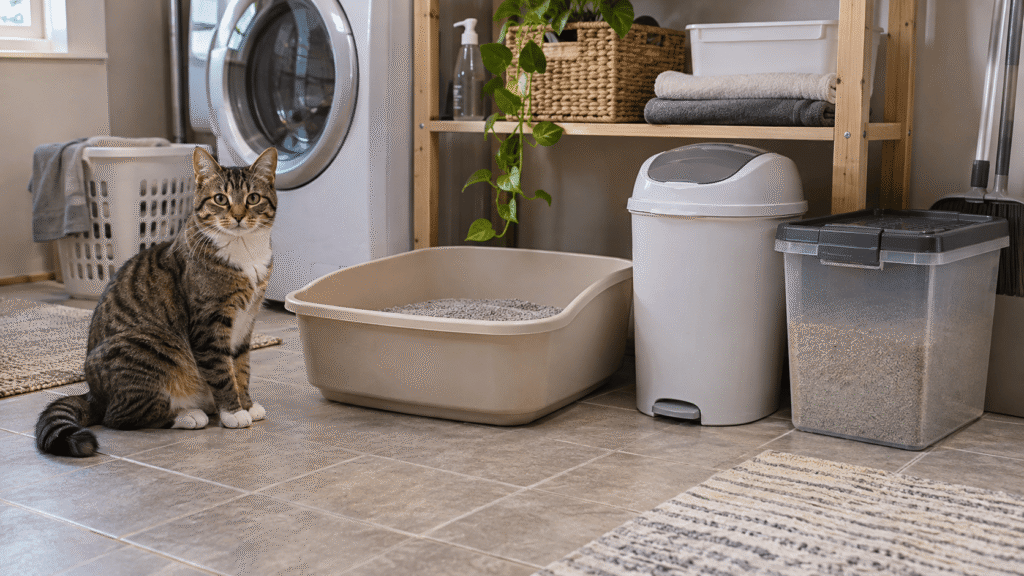
Seal the waste. An open trash can full of used litter draws flies. A sealed pail like the Litter Genie keeps waste closed off until trash day.
Store litter sealed. This matters most for wheat and corn litters, which pantry pests can get into. A gasket box like the Sterilite keeps the bag closed off.
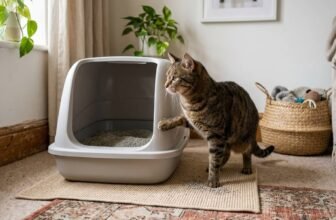
Keep the box dry. Covered boxes can hold moisture, and damp litter is what gnats like. If you use a covered box, scoop it often and let it air out.
Change the litter on schedule. Follow the directions on your litter bag for full changes, and don’t stretch old litter longer in summer.
What Not to Use
Don’t spray insecticides or essential oil products into the litter box or apply them to surfaces your cat regularly contacts. Cats can pick up residues on their paws and fur while grooming.
If pest control is needed, choose a product specifically labeled for the situation and follow its pet safety directions. Your vet can also tell you what’s safe to use around cats.
Products That Help
Litter Genie Standard Pail

Waste sitting in an open trash can draws flies. The Litter Genie keeps used litter enclosed between cleanings, making it less accessible to flies than an open trash can. Reviewers strongly confirm it keeps odor in, and one credits it with solving a smell problem that spread across a whole floor.
Know before you buy: it uses refill bags, so that’s an ongoing purchase. This Litter Genie review compares the pails and refills.
Best for: anyone who scoops into a kitchen or bathroom trash can now.
Sterilite 80 Qt Gasket Box

A gasket lid and latches give this box a tight seal, which keeps pantry pests out of stored litter. Reviewers report the seal holding up for years. It’s big enough for a full bag of litter.
Know before you buy: at 80 quarts, it needs floor space. Measure your closet or laundry room first.
Best for: wheat, corn, and other grain-based litters, and anyone who buys litter in bulk.
Frequently Asked Questions
Why are there tiny black bugs in my cat’s litter box?
They could be fungus gnats, phorid flies, or another type of small fly. Deep clean the box, scoop daily, and check nearby houseplants and drains, since small flies often breed somewhere close by.
Are bugs in the litter box dangerous to my cat?
Gnats and fruit flies are mostly a nuisance. If you find maggots, remove the litter and clean the box right away. If you see white segments in your cat’s poop or on its fur, call your vet, since those may be tapeworms.
Does cat litter attract bugs?
Clean litter doesn’t attract much. Bugs come for waste and moisture. Stored grain-based litters can attract pantry pests, though, so keep those bags sealed.
Why do I still have gnats after cleaning the litter box?
The gnats may be breeding somewhere else, like houseplant soil, a drain, or the kitchen trash. Find and fix that source, and trap the remaining adults where your cat can’t reach.
How do I get rid of maggots in a litter box?
Bag and remove all the litter, wash the box with warm water and unscented soap, dry it fully, and refill. Then scoop daily and seal waste in a lidded bin so flies have fewer places to lay eggs.