Disclaimer: This post may contain affiliate links. As an Amazon Associate, we earn from qualifying purchases.
Last updated on September 1, 2026
A litter box for arthritic cats needs to do more than have a low entry. Arthritis changes how a cat moves, positions, and balances inside the box. A setup that solves only the entry problem often misses what’s actually causing accidents.
The best litter box for arthritic cats has an entry low enough to step into without lifting stiff joints, a large enough interior to turn comfortably, and a stable base that doesn’t shift when a cat steps in.
This article covers six box picks across different severity levels, plus what else matters in the setup: litter texture for sensitive paws, floor stability, and where the box needs to be placed.
Signs Your Cat’s Litter Box Setup Needs Changing
Arthritis doesn’t always show up as obvious limping. The litter box is often where the signs appear first.
Watch for hesitating at the box entrance before stepping in. Notice going right beside the box rather than inside it. Pay attention to accidents happening closer and closer to the box over time.
These may not be behavioral problems. They can be physical ones. If your cat has started any of these habits, talk to your vet. Arthritis is common in older cats but needs a diagnosis before you assume that’s the cause.
What Matters Most in the Setup
The box itself is only part of the solution.
Entry height is the most critical factor. Most standard litter boxes have entries of 5 to 8 inches. A cat with sore joints may struggle with anything over 4 inches, and cats with more advanced stiffness often need 3 inches or lower.
Interior size matters just as much. A cat with stiff joints can’t turn easily in a cramped box. Extra space reduces how much maneuvering they need to do once inside.
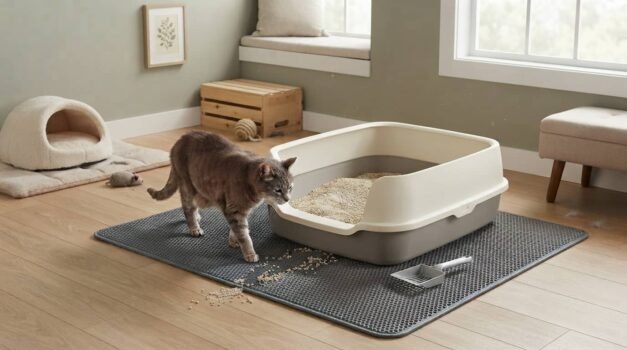
Floor stability is often overlooked. A box that slides when a cat steps in creates instability for a cat that already has weaker legs. A non-slip mat underneath, or rubber feet on the box itself, keeps everything in place.
Litter texture affects how comfortable it is to stand and dig. Coarse pellets, large crystals, or sharp-edged granules can be hard on sensitive paws. Fine, soft litters like paper litter or tofu litter are gentler underfoot. For more options, this guide to the best cat litter for senior cats covers the softest choices, and our best cat litter for sensitive paws guide covers additional soft-texture options including grass and wood fiber formulas.
Box placement changes whether an arthritic cat can reach the box in time. One box on every floor your cat uses is the minimum. Place it where the cat already spends most of its time.
Quick Picks
- Best Overall: KittyGoHere Senior Cat Litter Box
- Best Adjustable: maohegou Adjustable Height Litter Box
- Best Balance of Entry and Containment: Vealind Large Low Entry Litter Box
- Best for Severe Mobility Issues: IXARO Ultra-Low Entry Litter Box
- Best for Large Arthritic Cats: LoopTime Extra Large Low Entry Litter Box
- Best for Easy Cleaning: WENBOKMIN Stainless Steel Litter Box
Comparison Table
| Litter Box | Entry Height | Best For | Material |
|---|---|---|---|
| KittyGoHere | 3 inches | Best overall pick | Plastic |
| maohegou Adjustable | 2.65 to 7 inches | Transitioning cats | Plastic |
| Vealind Large | 4.72 inches | High containment and access | Plastic |
| IXARO Ultra-Low | 2.7 inches | Severe mobility issues | Stainless steel |
| LoopTime Extra Large | Low front entry | Large arthritic cats | Plastic |
| WENBOKMIN Stainless | 4 inches | Easy daily cleaning | Stainless steel |
KittyGoHere Senior Cat Litter Box
Why It Stands Out
This is the most purpose-built option for arthritic cats and one of the highest-rated litter boxes in our database at 4.7 stars from over 4,300 ratings. Multiple owners mention their vet specifically recommended this product for a cat with arthritis or mobility issues.
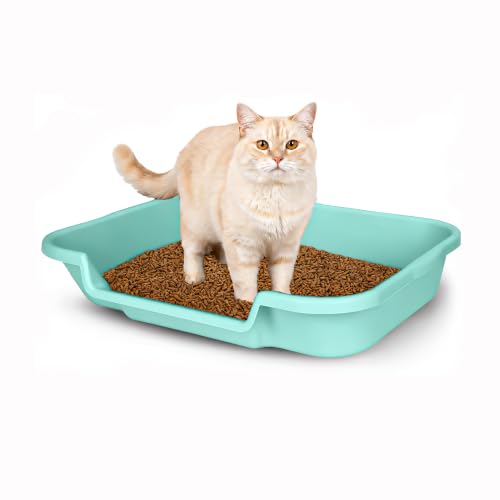
The 3-inch entry is built into an overall 5-inch-tall pan. That combination gives a low step for stiff joints while still keeping litter reasonably contained. The 24×20-inch footprint gives large-breed cats genuine room to turn and reposition without touching the walls.
Owner accounts consistently describe this box helping cats that had started avoiding the box or having accidents beside it.
Possible Downsides
The relatively shallow sides mean more cleanup around the box for cats that spray or kick litter aggressively. A litter mat around the perimeter helps significantly.
Best For: Most arthritic cats, especially those where a vet has flagged joint pain as a concern. The clearest starting point before trying anything else.
maohegou Large Cat Litter Box
Why It Stands Out
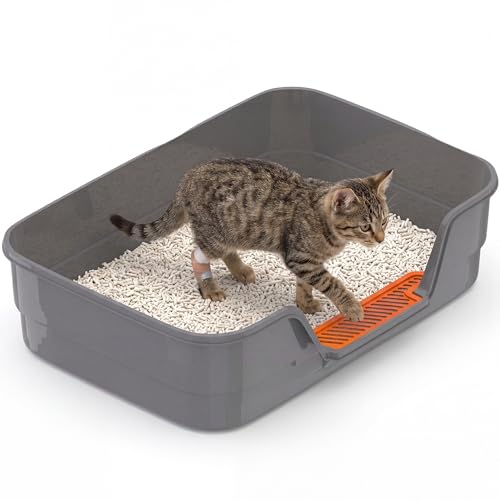
This is the most flexible design on the list. The sides fold down to create a 2.65-inch entry when needed, or stay upright at a standard 7-inch height. That adjustability is useful during transitions when a cat’s mobility is declining and you’re not sure yet how low the entry needs to be.
Owners of cats with joint stiffness, injuries, and limited mobility describe this design helping their cats resume normal litter box habits. One owner also discovered a practical third configuration: front folded, back left tall. That creates a low entry with some containment on the back wall, useful for cats that have started urinating higher as their squat weakens.
Possible Downsides
The folding sides aren’t as rigid as a solid-walled box. For cats with strong legs that tend to push against the sides, this may shift more than a conventional box.
Best For: Cats whose mobility is changing and owners who want a box that can adapt as access needs evolve over time.
Vealind Large Cat Litter Box High Sided
Why It Stands Out
The 4.72-inch low front entry paired with 8.66-inch walls on three sides is a strong combination for cats that need easier access but also tend to spray or miss as their squat weakens. Most low-entry boxes sacrifice containment to get the entry lower. This one keeps both.
Owner accounts include a 16-year-old senior cat and a cat with a balance and coordination condition. Both adapted to this box. The anti-stick interior coating makes daily cleaning faster.
Possible Downsides
At 4.72 inches, the entry is lower than standard but not as low as the KittyGoHere or the IXARO. For cats with more severe stiffness, a few extra inches can make a difference.
Best For: Arthritic cats that also spray high or miss the edges, where containment matters as much as access.
IXARO Low Entry Litter Box for Senior Cats
Why It Stands Out
At 2.7 inches, this has the lowest entry of any box on this list. It’s designed for cats with the most limited mobility, including post-surgical recovery and hind-leg weakness. Ask your vet whether this level of access is appropriate for your cat’s specific situation.
The stainless steel construction means no odor absorption and faster cleaning. The open-top design gives cats a clear view of their surroundings while inside, which can reduce hesitation at the entrance.
Despite the very low front, the sides still provide some containment for light scatter and spray.
Possible Downsides
At 2.7 inches, aggressive diggers will kick litter out easily. A litter mat directly in front and around the box catches most of what comes out.
Best For: Cats where even a 3-inch step feels like too much, particularly during recovery from injury or surgery. Always follow your vet’s guidance on setup during post-surgical recovery.
LoopTime Extra Large Cat Litter Box
Why It Stands Out
Size is the priority here. Arthritic cats that are also large need more than a low entry. They need room to step in, reposition, and exit without touching the walls or bumping into corners.
Owner accounts describe this box helping cats that had been having near-daily accidents resume consistent litter box use after the switch. The interior is described as roomy enough for a cat to turn and find a position without hitting the walls, and the low front entry keeps access manageable.
Possible Downsides
The large footprint takes up more floor space. The low front opening also means lighter litter can exit through the entry.
Best For: Large arthritic cats, or any arthritic cat where the current box feels too cramped to turn comfortably inside.
WENBOKMIN Stainless Steel Cat Litter Box
Why It Stands Out
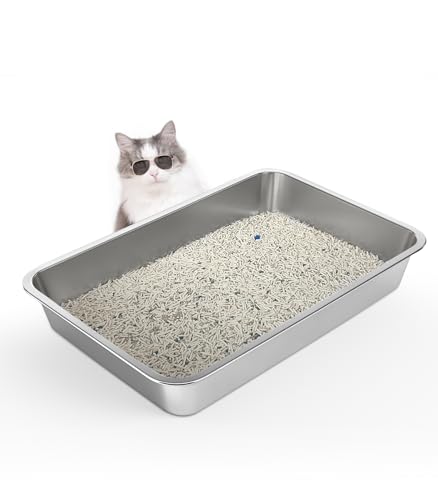
When an older or arthritic cat needs frequent box cleaning, stainless steel can make the daily routine easier. Plastic boxes can hold odor over time, especially with heavy use. This shallow stainless pan cleans faster and resists odor buildup better than plastic.
The 4-inch depth gives easy access, and the 24×16-inch footprint gives cats room to maneuver. The non-porous surface wipes clean without scrubbing.
Possible Downsides
At 4 inches total depth, there’s very little containment for heavy diggers or sprayers. This works best for cats whose main issue is entry rather than mess containment.
Best For: Owners who need a box that stays genuinely fresh between cleanings and cleans up quickly every day.
The Full Arthritic Cat Setup
Litter Choice
Avoid large pellets, sharp crystals, and coarse litter for cats with sensitive paws. Paper litter and tofu litter are the softest options underfoot. Unscented formulas work better for older cats who may have developed sensitivity to strong fragrance. For a full comparison, this guide to the best cat litter for senior cats covers the softest choices.
Floor Stability
Place a non-slip rubber mat under the box. A cat with weaker legs stepping into a sliding box is an unnecessary stress. Even a small shift as they step in can make them hesitant to use it again.
Placement
One box per floor is the minimum. Place it where the cat already spends most of its day. Keep the box away from noisy appliances. A cat that’s already moving slowly doesn’t need added stress mid-use.
Cleanliness
A dirty box is a bigger problem for a cat that can’t hold it as long. Scooping twice daily makes a real difference. If box maintenance is becoming difficult, this guide to automatic litter boxes covers options that handle cleaning on their own.
FAQ
How low should the entry be for an arthritic cat?
Most cats with joint stiffness do better with entries of 3 to 4 inches. Cats with more severe mobility issues may need 2.5 to 3 inches or lower. The KittyGoHere at 3 inches is a widely used starting point. The IXARO at 2.7 inches is the lowest option on this list. Your vet can help assess what your cat actually needs.
Should an arthritic cat use a covered litter box?
Open boxes are almost always better. Covered boxes reduce visibility and can feel cramped, which increases hesitation for a cat that already moves slowly. They also trap odor more aggressively, which can deter a cat that’s already reluctant to use the box.
How many litter boxes does an arthritic cat need?
At least one per floor, placed where the cat spends time. An arthritic cat may not be able to travel quickly enough to a distant box. This guide on how many litter boxes per cat explains placement in detail.
My cat started going right beside the litter box. Is this arthritis?
Going beside rather than inside the box is one common sign that entry may be painful or difficult. It’s worth a vet visit to identify the cause before making setup changes, since other health issues can cause similar behavior.
Can an arthritic cat use an automatic litter box?
Some automatic boxes have lower entry points and self-cleaning mechanisms that keep the box cleaner between scoops. Check the specific model’s entry height before buying. Also confirm that your cat is comfortable with the noise and movement of the machine, since startled cats with limited mobility may fall or avoid the box entirely.