Disclaimer: This post may contain affiliate links. As an Amazon Associate, we earn from qualifying purchases.
Last updated on October 5, 2026
Walnut cat litter is made from crushed walnut shells, and it’s one of the few natural litters that clumps and scoops a lot like clay. If clay’s dust bothers you but you don’t want to give up easy scooping, it’s worth a look. Below you’ll see what changes when you switch, the real downsides, and how walnut stacks up against other natural litters.
Walnut cat litter is a natural clumping alternative to clay that many owners like for odor control and low dust. Its biggest trade-offs are the dark brown color, tracking from fine granules and fewer brand choices.
Quick Picks
Best Walnut Litter to Start With: Naturally Fresh Quick-Clumping
Best Mat for Walnut Granules: CatGuru XXL Litter Mat
What Walnut Cat Litter Is Made Of
Walnut shell cat litter is made from the hard outer shell of the walnut, not the nut you eat. The shells are left over from walnut processing. They’re crushed into small granules that look a lot like brown clay litter.
Most walnut litter on Amazon comes from one brand, Naturally Fresh. Its clumping formulas use fine granules. It also makes a non-clumping pellet version for owners who prefer pellets instead of fine clumping granules.
Walnut Cat Litter vs Clay: What Changes
Odor
Odor control is walnut’s strongest point. Naturally Fresh says its walnut shells neutralize litter box smells better than clay, pine, corn and wheat litters. Most reviewers of its Multi-Cat formula say it beats the clay they used before.
Dust
Reviewers mostly describe walnut litter as low dust. Low dust isn’t the same as no dust, so pour it low and slow.
Clumping
Most reviewers say the clumps hold together well enough for daily scooping. A few find them looser than clay.
How Much You Pour
Naturally Fresh’s directions say to fill a clean box with three inches. Fill depth varies between brands, so go by the bag, not by what you used with clay.
The Downsides of Walnut Litter
The Dark Color Hides What’s in the Box
Walnut litter is dark brown, so clumps and wet spots blend in. It’s easy to miss one, especially in a dim room or a covered box. Scoop with a light on.
Tracking Depends on Your Cat
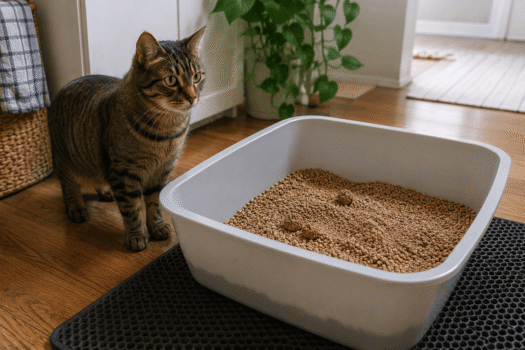
Fine walnut granules can still get carried out of the box on paws. Several reviewers say it tracks less than clay, while others still find it on the floor. A big digger will scatter more of any litter.
A wide mat can help catch the granules that make it out of the box. Our pick for walnut litter is below.
Fewer Brand Choices
Walnut litter has far fewer widely available options than materials like clay, corn or tofu. Naturally Fresh dominates the category, so if its granule size or feel doesn’t suit your cat, there aren’t many alternatives to try.
Walnut vs Other Natural Litters
Corn and wheat: Both clump, and both are usually lighter in color than walnut, so clumps are easier to spot. Our guides to corn cat litter and wheat cat litter cover the types.
Tofu: Tofu-style litter usually comes as light-colored pellets that are bigger than walnut granules. It isn’t always made from soy, which our tofu cat litter guide explains.
Pine and wood pellets: Most pine pellets don’t clump. They break down into sawdust that you sift out, while walnut clumps and scoops like clay. See pine pellets for cat litter and our wood cat litter guide.
Grass seed: One reviewer who switched from a grass-seed litter to Naturally Fresh Multi-Cat said the clumps flaked less and left less lingering odor.
How to Switch to Walnut Litter
Naturally Fresh gives its own switching directions. Put one to two inches of Naturally Fresh in a clean box, then cover it with your current litter. Each time you change the litter, use less of the old one and more Naturally Fresh.
For any other walnut brand, check the bag first. Our guide on how to transition cat litter covers the rest.
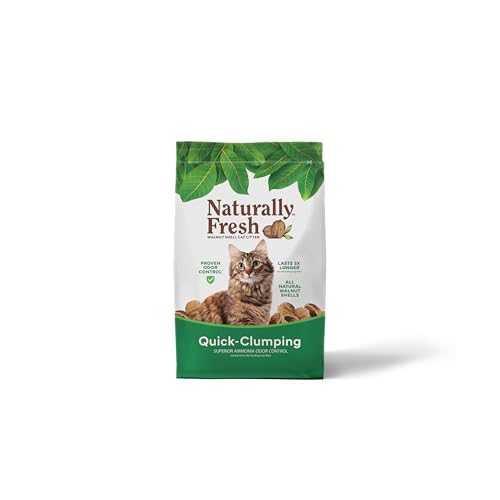
Naturally Fresh Quick-Clumping: The Walnut Litter to Start With
Why It Stands Out
This is Naturally Fresh’s basic unscented clumping formula, so it’s the simplest place to start if you want to try walnut litter. Reviewers say it’s low dust and controls odor without perfume covering the smell.
Several reviewers say even their picky cats took to it.
Possible Downsides
It has no added odor counteractant, unlike the Multi-Cat formula. One reviewer who tried both also found Multi-Cat clumped better.
Best For
One or two cats, and anyone trying walnut for the first time. With more cats, our Naturally Fresh cat litter review compares Multi-Cat and Ultra Odor Control.
CatGuru XXL Mat: For Walnut Litter That Leaves the Box

Why It Stands Out
One owner said this was the first mat that kept walnut shell litter contained after several other types failed. Reviewers also praise its grip, so it stays put when cats jump out.
It holds up to claws, with only minor wear reported. Owners with Maine Coons and busy multi-cat boxes use it too.
Possible Downsides
It’s a flat mat, so it only catches litter that lands on it. Litter kicked over a low box wall can still clear it.
Best For
Big diggers and large cats using fine walnut granules.
Frequently Asked Questions
Does walnut cat litter smell like walnuts?
Not really. Some owners notice an earthy smell when the bag is fresh, but Naturally Fresh is unscented, with no added perfume.
Is walnut cat litter flushable?
Don’t assume a litter is flushable. Clay-based litter shouldn’t be flushed. For non-clay formulas, follow the disposal directions on the package and local wastewater rules.
Can you compost walnut cat litter?
Naturally Fresh calls its litter biodegradable and compostable. Used litter still holds cat waste, so follow the disposal directions on the bag and your local rules.
Is walnut litter a good choice for kittens?
AAHA suggests unscented clumping litter, the litter they used before, or both. Naturally Fresh’s clumping formulas are unscented, so they fit the first part.
Does walnut litter work in automatic litter boxes?
It depends on the machine. Check your box’s manual for the litter types it supports before you pour.
What if someone in my home has a walnut or nut allergy?
Naturally Fresh says not to use its litter if there’s potential for an anaphylactic reaction. If that applies in your home, choose another litter material.