Disclaimer: This post may contain affiliate links. As an Amazon Associate, we earn from qualifying purchases.
Last updated on October 5, 2026
Crystal cat litter works differently from clay. Instead of clumping around urine, the crystals soak it up and hold it, so your daily routine changes too.
Here are the real pros and cons, how the routine works, and which cats and setups it suits.
Crystal cat litter is made from silica gel beads that absorb urine instead of forming clumps. Owners like its odor control and light weight, but the firm texture doesn’t suit every cat, and automatic-box compatibility depends on the machine.
Quick Picks
Standard crystal litter: Fresh Step Clean Care Crystal Cat Litter
Color-change crystal litter: Purina Tidy Cats Tidy Care Alert
For a full brand comparison, see our best crystal cat litter guide.
| Litter | Type | Scent | Best For |
|---|---|---|---|
| Fresh Step Clean Care Crystal | Standard silica crystals | Febreze freshness | Trying crystal litter |
| Tidy Cats Tidy Care Alert | Color-change silica crystals | Not stated | Wanting a color signal |
Is Silica Cat Litter the Same as Crystal Cat Litter?
Yes. “Crystal” and “silica” litter usually refer to the same litter type: beads of silica gel. Some brands put “silica” on the bag, others say “crystal.”
How the Crystal Litter Routine Works
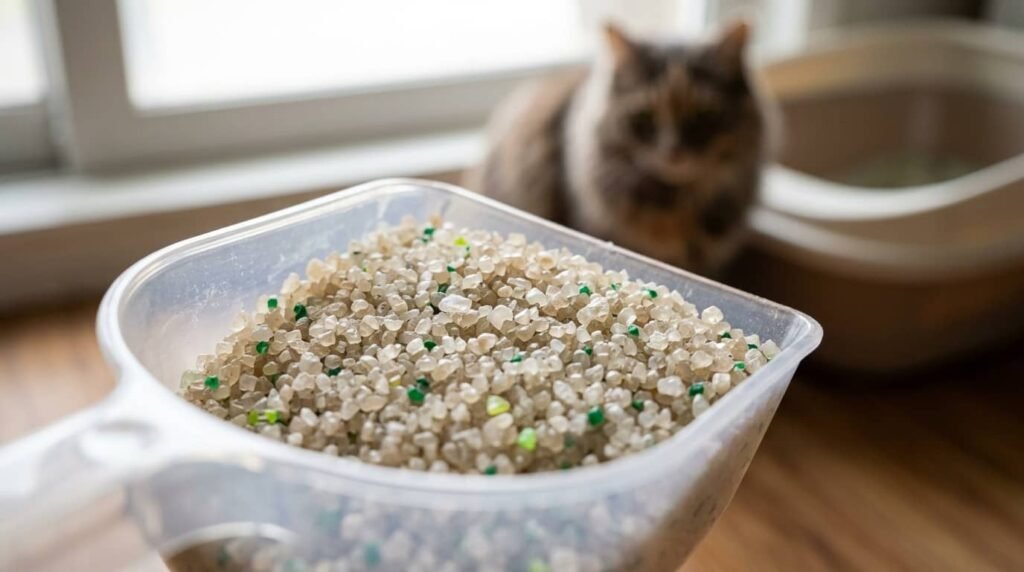
With standard non-clumping crystal litter, there is no urine clump to scoop. You remove solid waste and stir the crystals as directed so moisture isn’t concentrated in one area. Follow the specific package directions for stirring and replacement.
When the batch is used up, you replace all of it at once. Follow the package directions for when to change it, since products differ.
The Pros of Crystal Cat Litter
Odor control. This is the main reason owners switch. Reviewers of Fresh Step’s crystal litter repeatedly report strong odor control.
Light weight. Silica crystals weigh less than clay, so bags are easier to carry and pour.
Less sticking. Some owners report less litter stuck to the bottom of the box than with their previous clumping litter.
Low dust. Many crystal litters are marketed as low dust, and many owners agree. Results still vary by brand and bag.
The Cons of Crystal Cat Litter
Texture. Crystal beads are firmer and coarser than clay. Some owners report cats stepping in, then walking straight back out.
A different routine. Stirring and full replacements take some getting used to if you’re coming from clumping litter.
Tracking. Results are mixed. Some owners report less tracking than clay, while others find light crystal pieces carried on paws. A litter mat helps either way, and our litter tracking solutions guide covers other fixes.
Automatic boxes. Compatibility depends on the machine. PetSafe’s ScoopFree Crystal boxes are designed around crystal litter, while many other automatic boxes are built for clumping litter. Always follow your machine’s manual. Our scoop free litter box guide explains how that system works.
What About Color-Changing Crystal Litter?
Some crystal litters include particles that change color in contact with urine. It’s a color signal, not a diagnosis, so take any concern to your vet. Our color changing cat litter guide compares the main brands, and our PrettyLitter review covers the best-known one.
Fresh Step Clean Care Crystal Cat Litter
Why It Stands Out
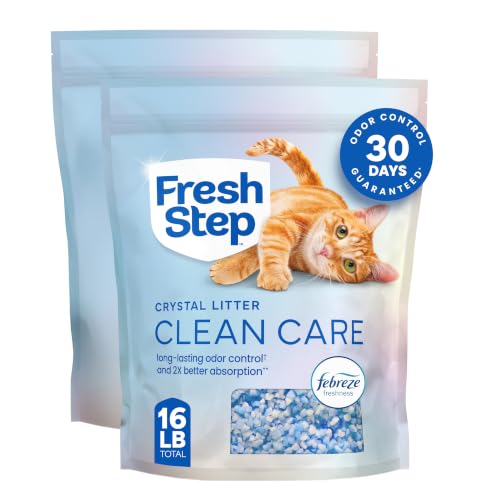
It’s a clear example of standard crystal litter. Fresh Step markets it with Febreze freshness and Ammonia Block technology. Several reviewers report strong odor control, including a long-time owner who has tried nearly every litter type. Multiple reviewers also say it tracks less than their old clumping clay and doesn’t stick to the box.
Possible Downsides
It’s scented with Febreze, so it won’t suit homes that want no added fragrance.
Best For
Owners who want to try crystal litter in a standard box.
Purina Tidy Cats Tidy Care Alert
Why It Stands Out
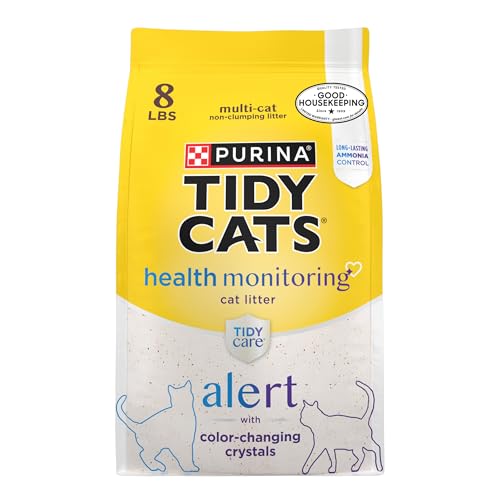
It’s a crystal litter with a color feature built in. Purina says the crystals change color based on your cat’s urine pH. It’s a color signal, not a diagnosis, so take any concern to your vet. Most reviewers report strong odor control, and one long-term user praises how absorbent it is.
Possible Downsides
In a shared box, a color change can’t tell you which cat it came from.
Best For
Single-cat homes that want crystal litter with a color signal.
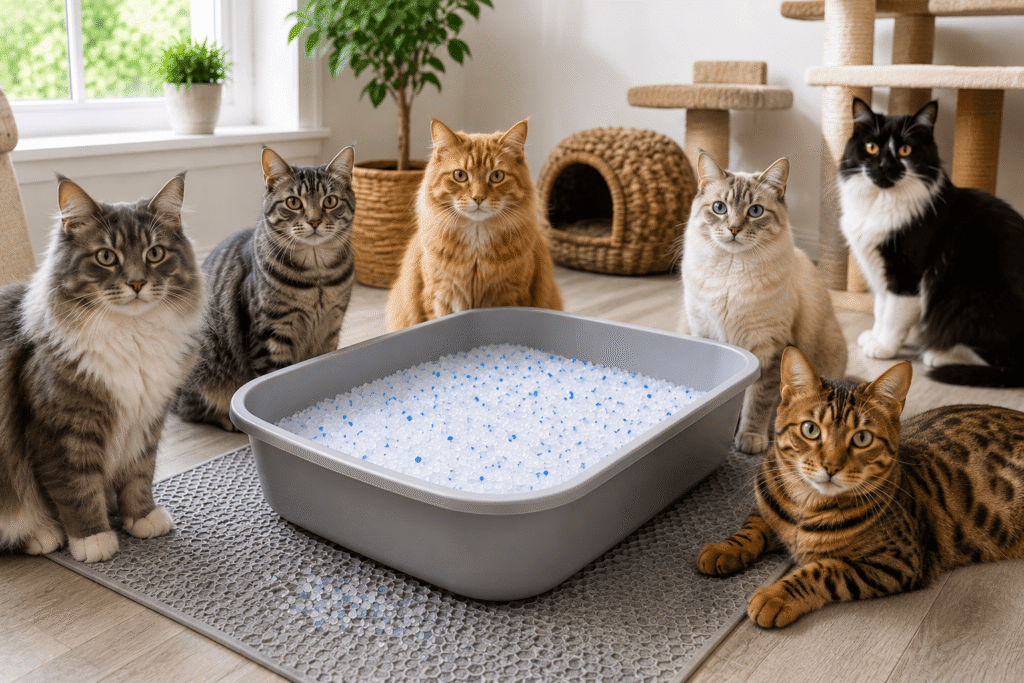
How Crystal Litter Compares With Other Types
Standard crystal litter is usually non-clumping. If you’re deciding between clumping and non-clumping systems, our clumping vs non-clumping cat litter guide walks through the choice.
Plant-based litters like tofu and corn usually clump instead, so their routine is closer to clay.
Frequently Asked Questions
Does crystal cat litter clump?
Usually not. Standard crystal litter absorbs urine into the beads. Our clumping crystal cat litter guide explains products sold with that label.
How do I switch my cat to crystal litter?
Check the bag first, since some makers give their own switching directions. Our guide on how to transition cat litter covers the general approach.
Is crystal cat litter good for kittens?
AAHA suggests starting kittens with unscented clumping litter, the litter they used before, or both. Standard crystal litter doesn’t clump, so it doesn’t match that suggestion.