Disclaimer: This post may contain affiliate links. As an Amazon Associate, we earn from qualifying purchases.
Last updated on October 4, 2026
Color changing cat litter contains indicator crystals that change color when your cat pees on them. It’s an easy way to keep an eye on what’s showing up in the box, as long as you know what it can and can’t do.
This guide explains how the color change works, how to read it properly, and where it falls short. Then it covers three picks, including a clumping tofu option for owners who don’t want non-clumping crystals.
Color changing cat litter reacts mainly to the pH of your cat’s urine, and some formulas also turn red when blood is present. It shows a color, not a diagnosis. Follow the brand’s instructions for persistent changes, and call your vet sooner if your cat seems unwell.
Quick Picks
Best overall: PrettyLitter. Scoop solids, stir and replace per the directions.
Best for establishing a baseline: Tidy Cats Tidy Care Alert. Detailed step-by-step baseline instructions on the bag.
Best clumping tofu option: pidan Tofu Cat Litter with Occult Blood Test. An indicator litter that still clumps.
| Litter | Type | Clumps? | What It Reacts To | Best For |
|---|---|---|---|---|
| PrettyLitter | Silica crystals | No | Urine pH and blood | The simplest routine |
| Tidy Care Alert | Silica crystals | No | Urine pH and blood | Setting a baseline |
| pidan Occult Blood Test | Tofu | Yes | Blood | Owners who want clumps |
How Color Changing Cat Litter Works

The crystals contain a pH indicator, the same basic idea as a pool test strip. When urine soaks in, the indicator shifts color depending on how acidic or alkaline the urine is.
Each brand prints a color guide on the bag. Purina’s guide lists yellow to olive green as the typical normal range, with deeper yellow and orange on the acidic side and blue or dark green on the alkaline side. Some formulas also turn red when blood is present.
Brands are clear that this isn’t a medical test. Purina states on the bag that its litter is not a test to diagnose, cure, prevent or treat disease, and tells owners to discuss color changes with a vet.
How to Read It Properly
Don’t judge by the first pee. Purina recommends watching for five days and noting the most common color in the normal range. That’s your cat’s baseline.
Check within two hours of your cat using the box. Color also varies through the day, and it can look bluer or darker green for an hour or two after meals before settling back.
If the color stays outside the normal range for more than two days, Purina says to call your vet. For red, it recommends contacting your vet right away. For a color-by-color breakdown, see our PrettyLitter color chart guide.
What It Can’t Tell You
A normal color doesn’t mean everything’s fine. The litter only reacts to what its indicators are designed for, so plenty of problems won’t show up. If your cat seems off, call your vet regardless of the color.
It can’t tell you which cat. In a shared box, you won’t know whose urine changed color. Purina’s suggestion is to give each cat its own box of the litter for a while if a change keeps showing up.
It only helps if you look. The feature is passive, but you still have to glance at the box. If you scoop in a dark closet at night, you’ll miss what it’s showing.
PrettyLitter

Why It Stands Out
The routine is the draw. You scoop solids, stir the crystals and replace the litter when PrettyLitter’s directions say to. One long-time user called it the cleanest routine she’s found.
Odor control is strong across most reviews, including several owners who say you can’t smell the box at all. It comes in Unscented, Calm Aloe and Lotus Flower.
Possible Downsides
This formula doesn’t clump, so urine stays in the crystals until you change the litter. The lightweight crystals can also track on hard floors. Our litter tracking solutions guide covers what helps.
Best For
Single-cat homes that want the easiest possible routine. Our PrettyLitter review goes deeper.
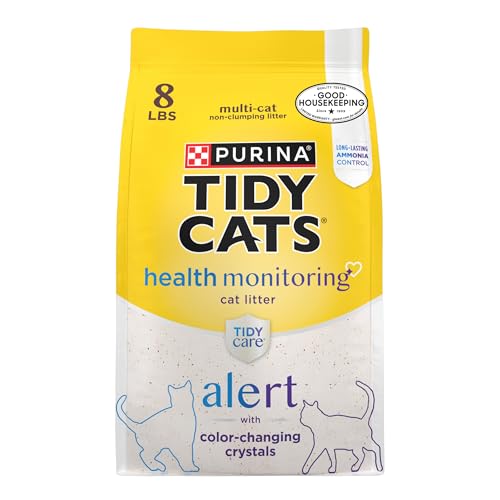
Tidy Cats Tidy Care Alert
Why It Stands Out
Purina prints detailed step-by-step baseline instructions on the bag, which makes this an easy litter to read correctly. It comes in an 8 lb bag.
It’s highly absorbent for a non-clumping litter, according to a one-year user, and most reviewers say odor control is strong. Reviewers report using it successfully in some automatic litter boxes, and some mix it into regular litter while transitioning. Check your machine’s requirements before switching.
Possible Downsides
Like any crystal litter, it doesn’t clump. Purina warns that bleach and baking-soda deodorizers can interfere with the color results, so skip both.
Best For
Owners who want to set a proper baseline and read the colors with confidence.
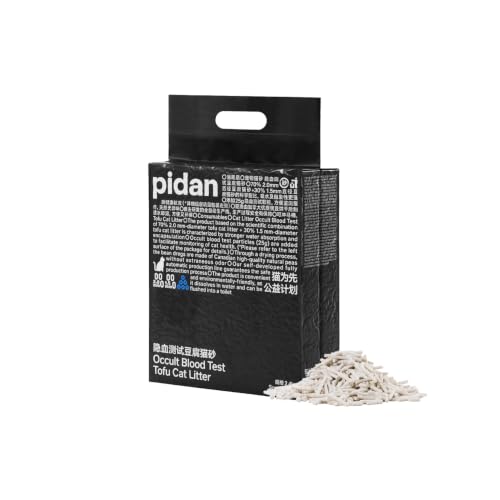
pidan Tofu Cat Litter with Occult Blood Test
Why It Stands Out
Many color indicator litters are non-clumping crystals. This one is a clumping tofu litter with a blood indicator, so you keep your normal scoop routine.
Reviewers confirm strong odor control and genuinely low dust, including direct comparisons that favor it over World’s Best.
Possible Downsides
It indicates blood only, not pH, so it tells you less than the crystal litters. Tofu texture also takes some cats time to accept. Mixing it into their old litter first can help.
Best For
Owners who want an indicator but won’t give up clumping.
Frequently Asked Questions
How long does a bag of color changing litter last?
Follow the directions on the bag for the exact litter and number of cats. Replacement guidance varies by product.
Can I use a litter deodorizer with it?
Not a baking soda one. Purina warns that baking soda deodorizers and bleach can alter the color results. Wash the box with warm water and unscented soap instead.
Does color changing litter work in automatic litter boxes?
It depends on the machine. Many automatic boxes are built for clumping litter, while some owners report crystal formulas working fine. Check your machine’s manual before switching.