Disclaimer: This post may contain affiliate links. As an Amazon Associate, we earn from qualifying purchases.
If you are trying to figure out the right types of cat litter, something probably is not working the way it should. The smell comes back too fast, litter ends up all over the floor, or your cat suddenly avoids the box.
It is easy to assume all litter works the same, and the problem is just cleaning more often. That is not usually the case. Different litter types behave very differently once in the box, and choosing the wrong one can create problems that no amount of scooping will fix.
Cat litter falls into three main types. Clumping litter, absorbent non-clumping litter, and pellet based litter. Each one has a different way of handling odor, moisture, and daily cleaning.
This guide breaks down how each type actually works in real life, where they tend to cause problems, and how to choose one that fits your cat, your space, and your routine.

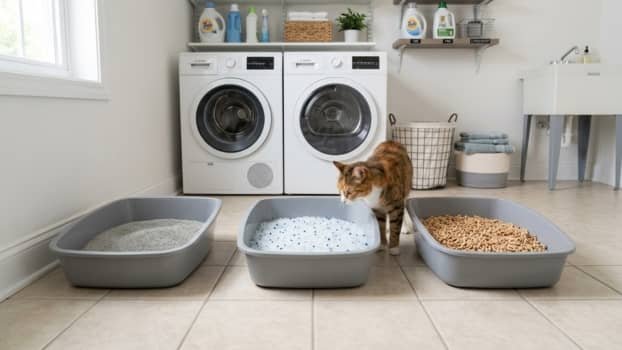
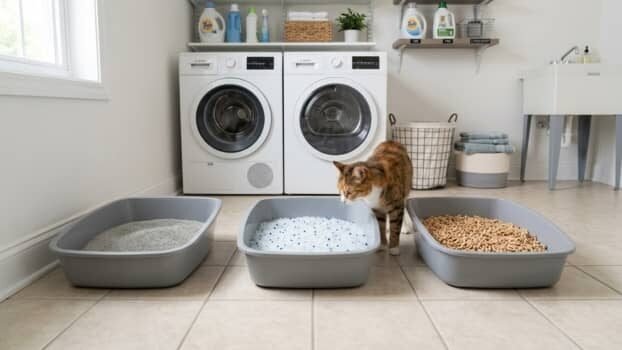
A side by side comparison of clumping clay, crystal, and pellet cat litter, showing how each type looks and helping you choose the right one for your setup.
Quick Answer
Cat litter falls into three main types. Clumping litter forms solid scoops that you remove daily. Absorbent litter soaks up urine and requires full changes more often. Pellet based litter breaks down into sawdust or expand, usually needing a sifting setup and a different cleaning routine.
Why This Matters
It is easy to think litter is just about odor control or price. That is where most problems start.
A litter type is not just a material. It changes how you clean the box, how much mess ends up on your floor, and whether your cat is comfortable using it. When the wrong type is in the box, you usually see the same patterns. The smell comes back quickly, clumps fall apart, or your cat starts hesitating before stepping in.
There is also a common assumption that switching brands will fix the problem. In reality, switching between similar types does not change much. Moving from one clumping clay to another often gives the same result because the behavior is almost identical.
The bigger difference comes from switching categories. For example, moving from a lightweight clumping litter that sticks to paws to a heavier clumping formula or even a pellet system can completely change how much litter gets tracked around the house.
The goal is not to find a perfect product. It is to match the litter type to your setup, your cleaning routine, and what your cat is comfortable with. Once those line up, most of the common litter box problems become much easier to manage.
The 3 Main Types of Cat Litter
Instead of thinking in terms of brands or materials, it helps to group litter by how it behaves in the box. This makes it much easier to understand why certain types work well in some homes and fail in others.
Clumping Cat Litter
Clumping litter is the most widely used type. It reacts to moisture by forming solid clumps that can be scooped out daily, leaving the rest of the litter clean.
This group includes traditional clay made from bentonite, along with newer options like corn, cassava, and tofu based litters that use plant starches to create clumps.
In daily use, this is the easiest system to manage. You scoop once or twice a day, top up as needed, and do a full clean less often. That is why it works well in busy households or multi cat setups where odor control needs to stay consistent.
The texture also plays a big role. Most clumping litters feel similar to fine sand, which is what cats naturally prefer. That makes this type the most widely accepted, especially for picky cats.
One example is Dr. Elsey’s Ultra Unscented Clumping Clay Cat Litter 40 lb.
This type of litter is often used as a starting point before trying other materials, because it gives you a clear idea of how clumping performance should feel.
It uses medium grain clay that forms very firm clumps, which makes scooping easier without the clumps breaking apart. It is also unscented, which helps avoid the strong artificial smells that can cause some cats to avoid the box.
If you want a simple baseline to compare other litter types against, this is the kind of formula that shows how clumping litter is supposed to perform.
Where this type struggles is tracking and dust. Finer particles stick to paws easily, especially with lighter formulas. If the box is in a high traffic area, you will usually see litter outside the box unless you pair it with a good mat or adjust placement.
Absorbent and Non Clumping Litter
This type of litter works very differently from clumping options. Instead of forming solid scoops, it absorbs moisture and holds it inside the material.
The two main versions are non clumping clay and crystal litter, and each one comes with a completely different routine.
Non Clumping Clay Litter
Non clumping clay is the simplest version of cat litter. Urine spreads through the material and gets absorbed instead of forming clumps. Over time, the litter becomes saturated and the entire box needs to be emptied and replaced.
One example is Purina Tidy Cats Non Clumping Cat Litter 24 7 Performance 20 lb. This type of litter is straightforward to use and shows how absorbent systems work in practice. Instead of daily urine removal, you manage the box by replacing all the litter once it reaches its limit.
This approach can feel simple at first, but the trade off becomes clear over time. Odor builds as the litter absorbs more moisture, and there is no way to remove urine without changing everything.
This type is less common for everyday use, but it still shows up in situations where simplicity and low upfront cost matter more than long term convenience.
Crystal Cat Litter
Crystal litter works differently from both clumping and basic absorbent clay. Instead of forming clumps or simply soaking moisture, it uses silica gel to pull liquid into tiny pores while allowing it to slowly evaporate.
You still remove solid waste daily, but instead of scooping urine, you stir the litter to keep it working evenly. This creates a very different cleaning routine compared to clumping litter.
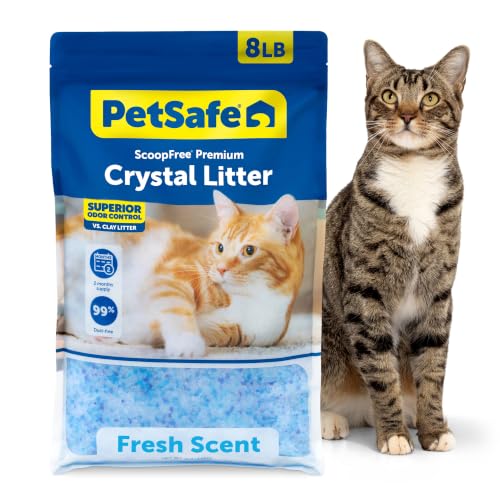
One example is PetSafe ScoopFree Premium Crystal Cat Litter 8 lb. This type of litter uses silica crystals to absorb moisture quickly and dry out solid waste, which helps reduce odor without needing daily urine removal. It also tends to be lighter and lower tracking than traditional clay.
At first, this system can feel easier because there are fewer scoops. In a single cat setup, it can last longer than expected before needing a full change.
But the trade off becomes noticeable over time. Odor control depends on how well the crystals continue to absorb moisture. Once they reach their limit, the smell can build quickly, and the entire box needs to be replaced.
Texture is another factor that often gets overlooked. Crystal litter feels rougher than softer, sand like litter. Some cats adjust without any issues, while others hesitate or avoid the box entirely.
This type tends to work best in smaller setups or situations where reducing daily cleaning is the priority. It is also commonly used with automatic litter boxes, where the system is designed around how crystal litter behaves.
Pellet and Wood Based Litter
Pellet based litter is the most different from anything else. It does not clump and it does not absorb in the same way as other types. Instead, it breaks down when it gets wet.
This group includes pine pellets, wood pellets, and paper pellets. When liquid hits the pellets, they expand or crumble into a sawdust like material. Instead of scooping individual spots, the system works by separating clean pellets from the used material.
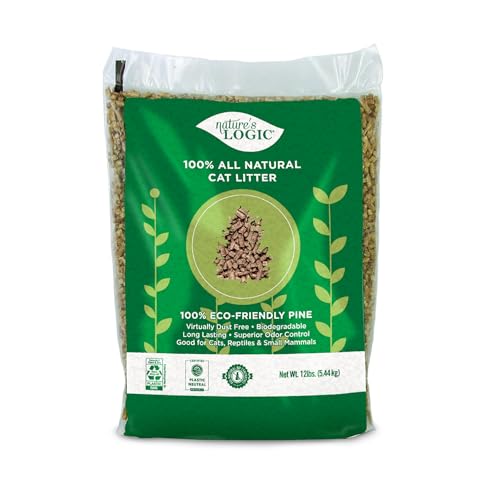
A common starting point is Nature’s Logic 100% Natural Pine Pellet Cat Litter 12 lb . This type of litter is made from compressed pine and breaks down naturally when wet. It produces very little dust and the larger pellet size helps reduce tracking compared to finer litter.
Because pellet litter breaks down instead of clumping, the setup matters a lot. A standard litter box makes this type harder to manage, since the sawdust mixes with the fresh pellets.
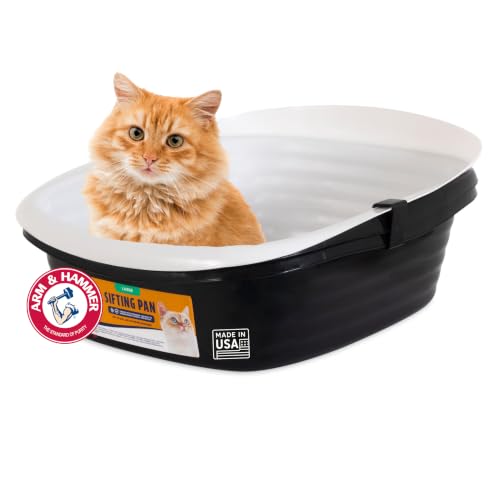
This is where a proper system makes a big difference. A sifting litter box separates the clean pellets from the broken down material automatically, so you are not mixing everything together.
One example is Suzzipaws Stainless Steel Sifting Litter Box with Lid . This type of setup uses a top sifting layer and a bottom tray to catch the used material, which makes daily maintenance much easier. Instead of digging through the box, you simply shake or lift the top layer so the waste falls through.
The daily routine is different from other litter types. You remove solid waste as usual, then periodically sift the box so the broken down material separates. Full changes are still needed, but the process feels more like maintaining a system than scooping clumps.
One of the biggest advantages here is tracking. Pellets are large and heavy, so they do not stick to paws the same way fine litter does. This can make a noticeable difference if litter tracking has been a constant problem.
Dust is also much lower, especially with pine or paper pellets. This is one reason this type is often used for kittens, senior cats, or cats recovering from medical procedures.
The trade off is texture. Pellets feel very different under a cat’s paws compared to soft litter. Some cats adjust quickly, while others resist using it altogether, especially if they are used to fine, sand like litter.
This type works best when the setup is designed around it. With the right litter and a proper sifting system, it can be one of the cleanest and lowest tracking options available. Without that setup, it often feels harder to manage than it needs to be.

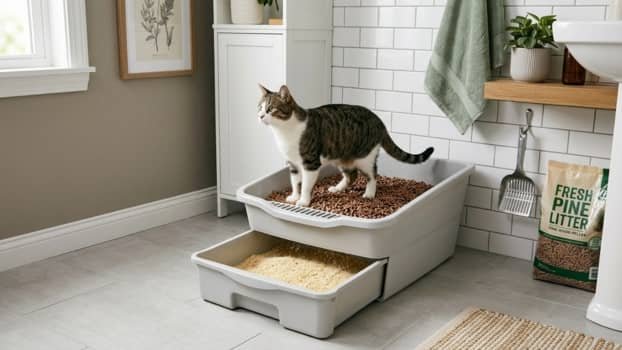
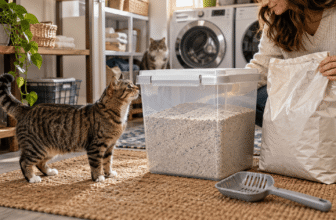
A pellet litter box system separating clean pine pellets from sawdust below, showing how this setup reduces tracking and simplifies cleaning.
Less Common Types of Cat Litter
Beyond the main categories, there are a few less common options that show up more often now, especially in eco focused products.
Walnut shell litter is one example. It has a texture closer to traditional clay but is lighter to handle. It clumps moderately well, though not as firmly as clay, and still tracks a bit depending on particle size. One example is Naturally Fresh Cat Litter Made from Walnut Shells 30 lb , which uses ground walnut shells to create clumps while keeping dust relatively low.
Grass seed litter is another option that forms soft clumps and produces very little dust. It feels closer to fine sand, which helps with acceptance, but it can be harder to find and usually costs more. One example is SmartCat All Natural Clumping Cat Litter 10 lb , which is made from grass and is known for its soft texture and lightweight feel.
Tofu based litter is becoming more popular as well. It forms clumps using plant starch and is often marketed as flushable. It tends to be low dust and lighter than clay, though it can break apart if scooped too early. One example is HONEY CARE Petrichor Mix Tofu Cat Litter 6 lbs , which combines plant based pellets with clumping material for easier scooping and odor control.
Paper based litter stands out for a different reason. It does not clump well and does not control odor as strongly, but it is extremely low dust and very soft. This makes it useful for kittens, senior cats, or recovery situations where comfort matters more than performance. One example is Fresh News Recycled Paper Small Animal Litter Bedding 10 Liters , which uses soft recycled paper pellets and is often used in temporary setups or situations where dust needs to be kept as low as possible.
These options can work well in specific situations, but they usually make the most sense once you already understand how the main litter types behave.
Key Differences That Actually Matter
At this point, the goal is not to compare materials. It is to understand how each type affects your daily routine and your home.
Odor control
Clumping litter tends to manage odor best in the short term because waste is removed daily. Absorbent litter can hold odor for a while, but once it reaches its limit, the smell builds quickly. Pellet systems rely more on natural odor control and regular maintenance.
Tracking
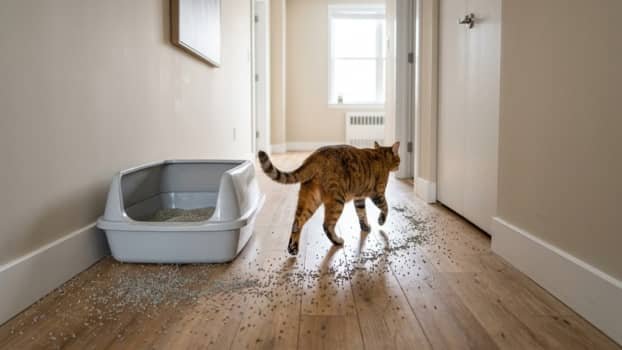
Fine particles track the most. This is where clumping clay and lightweight formulas struggle. Pellet based litter tracks the least because the pieces are too large to stick to paws.
If tracking has been a constant issue, it usually helps to look at both the litter type and your setup. A better entry area or mat can make a noticeable difference. You can see more practical fixes in this guide on practical fixes in this guide on litter tracking problems and solutions.
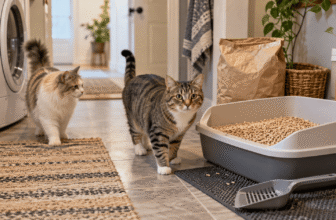
A cat walking away from the litter box with litter stuck to its paws, showing how tracking spreads across the floor.
Dust
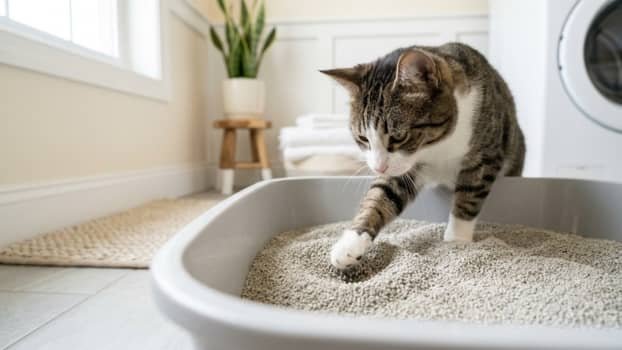
Dust varies widely even within the same category. Clay tends to produce the most dust during pouring and scooping. Crystal and pellet litters are typically lower dust, which can matter in smaller or poorly ventilated spaces.

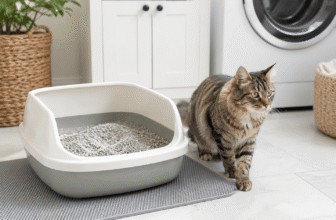
A cat using fine, low dust litter in a clean litter box, showing how softer materials reduce airborne dust during use.
Cleaning routine
This is where the biggest difference shows up. Clumping litter requires consistent scooping. Absorbent litter shifts the work into full changes. Pellet systems depend on sifting and separating material.
Choosing the wrong routine is often what makes a litter feel difficult to manage.
Cost over time
Cheaper litter is not always cheaper long term. Some types need to be replaced more often, while others last longer but cost more upfront. The total cost depends on how quickly the litter breaks down in your specific setup.
Common Problems With Each Type
Every litter type solves one problem but usually creates another. Understanding that trade off makes it easier to avoid frustration later.
Clumping litter often leads to tracking and dust. Fine particles stick to paws and spread easily, especially with lighter formulas. If the box is near a living area, this becomes noticeable quickly.
Absorbent litter can start out clean but lose odor control once it becomes saturated. When that happens, there is no quick fix other than replacing the entire box.
Crystal litter sometimes works well at first, but in busier setups, it can stop controlling odor before the litter is used up. The texture can also be uncomfortable for some cats, which leads to hesitation or avoidance.
Natural litters like corn or tofu can develop issues in humid environments. They absorb moisture from the air as well as the box, which can lead to clumping problems or even mold if not maintained carefully.
Pellet based systems reduce tracking but introduce a different kind of maintenance. Without the right setup, the broken down material mixes with fresh pellets and becomes harder to manage.
Most of these problems are not caused by poor quality products. They come from using a type of litter that does not match the environment or routine.
How to Choose the Right Type of Cat Litter
The right choice depends less on the brand and more on your situation.
If odor control is your biggest concern, clumping litter is usually the most reliable starting point. Removing waste daily keeps the smell from building up.
If you want to reduce daily scooping, absorbent or crystal litter can work, but it requires accepting a different maintenance style and watching for odor changes over time.
If tracking is the main frustration, pellet based litter or larger particle litters can make a noticeable difference, especially when combined with a better setup around the box.
For sensitive cats, texture matters more than anything else. Softer, sand like litter tends to be accepted more easily than hard pellets or sharp crystals.
In multi cat setups, stronger clumping performance and consistent cleaning usually matter more than convenience. Using the right number of boxes and setting them up properly also makes a big difference. This guide on multi cat litter box setups explains how to avoid common problems.. Litter breaks down faster when more than one cat is using the same box.
If you are unsure where to start, it usually makes sense to begin with a simple, unscented clumping litter and adjust from there based on what is not working.
Related Solutions and Products
Sometimes changing the litter type helps, but small upgrades around the box can make just as much difference.
A well designed litter mat can catch a large amount of loose particles before they reach your floor. One example is a double layer mat that traps litter between layers instead of letting it spread.
Using a sturdy scoop that matches your litter type also makes cleaning easier. For clumping litter, a metal scoop with narrow slots helps remove clumps cleanly without breaking them apart.
For pellet systems, a sifting litter box setup can make the process much smoother by separating used material automatically instead of mixing everything together.
These small changes often solve problems that seem like they are caused by the litter itself.
FAQ
Does clay litter cause respiratory problems in cats?
Dust from low quality clay litter can irritate both cats and humans, especially in enclosed spaces. If you notice coughing or sneezing, switching to a low dust formula or a different litter type can help.
Is crystal litter safe for long term use?
Crystal litter is generally safe, but it does not work for every cat. Some cats dislike the rough texture, which can lead to hesitation or avoiding the box. It is important to watch how your cat reacts over time.
Why does natural cat litter attract bugs?
Natural litters made from corn, wheat, or other plant materials can attract insects if moisture builds up. In humid environments, they can also develop mold if the box is not cleaned frequently enough.
Can you flush cat litter?
Some litters are labeled as flushable, but flushing cat waste can introduce harmful parasites into water systems. Disposing of used litter in the trash is usually the safer option.
What should you do if your cat refuses a new litter type?
A sudden switch can cause problems. Mixing the new litter with the old one and gradually increasing the amount over several days helps most cats adjust without avoiding the box.
Final Thoughts
There is no single best type of cat litter that works for every situation. Each type is built around a different way of handling moisture, odor, and cleaning.
The biggest improvement usually comes from matching the litter to your setup and your routine, rather than trying multiple similar products and hoping for a different result.
Once the litter type fits how your box is used every day, most of the common problems become much easier to control.