Disclaimer: This post may contain affiliate links. As an Amazon Associate, we earn from qualifying purchases.
Last updated on August 3, 2026
Bentonite clay cat litter works great at first. The clumps are solid, scooping is quick, and the box seems easy to manage.
Then a couple of weeks go by.
Dust starts showing up when you pour or scoop. Litter ends up outside the box more than you expected. The bottom of the box gets harder to clean, and odor does not stay under control the way it did in the beginning.
This is where most articles stop being useful. They list a few pros and cons, but they do not explain what actually changes over time.
This guide breaks down what bentonite clay cat litter is really like after a few weeks of daily use, why these problems show up, and how to fix them without starting over.
Quick Answer
Bentonite clay cat litter forms strong, scoopable clumps and controls odor well at first, but after a few weeks it often gets dustier, tracks more, and can start to smell if the lower layers are not maintained. If you are comparing it against other materials, this guide to clay cat litter pros and cons covers the full picture before you commit.
What Bentonite Clay Cat Litter Actually Does
Bentonite clay cat litter works by absorbing moisture and locking it into solid clumps.

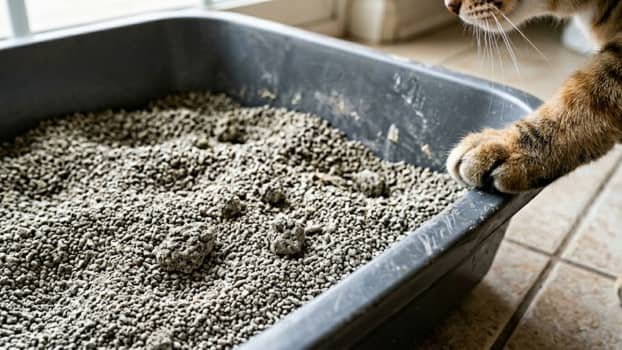
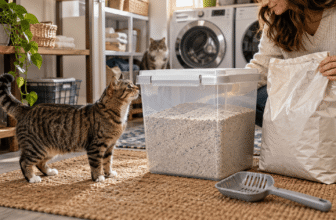
Bentonite clay forms solid clumps that make scooping easier, but small particles start to build up underneath the surface over time.
When your cat uses the box, liquid does not spread through the whole litter bed. It gets pulled into one area and forms a firm clump you can scoop out, which is what keeps the rest of the litter usable instead of forcing a full dump every time. This is also why it controls odor well in the beginning, waste stays contained inside those clumps instead of soaking through the entire box.
The tradeoff is that everything depends on how those clumps form and how the remaining litter holds up over time. As the litter gets used, small particles, moisture, and waste start building up underneath the surface. That is where most of the common problems begin.
What It’s Really Like After a Few Weeks
The first few days do not tell you much about how bentonite clay litter really performs. At the beginning, everything feels easy. Clumps form cleanly, the box looks fresh, and odor stays under control with simple daily scooping.
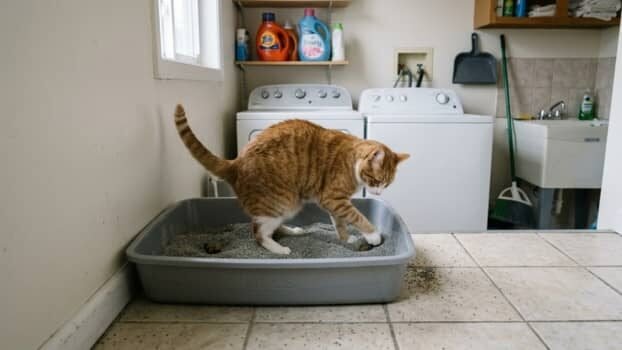
After a couple of weeks, the experience starts to shift. Dust is usually the first thing you notice. It shows up when pouring fresh litter or when your cat digs, and it settles around the box or on nearby surfaces. Even litters labeled low dust tend to build up fine particles as they get used.
Tracking also becomes more noticeable. The smaller broken-down pieces stick to paws more easily, which means more litter outside the box, especially on hard floors. At the same time, the box starts changing underneath the surface. If odor is coming back sooner than expected, how to clean a litter box so it doesn’t smell covers what to focus on.
This is also when clumps start getting heavier and harder to remove cleanly. If the litter is not deep enough, some of that moisture reaches the bottom of the box and starts sticking there. None of this happens all at once, it just reaches the point where buildup starts making the box harder to keep clean.
Why These Problems Start Happening
Most of the issues with bentonite clay litter come from what is building up underneath the surface.
Each time the box is used, clumps are removed, but not everything comes out. Small particles, moisture, and tiny bits of waste stay behind and settle into the lower layers of the litter. At first, that does not seem to matter much, the top layer still looks clean, and the litter feels like it’s working the way it should.
Over time, that buildup starts affecting how the litter behaves. The litter breaks down into finer particles, which creates more dust. Those smaller particles also stick to paws more easily, which leads to more tracking outside the box.
At the same time, moisture builds up in the base layer, which is what causes odor to come back faster and why the box can start smelling even when you’re scooping regularly. This is also what leads to clumps sticking to the bottom: when the litter layer is too shallow, liquid reaches the base before it fully clumps, and it hardens there.
None of this is obvious from the surface. The box can look clean while these problems are building underneath, which is why it often feels like the litter suddenly stopped working.
Common Problems (and How to Fix Them)
After a couple of weeks, most issues with bentonite clay litter show up in predictable ways. The good news is that most of them are fixable, usually coming down to setup, maintenance, or the type of litter you’re using.
Dust That Builds Up Over Time
Dust usually gets worse the longer the litter stays in the box.

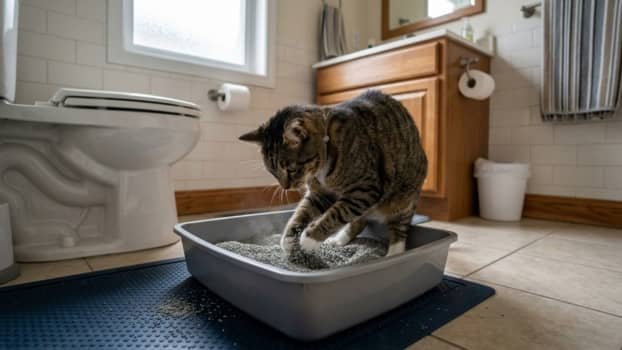
Dust often becomes more noticeable as bentonite clay litter breaks down into finer particles over time.
Fresh litter might seem fine, but as it breaks down, it creates more fine particles. You notice it when pouring, scooping, or when your cat digs.
What helps:
- Pour new litter slowly and close to the box
- Top off with fresh litter regularly instead of waiting too long
- Keep the litter deep enough so it does not grind down as quickly
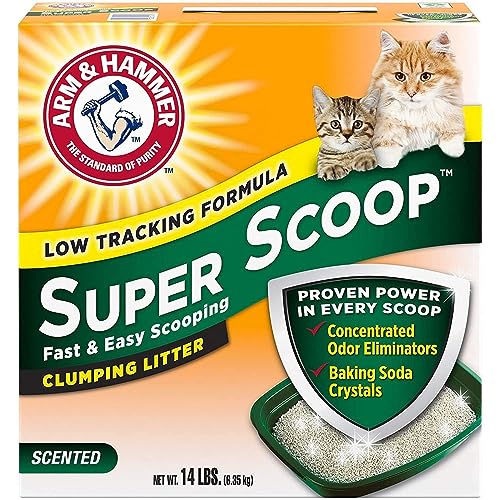
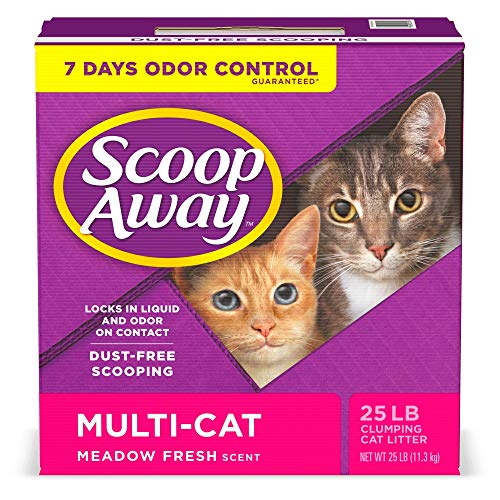
If dust is already becoming a problem, switching to a better-screened formula can make a noticeable difference. One example is Arm & Hammer Cloud Control Platinum clumping litter, which is designed to reduce airborne dust while still forming solid clumps.
Litter Tracking Around the House
Tracking usually gets worse once the litter starts breaking into smaller pieces.
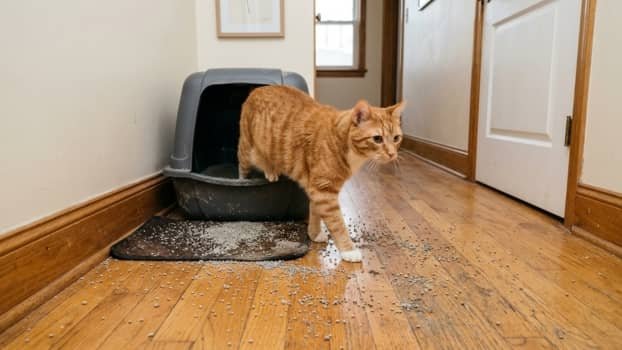
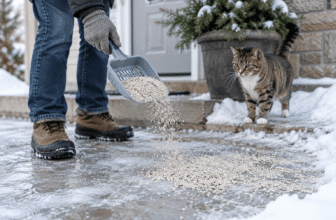
Fine particles from bentonite clay litter can stick to paws and spread outside the box, especially as the litter breaks down over time.
Those finer particles stick to paws more easily, so every trip in and out of the box spreads a little more litter across the floor. If tracking is already becoming a problem, litter tracking problems and how to control them goes deeper into ways to keep it contained.
What helps:
- Use a litter mat that catches particles as your cat steps out
- Place the box so your cat has to take a few steps before reaching open floor
- Consider a higher-sided box if your cat tends to kick litter
A good mat can cut down a large part of the mess right away. One example is the Gorilla Grip litter mat, which uses a coil-style surface to grab litter from paws and keep it contained in one area.
Clumps Sticking to the Bottom
This is one of the most frustrating problems, and it usually comes down to litter depth. When the layer is too shallow, liquid reaches the bottom before it has time to form a full clump, and it hardens against the base of the box instead.
What helps:
- Keep at least 2 to 3 inches of litter in the box
- Wait a few minutes before scooping so clumps fully form
- Scoop gently instead of scraping hard against the bottom
If this keeps happening, it usually is not the litter itself. It is the setup.
Odor Coming Back Too Quickly
Bentonite clay controls odor well at first, but that depends on what is happening underneath the surface. Even if you scoop daily, small amounts of moisture and waste stay behind in the lower layers, and over time that buildup starts releasing odor again.
What helps:
- Scoop at least once a day, more often with multiple cats
- Stir the litter occasionally to prevent damp pockets
- Fully replace the litter on a regular schedule instead of only topping it off
If odor is still creeping back too quickly, adding a simple deodorizer can help extend how long the litter stays fresh. Products like Arm & Hammer cat litter deodorizer use baking soda to absorb and neutralize odor directly in the litter instead of just masking it.
When Bentonite Clay Cat Litter Is Worth It
Bentonite clay litter still works really well in the right setup. It makes the most sense when easy scooping is the priority, strong clumping keeps daily cleaning simple, and that alone can make a big difference if you stay consistent with maintenance.
It also fits well in single-cat homes or lower-traffic setups, where buildup happens more slowly and odor and moisture are easier to manage. It’s also a solid choice if you’re using a self-cleaning litter box, since most automatic systems rely on firm clumps to work properly. For odor that still creeps back despite good maintenance, the guide to the best cat litter deodorizers covers what actually works alongside clay litter.
When It Starts to Become Frustrating
In multi-cat homes, the box gets used more often, which means faster buildup underneath. Odor comes back sooner, and you end up scooping more just to keep things under control. If you are dealing with multiple cats, this guide on the best clumping cat litter for multiple cats covers which formulas handle heavy use the best.
Dust can also become a bigger issue in smaller spaces or rooms with less airflow, even with lower-dust formulas. Tracking is another common frustration, especially with finer-grain litter, and weight is the other issue people don’t always expect at first: carrying, pouring, and cleaning heavier litter becomes more annoying over time, especially with larger boxes.
The Simple Way to Decide
Bentonite clay cat litter is a good choice if you want strong clumping, easy scooping, and a setup that stays manageable with a consistent routine. It becomes less appealing if dust, tracking, or weight are already major problems in your space, or if you’re dealing with multiple cats using the same box. In those cases, it can still work, but it usually needs a few setup changes to stay under control.
Bentonite Clay vs Other Types of Cat Litter
Bentonite clay is popular because of how well it clumps, but it is not the only option.
Silica crystal litter focuses more on absorbing moisture than forming clumps. It usually creates less dust and can last longer, but daily scooping is less straightforward. One example is Purina Tidy Cats non-clumping with silica crystals.
Wood and pellet litter are lighter and create very little dust. They do not track as much, but they also do not form tight clumps, which changes how you clean the box. A product like Nature’s Logic 100% Natural Pine Pellet is a useful reference.
Paper-based litter is soft, low dust, and often used for sensitive cats or post-surgery setups. It’s easy on paws but does not control odor as strongly as clay, as with options like Fresh News Recycle Paper Litter.
Tofu and plant-based litters are becoming more common. They tend to be lower dust and lighter to handle, and some can be flushed in small amounts, though clumping quality can vary by brand. A product such as Honey Care Petrichor Mix Cat Litter gives a useful idea of how these newer litters behave.
A Simple Setup That Fixes Most Problems
If you like how bentonite clay cat litter clumps but do not like the dust, tracking, or odor buildup, a few small changes can make a big difference. You don’t need to replace everything, just adjust a few key parts of the setup.
Low-Dust Clumping Litter
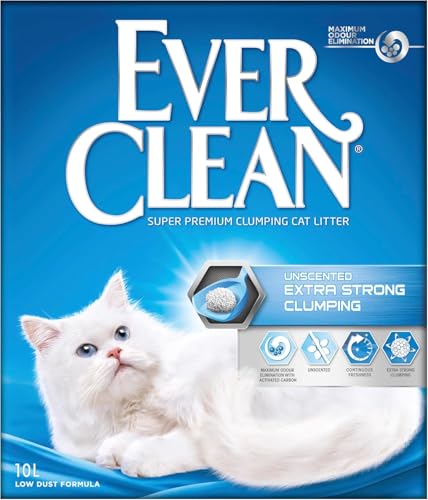
Use a litter that produces less fine dust as it breaks down. One example is Dr. Elsey’s Ultra UnScented Clumping Clay Cat Litter, which uses a medium-grain clay to limit airborne dust while still forming strong clumps.
Litter Mat to Control Tracking
A litter mat placed right outside the box catches a large amount of the litter before it spreads across the floor. The GORILLA GRIP Cat Litter Box Mat uses a textured surface to grab particles from paws and keep them contained.
Simple Deodorizer for Longer Freshness
If odor starts coming back too quickly, a simple deodorizer can help extend how long the litter stays usable between full cleanings. ARM & Hammer Cat Litter Deodorizer Double Duty uses baking soda to absorb and neutralize odor directly in the litter without changing how it clumps.
FAQ
Is bentonite clay cat litter safe for cats?
Generally safe for adult cats when used as directed. The main issue is dust, which can be irritating in small, poorly ventilated spaces. For kittens, non-clumping litter is usually the safer choice because they are more likely to ingest it.
Why does bentonite litter get dustier over time?
As the litter is used, it breaks down into smaller particles. Scooping, digging, and moisture all contribute to that breakdown, which is why dust tends to build up after a couple of weeks instead of staying consistent.
How often should you fully change bentonite clay litter?
Even with daily scooping, the whole box still needs to be emptied and replaced on a regular schedule. In most setups, every 2 to 3 weeks works well, though multi-cat homes usually need more frequent changes.
Can you flush bentonite clay cat litter?
No, bentonite clay litter should not be flushed. It expands and hardens when wet, which can cause serious plumbing problems. Trash disposal is the safer option.
Why does bentonite litter stick to the bottom of the box?
This usually happens when the litter layer is too shallow. Liquid reaches the base before it has time to form a full clump and hardens there. Keeping a deeper layer helps prevent it.