Disclaimer: This post may contain affiliate links. As an Amazon Associate, we earn from qualifying purchases.
Last updated on August 30, 2026
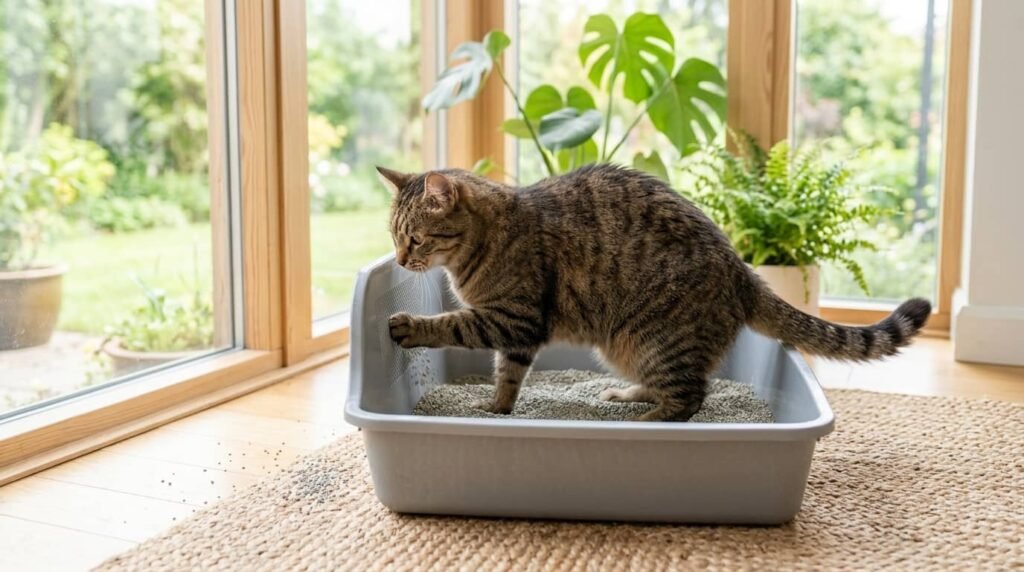
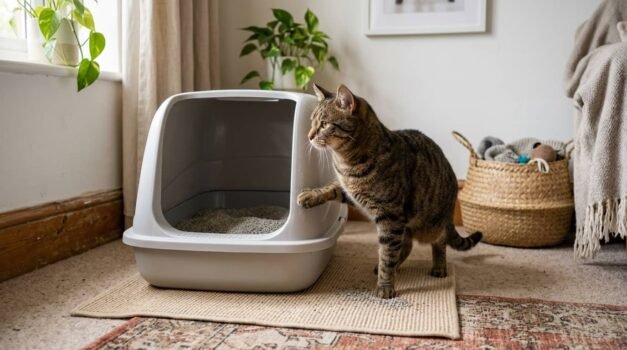
A cat scratching side of the litter box is one of those behaviors that sounds like a problem but usually isn’t. Most cats do it at some point, and in most cases it comes down to instinct, not dissatisfaction.
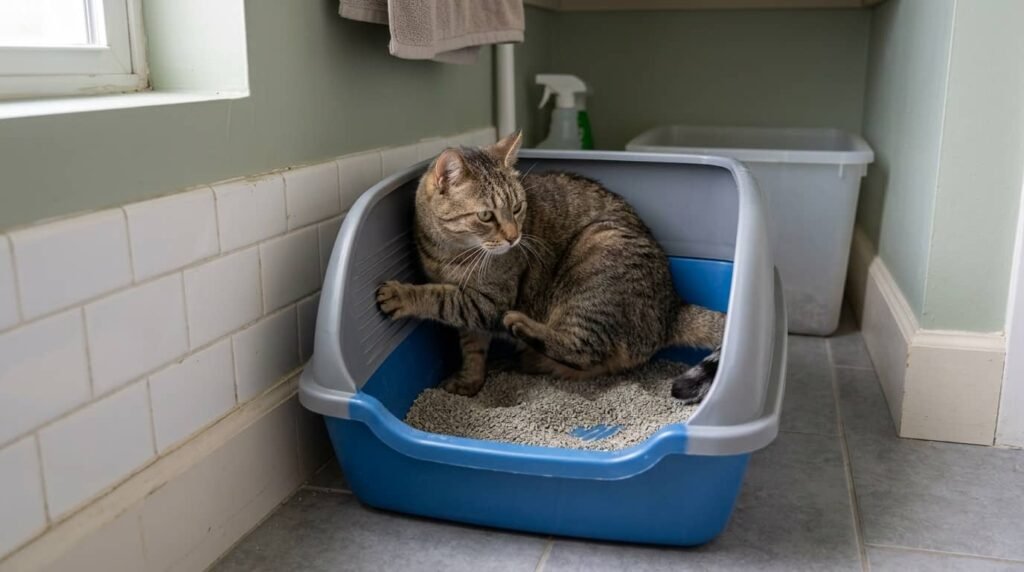
A cat scratching the side of the litter box is usually an attempt to bury waste more thoroughly. It can also signal that the box is too small, the litter is too shallow, or the box needs cleaning more often.
Understanding which situation you’re dealing with takes about a minute of observation.
When It’s Completely Normal
Covering waste is part of a cat’s scent-management instinct, and domestic cats often keep that habit even when they are safe indoors. When a cat scratches the sides of the box after using it, they’re often trying to push imaginary litter over the waste. The sides are simply what their paw finds when there isn’t enough litter to work with, or when the litter is already flattened around the edges.

Some cats may also like the resistance of the plastic, especially if the scratching continues after they are done burying. In those cases a scratching post nearby often redirects the habit.
If your cat uses the box normally, doesn’t seem distressed, and the scratching lasts only a few seconds, it’s almost certainly just normal behavior. Nothing needs to change.
When It Signals a Fixable Problem
If the scratching seems excessive, frustrated, or your cat spends a long time in the box without settling, something in the setup is likely off.

The litter level is too low. This is the most common cause. When there isn’t enough litter to dig into, cats scratch the sides looking for more. Most cats do best with roughly 2 to 4 inches of litter, with deeper-digging cats often needing closer to 3 or 4 inches. If the box looks flat or compacted, top it up. A good clumping litter can make digging and burying easier, especially if the current litter is too shallow, dusty, or compacted.
The box is too small. A cat that feels cramped will scratch the sides trying to create space. The box should be at least 1.5 times the length of your cat from nose to tail base. If your cat’s back end hangs over the edge while they dig, the box is too small. Upgrading to a larger litter box often resolves this immediately.
The box needs cleaning. Cats are particular about cleanliness. If the box smells or has waste piled up, some cats scratch the sides in frustration because they can’t find a clean spot. Scooping at least twice a day prevents this. Walnut shell litter and tofu litter are both worth considering if odor control and cleaner scooping are the main problems.
The litter texture doesn’t suit your cat. Some cats scratch more when the litter doesn’t feel right underfoot. Fine-grain, soft litters tend to satisfy the digging instinct better than coarse or pellet-style litters. If you’ve recently changed litters and the scratching increased, the texture may be the cause.
Giving Them a Better Scratching Outlet
If your cat is using the box sides specifically as a scratching surface rather than as part of burying behavior, a scratching post near the litter area often redirects the habit. Cats want to scratch near places they already spend time.

A vertical scratching post positioned a foot or two from the litter box gives them an appropriate surface for claw maintenance and territorial marking without damaging the box or making noise in the middle of the night.
What Not to Do
Don’t scold your cat for scratching the box. If the behavior is part of burying, punishment can make the litter box feel unsafe and create a bigger avoidance problem.
Also avoid changing the box, litter, and location all at once. Start with the easiest fixes first: add enough litter, scoop more often, and make sure the box is large enough. One change at a time makes it much easier to see what’s actually working.
When to Talk to a Vet
Scratching the litter box sides is rarely a medical issue, but a vet visit is worth it if the scratching comes with straining or crying in the box, frequent trips with little output, blood in the urine or stool, sudden accidents outside the box, or a sharp increase in how often your cat visits the box.
Any of these alongside the scratching can point to a urinary tract issue, constipation, or another health problem that needs attention sooner rather than later.
Quick Fixes to Try
Work through these in order:
Add more litter and see if the scratching reduces. Scoop the box more frequently for a week. Try a larger box if your cat seems cramped. If you’ve recently switched litters, try switching back or moving to a softer formula. Add a scratching post near the litter area.
Most cats respond to one of the first three. If none of these help and the scratching seems distressed rather than routine, a vet check rules out the small chance of a medical cause.
FAQ
Is it normal for cats to scratch the sides of the litter box?
Yes. Most cats do it occasionally as part of their natural burying instinct. It becomes worth addressing when it’s excessive, frustrated-looking, or accompanied by other signs of discomfort.
Why does my cat scratch the sides but not the litter?
Usually because there isn’t enough litter to dig into, or the litter has become too compacted to feel like a useful digging surface. Adding 2 to 4 inches of fresh clumping litter typically resolves this.
Does a bigger litter box help with side scratching?
Often yes, especially if your cat seems cramped or their back end hangs over the edge. A larger box gives them more room to move and dig before reaching the walls.
Should I stop my cat from scratching the litter box?
Not unless it’s destructive or clearly stress-related. Normal post-use scratching is part of how cats process their instinct to cover waste. Providing a scratching post nearby redirects the claw-maintenance version of the behavior without needing to discourage the natural habit.
Could scratching the litter box sides be a sign of stress?
It can be. Cats under stress sometimes scratch more intensely and for longer. If you’ve recently introduced a new pet, moved furniture, or changed routines, that context plus excessive scratching is worth noting. A calm, private litter area and consistent cleaning schedule helps reduce stress-related box behaviors.