Disclaimer: This post may contain affiliate links. As an Amazon Associate, we earn from qualifying purchases.
Last updated on October 5, 2026
How to transition cat litter depends on the litter you’re switching to, because manufacturers give different directions. Some layer the new litter under the old, and one switches a whole litter box system. Below you’ll see why the methods differ, real examples from four brands, and what to do when the bag says nothing.
Check the new litter’s bag first and follow its switching directions. If the bag gives none, put the new litter in a separate box next to the old one and let your cat choose.
Why There’s No Single Switching Schedule
Litters are made from different materials, and those materials behave differently in the box. Pine pellets break down into sawdust, paper pellets soak up urine, and clumping clay forms clumps. A method that suits one can work against another.
That’s why the people who make each litter are the best guide to switching to it. Their directions are written for how their product actually works.
How Four Brands Handle the Switch
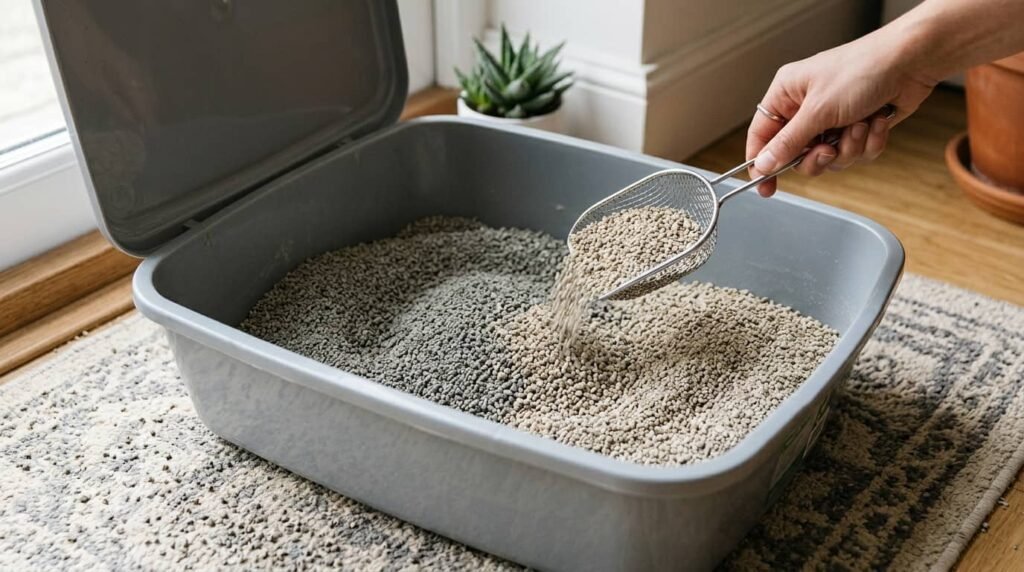
Feline Pine (pine pellets): Pour one inch of Feline Pine into a clean box, then add one to two inches of your old litter on top without mixing. At each change, use the same amount of Feline Pine and less of the old litter. Our pine pellets guide covers the routine after the switch.
Naturally Fresh (walnut): Put one to two inches of Naturally Fresh in a clean box, then add enough of your current litter to cover it. At each change, use less of the current litter and more Naturally Fresh.
ökocat (paper pellets): Fill half a clean box with ökocat and top it off with your current litter. Each time you change the litter, add more ökocat and less of the old litter until the box is all ökocat.
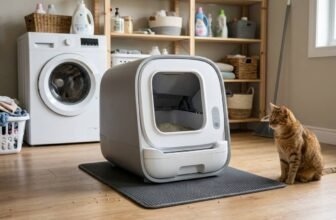
Breeze (pad system): Purina’s first step is mixing a full bag of Breeze pellets into your current litter box. Then you set up the Breeze system next to the old box. Our Breeze litter box review explains the system.
The details aren’t interchangeable. Feline Pine explicitly says not to mix. Naturally Fresh and ökocat also start with the new litter underneath the old, but use different starting amounts. Breeze takes a different approach by first mixing its pellets into the current litter before introducing the separate Breeze system.
When the Bag Gives No Directions
AAHA’s feline guidelines suggest testing a cat’s litter preference by offering choices in separate boxes. That gives you a simple method when the bag doesn’t.
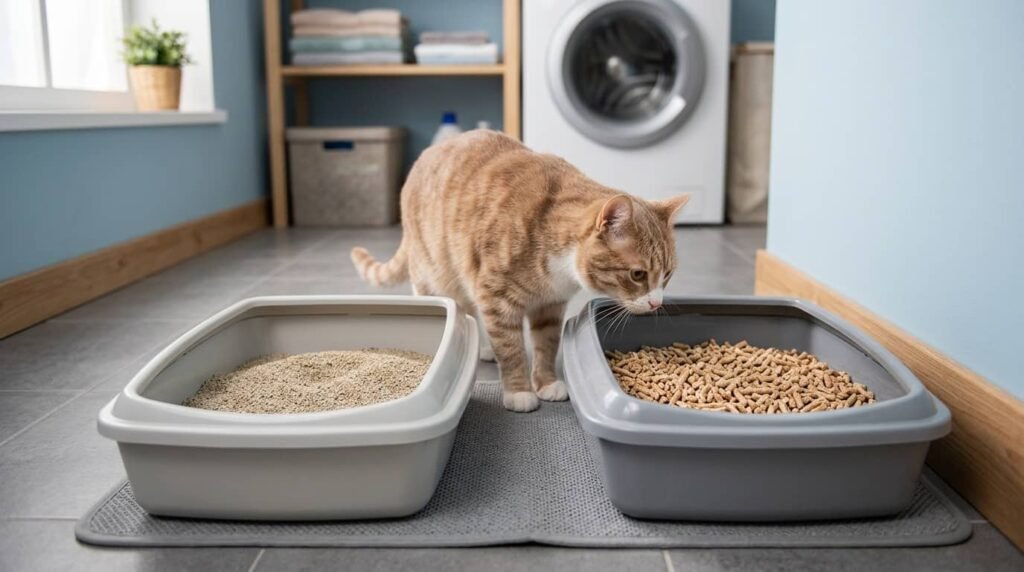
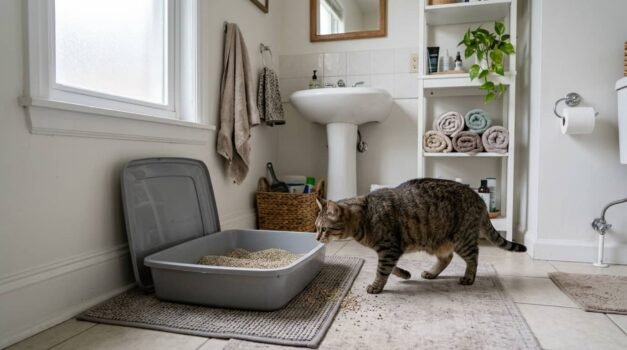
Keep the old box where it is, with the litter your cat already uses. Set up a second box nearby with the new litter, and let your cat explore. Keep both choices available while you see which litter your cat prefers. If the new litter becomes the accepted choice, you can decide whether to retire the old setup.
While you’re testing a new litter, keep the rest of the setup as consistent as practical. If you change the litter, box and location together, you won’t know which change your cat is responding to.
Signs Your Cat Isn’t Happy With the Switch
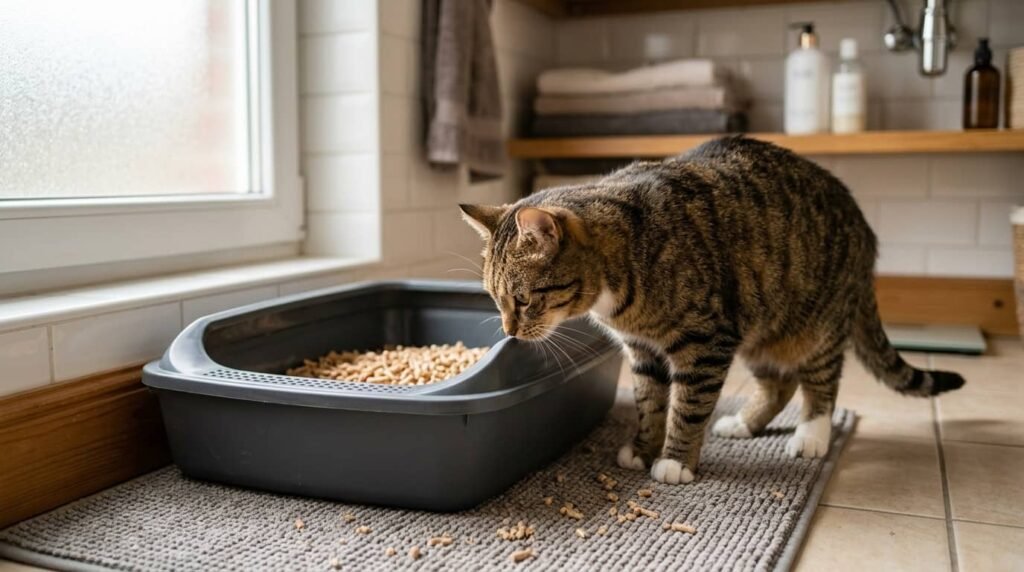
Watch for hesitating at the box, repeated sniffing without going in, or toileting outside it. These can tell you the new setup isn’t working for your cat, but they don’t tell you why.
If your cat is still using the box but seems reluctant, go back to the familiar litter and reassess the switch. If your cat starts avoiding the box or toileting elsewhere, don’t assume the new litter is the only possible cause. A sudden or continuing change is worth discussing with your vet.
Don’t scold or punish your cat for accidents. AAHA/AAFP says cats should never be reprimanded for toileting in an undesired location.
Frequently Asked Questions
Can you mix different types of cat litter?
It depends on the litters. Some manufacturers’ methods combine the new litter with the old, while Feline Pine says to layer without mixing. Follow the directions on the bag of the litter you’re switching to.
How long does it take to transition cat litter?
There’s no set timeline. Follow your new litter’s directions and watch how your cat uses the box. Your cat’s comfort decides when the switch is done, not a calendar.
What litter should I use for a kitten?
AAHA suggests unscented clumping litter, the litter the kitten used before, or both.
Should you change the litter box at the same time as the litter?
If possible, change one thing at a time. Keeping the box and location consistent makes it easier to tell whether your cat accepts the new litter.