Disclaimer: This post may contain affiliate links. As an Amazon Associate, we earn from qualifying purchases.
Cat litter has a way of spreading far beyond the box. It ends up on hard floors, gets stuck in carpet, and collects along edges where a normal vacuum doesn’t quite reach.
The problem is that not all vacuums handle litter well. Fine dust can clog filters, heavier granules can block airflow, and some brush rolls actually fling litter across the floor instead of picking it up.
The best vacuum for cat litter depends on the type of mess you’re dealing with. Fine dust, scattered litter on hard floors, and carpet buildup each require different features.
In this guide, you’ll see which vacuums actually work in real situations, and which ones tend to make the problem worse.
Quick Picks
| Category | Vacuum | Best For |
|---|---|---|
| Best for fine dust | Kenmore BC4039 Canister Vacuum | Clay litter, odor control, low maintenance |
| Best for hardwood floors | Shark Navigator Lift-Away | Preventing litter from scattering |
| Best for heavy litter | Vacmaster Beast Shop-Vac | Large messes, damp litter, durability |
| Best for quick cleanup | Shark Rocket Stick Vacuum | Daily maintenance and small messes |
Why Most Vacuums Don’t Work Well for Cat Litter
Cat litter seems simple to clean, but it creates a few problems that regular vacuums aren’t designed to handle.
The first issue is fine dust. Clay litter breaks down into very small particles that can pass through basic filters or clog them over time. This is why some vacuums start to lose suction or smell even after cleaning.
The second problem is weight and size. Litter isn’t like dust or crumbs. It’s heavier, rougher, and harder for some vacuums to handle. Smaller vacuums or narrow airflow paths can struggle to pull it through, especially when larger pieces get stuck in the hose.
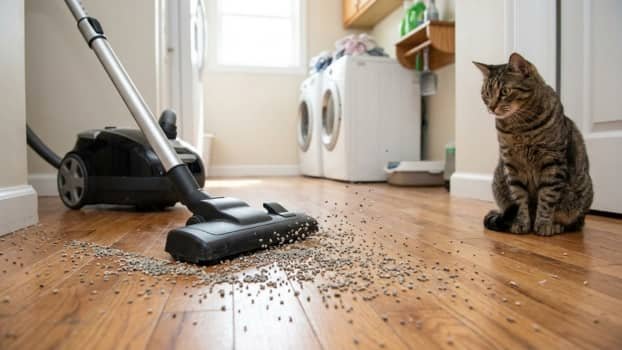
Then there’s the scatter problem on hard floors. Some vacuums use aggressive brush rolls that spin fast enough to fling litter outward instead of pulling it in. Instead of cleaning the mess, it spreads it further across the room.
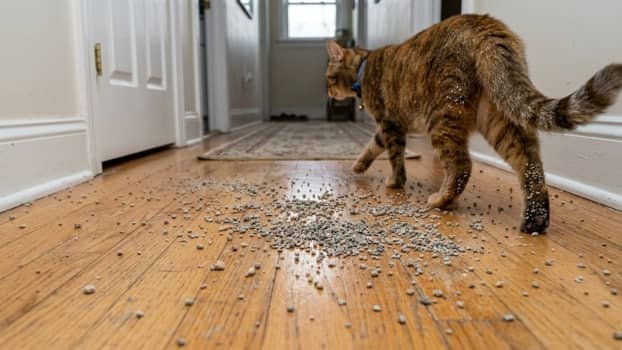
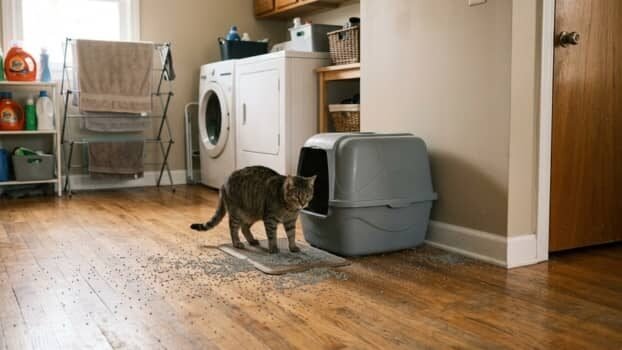
Litter often sticks to a cat’s paws and spreads across the floor after leaving the box.
Carpet creates a different issue. Litter gets pressed into fibers, especially in high-traffic areas around the litter box. A vacuum needs enough suction and the right brush setup to lift it out without just pushing it deeper.
There’s also the buildup inside the vacuum itself. Litter dust can collect in filters, seals, and bins, which can lead to lingering odors if it’s not handled well.
This is why one “perfect vacuum” doesn’t really exist for cat litter.
Different setups solve different problems:
- sealed systems help with dust
- brush control helps on hard floors
- wider airflow helps prevent clogs
- smaller vacuums work better for quick daily cleanup
The goal isn’t just to pick a powerful vacuum. It’s to choose one that handles the specific type of mess you’re dealing with.
What to Look for in a Vacuum for Cat Litter
Not every feature matters, but a few make a big difference when you’re dealing with litter around the house.
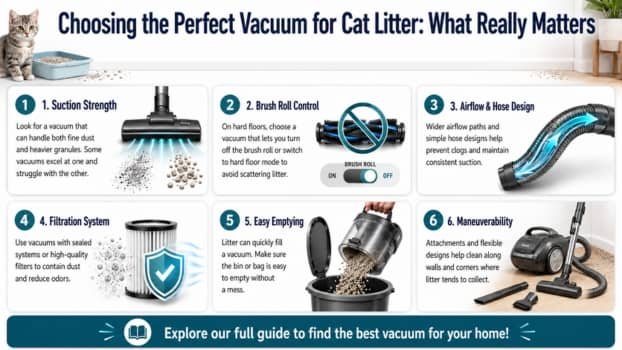
Suction That Handles Both Dust and Debris
A vacuum needs to pick up fine dust without clogging, but also handle heavier granules without struggling. Some vacuums do one well but not the other.
Brush Roll Control (Important for Hard Floors)
On hard floors, a spinning brush can push litter around instead of picking it up.
A vacuum that lets you:
- turn the brush roll off
- or switch to a hard floor mode
will usually clean more efficiently without scattering litter.
Airflow and Hose Design
Narrow pathways can get blocked by larger pieces of litter.
Wider airflow and simpler designs help:
- prevent clogs
- keep suction consistent
Filtration and Dust Containment
Litter dust doesn’t just stay in the bin. It moves through the vacuum and into the filters and airflow.
Sealed systems or better filters help:
- keep dust contained
- reduce odor buildup
Ease of Emptying
Litter fills up a vacuum quickly, especially in high-use areas.
A bin or bag that’s easy to empty makes a big difference in day-to-day use.
Maneuverability Around the Litter Box
The mess usually isn’t in the middle of the room.
It builds up:
- along walls
- behind the box
- in corners
Attachments and flexible designs make it easier to reach those areas.
Best Vacuum for Fine Dust and Low Maintenance
If you’re using clay litter, dust is usually the biggest problem. It builds up inside the vacuum, reduces suction over time, and can start to smell even if you empty the bin regularly.
This is where a bagged vacuum makes a noticeable difference.
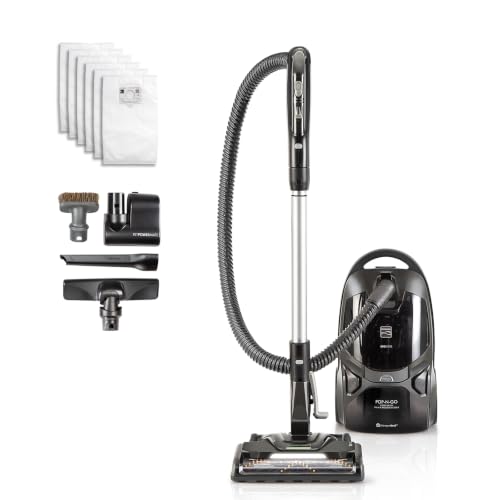
The Kenmore BC4039 stands out because it contains dust instead of circulating it through the machine. The bag holds fine particles more effectively, which helps prevent buildup in filters and keeps the vacuum running consistently.
The canister design also helps with airflow. Litter moves through more smoothly compared to upright vacuums with tighter internal pathways, which reduces the chance of clogs when picking up heavier debris.
This setup works especially well if:
- you use clay litter that creates a lot of dust
- your current vacuum loses suction quickly
- you notice odor coming from the vacuum itself
Another advantage is maintenance. Instead of cleaning filters frequently, you simply replace the bag when it fills up. That makes it easier to manage long term, especially in areas around the litter box where dust collects quickly.
This type of vacuum is better suited for regular cleaning rather than quick daily touch-ups, but it handles the underlying problem more effectively than most bagless models.
Best Vacuum for Cat Litter on Hardwood Floors
Hardwood floors create a different kind of problem. Instead of getting stuck, litter tends to spread. Some vacuums make this worse by pushing it around before picking it up.
The Shark Navigator Lift-Away works well here because it gives you more control over how the vacuum interacts with the floor. Instead of relying only on a fast-spinning brush, it allows you to clean more carefully so litter is pulled in rather than scattered.
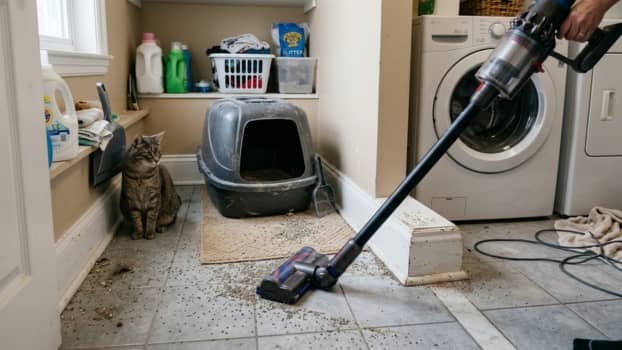
The design also helps around the litter box area. The lift-away feature lets you detach the main unit, which makes it easier to clean along baseboards, behind the box, and in tight spaces where litter tends to collect.
This is especially useful if you notice:
- litter getting kicked across the room
- buildup along walls and edges
- small piles forming around the box
The suction is strong enough to pick up heavier granules, but you may need to adjust how you use it on certain surfaces. On hard floors, slower passes tend to work better to avoid pushing litter ahead of the vacuum.
One thing to keep in mind is that this is still a bagless vacuum. You will need to empty it regularly, and fine dust can stick inside the bin over time. It works well for controlling scattered litter, but it does require a bit more maintenance compared to a bagged system.
For homes with a mix of hard floors and rugs, this type of vacuum offers a good balance between power and control without spreading litter further across the room.
Best Vacuum for Heavy Litter and Tough Messes
Some litter situations are harder to deal with than others. Larger granules, damp clumps, or heavy buildup around the box can overwhelm a regular vacuum.
This is where a shop-style vacuum like the Vacmaster Beast makes a difference.
Instead of relying on narrow internal pathways, it uses a wider hose and simpler airflow design. That makes it much less likely to clog when picking up heavier pieces of litter. It can also handle small damp areas, which is something most standard vacuums struggle with.
This type of vacuum works well if:
- litter piles up quickly around the box
- you’re dealing with larger or heavier litter types
- clumps or damp spots are part of the problem
Another advantage is durability. This kind of vacuum is built for debris, not just dust, so it holds up better when used regularly in one area. Some setups even use it as a dedicated vacuum just for the litter zone.
It’s not designed for full-house cleaning, and it’s usually louder than standard vacuums. But for tough messes in one area, it handles situations that would slow down or damage a typical household vacuum.
If you’ve ever had a vacuum clog or struggle with larger pieces of litter, this type of setup solves that problem directly.
Best Vacuum for Quick Daily Cleanup
Not every litter mess needs a full vacuuming session. Most of the time, it’s small amounts that build up throughout the day around the box or along nearby floors.
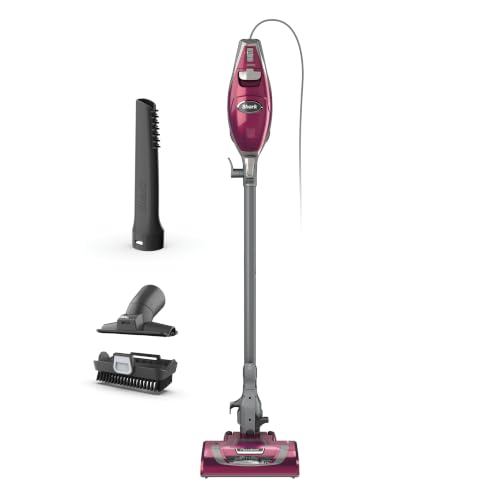
This is where a lightweight stick vacuum like the Shark Rocket makes things easier.
Instead of pulling out a larger machine, you can grab it quickly and clean the area in a few minutes. That makes a big difference if litter tracking is a constant issue rather than something you deal with once a week.
The compact design also helps in tighter spaces. You can move around the litter box, along walls, and into corners without much effort. The handheld mode is useful for edges, baseboards, and spots where litter tends to collect.
This type of vacuum works well if:
- litter shows up throughout the day
- you want something quick and easy to use
- the mess is usually light but frequent
It still has some limits. The dust bin is smaller, so it fills up quickly with litter. It also isn’t designed for heavy buildup or deep cleaning. For larger messes, one of the other options will handle the job better.
Used alongside a more powerful vacuum, this kind of setup helps keep the area clean between deeper cleanings without much effort.
Buying Guide: What Actually Matters for Cat Litter Cleanup
Not every vacuum works well for cat litter, even if it’s powerful. The difference usually comes down to a few specific features that affect how it handles dust, debris, and daily use around the litter box.
Suction That Handles Both Dust and Granules
Cat litter creates two types of mess at the same time. Fine dust needs to be contained, while heavier pieces need to be pulled in without getting stuck.
A vacuum that handles both will:
- keep suction consistent
- avoid clogging
- reduce the need for frequent cleaning
Some vacuums are strong with dust but struggle with larger pieces, while others handle debris but let dust pass through.
Brush Roll Control for Hard Floors

Some vacuums push litter across hard floors instead of picking it up.
On hard floors, the wrong brush can make things worse.
A fast-spinning brush can push litter away instead of picking it up. This is why control matters more than raw power.
Look for a vacuum that:
- allows you to turn the brush off
- or has a setting designed for hard floors
This helps keep litter from spreading across the room.
Airflow and Hose Design
Litter is heavier than typical household debris, so it moves differently through a vacuum.
Narrow pathways can lead to:
- clogs
- reduced suction
- frequent interruptions
A vacuum with a wider or simpler airflow path tends to handle litter more smoothly.
Filtration and Dust Containment
Litter dust doesn’t just stay in the bin. It moves through the vacuum and can build up inside.
Good filtration helps:
- keep dust from escaping
- reduce odor inside the vacuum
- maintain performance over time
Bagged systems usually handle this better, but strong sealed filters can still work well.
Bin or Bag Capacity
Litter fills up space quickly.
A small bin might need to be emptied after every use, especially in areas where litter builds up fast.
A larger capacity:
- makes cleaning easier
- reduces interruptions
- works better for regular maintenance
Maneuverability Around the Litter Box

Litter often collects along walls and around the litter box, especially in tight spaces.
The mess is rarely in open space. It collects in tighter areas that are harder to reach.
Look for features like:
- crevice tools
- flexible hoses
- lightweight designs
These make it easier to clean:
- along baseboards
- behind the box
- in corners
If you’re dealing with litter tracking, you might find this guide on litter tracking solutions helpful for reducing how much ends up on the floor in the first place.
Frequently Asked Questions
Can a robot vacuum handle cat litter?
Robot vacuums can handle small amounts of litter, but they often struggle with larger pieces or heavy buildup. They can also spread litter if the brush design isn’t suited for hard floors.
They work better for light daily maintenance rather than full cleanup.
Is a cordless vacuum strong enough for cat litter?
Cordless vacuums can work well for quick cleanup, especially around the litter box. For deeper cleaning or larger messes, a corded vacuum usually performs more consistently.
What type of vacuum is best for litter dust?
Bagged vacuums tend to handle litter dust better because they contain fine particles more effectively. This helps reduce odor and keeps the vacuum from clogging as quickly.
Can cat litter damage a vacuum?
It can, especially if the vacuum isn’t designed for heavier debris. Fine dust can clog filters, and larger pieces can block airflow or get stuck in hoses.
Using the right type of vacuum helps avoid these issues.
Quick Comparison: Which Vacuum Is Right for You?
| If your main problem is… | Best choice | Why it works |
|---|---|---|
| Fine litter dust and odor | Kenmore BC4039 | Contains dust better and requires less filter cleaning |
| Litter spreading across hard floors | Shark Navigator Lift-Away | Gives better control so litter is picked up instead of pushed around |
| Heavy or damp litter mess | Vacmaster Beast | Handles larger debris without clogging |
| Small daily mess around the box | Shark Rocket Stick Vacuum | Quick and easy for frequent cleanup |
Final Recommendation
The best vacuum for cat litter depends on how the mess shows up in your home.
Fine dust, scattered litter on hard floors, and heavier buildup around the box all need different approaches. A vacuum that works well in one situation may not perform the same way in another.
If dust and odor are the main issue, a bagged vacuum is usually the easiest to manage over time. For hard floors, a vacuum that gives you more control helps prevent litter from spreading during cleanup. For heavier messes, a more durable option handles the job without clogging or slowing down. And for daily maintenance, a lightweight vacuum makes it easier to keep things under control without much effort.
Choosing a vacuum that matches your setup makes a bigger difference than simply picking the most powerful model. Once the right tool is in place, keeping the area around the litter box clean becomes much more manageable.