Disclaimer: This post may contain affiliate links. As an Amazon Associate, we earn from qualifying purchases.
Last updated on October 3, 2026
Yes, you can put baking soda in cat litter, and a little can take the edge off mild litter box smell. It works best as a small boost to a clean box, not as a fix for a box that already smells.
This guide covers how to use it, when it stops working, and the litters and deodorizers that already have baking soda built in, so you don’t have to add it yourself.
You can put baking soda in cat litter for odor control, but it only helps with mild smells and won’t fix deeper issues like saturated litter or odor trapped in the box.
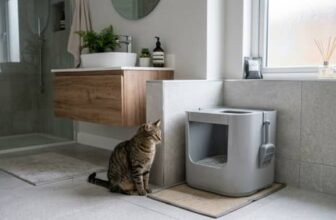
A clean litter box setup helps control odor more effectively than quick fixes alone.
Quick Picks
Best Litter With Baking Soda Built In: Arm & Hammer Clump & Seal Platinum
Best Unscented Baking Soda Litter: Arm & Hammer Ultra Last Unscented
Best Lightweight Baking Soda Litter: Cat’s Pride Lightweight Baking Soda
Best Add-In for Your Current Litter: Arm & Hammer Deodorizing Crystals
Why Litter Box Smell Happens
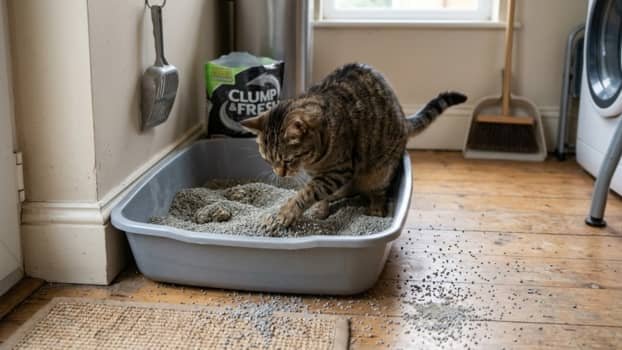
Odor usually builds up when moisture sits in the litter too long or reaches the bottom of the box.
Litter box odor usually comes from urine breaking down over time. Urine contains urea, which quickly turns into ammonia. That’s the sharp smell that builds up if the litter isn’t scooped often enough. If you’re not sure what “often enough” looks like, this guide on how often to scoop a litter box breaks it down.
Feces add a different type of odor, but that’s usually easier to manage with regular scooping. The stronger, lingering smell almost always comes from urine that has soaked into the litter or reached the bottom of the box. That’s why baking soda sometimes works and sometimes does nothing: it depends on how deep the odor has already settled.
How Baking Soda Works in Cat Litter for Odor Control
Baking soda helps absorb and neutralize odor instead of covering it with perfume. That can make a noticeable difference in a clean litter box, but it works best as a supplement to regular scooping and litter changes.
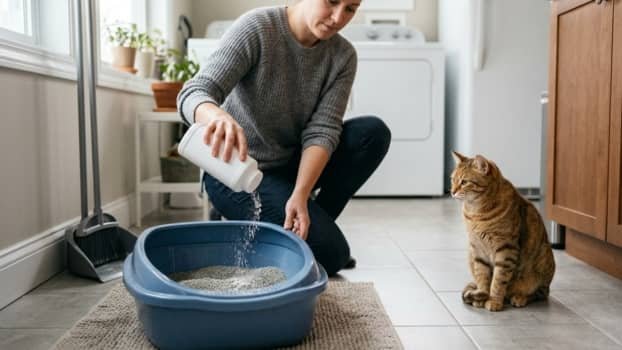
Adding a small amount of baking soda to clean litter can help reduce odor before it builds up.
The key limitation is that baking soda can’t replace scooping or a full litter change. If urine has saturated the litter or soaked into the box, adding more deodorizer won’t remove the source.
When Baking Soda Works and When It Does Not
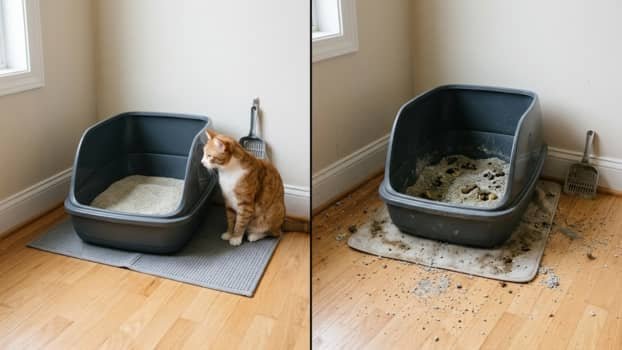
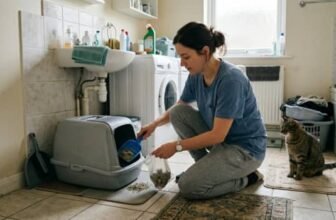
A clean litter box prevents odor buildup, while a neglected one quickly traps smell deep in the litter.
When It Works Well
It’s best on a box that’s already clean, as a way to slow odor between scoops. A small amount mixed into fresh litter can noticeably reduce mild odor in a single-cat home. It works better mixed into fresh litter than sprinkled onto a box that already smells.
When It Does Not Work
Baking soda struggles with strong ammonia smells, especially once urine has soaked deep into the litter or reached the bottom of the box. At that point the only real fix is a full reset. This guide on how often to change cat litter covers when that should happen. In multi-cat homes, this guide to the best clumping cat litter for multiple cats covers which litters hold up under heavy use.
If odor keeps coming back even after cleaning, the box itself may be the problem. This comparison of stainless steel vs plastic litter boxes explains why some boxes hold onto smell more than others.
How to Use Baking Soda in Cat Litter
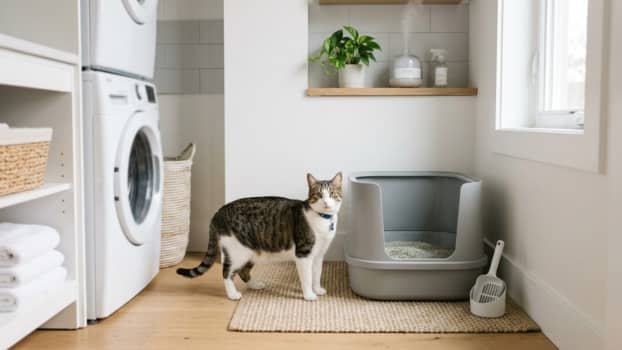
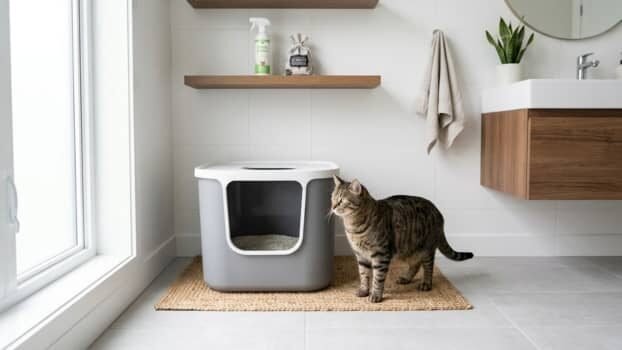
A clean and well-placed litter box setup helps prevent odor from building up in the first place.
Start with a clean box. Wash the box, dry it completely, then add fresh litter. Baking soda won’t rescue an existing odor problem.
Add a small amount. Start with a light sprinkle mixed through fresh litter. You don’t need a thick layer, and adding more doesn’t replace regular scooping.
Keep it dry. If the litter gets too damp, baking soda can form a paste at the bottom of the box. At that point it stops helping and makes cleaning harder.
Use plain, unscented baking soda. Some baking soda products add fragrance, and strong scents can put cats off the box.
Litters and Deodorizers With Baking Soda Built In
If you’d rather not measure and sprinkle, plenty of products already include baking soda. Arm & Hammer says its cat litters include baking soda in every scoop. For the full lineup, see our guide to the best Arm and Hammer cat litter.
Arm & Hammer Clump & Seal Platinum

Why It Stands Out: It pairs baking soda with moisture-activated granules designed to seal odor inside each clump. Arm & Hammer advertises 14 days of odor control. Most reviewers confirm firm clumps and odor control that lasts for days, including in homes with two or three cats and in automatic boxes. Our Arm and Hammer Clump and Seal review compares it with the Original.
Possible Downsides: It’s a clay litter, so a full box is heavy to carry and pour.
Best For: Multi-cat homes that want baking soda odor control in a firm-clumping clay litter.
Arm & Hammer Ultra Last Unscented

Why It Stands Out: You get the baking soda odor help without added fragrance, which fits the advice above. Most reviewers confirm long-lasting odor control, low dust and strong clumping. One reviewer used it on subscription for a year with no odor issues.
Possible Downsides: It’s a clay litter, so a full box is heavy to lift and pour.
Best For: Cats sensitive to scent, and anyone who wants baking soda without perfume.
Cat’s Pride Lightweight Baking Soda

Why It Stands Out: It’s a lighter clumping litter with baking soda odor control. Most reviewers confirm good odor control and solid clumping. One reviewer says the lighter weight makes it much easier to handle.
Possible Downsides: It’s scented. Strong scents can put some cats off the box, so watch how your cat reacts, or choose the unscented Ultra Last instead.
Best For: Owners who want a lighter jug to carry and a cat that’s fine with scented litter.
Arm & Hammer Deodorizing Crystals with Baking Soda
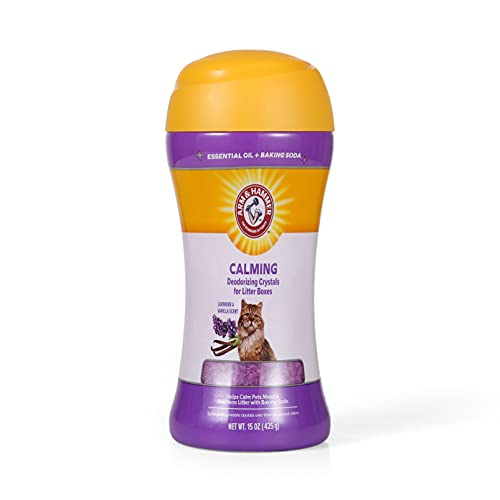
Why It Stands Out: It’s an add-in for the litter you already use. The crystals dissolve into the litter instead of sitting on top as powder, and several reviewers confirm long-lasting results. One reviewer says pouring it is low-mess.
Possible Downsides: It’s scented. If you’re trying to avoid fragrance, use plain unscented baking soda instead. Follow the label for how much to use.
Best For: Boosting odor control in your current litter without switching brands.
Other Ways to Control Litter Box Smell
If baking soda isn’t enough, the fix is usually elsewhere:
- A litter built for odor control handles smell at the source. See our guide to the best cat litter for odor control.
- A dedicated deodorizer is another option. Our litter box deodorizer guide compares them.
- The box itself may be holding odor. Stainless steel resists scratching better than plastic and is less likely to retain lingering odor. Our stainless steel vs plastic litter boxes guide explains the difference.
FAQ
Is baking soda safe to use in cat litter?
Small amounts of plain baking soda are commonly used in cat litter, and Arm & Hammer includes baking soda in its own litter products. Keep the amount small and mix it into the litter. If you have a safety concern about adding baking soda for your individual cat, ask your veterinarian before using it.
How much baking soda should you put in cat litter?
Use a small amount rather than coating the litter heavily. If you’re using a packaged litter deodorizer, follow its label directions.
Can you use baking powder instead of baking soda?
No. Baking powder is baking soda mixed with an acid and starch for baking. Stick with plain baking soda for the litter box.
Can you use baking soda with color-changing litter?
No. Purina warns that baking soda deodorizers can alter the color results of its health monitoring litter. Our guide to color changing cat litter explains how to read those litters properly.
Why does my litter box still smell after adding baking soda?
If the box still smells, the litter may be saturated or the box itself may be holding odor. Baking soda can help with mild odor, but it can’t replace removing the source.