Disclaimer: This post may contain affiliate links. As an Amazon Associate, we earn from qualifying purchases.
Last updated on October 2, 2026
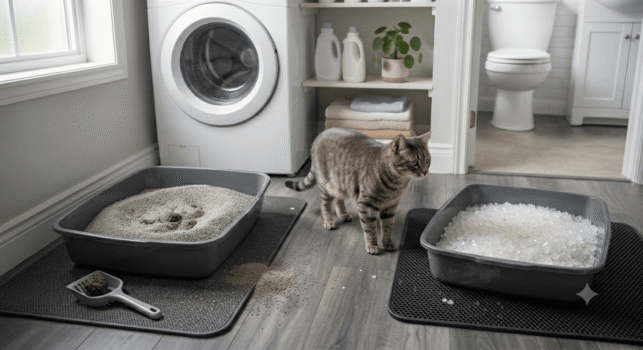
Clumping vs non-clumping cat litter is one of the first decisions new cat owners face, and one many owners revisit when their current litter stops working.
For most adult cats, clumping litter is the easier starting point because urine is removed daily. Non-clumping litter makes more sense in low-dust pellet or crystal systems and boxes designed around non-clumping litter.
Quick Picks
Best Low-Dust Clumping Pick: Arm & Hammer Cloud Control Platinum
Best Paper Pellet Pick: ökocat Dust Free Paper Pellets
More Non-Clumping Options: see our best non-clumping cat litter
How clumping litter works
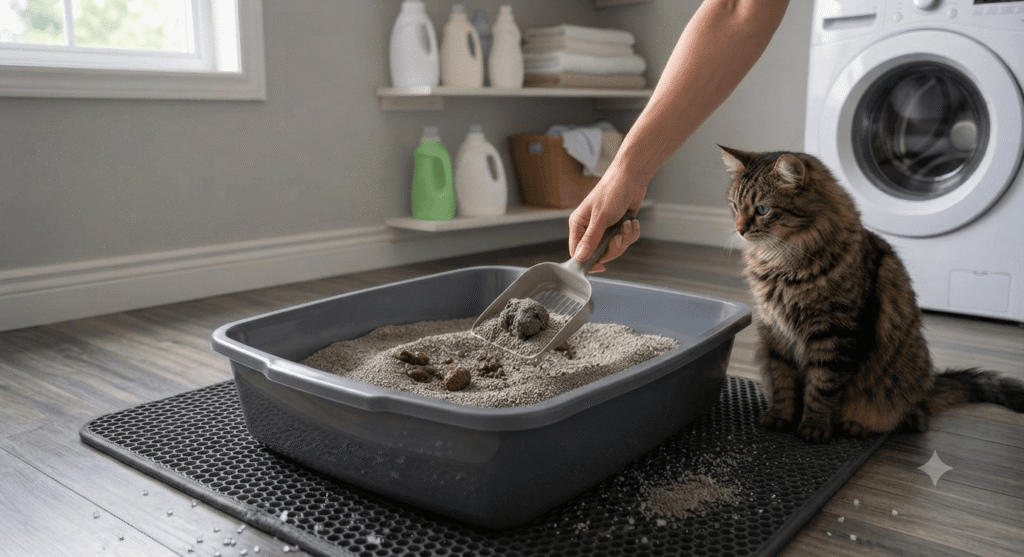
When urine hits clumping litter, the particles bind together into a solid mass. You remove the urine clumps, top up as needed and follow the litter’s directions for full replacement.
Most clumping litters are made from bentonite clay, which forms the hardest, most scoopable clumps. Plant-based clumping options made from corn, tofu, wheat, and walnut are alternatives for owners who want to avoid clay.
How non-clumping litter works
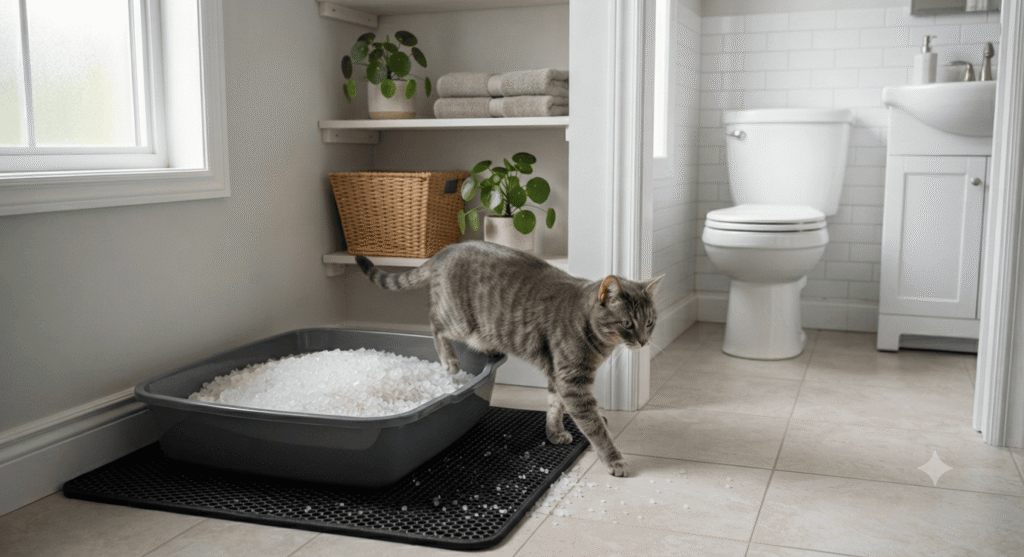
Non-clumping litter absorbs urine without binding together. The moisture spreads through the material and gradually dries out. You scoop solid waste, manage the litter as its directions specify and replace it according to the packaging.
Non-clumping is not one single type of litter. Crystal litter, pine pellets, and paper pellets are all non-clumping, and each one works quite differently. For a full breakdown of the types, see our guide on non-clumping cat litter. For product picks across every type, see our best non-clumping cat litter roundup.
The key differences side by side
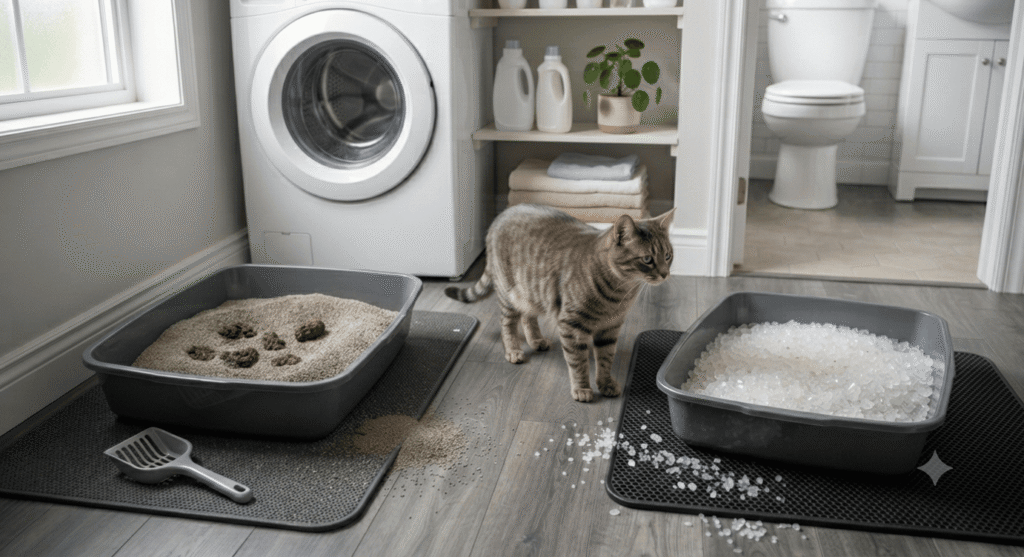
| Clumping | Non-Clumping | |
|---|---|---|
| Daily task | Scoop urine and solids | Scoop solids only, stir litter |
| Full box change | Less often, since urine is scooped out; follow the bag | More often, since urine stays in; follow the bag |
| Odor control | Urine-soiled litter is scooped out daily; varies by formula | Varies by material |
| Dust | More common in clay varieties | Lower in crystal and paper |
| Tracking | More with fine clay | Often less with pellets and crystals |
| Kitten guidance | AAHA starting point: unscented clumping | May suit a kitten already using it or one that prefers it |
Clumping litter requires daily scooping but less frequent full changes. Non-clumping litter skips urine scooping but needs the entire box replaced more often.
Where clumping litter wins
Daily odor control. Clumping litter lets you remove urine-soiled litter during daily scooping instead of leaving absorbed urine in the box. Odor performance still varies by formula.
Many adult cats prefer it. AAHA notes that most adult cats prefer clumping litter and most cats prefer plain, unscented litter, although individual preferences vary. A major texture change, such as switching from fine litter to pellets, may take some cats time to accept.
Easy daily removal. Because urine forms scoopable clumps, you can remove soiled litter without emptying the entire box each time. Follow the bag for full replacement.
Where non-clumping litter wins
Automatic boxes built for non-clumping litter. Some automatic boxes are designed around a specific litter type. PetSafe ScoopFree Crystal models use crystal litter, while PetSafe also now sells ScoopFree models made for clumping litter. Check your machine before switching.
When dust is your main complaint. Paper pellets can be a low-dust alternative to fine clay, although dust varies by product. ökocat paper pellets or crystal litter are options to try. Our guide to dust free cat litter covers more options.
When tracking is your main complaint. Larger pellets may track less than fine-grained litter, although performance varies by product and cat.
Where to start
If you’re choosing clumping, Arm & Hammer Cloud Control Platinum is a strong everyday clay with exceptionally low dust for clay, according to most reviewers.

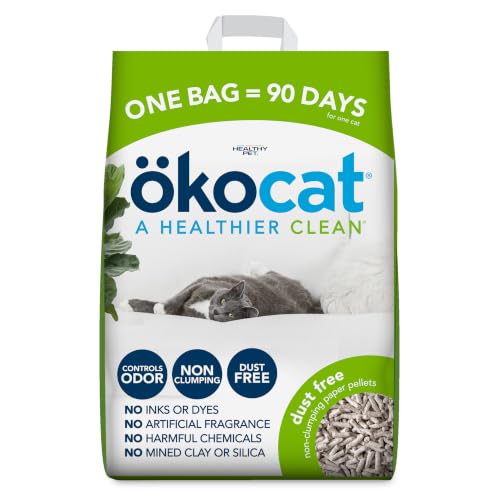
If you’re choosing non-clumping, ökocat Dust Free Paper Pellets are unscented and very low in dust, a good fit for homes where dust is the main complaint.
Which one should you choose?
Start with clumping litter unless one of these applies to your situation:
- Your vet has suggested a non-clumping litter
- You use an automatic litter box designed for crystals
- Dust or tracking is a serious problem in your home
- You want fewer daily steps and are okay with full box changes as the bag directs
If none of those apply, start with clumping litter.
Switching between types
If you’re changing litter types, some cats do better with a gradual transition. Mix in the new litter gradually rather than changing the entire box at once, and let your cat’s response guide the pace. Keep at least one box with the old litter during the transition if your cat resists the change. Our guide on how to transition cat litter walks through it step by step.
FAQ
Is clumping or non-clumping litter better for odor control?
Clumping litter usually controls odor better because urine is removed daily. Non-clumping litter works well with crystal types but requires consistent stirring and timely full changes to stay fresh.
Should kittens use clumping or non-clumping litter?
AAHA suggests starting kittens with unscented clumping litter, the litter they used before, or both. If your kitten tends to eat litter, ask your vet which type to use.
Can you use clumping litter in an automatic litter box?
It depends on the machine. Most automatic litter boxes work with clumping litter. However, some ScoopFree Crystal models are designed only for crystal litter and will not work properly with clumping.
Do cats have a preference between clumping and non-clumping?
AAHA notes that most adult cats prefer clumping litter and most cats prefer plain, unscented litter, but individual preferences vary. If you’re changing litter types, give your cat time to adjust to the different texture.
Is clumping litter bad for the environment?
Clay litter is not biodegradable. Some plant-based and paper litters are made from biodegradable materials such as corn, wheat, wood or paper. That does not automatically mean used cat litter belongs in compost, though, so follow the disposal instructions on the bag and your local rules.