Disclaimer: This post may contain affiliate links. As an Amazon Associate, we earn from qualifying purchases.
Last updated on October 4, 2026
The PrettyLitter color chart tells you what each crystal color means. Fresh PrettyLitter is white, and after your cat pees, the crystals shift color based on the pH of the urine and whether blood is present.
This guide puts every color in one table, then covers the colors people ask about most, what can throw off a reading, and when to call your vet.
PrettyLitter changes color based on urine pH and the presence of blood. Yellow to olive green is PrettyLitter’s typical range. Blue, dark green, orange or red means the crystals picked up a change worth watching, and PrettyLitter is clear that it shows a color, not a diagnosis.
The PrettyLitter Color Chart
| Color | What the Crystals React To | What to Do |
|---|---|---|
| 🟡 Yellow to olive green | pH in PrettyLitter’s typical range | Continue normal monitoring |
| 🔵 Blue or dark green | Higher pH | Monitor for 24 to 48 hours, call your vet if it persists |
| 🟠 Orange | Lower pH | Monitor for 24 to 48 hours, call your vet if it persists |
| 🔴 Red | Blood may be present | Contact your vet |
Colors are a general guide. One reading on its own tells you very little, and patterns matter more.
Quick Picks
Best Unscented Color-Changing Litter: PrettyLitter Unscented
Best for Clear Baseline Instructions: Tidy Cats Tidy Care Alert
Best Clumping Color-Changing Option: pidan Tofu Litter
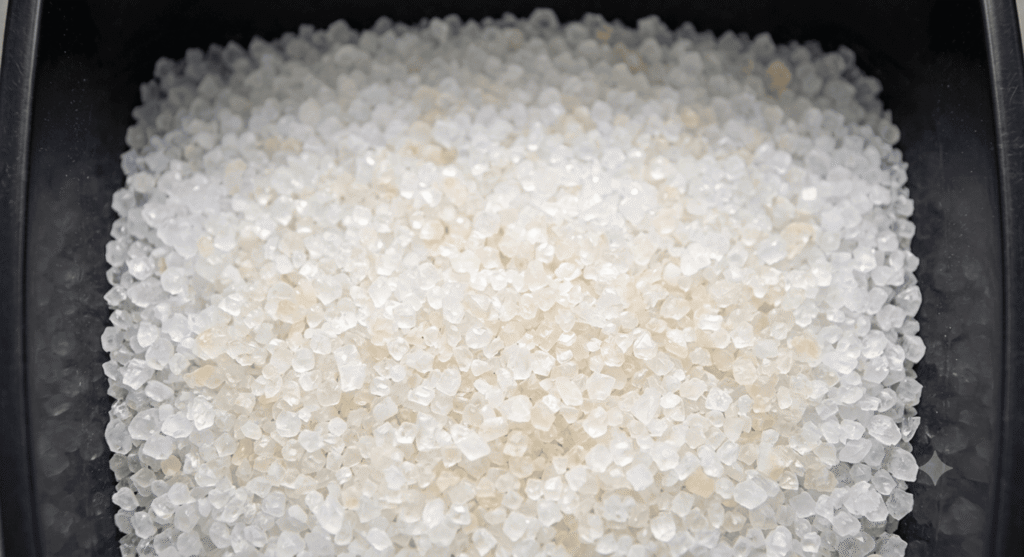
Yellow to Olive Green: PrettyLitter’s Typical Range
After your cat uses fresh litter, the crystals turn yellow to olive green when urine pH is in the typical range. PrettyLitter puts that range at roughly 6.0 to 6.5.
The shade can vary between cats and from day to day for the same cat. A slightly darker or lighter yellow is still typical, as long as it stays in that yellow-to-olive-green band.
Green: Typical or Not?
This is the color people ask about most, because green shows up on both sides of the chart. Olive green, the yellowish green, is part of the typical range. Dark green sits next to blue on the higher-pH side.
If you can’t tell which one you’re looking at, compare it with your cat’s usual color. If it’s clearly darker and bluer than usual and stays that way, treat it like blue.
Blue or Dark Green: Higher pH
Blue or dark green crystals mean the urine is more alkaline than the typical range. One reading isn’t a reason to panic. Monitor it for 24 to 48 hours, and if it persists, call your vet and describe what you’re seeing.
Orange: Lower pH
Orange crystals mean the urine is more acidic than the typical range.
The line between dark yellow and orange isn’t always obvious. Watch it over the next 24 to 48 hours, since a real shift toward orange tends to become clearer rather than fading back to yellow. If orange persists, call your vet.
Red: Possible Blood
Red indicates that blood may be present in the urine. Unlike the pH colors, this isn’t one to wait on. Contact your vet as soon as you notice it.
White or Faintly Tinted: Unused Litter
Fresh PrettyLitter is white. A new bag can also show a faint yellow or orange tint before your cat ever uses it. PrettyLitter says that’s normal, because the indicator material shows through the white crystals.
What Can Throw Off a Reading
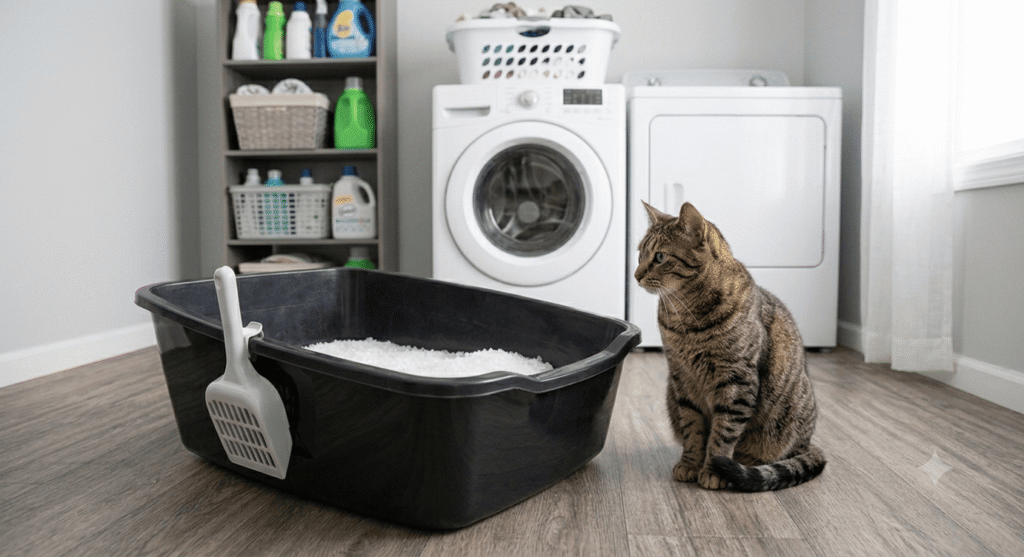
A color change doesn’t always come from your cat. Before drawing conclusions, rule out the usual causes.
Deodorizers and anything mixed into the litter. PrettyLitter says baking soda and other deodorizing agents can affect the pH reading and change the color. For the clearest reading, use the litter on its own.
Diet changes. Diet changes can temporarily affect urine pH, so consider whether the color change started around the same time as a new food or treat.
Old or saturated litter. Once the crystals reach the end of their absorbency, concentrated moisture can cause saturated areas to appear blue. If the litter is wet, slushy or overdue for replacement, change it before interpreting the color.
For an unexpected blue, green or orange reading, first make sure the litter isn’t saturated or mixed with deodorizer, then monitor according to PrettyLitter’s 24-to-48-hour guidance. Red should be handled separately by contacting your vet.
The Multi-Cat Problem
The color feature works best with one cat per box. If several cats share a box, there’s no way to know whose urine changed color. If a change keeps showing up, giving each cat its own box for a while tells you which cat it’s coming from.
What PrettyLitter Can’t Tell You
PrettyLitter is not a diagnostic tool, and it doesn’t claim to be. It only reacts to urine pH and blood, so plenty of health problems won’t show up in the litter at all. A typical color doesn’t mean everything is fine.
If your cat seems unwell, strains in the box or stops eating, go to the vet regardless of what the litter shows. Our guide to color changing cat litter covers the limits of these litters in more detail.
Color-Changing Litters to Try
PrettyLitter

Why it stands out: It reacts to both urine pH and blood, so every row in the chart above applies to it. The routine is simple: scoop solids, stir the crystals and replace the litter when PrettyLitter’s directions say to. Owners report strong odor control, and it comes in Unscented, Calm Aloe and Lotus Flower.
Good to know: The silica crystals don’t clump, and the lightweight crystals can track on hard floors.
Best for: Owners who want the full pH-and-blood color chart, especially in a single-cat box where it’s clear which cat produced the reading.
Tidy Cats Tidy Care Alert
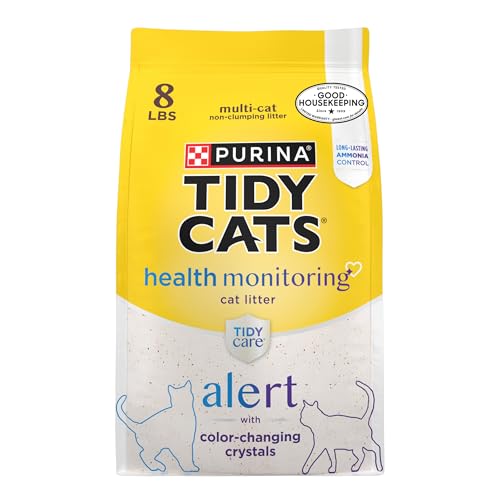
Why it stands out: It also reacts to pH and blood. Purina prints step-by-step baseline instructions on the bag: watch for five days and note your cat’s most common color in the normal range. That gives you something to compare future readings against. It comes in an 8 lb bag.
Good to know: Purina warns that bleach and baking-soda deodorizers can interfere with the color results. Like PrettyLitter, it doesn’t clump.
Best for: Owners who want written guidance on setting a baseline before reading colors.
pidan Tofu Litter with Occult Blood Test
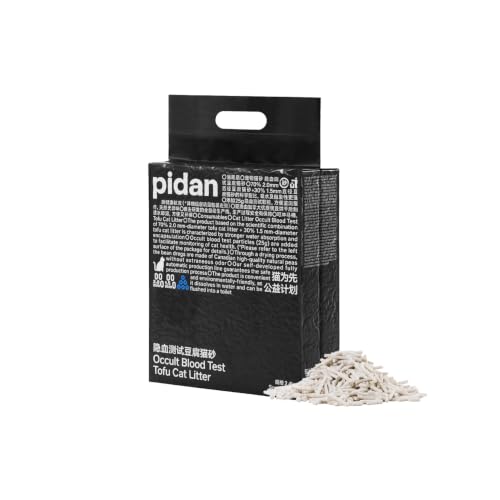
Why it stands out: It’s a clumping tofu litter with a blood indicator, so you keep your normal scoop routine. Reviewers report strong odor control and low dust.
Good to know: It indicates blood only, not pH, so only the red row of the chart applies to it.
Best for: Owners who want clumping litter with a blood indicator.
FAQ
What is the typical color for PrettyLitter?
Yellow to olive green. Anything in that band is the color you want to see.
Can food affect PrettyLitter color?
Yes. PrettyLitter says changes in food or treats can temporarily affect urine pH and the litter color. Monitor an unexpected change for 24 to 48 hours, and contact your vet if it persists.
Why is my PrettyLitter orange before my cat used it?
A faint yellow or orange tint in a fresh bag is normal. It’s the indicator material showing through the white crystals before any urine contact.
Does PrettyLitter detect every health problem?
No. It only reacts to urine pH and blood. Regular vet visits are still the foundation of your cat’s health care.