Disclaimer: This post may contain affiliate links. As an Amazon Associate, we earn from qualifying purchases.
Last updated on October 4, 2026
Knowing how to clean an automatic litter box keeps it running smoothly and smelling fresh. The machine handles the scooping, but its drawer, sensors and removable parts still need you now and then.
To clean an automatic litter box, empty the waste drawer or bag when it’s full, clean the sensors the way your maker specifies, and wash only the removable parts your manual says can be washed. Where soap and water are allowed, use a mild unscented soap and dry everything completely before reassembly.
Quick Picks
For quick cleanups on automatic boxes: Nature’s Miracle Litter Box Scrubbing Wipes
For stuck-on residue during a deep clean: Absolutely Clean Litter Box Cleaner
Everyday Upkeep
Empty the waste drawer or bag when it’s full. How often depends on how many cats you have and how big the drawer is. Many boxes have a full indicator that tells you when.
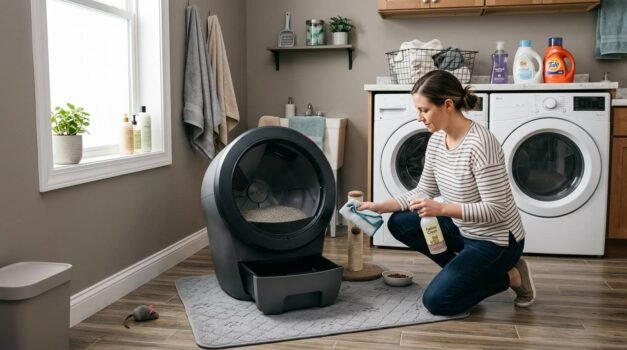
Clean sensors the way your maker says. Depending on the model, sensors may detect cat presence, litter levels or waste levels. Dust, hair and litter can interfere with some of them. Whisker says to clean the Litter-Robot 4 bezel sensors with a clean, dry cloth. For other brands, follow the instructions for your exact model rather than assuming every sensor cleans the same way.
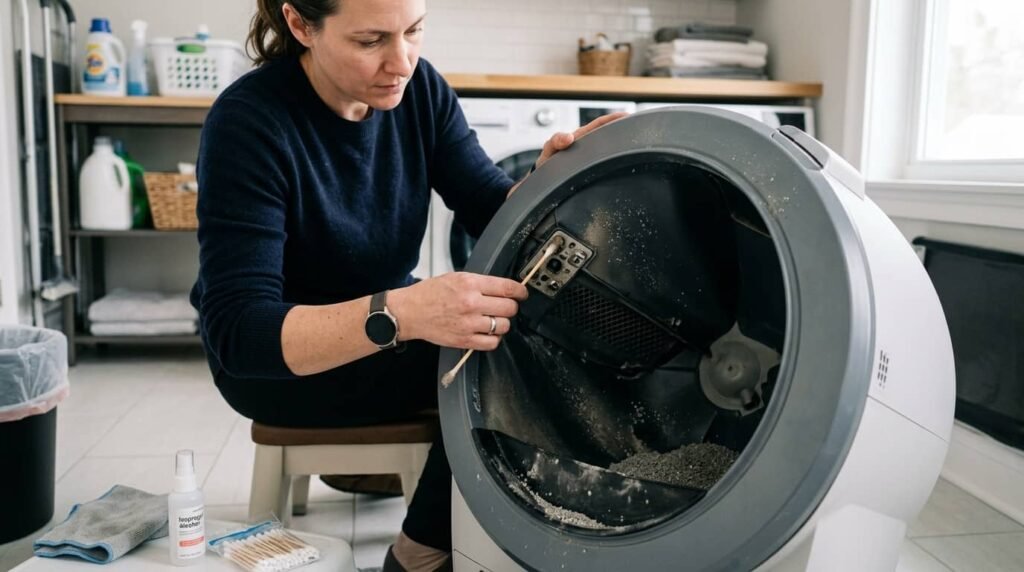
Keep the litter at the fill line. Top it up to the line your manual shows. Too little or too much litter can affect how the box sifts. Our guide to the best cat litter for automatic litter boxes covers options.
Wipe the outside. A damp cloth keeps dust and paw prints from building up.
How to Deep Clean an Automatic Litter Box
Automatic boxes come apart differently, so check your model’s manual before removing or washing anything.
Step 1: Turn it off and unplug it. Never submerge the motor housing or any electronic part, and keep the circuit board and wiring dry.
Step 2: Remove the litter as your manual directs. Some machines have an empty function; others require you to remove the litter manually.
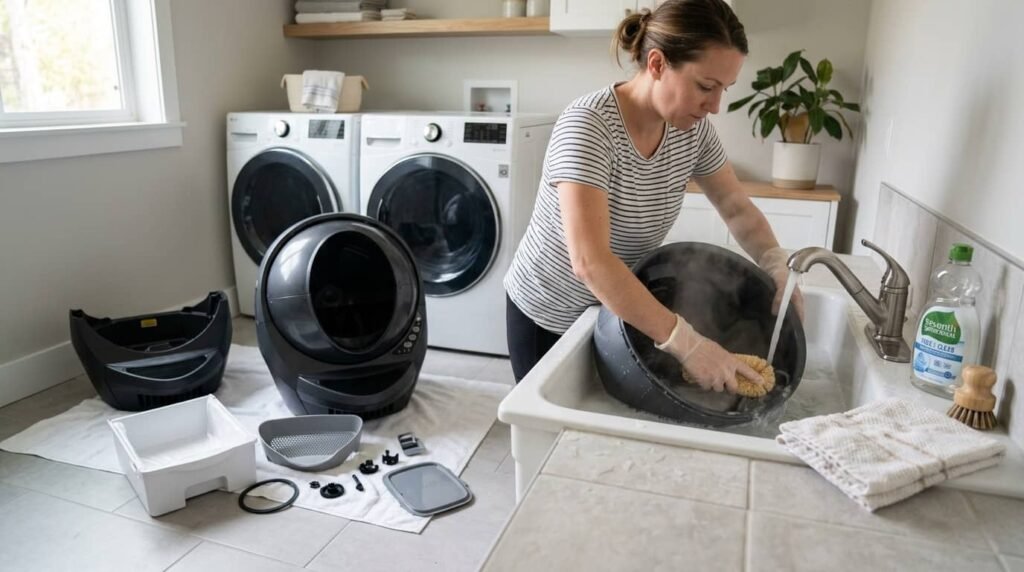
Step 3: Remove the washable parts. Take out only the globe, drum, drawer, liner or other parts your manual identifies as removable. If a part feels stuck, look for a latch rather than pulling harder.
Step 4: Wash the parts your manual says can be washed. For ordinary litter boxes, the ASPCA recommends warm water with unscented soap, baking soda or no soap. For an automatic box, follow its manufacturer’s instructions first. If mild soap and water are permitted, use a soft sponge or cloth and rinse thoroughly.
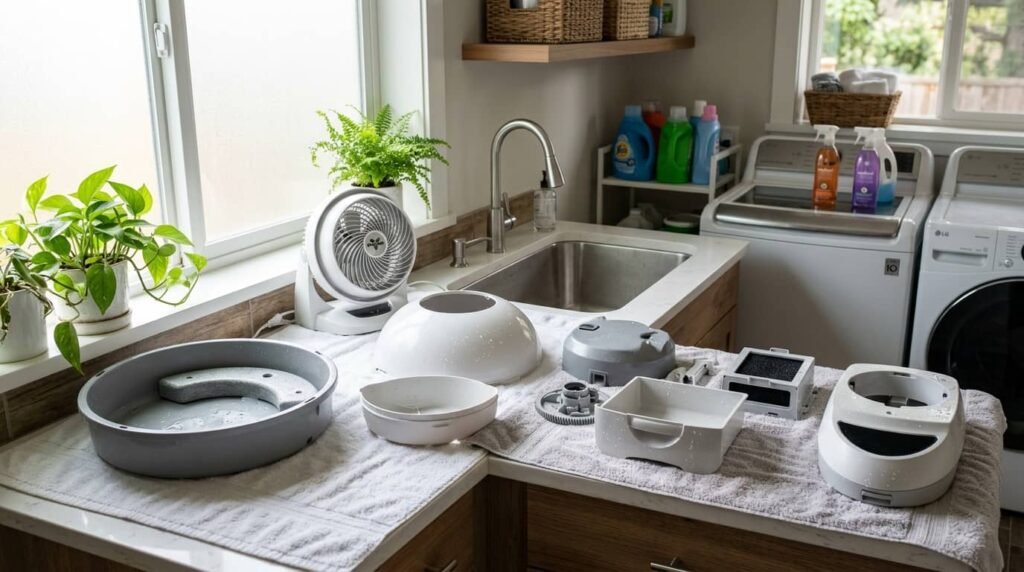
Step 5: Dry everything completely. Towel each part, then let it air dry. Don’t reassemble anything that still feels damp, especially near the sensors and electronics.
Step 6: Wipe around the motor and electronics. Use a dry or barely damp cloth. Never spray cleaner onto the motor area.
Step 7: Reassemble, refill and test. Add fresh litter to the fill line, plug it in, and run a manual cycle before switching back to automatic mode.
How Often to Deep Clean
Follow your model’s manual rather than using one schedule for every automatic box. The ASPCA recommends weekly washing for litter boxes generally, but automatic-box makers set their own maintenance routines. CatGenie, for example, specifies a maintenance cycle every 90 days. Clean sooner if your model’s instructions or its condition call for it.
What Not to Use
Bleach and harsh cleaners. Follow your model’s restrictions. Whisker says not to use bleach or bleach-containing cleaners inside the Litter-Robot 4 globe, and PetSafe warns against specific harsh or strongly scented cleaners on its boxes. An expert quoted by Kinship also recommends skipping bleach, ammonia and vinegar. Never mix bleach with ammonia or other cleaners.
Abrasive scrubbers. Scratches in plastic can hold onto odor. Stick to soft sponges and cloths.
Products That Make Cleaning Easier
Nature’s Miracle Litter Box Scrubbing Wipes

Why It Stands Out: Four reviewers confirm using these on automatic boxes, including the Litter-Robot and Breeze. That matters when you can’t easily carry the whole unit to a sink. The textured surface lifts stuck-on residue from the globe, drawer and rims, and owners say surfaces dry quickly afterward.
Possible Downsides: They’re single-use, so they’re an ongoing purchase. They suit touch-ups better than a full deep clean.
Best For: Quick cleanups on automatic boxes between deep cleans.
Absolutely Clean Litter Box Cleaner
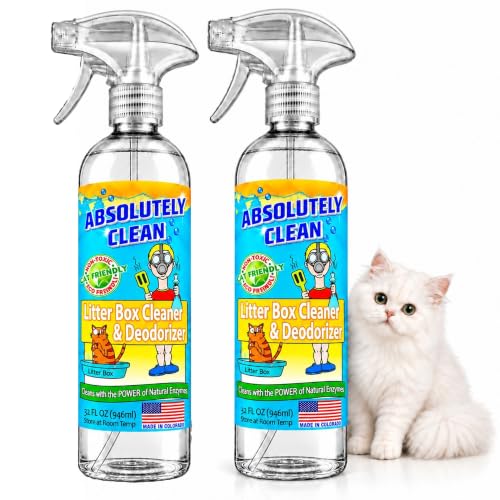
Why It Stands Out: It’s made for litter boxes, and multiple reviewers report using it on automatic boxes as well as plastic and stainless steel litter boxes. Most owners say it handles stuck-on residue and lingering odor well, which helps when soap alone isn’t lifting the buildup in a drawer or liner tray.
Possible Downsides: It’s one more product to store compared with plain unscented soap. Follow the label for your box’s material, and rinse and dry fully before reassembling.
Best For: Deep cleans when soap isn’t lifting residue.
Frequently Asked Questions
Does a self-cleaning litter box still need cleaning?
Yes. It removes waste after each use, but the drawer, sensors and removable parts still collect residue and dust. Regular upkeep keeps the machine running reliably.
My automatic litter box still smells after cleaning. What’s wrong?
Check the waste drawer or tray, seals and other areas your manual tells you to clean. If your model uses a carbon filter or deodorizer, replace it according to the manufacturer’s instructions. Make sure washable parts were completely dry before reassembly.
Can I put automatic litter box parts in the dishwasher?
Only if your manual says a part is dishwasher-safe. Never put electronic components, sensor housings or motor parts in a dishwasher. When in doubt, hand wash.