Disclaimer: This post may contain affiliate links. As an Amazon Associate, we earn from qualifying purchases.
Last updated on October 4, 2026
Learning how to get your cat to use an automatic litter box mostly comes down to patience and order. Cats take to new boxes at their own pace, and the steps below let your cat set that pace without forcing anything.
To get your cat to use an automatic litter box, place it near the old box, keep both available, and leave automatic cleaning off at first. Switch automatic cleaning on once your cat is using the new box regularly.
Quick Picks: If the Box Itself Is the Problem
For cats that avoid enclosed boxes: Thereye Open-Top
For large cats that need more room: Meowant 106L
For an adjustable cleaning delay: Mintakawa
Why Cats Hesitate
Movement and sound. A drum or rake that moves can startle a cat, especially if the cat sees it happen.
An enclosed space. A globe can feel confining to a cat used to an open tray.
A litter change. If your new box needs a different litter, the new smell and feel add one more thing for your cat to adjust to.
Step-by-Step: How to Get Your Cat to Use an Automatic Litter Box
Step 1: Set It Up Near the Old Box
Whisker suggests placing the new box near the old one and keeping both for a while. Fill it to the line your manual shows. If your model allows it, use the litter your cat already knows.
Whisker also suggests mixing a scoop of used litter into the clean litter, so the new box smells familiar.
Step 2: Leave Automatic Cleaning Off
Leave the box off, or in manual mode, until your cat has tried it. Check your manual for how your model handles this. Whisker says that for the Litter-Robot, semi-automatic mode means leaving it powered off or unplugged.
To draw your cat in, Whisker suggests treats or catnip on the step or around the box, and a reward after your cat uses it. Whisker also suggests letting the old box get a little less appealing rather than immediately taking it away.
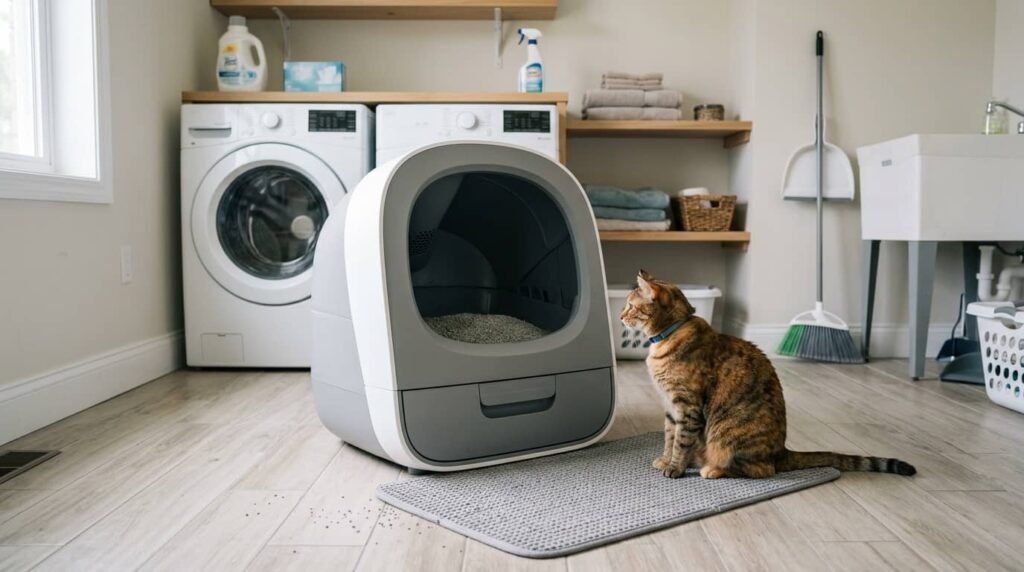
Step 3: Introduce the Movement Carefully
Once your cat has used the box, run a manual cleaning cycle while you’re there. Whisker suggests letting your cat see and hear the Litter-Robot cycle so the movement becomes familiar.
If your cat is especially nervous about movement, one experienced owner took the opposite approach and ran the first cycles while the cat was elsewhere. Watch your cat’s reaction and use the approach that causes less hesitation.
Step 4: Turn On Automatic Mode with a Longer Delay
When your cat is using the box regularly, switch on automatic cleaning. Set a longer wait between your cat leaving and the cycle starting. One Litter-Robot 4 owner said raising the delay to 15 minutes helped a lot.
Step 5: Retire the Old Box When Your Cat Has Moved On
Remove the old box once your cat uses the new one regularly and has stopped going back to the old one. If you have several cats, keep the ASPCA’s one-box-per-cat-plus-one guidance in mind. An automatic box may replace one of your boxes, not all of them.
If Your Cat Still Won’t Use It
Match the old location. A new spot on top of a new box is two changes at once.
Check the fill line. Too little or too much litter can affect how the box cleans and how it feels to dig in. Fill to the line your manual shows.
Try changing the entrance setup. Whisker says temporarily removing the Litter-Robot fence can help some cats see inside more easily, and its ramp can be removed and reattached depending on how your cat responds. For other boxes, only remove accessories the manufacturer says are removable.
Check the fit. A cat that’s cramped inside can be reluctant to settle. An open-top box or a roomier model may suit your cat better. The three boxes below each solve a specific problem, and our best automatic litter box guide covers the full range of designs.
If your cat stops using every box, not just the new one, check with your vet. The ASPCA notes that litter box problems can have medical causes.
Automatic Litter Boxes That Make the Switch Easier
Sometimes the steps aren’t the problem. The box is. These three each solve a specific reason cats hesitate.
Thereye Open-Top Self Cleaning Litter Box

Why it helps: There’s no hood, so your cat can see around the whole time. That can help when a cat uses an open tray but won’t step into an enclosed globe. One owner’s cat refused a Litter-Robot but uses the Thereye consistently.
Reviewers, including critical ones, call it quiet, which may help when movement and sound are part of the hesitation. The entry step also catches a good amount of litter from paws, and a cover keeps urine away from the buttons.
Good to know: An open top doesn’t hold in odor the way an enclosed globe does. Check Thereye’s listed weight range against your cat before ordering.
Best for: Cats that use open boxes but avoid enclosed automatic ones.
Meowant 106L Large Self-Cleaning Litter Box

Why it helps: A cat that feels cramped can be reluctant to use a new box, no matter how slowly you introduce it. Meowant rates the 106L for cats from 3.3 to 30 lb, with an 8-inch entry. One owner’s large Siamese mix finally fit comfortably after other automatic boxes felt too tight.
It also gives you automatic, scheduled and manual cleaning modes. During a transition, that gives you control over when the box moves instead of relying on an automatic cycle right away.
Good to know: The weight sensors need a hard, level floor. It’s also a newer model, so there’s less long-term owner feedback.
Best for: Large cats, and cats that seem cramped in other automatic boxes.
Mintakawa Automatic Cat Litter Box

Why it helps: You control when it cleans. You can set how long it waits after your cat leaves, and one owner uses a 10-minute delay. It also works as a standalone box without the app, so you can run cycles by hand while your cat adjusts.
Six reviewers call it quiet.
Good to know: It needs assembly, which owners put at about eight screws and roughly 10 minutes.
Best for: Owners who want full control over cleaning timing during the switch.
Kittens
Check the maker’s minimum weight before using automatic mode. Whisker says a cat needs to weigh at least 3 lb for the Litter-Robot 4. PetSafe says to keep its crystal ScoopFree boxes unplugged until a kitten is 6 months old. Until then, use the box with automatic cleaning off.
Frequently Asked Questions
How long does it take for a cat to get used to an automatic litter box?
It varies by cat. Some use it on day one, and cautious cats can take longer. Let your cat’s behavior, not the calendar, decide when to move to the next step.
My cat used it once and then stopped. What happened?
A cleaning cycle may have startled your cat, or something else about the new setup may be putting them off. Turn automatic cleaning off again and work back through the steps above. If your cat has stopped using every litter box, check with your vet.
Should I put treats inside the box?
Whisker suggests treats on the step or around the box. Keep them out of the litter itself, and reward your cat after they use it.
Do I need a special litter?
Follow the litter guidance for your model. Our guide to the best cat litter for automatic litter boxes goes model by model.
Once your cat is settled, our guide on how to clean an automatic litter box covers upkeep.