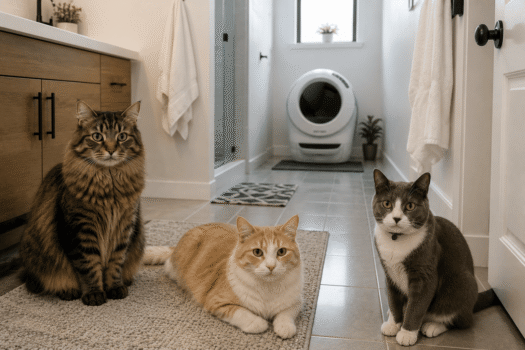
Disclaimer: This post may contain affiliate links. As an Amazon Associate, we earn from qualifying purchases.
Last updated on October 3, 2026
This Litter-Robot 4 review covers one of the most recognized automatic litter boxes on the market. It’s quiet and roomy, and owners consistently report strong odor control. It has a few real quirks too, and this review covers both sides.
The Litter-Robot 4 is a strong choice if you have up to four cats and room for its footprint. The main tradeoffs are its size and keeping its sensors clean.
Our pick: Litter-Robot 4 by Whisker
For a comparison across designs and brands, see our best automatic litter box guide.
What the Litter-Robot 4 Does Well
Odor Control
Owners consistently report that smell stays contained while the globe is closed, including in a three-cat home. Waste drops into a sealed drawer below the globe. One owner estimated about 90% less tracking than with their previous open box.
Room and Cat Comfort
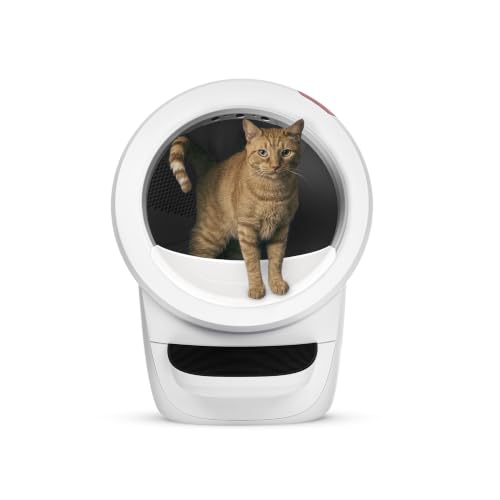
The LR4 has a 15.75 by 15.75-inch opening. One owner says their large cat found another automatic box too cramped but used the roomier LR4 right away. Several owners say their cats took to it on the first day.
Noise
Owners, including its most critical reviewers, describe it as quiet. Multi-generation owners say it’s quieter than the Litter-Robot 3, and one says you have to stand right beside it to hear it turn.
Waste Drawer
Long-term owners say the LR4 drawer holds more than earlier Litter-Robots. How often you empty it depends on how many cats you have.
Long-Term Support and Repeat Buyers
Plenty of owners come back for a second unit after years of use. One describes Whisker sending free parts for a unit bought in 2016.
Setup
There’s no major assembly. Owners consistently describe the physical setup as straightforward.
What to Know Before You Buy
Sensor Upkeep
Dust, hair and litter can interfere with the LR4’s sensors and cause false cat, litter-level or drawer readings. Whisker recommends wiping the bezel and sensors with a clean, dry cloth and resetting the unit after maintenance. Our guide on how to clean an automatic litter box covers the routine.
Wi-Fi
Some owners report the unit dropping Wi-Fi and needing to be re-paired. Cleaning still runs, but app notifications stop until it reconnects.
Footprint
It’s large and needs open space in front for your cat to walk in. Measure your spot before buying.
Litter
Whisker says clumping clay litter works best in the Litter-Robot. Our guide to the best cat litter for automatic litter boxes covers specific options.
Litter-Robot 4 vs Litter-Robot 5
Whisker now sells the Litter-Robot 5. It adds WasteID, which distinguishes urine from stool, plus slightly more interior room, an improved waste drawer and an LCD display. Whisker rates it for up to five cats and for cats from 3 to 30 lb, and describes it as having sturdier construction.
The Litter-Robot 5 Pro adds dual cameras; its AI facial recognition feature requires Whisker+.
The Litter-Robot 4 remains the model with years of owner feedback behind it. If WasteID, the larger cat range or five-cat support matters to you, compare the LR5 directly with the LR4 before choosing. Whisker also makes the smaller Litter-Robot EVO for one or two cats.
Is the Litter-Robot 4 Worth It?
Yes, if you have one to four cats, room for its footprint and want to replace routine scooping with an automatic cycle.
Odor control, quiet cycling and a long owner track record are its biggest strengths. The main upkeep beyond normal cleaning is keeping the sensors clear and handling occasional sensor or drawer-reading errors. Its sensor quirks are manageable once you know the basic cleaning and reset steps.
If space is tight, our best automatic litter box guide covers more compact designs.
Frequently Asked Questions
How many cats can use one Litter-Robot 4?
Whisker says up to four. One six-cat household uses two units. The app tells cats apart by weight and logs visits for each. It’s a log, not a diagnosis, so take any concern to your vet.
Can kittens use the Litter-Robot 4?
Whisker says kittens at least 3 lb can use it in automatic mode. Below that, keep automatic cycling off and use its semi-automatic procedure.
How does the Litter-Robot 4 compare with the Litter-Robot 3?
If your LR3 is still working reliably, the main reasons to upgrade are quieter operation, the larger drawer and the LR4’s newer monitoring features.