Disclaimer: This post may contain affiliate links. As an Amazon Associate, we earn from qualifying purchases.
Last updated on October 4, 2026
Tofu cat litter is a clumping litter built around plant-based pellets, sometimes with added bentonite clay. Despite the name, it isn’t always made from soy.
This guide explains what’s in it, how it behaves in the box, whether it works in automatic litter boxes, and how it compares with corn and wood litter.
Tofu cat litter uses plant-based pellet ingredients such as pea or corn, while some formulas also contain bentonite clay. The ingredients and clumping behavior vary by formula, so check the label if avoiding clay and check the maker’s guidance before using one in an automatic box.
Quick Picks
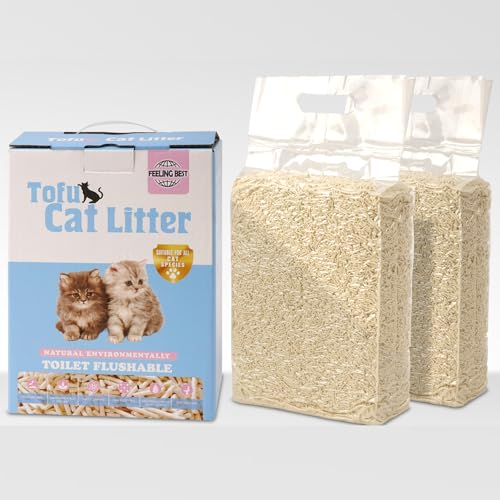
Pure plant-based example: FEELING BEST Tofu Cat Litter
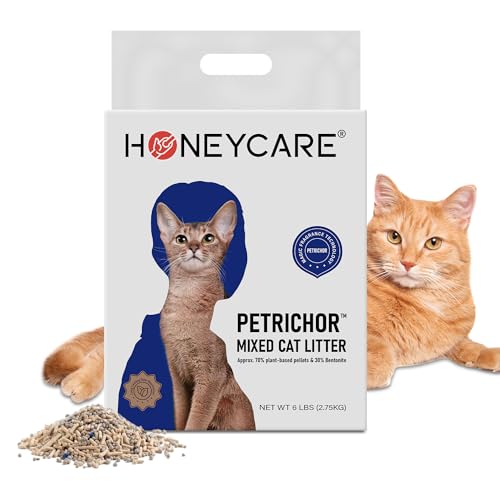
Plant and bentonite blend: HONEY CARE Petrichor Mix Cat Litter
For a full brand-by-brand comparison, see our best tofu cat litter guide.
| Litter | Made From | Clay-Free? | Scent | Best For |
|---|---|---|---|---|
| FEELING BEST | Corn starch and pea dregs | Yes | Natural scent, labelled unscented | Trying a fully plant-based litter |
| HONEY CARE Petrichor Mix | Plant pellets and bentonite | No | Scented | Tofu-style pellets in a bentonite blend |
What Is Tofu Cat Litter Made Of?
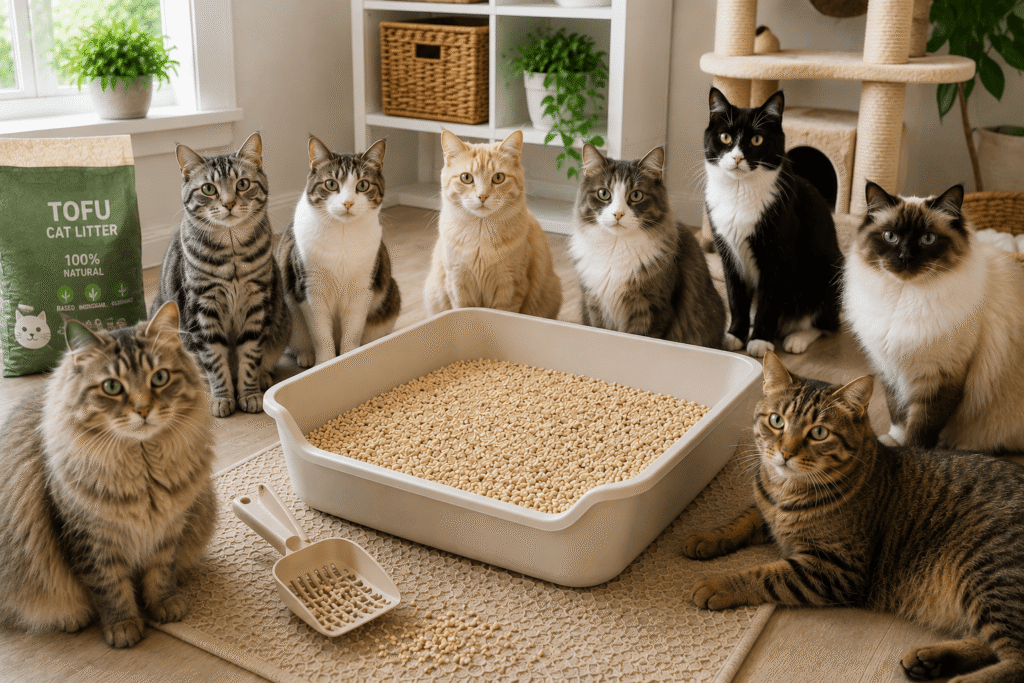
Despite the name, tofu-style cat litter isn’t always made from soy. Formulas sold in this category can use different plant materials, and some are blended with bentonite.
Some brands use soybean pulp left over from tofu making. FEELING BEST’s listing says it’s made from corn starch and pea dregs, with no soy named. HONEY CARE Petrichor Mix pairs plant-based pellets with bentonite clay.
That difference matters if you’re switching to avoid clay. A blend still contains clay, so read the ingredients, not just the word “tofu” on the bag.
What to Expect Day to Day
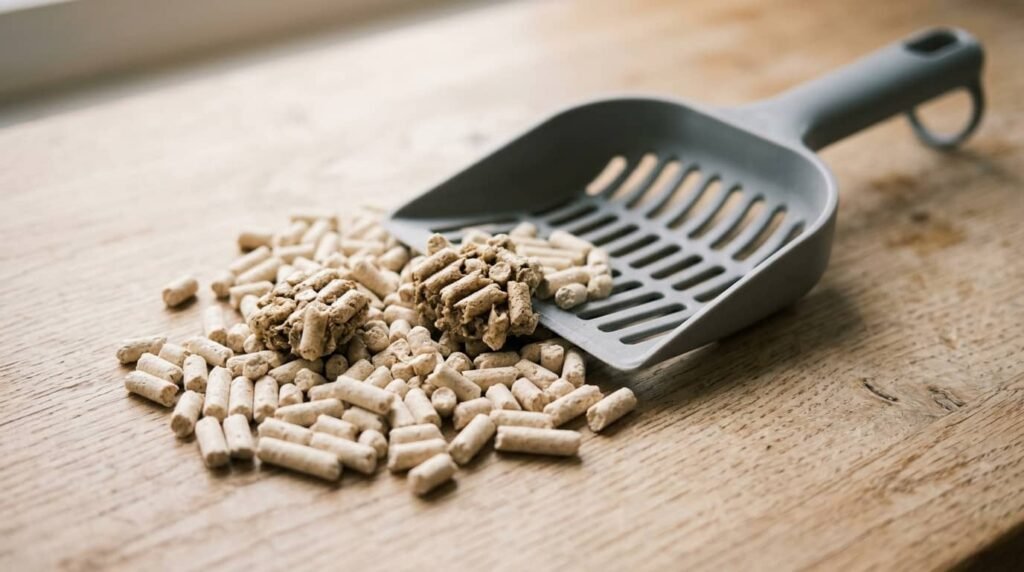
Clumping. Tofu formulas are designed to clump around urine, but clump firmness varies by formula.
Scooping. Narrow-slot scoops can struggle with pellets. Reviewers specifically say this wide-slot metal scoop works with tofu litter.
Smell. “Unscented” doesn’t always mean no smell. Reviewers describe a natural milky or vanilla-like scent in FEELING BEST, even though it’s labelled unscented, and Tuft & Paw discloses a natural aroma on its own litter.
Storage. Moisture can be an issue with some formulas. Some pidan owners in humid climates report pellets softening or developing mold before use. Follow the storage directions on the specific bag.
Tracking. Some owners switching from fine clay report less litter on the floor with tofu pellets, but tracking varies by formula and cat. Our litter tracking solutions guide covers other fixes.
Does Tofu Cat Litter Work in Automatic Litter Boxes?
Sometimes, but check first. Tuft & Paw says its litter isn’t made for automatic boxes, and FUKUMARU says the same about its Lavender tofu litter. One owner reports PETKIT Clump+ working in a Litter-Robot 5.
Always follow your machine’s manual. Our guide to the best cat litter for automatic litter boxes compares litter compatibility for automatic boxes.
FEELING BEST Tofu Cat Litter
Why It Stands Out
Its listing says it’s made from corn starch and pea dregs, so it’s a clear example of a tofu litter with no soy named. Most reviewers report strong clumping, including clumps that hold together when scooped wet. Reviewers also report low dust and less tracking than clay.
Possible Downsides
It’s labelled unscented, but several reviewers notice a sweet, milky natural scent. Most describe it favorably, but it isn’t scent-free.
Best For
Owners who want to try a fully plant-based clumping litter.
HONEY CARE Petrichor Mix Cat Litter
Why It Stands Out
It blends plant-based pellets with bentonite clay, and HONEY CARE markets the formula for quick clumping. Most reviewers report strong odor control and low dust, including comparisons favoring it over World’s Best Cat Litter and clay. Most also say it clumps reliably.
Possible Downsides
The bentonite means it isn’t clay-free. If avoiding clay is your reason for switching, choose a pure plant formula.
Best For
Owners who want tofu-style pellets in a bentonite blend.
Tofu Cat Litter vs Corn and Wood Litter
Corn litter is the closest relative. Both are plant-based and both clump, but many corn litters are finer-grained clumping formulas rather than tofu-style pellets.
Wood pellet litter works differently. Most wood pellets absorb urine and break down into sawdust instead of clumping, so the scooping routine changes. Our pellet cat litter guide explains how that system works.
Frequently Asked Questions
Can tofu cat litter be flushed?
Don’t assume a litter is flushable. Clay-based litter shouldn’t be flushed. For non-clay formulas, follow the disposal directions on the package and local wastewater rules.
How do I switch my cat to tofu litter?
Check the bag first, since some makers give their own switching directions. Our guide on how to transition cat litter covers the general approach.
Is tofu cat litter good for kittens?
AAHA suggests starting kittens with unscented clumping litter, the litter they used before, or both. AAHA doesn’t specifically recommend tofu litter, so check whether the particular formula matches those criteria.