Disclaimer: This post may contain affiliate links. As an Amazon Associate, we earn from qualifying purchases.
Last updated on October 2, 2026
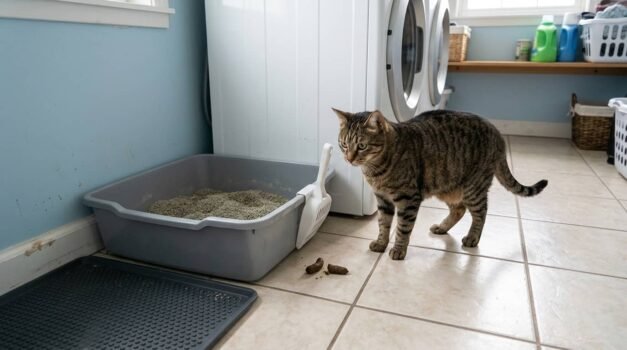
If your cat is pooping right next to the litter box instead of inside it, it gets frustrating fast. You clean the area, scoop the box, and still end up dealing with the same mess just inches away.
This often points to something about the box itself. Once you figure out what’s bothering your cat, the behavior starts to make sense and becomes much easier to fix.
Quick Answer
A cat pooping next to the litter box often suggests something about the box itself is off, such as its size, cleanliness, litter type or location. It often means the cat is using the right area but finds something about the box uncomfortable.
If you want the broader overview first, you can read this guide on why your cat is not using the litter box.
Quick Picks
Best Bigger Open Box: IRIS USA XXL Open Top
Best Soft Unscented Litter: Dr. Elsey’s Ultra Unscented
Best Enzyme Cleaner for the Accident Spot: Hepper Advanced Bio-Enzyme
Best Box That Won’t Hold Odor: WoofiGo Stainless Steel High Sided
What It Means When Your Cat Poops Next to the Litter Box
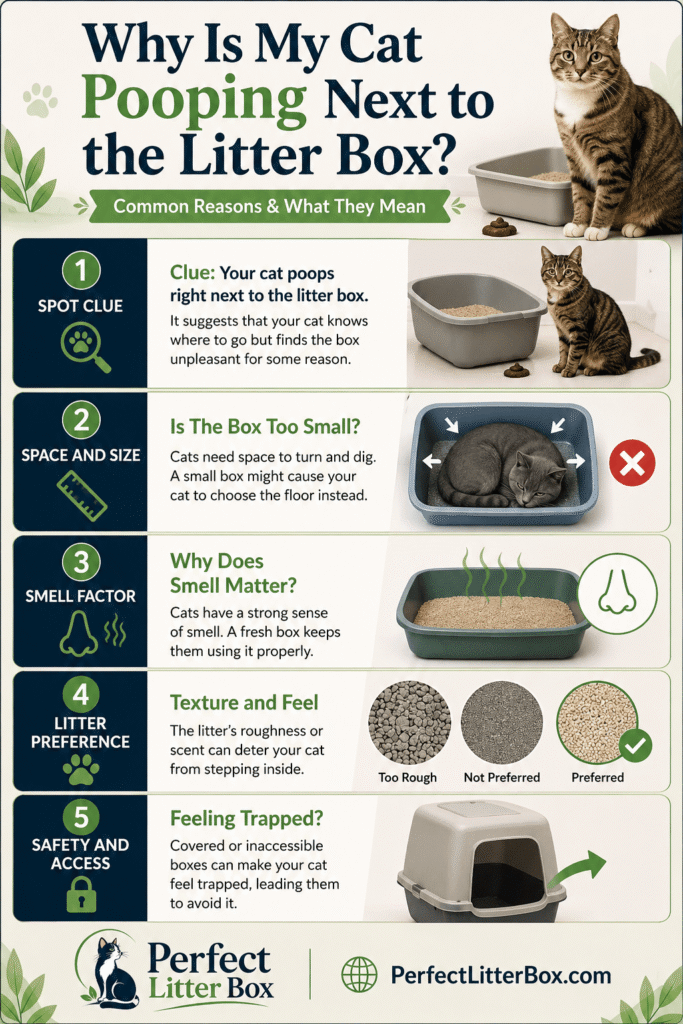
When a cat poops right next to the litter box, it often suggests they want to use that spot but are avoiding something about the box itself.
This is different from a cat going in random areas around the house. In this situation, your cat is going to the right place, but stopping just short of using the box. That’s an important clue.
It can point to a problem with how the litter box feels, smells or functions rather than a training issue. Your cat isn’t confused, and it’s not acting out of spite.
If your cat is going outside the box in different areas, this guide on why cats poop outside the litter box breaks down the bigger picture.
What Different Patterns Can Tell You
Where your cat goes and how they behave around the box can give you more specific clues.
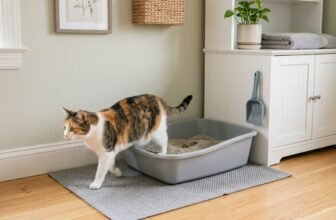
If your cat poops right at the edge or just outside the entrance, the box may be too small or awkward to get into.
If your cat pees in the box but poops next to it, they may want separate spaces or find the box too dirty to use for both.
If they use the same exact spot every time, that area has likely become part of the habit. The smell or surface keeps pulling them back.
If your cat hesitates, goes in and out, or seems unsure, something about the setup may be making them uncomfortable or stressed.
Why It Happens (And What Usually Causes It)
When a cat is pooping next to the litter box, the problem often comes down to the setup. Small details that seem minor to you can make a big difference to your cat. Here are the most common causes, starting with the ones that usually fix the problem the fastest.
The Litter Box Is Too Small
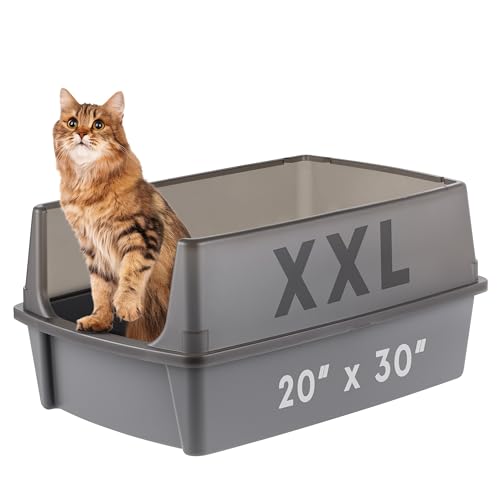
If the box is too small, your cat doesn’t have enough room to turn, dig and position comfortably. They may step in, try to go, and end up missing the box or choosing the floor right next to it.
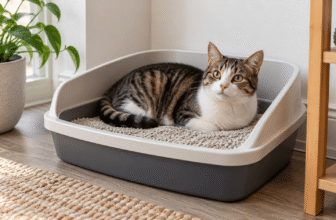
This shows up a lot with larger cats, but even average-sized cats can struggle with standard litter boxes. Switching to a larger, open design often helps. The IRIS USA Extra Large Open Top Litter Box gives your cat more space to move naturally, with 14-inch sides to keep everything contained.
Your Cat Doesn’t Want to Use the Same Box for Pee and Poop
Some cats are very particular about this. They’ll use the litter box for pee, but avoid pooping in the same space, especially if the litter already smells or feels used.
The easiest fix is adding a second box nearby. This gives your cat a separate space without forcing them to change their habits. The guide on how many litter boxes per cat explains how to set up the right number and spacing.
The Box Smells Worse Than You Think
Even if the box looks clean, it can still smell strong to your cat. Once odor builds up inside the box, they may avoid stepping into it and go right next to it where the area feels fresher.
Daily scooping helps, but worn plastic can hold onto odor over time, even after cleaning. A stainless steel litter box like the WoofiGo Stainless Steel High Sided Litter Box has a steel pan that doesn’t absorb odor the way worn plastic can, so it’s easier to keep fresh.

The Litter Feels Wrong
Texture matters more than most people expect. If the litter is too rough, too deep or heavily scented, your cat may not want to stand in it long enough to poop.
Fine, unscented litter like Dr. Elsey’s Ultra Unscented Clumping Clay tends to work well because it feels soft and familiar. If this behavior started after switching litter, that’s a strong clue.

The Box Feels Too Closed or Hard to Access
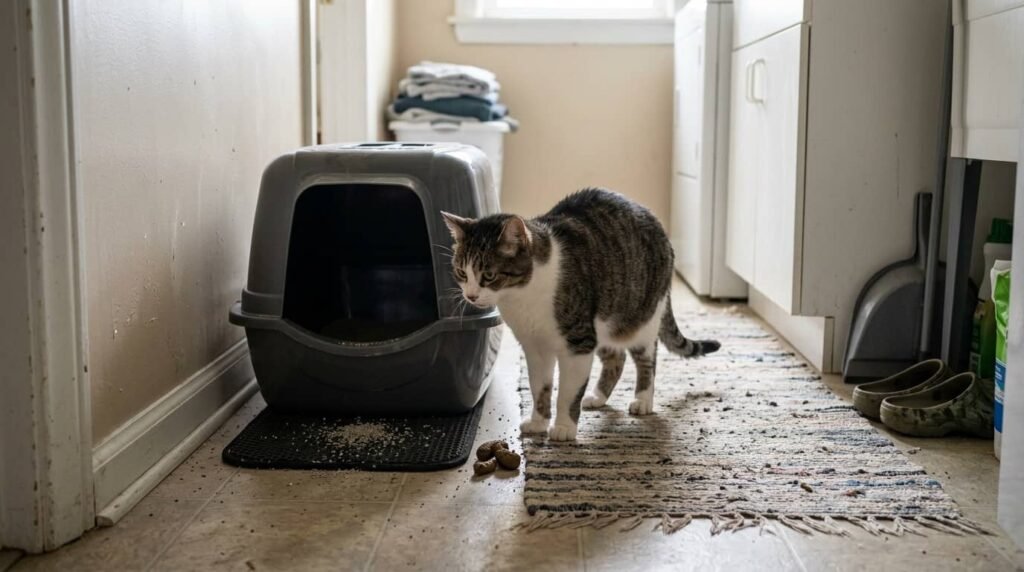
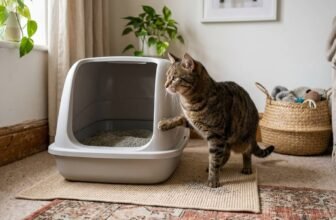
Covered litter boxes can make some cats less comfortable and lead to accidents outside the box
Covered boxes, high entry points or tight spaces can make some cats less comfortable, especially if they can’t easily see around them.
If your cat doesn’t feel like they can enter, turn and leave easily, they may avoid going fully inside. This often leads to pooping right outside the entrance. Open boxes with easy access often help, especially for older or larger cats. A low entry litter box can make stepping in easier too.
Stress or Tension Around the Box
In some homes, the issue isn’t the box itself, but what’s happening around it. Another cat may be watching, blocking access or making the area feel unsafe. Noise, location or interruptions can matter too.
When that happens, your cat may still go to the area, but won’t stay long enough to use the box properly.
When It Might Be Medical
If the behavior started suddenly, especially in an older cat, it’s worth considering discomfort.
Discomfort when squatting or passing stool can make a cat step out of the box to finish. If you notice straining, very hard stool or a sudden change, call your vet.
Cleanup and Breaking the Habit
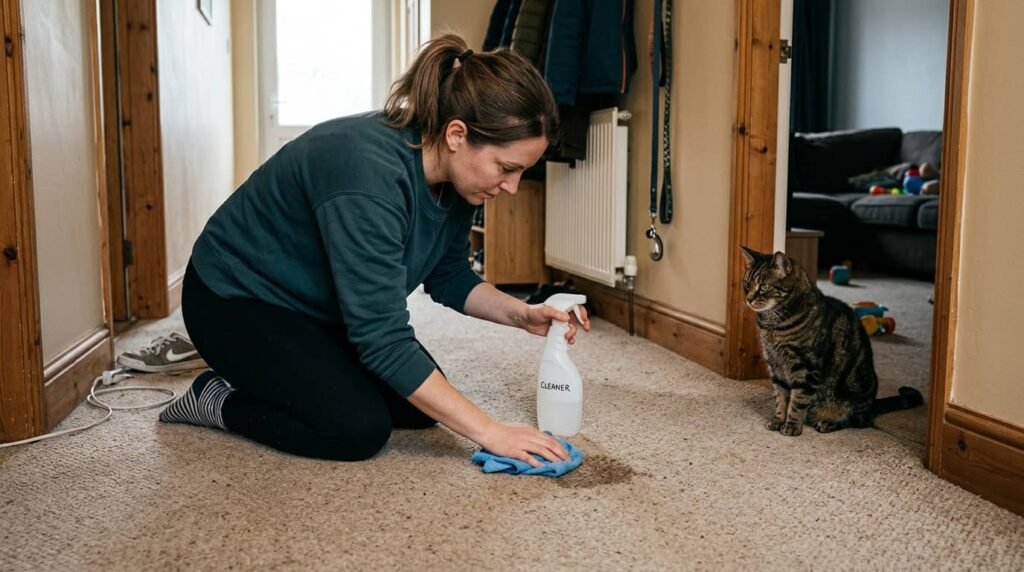
Thorough cleaning removes odor and helps stop cats from returning to the same spot
Whatever the underlying cause turns out to be, start with a full reset of the box: empty it, wash it with mild unscented soap, and refill it with fresh litter. If the problem stops right there, odor or buildup was likely the issue. This guide on the best way to clean a litter box covers the full process.
For the accident spot itself, if the smell is still there, your cat will keep going back to it. Regular cleaners don’t fully remove it, so use an enzyme cleaner like the Hepper Advanced Bio-Enzyme Pet Stain and Odor Eliminator that breaks the odor down. If your cat keeps returning to one spot after that, block it off temporarily or place a litter box directly over the area, then gradually move the box back to a better location once the habit resets.

Frequently Asked Questions
Why does my cat poop next to the litter box but pee inside it?
This often means your cat is okay using the box, but doesn’t want to use it for both. Adding a second litter box often helps.
Why does my cat only poop outside the litter box at night?
If it mostly happens at night, the box may be somewhere that feels less comfortable then, like a dark basement or a noisy laundry room. A second box in a more familiar spot can help.
Will my cat stop doing this on its own?
Usually not without a change. Once you identify and address the cause, many cats return to using the box normally.
Is my cat doing this on purpose?
No. A cat pooping outside the litter box isn’t acting out of spite. Something about the box feels uncomfortable, stressful or wrong.
How long does it take to fix this?
If the issue is related to the litter box setup, you may see improvement soon after making changes. Habit-based cases can take longer, especially if the behavior has been happening for a while.