Disclaimer: This post may contain affiliate links. As an Amazon Associate, we earn from qualifying purchases.
Last updated on October 2, 2026
The right litter box for kittens is low, open and easy to reach. If the box is too tall, too enclosed or too far away, a kitten can miss it, avoid it or turn it into a mess within days.
What works in the first weeks home also stops working a few months later, which is where most setups fall apart. This guide covers what to use as your kitten grows, where to put it, two boxes that suit kittens and fixes for the most common problems.
The best litter box for kittens is an open box with a low entry the kitten can step over without climbing. As your kitten grows, move to a roomier box, keeping the front low and adding higher back and side walls if your kitten digs hard.
Quick Picks
Best for Very Small Kittens: IXARO Ultra-Low Entry Stainless Steel
Best for Growing Kittens: Qiuma Stainless Steel Low Entry
Best Litter: see our best cat litter for kittens
Why Kittens Struggle With the Wrong Box
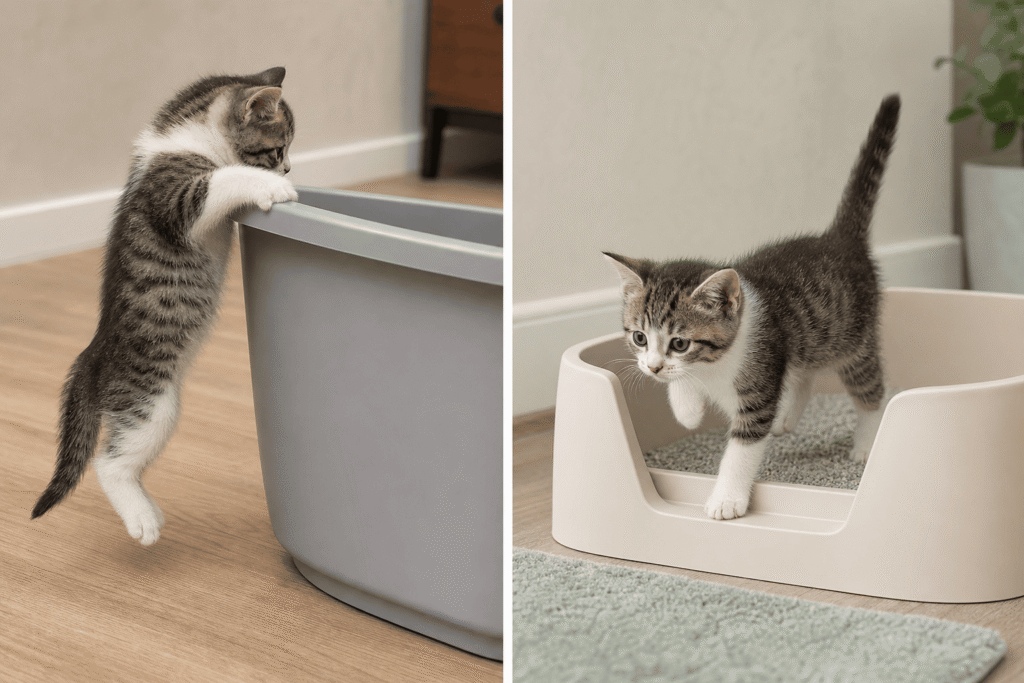
A high-sided litter box can be hard for kittens to use, while a low-entry design makes access much easier.
Many kitten litter-box problems come from a setup that’s hard to access or unfamiliar, though sudden or persistent accidents still deserve a veterinary check.
The entry is too high. AAHA says box edges should be low enough for kittens to get in and out easily. If a kitten has to climb, it may hesitate or go right beside the box.
The box is enclosed. A covered box can feel unfamiliar and harder to leave, which can make a young kitten hesitant.
There isn’t enough room. In a cramped box, a kitten can’t turn around, so it steps in its own mess and tracks it out.
Litter Box Setup as Your Kitten Grows
Early weeks home: keep it as easy as possible
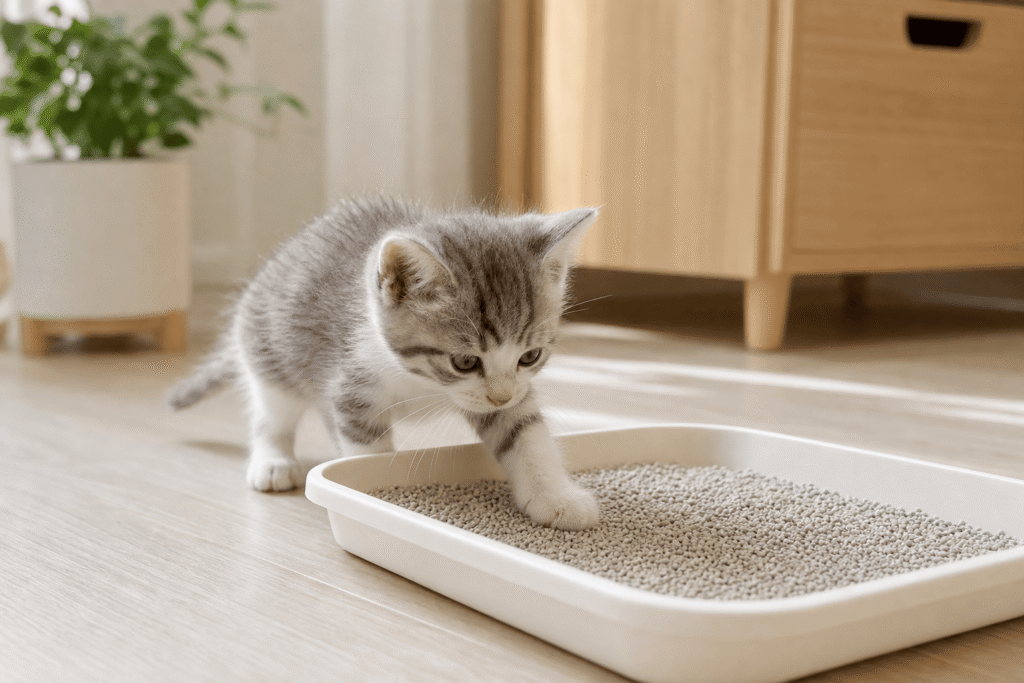
A low-entry litter box helps young kittens learn quickly without struggling to climb in.
Use a shallow box with a front low enough to step over with no effort. An open box is usually the easiest starting point because the entrance is obvious and unobstructed. Put it close to where your kitten spends most of its time, since a young kitten may not make it across the house in time.
For litter, use a plain, unscented litter. AAHA suggests starting with unscented clumping litter, the litter your kitten used before, or both. Some brands set their own age guidance, though. Boxie, for example, publishes age directions for introducing its clay litter. If you’re unsure, ask your vet. Our guide to the best cat litter for kittens compares the options.
As your kitten grows: add more room and higher sides
Coordination improves, and digging and kicking start in earnest. A slightly bigger box with higher back and side walls keeps litter in, as long as the front stays low.
Later kitten months: transition to a full-size box
Once your kitten moves easily in and out of the box, it can try a standard-size box. Don’t swap everything at once. Put the new box next to the old one, use the same litter in both, and let your kitten choose. If you want a covered box long term, start it with the lid off.
If accidents start again, slow down and go back to what was working.
Where to Put a Kitten’s Litter Box
Close to where your kitten spends its day. Distance matters more for kittens than for adult cats.
Away from noise and traffic. Washing machines, busy hallways and food bowls make the box feel less comfortable. A quiet corner works better.
A second box can help in a larger home, because it gives your kitten another easy-to-reach option. With more than one cat, see how many litter boxes per cat you need.
Two Low-Entry Boxes That Work for Kittens
IXARO Ultra-Low Entry Stainless Steel Litter Box
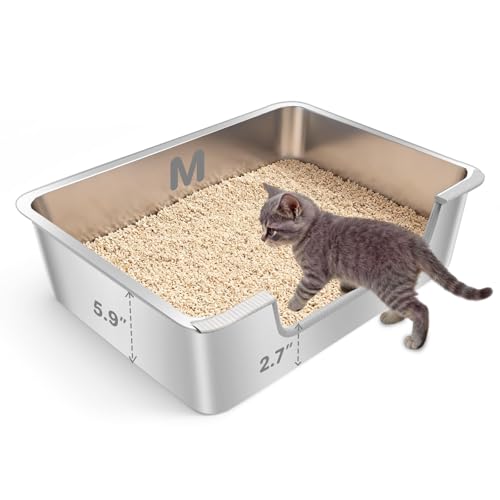
Why It Stands Out: At about 2.7 inches, the front entry is one of the lowest you’ll find. Multiple reviewers with very small or young kittens say it was the only box their kittens could use without difficulty. The open top lets a nervous kitten see around it, and high sides help contain scatter.
Possible Downsides: The low front lets more litter out, so pair it with a litter mat.
Best For: The first weeks home, especially with very small kittens.
Qiuma Stainless Steel Low Entry Litter Box
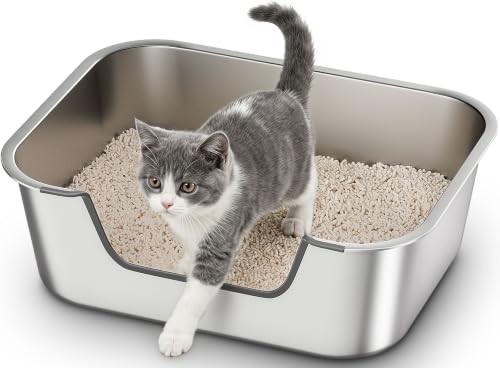
Why It Stands Out: The front entry is about 3.15 inches, with sides that sit higher than the entry, in a compact 17.5 by 13.6 inch pan. Reviewers with foster and very small kittens say the size and low opening work well, and one owner of a heavy-digging kitten says the high sides kept most of the litter in. Reviewers also say litter sticks less than it did in plastic, so cleanup is faster.
Possible Downsides: Very tiny kittens may find the IXARO’s lower front easier at first.
Best For: Growing kittens that have started digging and kicking.
For more options, see our low entry litter box guide.
Common Kitten Litter Box Problems
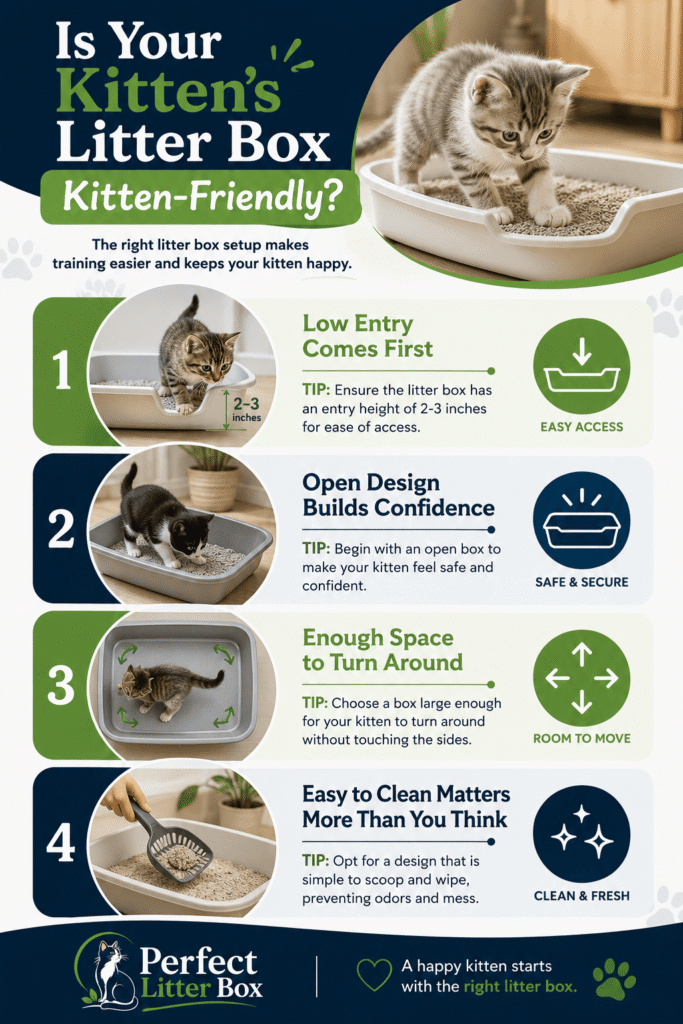
Going just outside the box
Usually access or timing. Lower the entry, move the box closer or add a second box in another spot.
Hesitating or backing away
A cover, a flap or a busy spot can make a kitten hesitant. Try a fully open box in a quiet place.
Stepping in waste or tracking it out
The box is likely too small. Move to a roomier one and put a mat outside. Our litter tracking solutions guide covers mats that help.
Playing in the litter
Kittens play with everything. Higher back and side walls with a low front keep the mess in, and plenty of playtime outside the box helps. If your kitten is lying or sleeping in the box instead, our guide on why a cat lays in the litter box explains what that can mean.
Eating litter
Some kittens taste or chew litter out of curiosity. If your kitten keeps eating litter, talk to your vet about which litter to use rather than switching types on your own.
Suddenly stopping
Something changed: the box, the location, the litter or the household. Go back to the setup that worked and reintroduce changes slowly. If it continues, check with your vet.
Frequently Asked Questions
Do I need a small litter box for my kitten?
Not necessarily. A low entry matters more than a small box. A kitten needs to step in easily and have room to turn around, so a low-entry box that’s a bit bigger is often better than a tiny one.
How high should a kitten’s litter box be?
Many purpose-built low-entry boxes are around 3 inches at the front, but the right height is simply one your kitten can step over comfortably. If your kitten hesitates at the edge, the entry height is one thing to check.
What if my kitten won’t step into the litter box?
Try something shallower. A low tray or a box with a lower front often helps. Keep it in a quiet, easy-to-reach spot.
Should I use a covered litter box for a kitten?
An open box is a simple place to start. If you later want to try a covered box, introduce it gradually and let your kitten show you which setup they prefer.
How many litter boxes does a kitten need?
One can work, and a second can make training easier while your kitten is learning. For more than one cat, aim for one box per cat plus one extra.