Disclaimer: This post may contain affiliate links. As an Amazon Associate, we earn from qualifying purchases.
A litter box for dogs sounds like a simple solution, especially if you’re dealing with bad weather, apartment living, or an older dog that can’t always get outside. The problem is, most setups don’t work the way people expect them to.
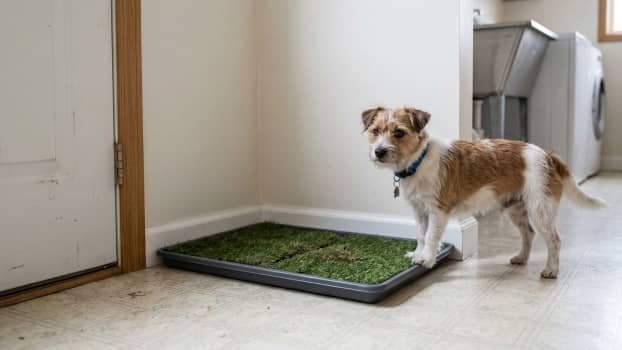
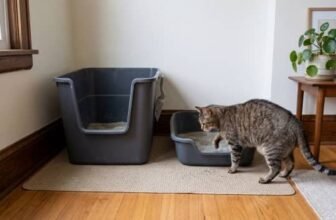
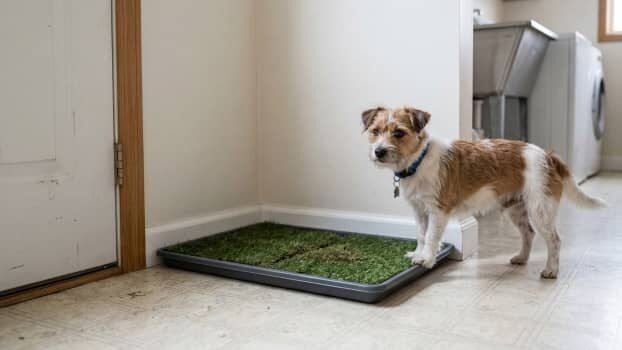
A simple indoor litter box setup for dogs using a grass pad and tray, placed in a corner for easy access and cleanup.
Dogs don’t use litter like cats do. Instead of clumping and burying, you’re dealing with liquid waste, tracking, and cleanup issues that standard litter boxes aren’t built for.
What actually works indoors is a different kind of setup, one designed for drainage, containment, and easy cleaning. This guide breaks down what those systems look like and how to choose one that won’t turn into a daily hassle.
Do Dog Litter Boxes Actually Work?
A litter box for dogs can work indoors, but not in the way most people expect. Instead of using loose litter, the setups that hold up best rely on grass pads, pee pad trays, or drainage systems that are built for easy cleanup.
The Biggest Problems With Indoor Dog Potty Setups
Most indoor setups don’t fail because the idea is wrong. They fail because small details get overlooked. Once you start using one every day, a few issues show up quickly.
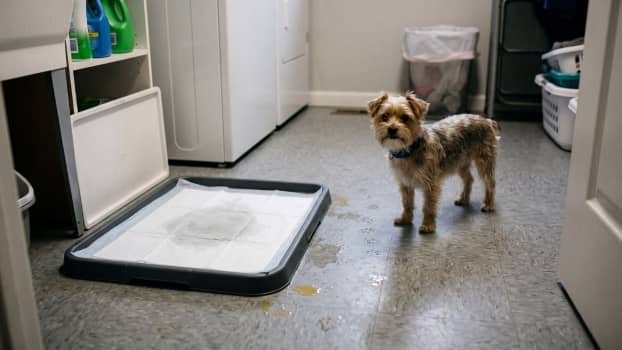
Leaks and tracking around a pee pad tray are one of the most common issues with indoor dog potty setups.
Splash and Leaks Around the Edges
This is one of the first problems that shows up.
If the sides are too low or the surface is not contained well, urine hits the edge and runs underneath the tray. It often goes unnoticed at first. After a few days, the smell builds up and it is hard to figure out where it is coming from.
Setups with higher walls or better containment help prevent this, especially for male dogs.
Odor Builds Up Faster Than Expected
Without proper drainage or absorption, liquid sits in the system instead of being contained.
That is when the smell starts to build, even if the surface looks clean. Grass pads and trays both need consistent cleaning. If that gets skipped, the odor settles in and becomes much harder to remove.
Wet Paws and Tracking
If the surface stays damp, your dog will step in it. From there, it spreads across floors, rugs, and nearby areas.
This tends to happen with flat pads or systems that do not drain well. What starts as a small issue quickly turns into a bigger cleanup problem around the room.
Cleaning Takes More Effort Than Expected
A lot of these products are described as easy to clean, but that depends on the design.
Grates need to be rinsed. Turf needs to be washed thoroughly. Trays need to be emptied and wiped down. If any part of that routine gets skipped, smell builds up quickly.
The setup still works, but it becomes more effort than expected to keep it under control.
What Features Actually Solve These Problems
Once you see where things go wrong, it becomes much easier to choose something that works.
Higher Walls and Better Containment
This keeps everything inside the system and reduces the chance of leaks. It also makes placement easier since you do not have to worry as much about the surrounding area.
Drainage That Keeps the Surface Dry
Systems that move liquid away from the top layer stay cleaner during use. A dry surface helps reduce odor and prevents tracking.
Secure Pads or Stable Surfaces
Pads that shift or bunch up create gaps where liquid can escape. A secure frame or tight fit keeps everything in place and makes the setup more reliable.
Simple Materials That Are Easy to Clean
Smooth surfaces and removable parts make a big difference. The easier it is to clean and dry each piece, the easier it is to keep odor from building up.
How to Choose the Right Setup
The right setup depends less on the product itself and more on your situation. A system that works well in one home can be frustrating in another.
Start with size. Small dogs can use compact trays or enclosed setups without much trouble. Larger dogs need more space to move and position themselves, which usually means wider trays or grass systems.
Next is location. If this is going in a tight indoor space, containment matters more. Higher walls or enclosed sides help prevent mess from spreading. For balconies or open areas, simpler tray systems can work since cleanup is easier.
Cleaning tolerance also plays a role. Some setups need daily rinsing, while others rely on disposable pads. If you want something low effort, pad systems are easier to manage. If you prefer reusable options, grass or grate systems work better but require more hands-on cleaning.
Finally, think about how your dog already behaves. Dogs that are used to going outside often adapt faster to grass-style surfaces. Others may do fine with pads as long as the surface stays consistent.
Cleaning and Maintenance
This is where most setups either work long term or become a problem.
Keeping things clean is less about deep cleaning once in a while and more about staying consistent with small tasks.
Grass Systems
These need regular rinsing to prevent smell from building up. A quick rinse is not always enough. The surface needs to be fully washed and allowed to dry.
Cold or lukewarm water works better at the start. Hot water can set odor into the material, which makes it harder to remove later. After rinsing, letting it dry completely helps prevent lingering smell.
Pee Pad Trays
Pads should be changed before they become fully saturated. Waiting too long is what usually causes leaks and odor.
The tray underneath still needs to be wiped down regularly. Even with pads, small amounts of liquid can collect over time.
Grate or Drainage Systems
These need both parts cleaned. The top surface collects solid waste, while the tray underneath holds liquid.
If either part is skipped, odor builds quickly. Rinsing and wiping both layers keeps the system usable without much buildup.
General Maintenance Tips
Keeping the area around the setup clean makes a big difference. A simple mat underneath can catch small misses and make cleanup easier.
If odor starts to build, it usually means the cleaning routine needs to be more frequent rather than more intense.
Related Solutions
If odor becomes an issue, it helps to look at the surrounding setup as well. Placement and airflow both affect how smells build up indoors.
You can also improve results by applying some of the same ideas used for cat setups, especially when it comes to odor control and placement.
Examples of Setups That Work Well
Simple Pad-Based Setups
These are the most straightforward option and usually the easiest place to start.
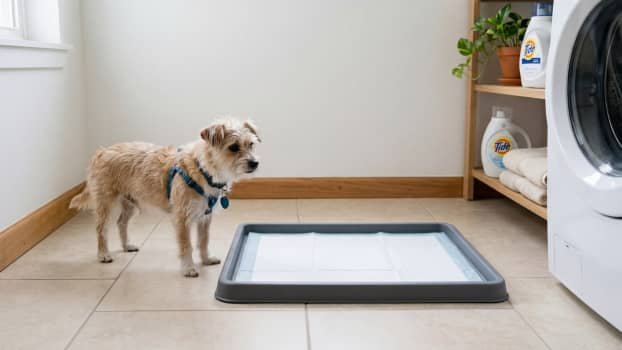
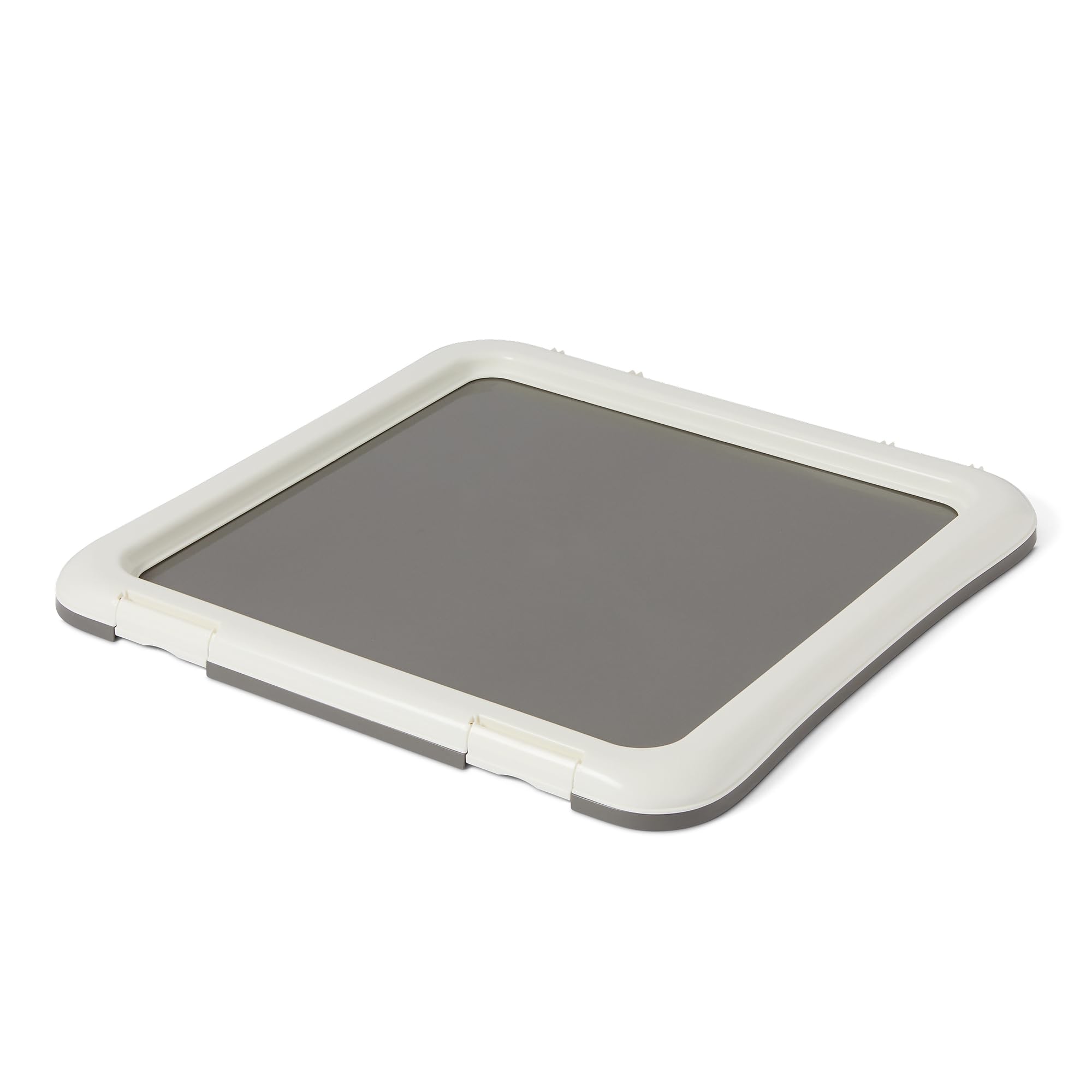
A simple pee pad holder tray keeps the pad in place and creates a defined indoor potty area.
A basic version is a flat tray that holds a disposable pad in place using clips or latches. A good example is a standard plastic holder like the Amazon Basics training pad tray, which uses a recessed base and locking edges to keep the pad from sliding around.
That detail matters more than it seems. Loose pads tend to bunch up, shift, or get pulled apart, especially with puppies. A holder like this keeps everything flat and contained so the setup stays usable throughout the day.
What Works Well
This type of setup works best when you want something simple and low effort.
You replace the pad as needed, and cleanup is usually limited to wiping the tray. The non-slip base also helps keep it from moving around on hard floors, which makes it more reliable in everyday use.
It can also help prevent puppies from tearing up pads, since the edges are secured instead of left loose.
Things to Keep in Mind
Even with a good design, there are a few limits.
The edges are still low, so if a dog misses slightly or aims toward the side, liquid can end up on the tray itself or just outside it. Some users also find that the latch system takes a bit of effort to open and close, especially on larger sizes.
This type of setup works best when your dog already uses pads consistently and stays centered.
A Step Up: Pad Holders With Walls
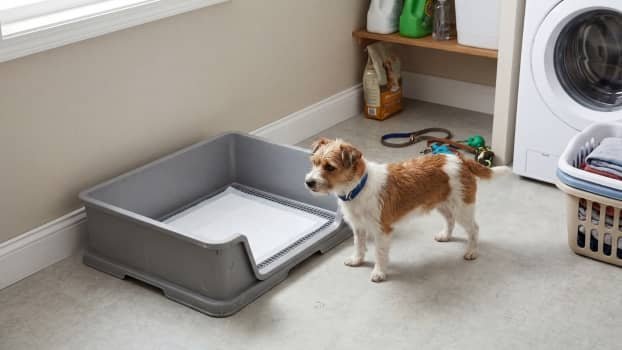
A high-wall dog pee pad holder helps contain spray and prevents leaks around the edges.
If you have already dealt with leaks or mess around the edges, a higher-sided setup makes a noticeable difference.
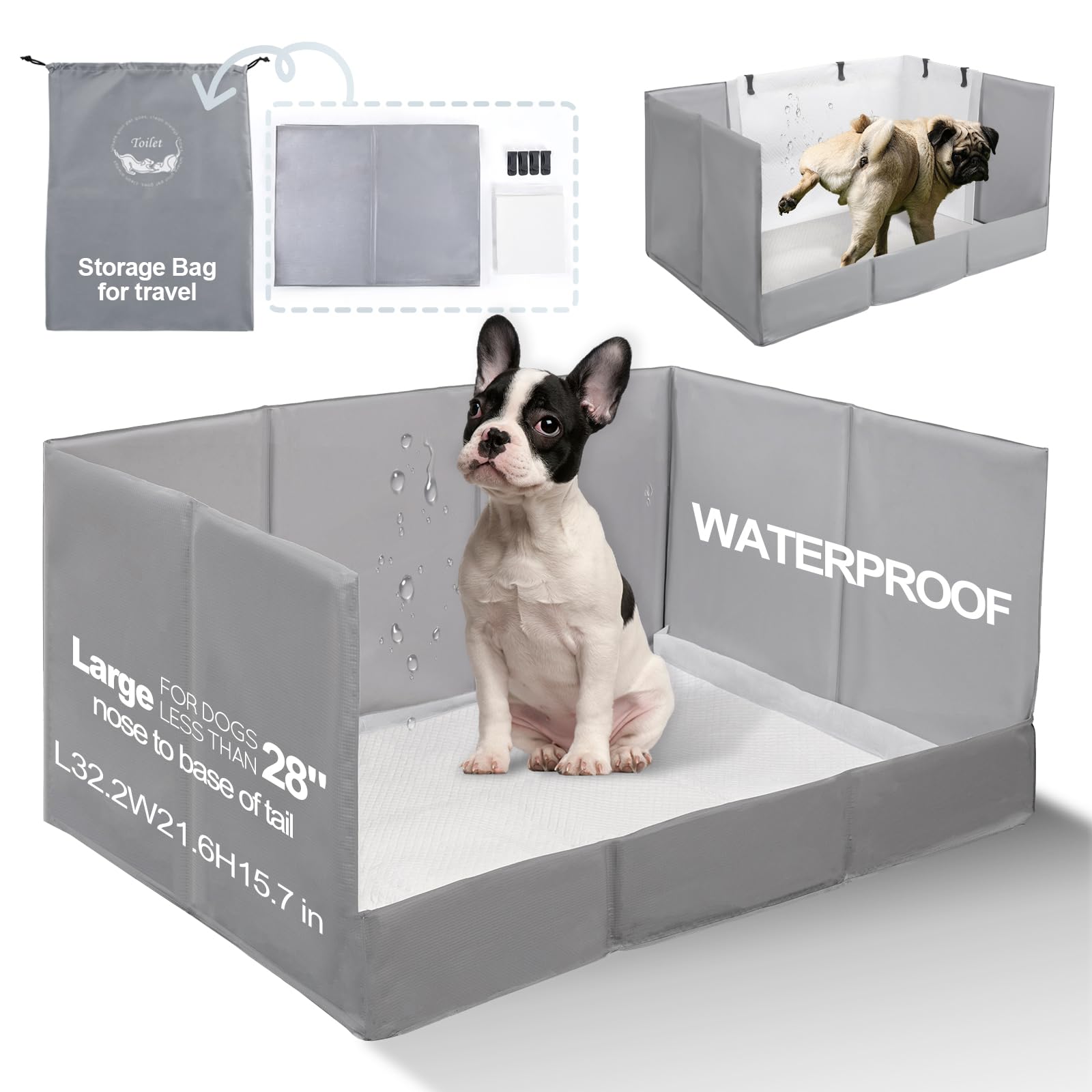
This type of design builds on a basic tray but adds three raised walls to contain spray and keep everything in one place. A good example is a foldable high-wall tray like this HQ4US setup, which uses a seamless one-piece liner to prevent liquid from leaking through gaps.
That construction matters in daily use. With no seams or joints, there are fewer places for liquid to escape, and cleanup is much more straightforward.
What Works Well
The higher walls help contain spray and small misses, which is one of the biggest problems with flat trays. This is especially useful for male dogs that lift their leg.
The seamless interior also makes cleaning easier. Since there are no gaps, you can rinse or wipe it down without worrying about liquid getting trapped underneath.
Another advantage is flexibility. These setups often fold flat and do not require assembly, which makes them easier to move or store when needed.
Things to Keep in Mind
The higher sides can take some getting used to. Some dogs hesitate at first or need a bit of time before they are comfortable stepping inside.
They also take up more space than a flat tray, which can matter in smaller rooms.
Like other pad-based systems, they still rely on disposable pads. If pads are not changed often enough, odor can build up inside the enclosure.
Grass Pad Systems
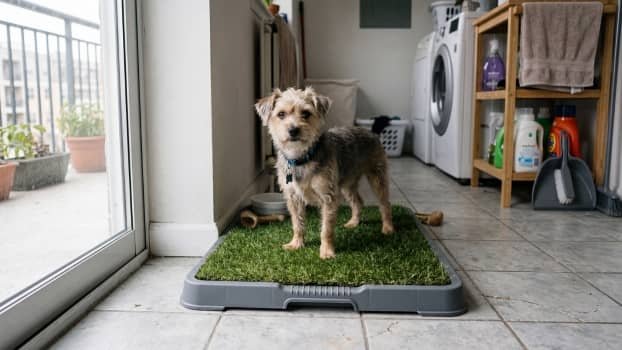
A grass pad system allows liquid to drain into a tray below while giving dogs a more natural surface to use indoors.
Grass pad systems are one of the most common alternatives when people look for a litter box for dogs.
Instead of using pads alone, these setups use a layered design that separates the surface your dog stands on from the tray underneath. A good example is a system like this LOOBANI grass pad setup , which combines artificial grass, absorbent layers, and a collection tray.
That layered approach is what makes the difference. Liquid drains through the grass instead of sitting on top, which helps keep the surface more usable during the day.

What Works Well
The biggest advantage is how natural it feels for dogs. If a dog is already used to going outside, the grass surface makes the transition easier.
The layered system also helps reduce tracking compared to flat pads. Since liquid moves downward, the surface stays more usable between cleanings.
Another practical benefit is having multiple layers or replacement pieces. Some setups include extra grass pads or washable layers, which makes it easier to rotate parts while cleaning.
Things to Keep in Mind
These systems still need regular cleaning to stay usable.
Even with drainage, odor can build up if the grass and tray are not cleaned often enough. Rinsing helps, but it needs to be done thoroughly and allowed to dry.
Cleaning can also take more effort than expected, especially in smaller spaces. Washing the grass indoors can be messy, and some people end up using a tub or outdoor hose.
Durability is another factor. Over time, the grass layer can wear down or start to come apart, especially with frequent use or chewing.
Which Option Works Best?
If you’re trying to find a litter box for dogs that works indoors, a basic pad holder is usually enough for simple, low-effort setups. It works best for small dogs that already use pads and don’t miss often.
If you’ve had issues with leaks or mess around the edges, a high-wall setup is a better choice. The added containment makes a noticeable difference in everyday use.
Grass systems tend to work best for dogs that are already used to going outside. They feel more natural, but they do require more regular cleaning to keep odor under control.
Where to Place an Indoor Dog Potty
Placement affects how well any setup works.
Choose a spot that is easy for your dog to reach but slightly away from food and sleeping areas. Corners or low-traffic areas tend to work best.
If possible, keep the location consistent. Moving the setup too often can confuse dogs and lead to missed spots.
FAQ
Can dogs really use a litter box indoors?
Yes, but it usually doesn’t work like a traditional litter box. Most setups use pads, grass, or drainage systems designed to handle liquid waste and make cleanup manageable.
What is the best indoor potty option for dogs?
It depends on your situation. Pad holders are the simplest, high-wall setups help with containment, and grass systems work well for dogs that are used to going outside.
Do grass pad systems smell?
They can if they are not cleaned regularly. Even with drainage, odor builds up if the grass and tray are left too long between cleanings.
How often should you clean a dog potty setup?
Pads should be changed before they become fully saturated. Grass systems and trays should be rinsed and cleaned regularly to prevent odor from building up.
Are dog litter boxes only for small dogs?
Most indoor setups are easier to use with small to medium dogs, but larger options do exist. The key is choosing a size that gives your dog enough space to move comfortably.
Final Thoughts
A litter box for dogs can work well indoors, but only if you choose a setup that matches how dogs actually use the bathroom.
Simple pad holders are easy to manage and work well in smaller spaces. High-wall versions help control mess when placement is tight or leaks have been an issue. Grass systems feel more natural, but they require more regular cleaning to stay usable.
The key is not the product itself, but how well it handles cleanup, containment, and daily use. Once those are in place, indoor setups become much easier to manage.