
Disclaimer: This post may contain affiliate links. As an Amazon Associate, we earn from qualifying purchases.
Last updated on October 2, 2026
Litter box liners promise the easiest cleanup there is: lift, tie, toss. Whether they actually work depends on your cat, your box and the liner you pick.
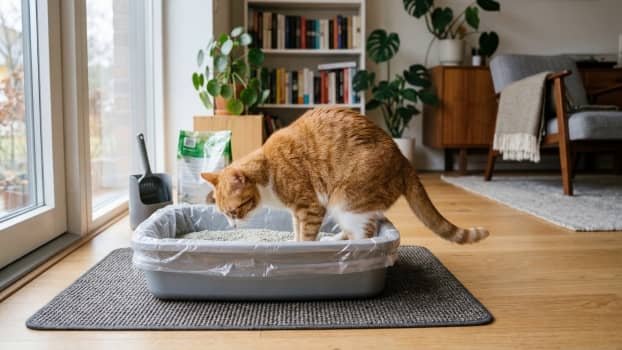
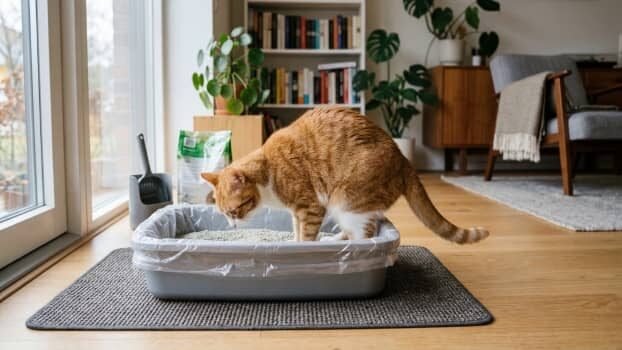
Litter box liners can make cleanup easier, but they do not always work the way you expect.
Even with regular scooping, the box itself can start to smell, and scrubbing it out gets old fast. Liners skip the scrubbing, but once you actually try them, the results aren’t always that simple.
This guide breaks down how litter box liners actually work, where they help, where they don’t, and which liner fits which problem.
Quick Picks
Best for Tearing: Jonny Cat Heavy Duty Liners
Best for Slipping: Alfapet Elastic Liners
Best Exact Fit: Pettiny XL Liners
Best for Litter-Robot: ANWA Waste Drawer Liners
Best Compostable: Jumbo Compostable Liners
What Litter Box Liners Are
Litter box liners are plastic or flexible bags that sit inside the box underneath the litter. They’re shaped to fit standard boxes, with either a drawstring or extra material around the edges to hold them in place.
When it’s time to change the box, you lift the liner out instead of scrubbing the entire tray. That makes full cleanouts faster in the setups where they hold up.
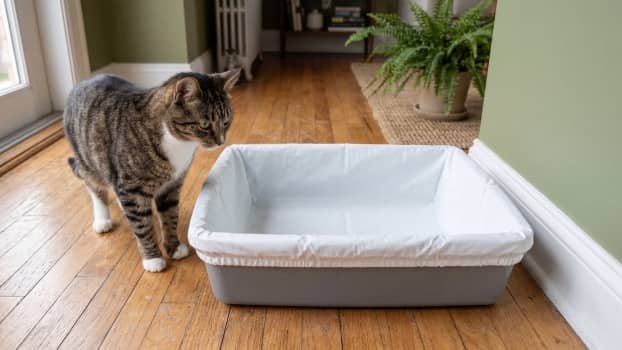
A litter box liner sits underneath the litter and lines the entire box for easier cleanup.
Why People Try Litter Box Liners
Dumping old litter, scrubbing the box and drying it out isn’t something anyone looks forward to. Liners promise a shortcut: lift, tie, toss, done.
They also seem like a fix for lingering smells, since once plastic starts holding onto odor, even a full wash doesn’t always help. And they protect the box from wear when you scrape clumps off the bottom.
The Real Problems With Litter Box Liners
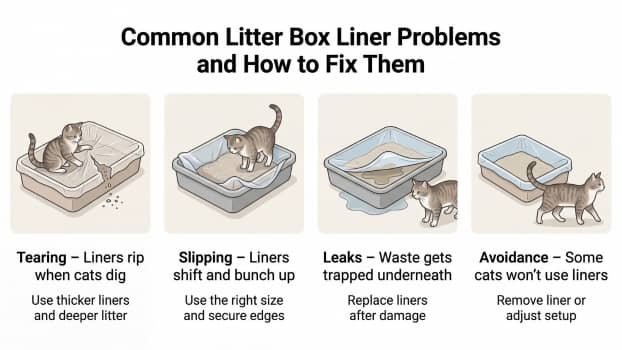
The most common litter box liner problems and simple ways to fix them.
The biggest problem is tearing. Cats that dig or scratch hit the liner with their claws, and thin liners don’t last long once damaged.
Shifting is the second most common issue. After a few days, liners don’t always stay tight against the sides, so they bunch up or sink into the box. When that happens, waste can end up underneath the liner, which defeats the point.
Some cats also just don’t like the feel or sound of a liner and will avoid the box. None of this shows up on the packaging.
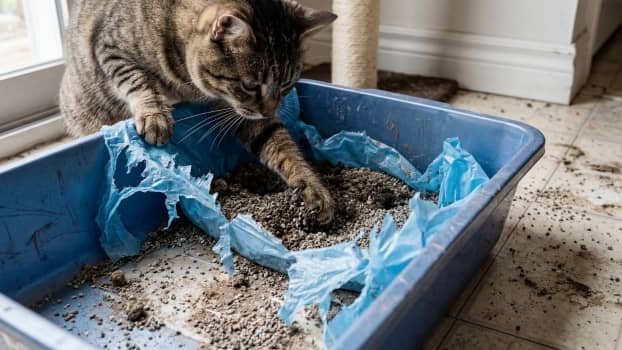
Thin liners can tear quickly, leaving litter and waste trapped underneath.
When Litter Box Liners Actually Work
Liners do well with cats that aren’t constantly digging at the bottom of the box. A more relaxed cat tends to leave the liner intact.
They also hold up better with lighter litters like pellets, which don’t press down as hard. If you use a pellet or low tracking litter, our guide to the best low tracking cat litter covers which types cause the least disruption inside the box.
Short-term use is another good fit: travel, a new cat settling in, or a quick low-effort setup for a few days. The common thread is stability. When the liner stays in place and undamaged, it does exactly what it’s supposed to do.
Types of Litter Box Liners
The differences mostly come down to thickness, how they stay in place, and how easy they are to remove.
Drawstring Liners
The most common type. They fit inside the box like a bag, and you pull the drawstring closed to lift everything out at once. They’re convenient, but thin material still tears easily.
Heavy-Duty Liners
Thicker and better at handling scratching. Not completely tear-proof, but they last longer and are less likely to leak.
Sifting Liners
Sifting liners use perforated layers stacked inside the box. When it’s time to clean, lift the top liner slowly. Clean litter falls through the openings while clumps stay behind.
What happens next depends on the system. Some liners are discarded with the waste, while tray-style systems may tell you to rotate the sifted layer to the bottom of the stack. Follow the directions for your particular liners.
They work best when the litter forms firm clumps that won’t break apart while sifting.
Extra-Large or High-Sided Liners
Made for bigger boxes or higher sides. A better fit makes a noticeable difference in keeping the liner from slipping down.
Biodegradable or Compostable Liners
Made to break down faster than standard plastic. They’re a better option if reducing waste matters, though some are thinner and shorter-lived.
Getting the Most Life Out of a Liner
Most liner problems come down to setup. Start with the right size: too small pulls tight and tears, while too large bunches up and slides around. Press it firmly into the corners before adding litter.
Litter depth matters more than it seems. A slightly deeper layer than a thin covering creates a buffer between claws and the liner. Our guide on how often to change cat litter helps set expectations for the full cleaning cycle.
When scooping, avoid dragging the scoop along the bottom, which is one of the fastest ways to damage a liner. Keeping your cat’s nails trimmed helps too. If tearing keeps happening, doubling up two liners means a damaged top layer doesn’t become an immediate leak.
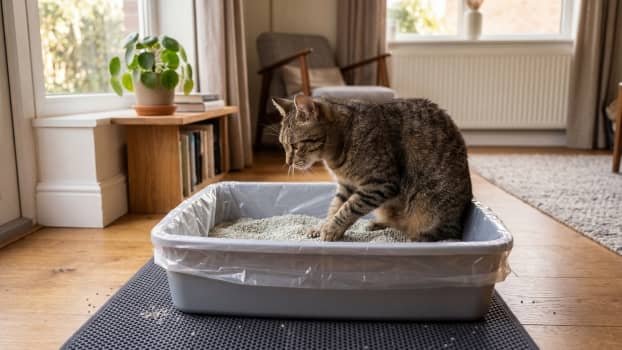
A deeper layer of litter helps protect the liner from claws and reduces tearing.
Litter Box Liner Picks at a Glance
One good option for each common liner problem.
For tearing: Jonny Cat Heavy Duty
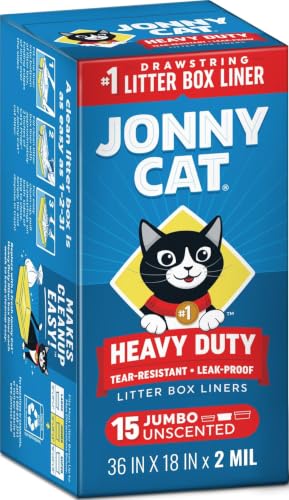
Jonny Cat Heavy Duty liners have repeatedly confirmed tear and claw resistance. One reviewer says they fit large, round and oddly shaped boxes that other brands didn’t.
For slipping: Alfapet Elastic Liners

Alfapet liners use an elastic edge that grips the rim instead of a drawstring. One reviewer found they stayed put better during active clawing, and one longtime reviewer reports using them for more than 10 years without a liner failure.
For an exact fit: Pettiny XL
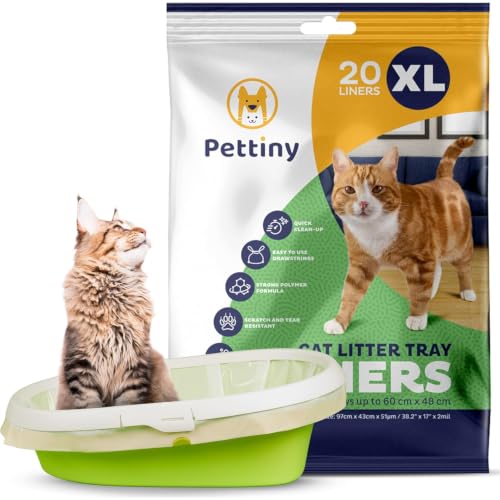
Pettiny liners come in three sizes matched to specific box dimensions, and reviewers across all three sizes report strong durability.
For Litter-Robot: ANWA Liners
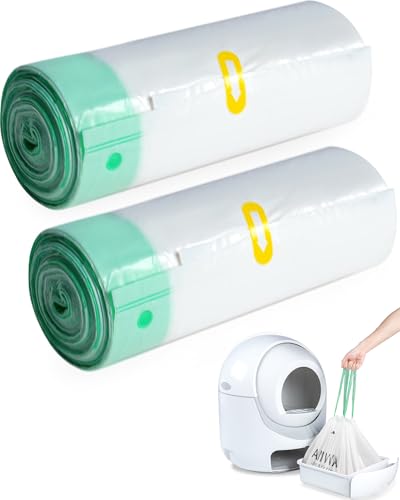
ANWA liners are made for the waste drawer, and multiple reviewers confirm the fit on Litter-Robot 3 and 4.
Compostable: Jumbo Compostable Liners

These jumbo compostable liners are OK Compost Home certified. The manufacturer specifically says compost containing cat waste should be used only for decorative plants, not food-growing areas. Check local guidance before composting pet waste.
When You Might Skip Litter Box Liners
If a cat constantly digs or scratches at the bottom, even thick liners can end up torn within a few days, turning cleanup into more work instead of less. Cats that dig aggressively are sometimes unhappy with the litter itself, and our guide on why cats avoid the litter box can help rule out underlying issues.
Cats sensitive to texture or sound may avoid the box rather than tolerate a liner. And if odor is the main issue, liners don’t solve much on their own: if anything slips underneath, smell builds up just as fast.
In those cases, a smoother litter box surface, a better cleaning routine or a different box design usually works better. If odor is the main frustration, see our guide to controlling litter box odor long-term.
Frequently Asked Questions About Litter Box Liners
Do cat litter box liners actually work?
They can work well in the right setup, especially with cats that don’t dig aggressively. They make full cleanouts faster, but they can tear or slip if the liner doesn’t hold up.
Do cats like litter box liners?
Some don’t mind them at all, while others avoid them completely. Cats sensitive to texture or sound may not like the feel of a liner underfoot.
How often should you change a litter box liner?
Whenever you do a full litter change, following the directions on your litter bag. Replace it sooner if it tears or starts to smell.
How do you keep a litter box liner from slipping or folding over?
Start with the right size, since a liner that’s too big bunches up and one that’s too small pulls loose. Press it into the corners before adding litter.
An elastic-edged liner can stay in place better than a drawstring for some boxes. One Alfapet reviewer specifically found the elastic design stayed put better during active clawing, and some liner packs include rubber bands to hold the edge in place.
Can you use liners in a corner or self-cleaning litter box?
Corner boxes are tricky because most liners are rectangular, so check the dimensions carefully. For a self-cleaning box, follow the manufacturer’s instructions rather than adding a standard litter box liner. Many models use bags or liners only in the waste drawer or bin. Litter-Robot, for example, uses waste-drawer liners, and the ANWA bags are made for that job.
Do litter box liners help with dust?
Not much. Most litter box dust comes from the litter itself. A liner can make a full litter change neater, but it won’t turn a dusty litter into a low-dust one.
Can you use a trash bag instead of a litter box liner?
You can, but regular trash bags are usually thinner, more likely to tear, and don’t fit the box as well, which leads to slipping or bunching.