Disclaimer: This post may contain affiliate links. As an Amazon Associate, we earn from qualifying purchases.
Last updated on October 5, 2026
Non-clumping cat litter is any litter that doesn’t form a scoopable clump when your cat urinates. That tells you what it doesn’t do, not how it works, and the difference matters. Below you’ll see how each type handles urine, and what that changes about keeping the box fresh.
“Non-clumping” covers several very different litters. Crystal and diatomaceous earth absorb urine, plain clay soaks it up without clumping, paper pellets hold it inside the pellet, pine breaks down into sawdust, and Breeze passes it through to a pad below. The upkeep changes with the material.
What Non-Clumping Means for Your Routine
With any litter, you scoop out solid waste. What changes is the urine. Instead of lifting out a neat urine clump, the material may absorb the urine, change form as it gets wet, or let the liquid pass through to a pad. What you remove from the box depends on the type.
That’s why the manufacturer’s directions matter. The upkeep for one non-clumping litter may not fit another.
How Each Type Handles Urine
Silica Crystal
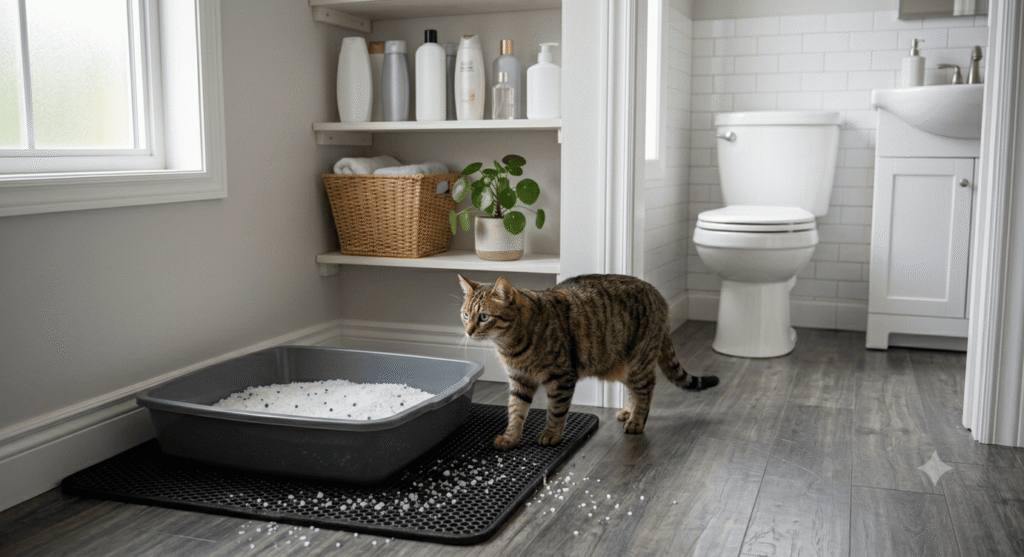
Crystal litter is made of silica beads that soak up urine. PetSafe says its crystals absorb moisture and odor and start dehydrating solid waste. Examples include PetSafe ScoopFree crystal.
In its ScoopFree Crystal guidance, PetSafe says to keep the box away from high-humidity areas such as bathrooms, showers and basements.
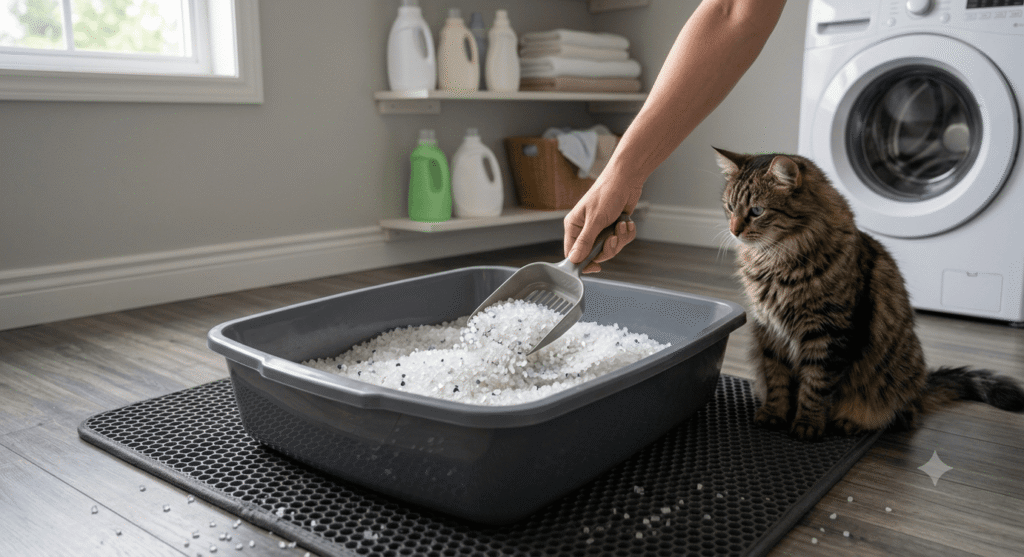
For cats that repeatedly urinate in one spot, PetSafe also suggests occasionally stirring the crystals to distribute saturated litter.
Some crystal litters, such as PrettyLitter, also change color. PrettyLitter says the color responds to urine pH. It’s a color signal, not a diagnosis, so take any concern to your vet. In a shared box, a color change also can’t tell you which cat it came from.
Diatomaceous Earth
This one is newer to most owners. PetSafe’s Premium Natural litter is made of pebbles of diatomaceous earth, a mineral formed from fossilized algae. PetSafe says it contains no added chemicals, additives, fragrances or dyes.
PetSafe says the pebbles absorb liquids and dehydrate waste, and that the litter works in both regular litter pans and ScoopFree self-cleaning boxes.
Plain Non-Clumping Clay
This is the original cat litter. Traditional non-clumping clay absorbs urine into the surrounding granules without forming a scoopable clump. Follow the manufacturer’s directions for upkeep and replacement.
Pellets: Paper, Pine and Breeze
Pellets come in several non-clumping materials, and each works differently. Paper pellets such as ökocat hold urine inside the pellet, so you remove the soaked ones. Pine pellets such as Feline Pine break down into sawdust. Breeze pellets let urine pass through to a pad in a drawer underneath.
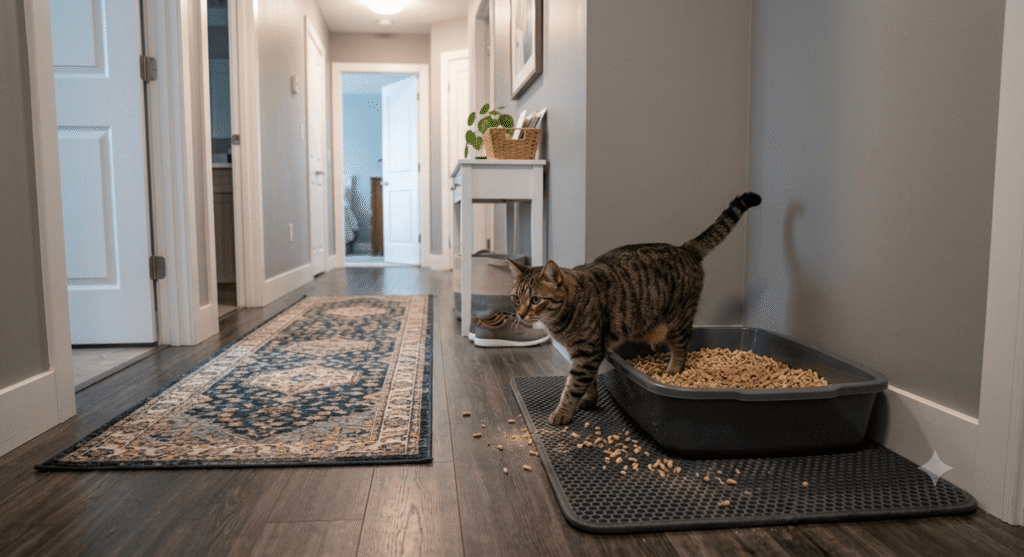
Our guide to pellet cat litter explains each routine in full.
Choosing Between Clumping and Non-Clumping
If you’re still deciding, our clumping vs non-clumping cat litter guide compares the two side by side. Once you’ve chosen non-clumping, our best non-clumping cat litter guide covers the picks for each type.
Frequently Asked Questions
Can you scoop non-clumping litter?
You can remove solid waste, but what you do with urine depends on the type. With paper pellets, ökocat says to remove the expanded, urine-soaked pellets. Pine has its own sawdust routine, Breeze sends urine through to a pad, and absorbent crystal and mineral litters have their own upkeep directions.
How often should you change non-clumping litter?
There’s no single answer, because the materials hold up differently. Follow the manufacturer’s directions for your litter.
Is non-clumping litter better for kittens?
AAHA suggests starting kittens with unscented clumping litter, the litter they used before, or both. If you’re choosing a different litter type, that guidance is worth considering rather than assuming non-clumping is automatically the better kitten option.
Can you use non-clumping litter in an automatic litter box?
It depends on the machine. PetSafe’s ScoopFree Crystal system is designed for non-clumping crystal, and PetSafe also lists Premium Natural for ScoopFree use. Other automatic boxes have their own litter requirements, so check your model’s manual before switching. See our best cat litter for automatic litter boxes guide.
Can you flush non-clumping litter?
Don’t assume a litter is flushable. Clay-based litter shouldn’t be flushed. For non-clay formulas, follow the disposal directions on the package and local wastewater rules.