Disclaimer: This post may contain affiliate links. As an Amazon Associate, we earn from qualifying purchases.
Can two cats share a litter box? Yes. In some homes, it works without any problems at all.
But it’s also one of those things that can quietly go wrong. Everything seems fine until one cat starts avoiding the box, or you notice smells building up faster than expected.
Most advice jumps straight to “you need one box per cat, plus one extra.” That’s helpful, but it doesn’t answer what people are actually dealing with. Sometimes there isn’t space for multiple boxes, or the cats are already sharing, and you’re trying to figure out if that’s okay.
What matters isn’t just the number of boxes. It’s how the cats use them, how clean they stay, and whether either cat feels uncomfortable using the same space.
This guide walks through when sharing actually works, when it starts to break down, and how to set things up so you don’t run into problems later.
Quick Answer
Two cats can share a litter box, but it only works if the setup holds up day to day.
If the box stays clean, the cats are comfortable around each other, and neither one feels blocked from using it, sharing can be fine.
The problem is how easy it is for that balance to slip. The box gets a little too dirty, one cat starts hovering nearby, or the space feels too tight, and suddenly one of them starts avoiding it.
That’s why having more than one box is usually recommended. It gives each cat another option instead of forcing them to deal with a situation that isn’t working.
Why This Happens
A litter box isn’t just a bathroom. It’s part of how cats manage space and feel comfortable in their environment.
When two cats use the same box, they’re constantly stepping into each other’s scent. Some cats are completely fine with that, especially if they’re closely bonded. Others are more sensitive, and that shared space starts to feel less predictable.
Access matters just as much. If one cat has to think twice before walking up to the box, that’s a problem. It doesn’t have to be obvious either. Sometimes it’s just the other cat sitting nearby, watching, or passing through at the wrong moment.
Cleanliness is the other big factor. One cat can tolerate a box that’s a bit used. Two cats fill it up fast. There’s a point where it stops feeling usable, and once that happens, one of them will look for another option.
That’s why sharing can seem fine at first. Then something small changes, and the whole setup starts to break down.
When It Actually Works

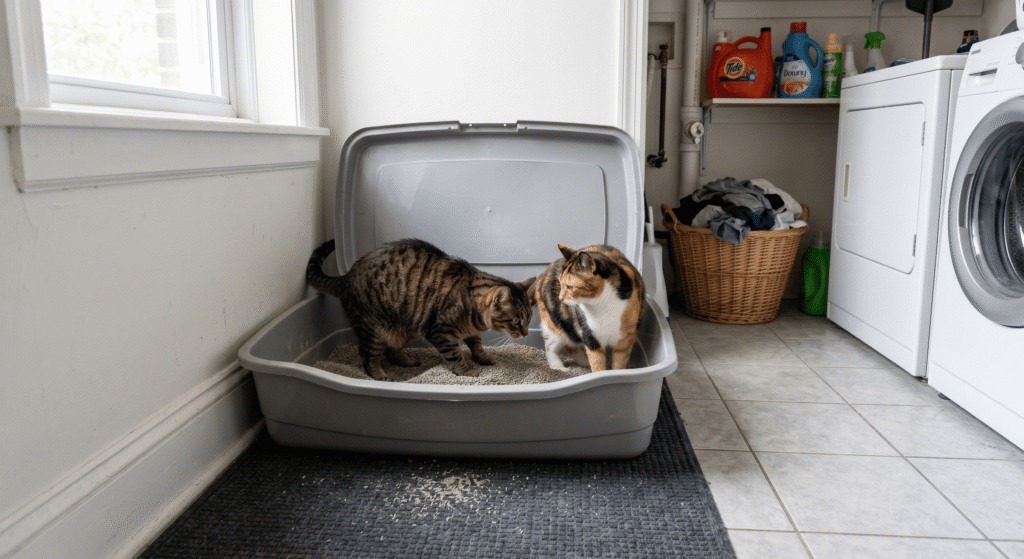
Two cats comfortably sharing a litter box in a laundry room, showing how a larger setup can sometimes work without issues.
There are setups where two cats share a litter box without any issues.
The most common case is when the cats already get along well. Cats that grew up together or spend a lot of time near each other tend to be more relaxed about sharing space, including the litter box.
A calm environment helps too. If there’s no tension, no chasing, and no competition over space, the box doesn’t become a point of stress.
The physical setup makes a big difference here. A larger, open litter box gives both cats enough room to use it without feeling crowded. If the box is easy to get in and out of, and nothing blocks the path, cats are more likely to keep using it.
This is where the type of litter box starts to matter. A standard small box fills up quickly with two cats. An extra large box, or even a deeper stainless steel option, gives you more room to work with and doesn’t get overwhelmed as fast.
Cleaning frequency is usually what keeps these setups working. When the box is scooped often enough, it never reaches the point where one cat decides it’s too dirty.
You’ll usually notice that when sharing works, it feels uneventful. Both cats use the box, there are no accidents, and nothing really stands out.
When It Starts to Fail

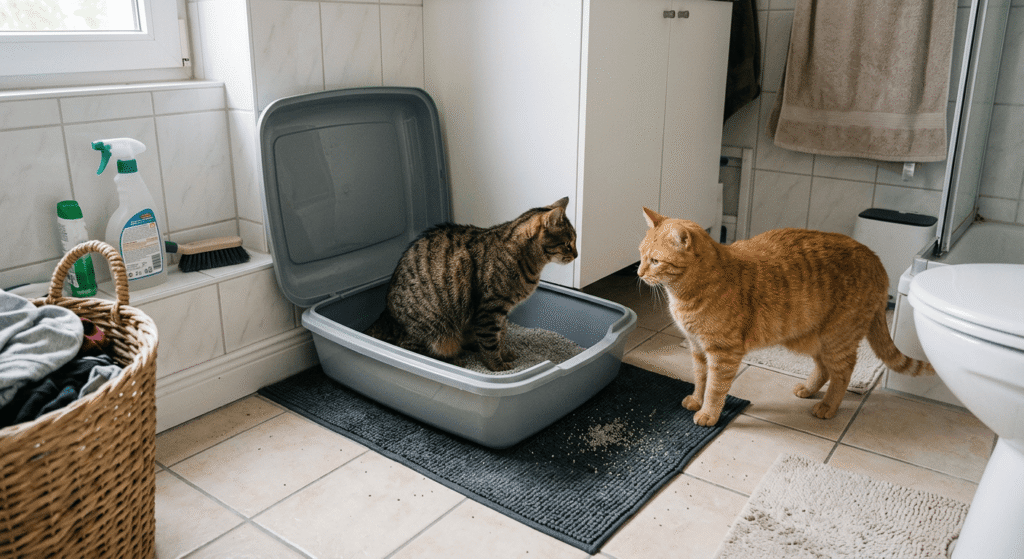
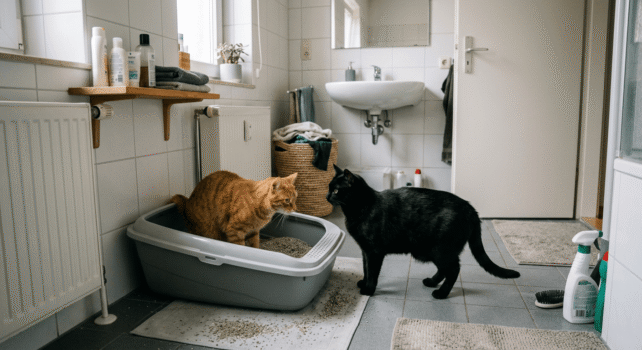
One cat uses the litter box while another waits nearby, showing how sharing can create tension even in a typical home setup.
Sharing usually doesn’t fall apart all at once. It starts with small changes that are easy to miss.
One of the first signs is hesitation. A cat walks toward the box, then pauses, or waits until the other cat leaves the area. Sometimes they start going at very specific times just to avoid each other.
In other cases, one cat starts spending more time near the litter box. Not doing anything obvious, just being there. That alone can be enough to make the other cat uncomfortable using it.
The setup itself can make this worse. If the box is tucked into a corner, inside furniture, or covered, it creates a situation where one cat can feel trapped. Even if nothing has happened yet, that feeling is enough to push them away from using it.
Cleanliness starts to show up here too. With two cats, the box reaches its limit faster than expected. It might still look fine, but for one of the cats, it’s already crossed the line.
This is usually when problems show up outside the box. Not because the cat is being difficult, but because the setup stopped working for them.
The Small Space Reality and How to Make One Box Work
Sometimes there’s only room for one litter box. That’s just the reality. In that case, the goal isn’t to follow the ideal setup. It’s to make that one box work as well as possible.
The biggest mistake here is trying to make a standard litter box handle two cats. That’s usually where things start to break down. It fills too fast, smells build up quicker, and one of the cats eventually starts avoiding it.
The fix is not complicated, but it does require a few upgrades.
Start with a Larger Open Litter Box
If two cats are going to share one box, size matters more than anything else.
A basic upgrade is something like the Pureness Giant High Sides litter pan . It’s noticeably bigger than a standard box and has higher sides, which helps keep litter from getting kicked out.
That extra space gives both cats room to move without stepping directly into each other’s mess. It also slows down how quickly the box gets overwhelmed.
This type of box works well as a starting point. It’s simple, open, and easy for both cats to use without feeling trapped.
Go Bigger If You Have the Space
If you can fit something larger, it makes a big difference.
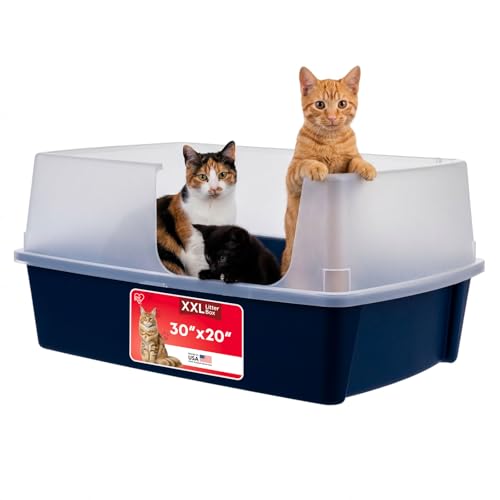
The IRIS USA XX Large litter box is a good example of what that looks like. It’s significantly longer and deeper than most standard boxes, which gives both cats more usable space.
In practical terms, this kind of size can feel closer to having two smaller boxes combined into one area. That extra room reduces crowding and gives each cat more freedom to move around.
The higher walls also help contain mess, which becomes more noticeable when two cats are using the same box.
Upgrade to Stainless Steel for Odor Control
Size helps with space, but it doesn’t fully solve the odor problem.
When two cats share one box, plastic starts to struggle over time. It holds onto smell, especially with heavy use, and that can make the box less appealing even after cleaning.
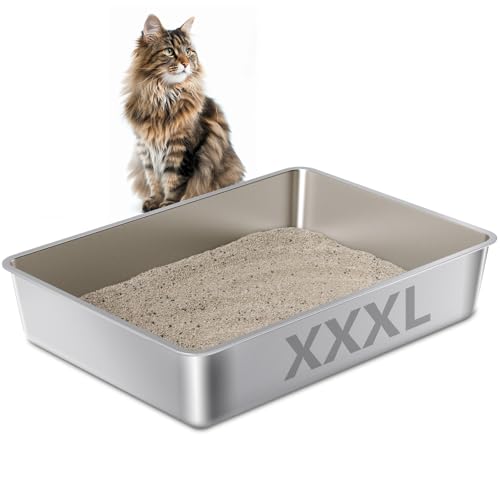
That’s where something like an XXXL stainless steel litter box comes in.
The surface is smoother and doesn’t absorb odor the same way plastic does. It’s also easier to clean completely, which matters when the box is being used multiple times a day.
This kind of upgrade won’t replace the need for regular scooping, but it does make the whole setup easier to manage and keeps the box usable for longer.
Use a Litter That Can Keep Up
When two cats share one litter box, the litter starts doing a lot more work than usual.
This is where weaker litter setups fall apart. Clumps break, waste spreads through the box, and the smell builds up faster than expected. Even if you’re scooping regularly, the box never quite feels clean.
A stronger clumping litter makes a noticeable difference here. It keeps waste contained, makes scooping easier, and helps the box stay usable between cleanings.
Dr. Elsey’s Ultra Unscented Clumping Litter
This is a solid choice if you want something reliable that handles heavy use without much fuss.
It’s made from bentonite clay and forms very firm clumps that don’t fall apart when scooping . That matters more than anything in a shared setup, because it means you’re actually removing the waste instead of leaving pieces behind.
It’s also low dust and unscented, which works well for cats that are sensitive to strong smells. Instead of covering odor with fragrance, it focuses on controlling it through how the litter performs.
This kind of litter keeps the box more consistent day to day, which makes it easier for both cats to keep using the same space.
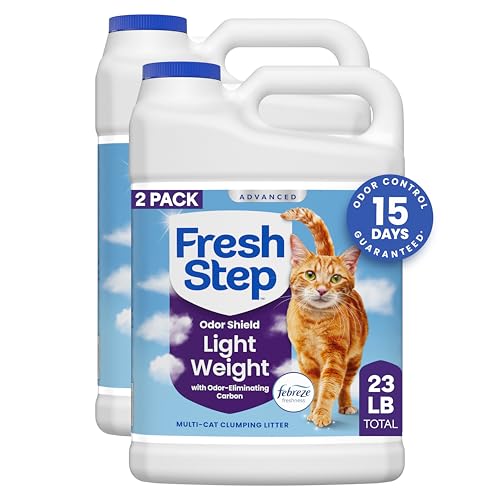
Fresh Step Advanced Multi-Cat Litter
If odor is the bigger issue, this type of litter leans more in that direction.
Fresh Step’s multi-cat formulas are designed with added odor control, including ammonia-blocking technology and activated carbon . That helps manage smell between cleanings, especially in smaller spaces.
It still forms solid clumps for scooping, but the main difference is how it handles odor buildup over time. The added freshness and scent can help keep the area from smelling like a litter box too quickly.
This kind of option works better if the box is in a living space where smell becomes noticeable faster.
A shared litter box setup puts more pressure on everything. The box, the litter, and how often it’s cleaned all have to work together.
When the litter can actually keep up, it becomes much easier to manage the rest.
Setup Changes That Make Sharing Easier
Even with the right litter box and litter, small setup details can make or break a shared situation.
Sometimes the issue isn’t the box itself. It’s where it is, how easy it is to use, or how the cats move around it.
A few simple changes can make a noticeable difference.
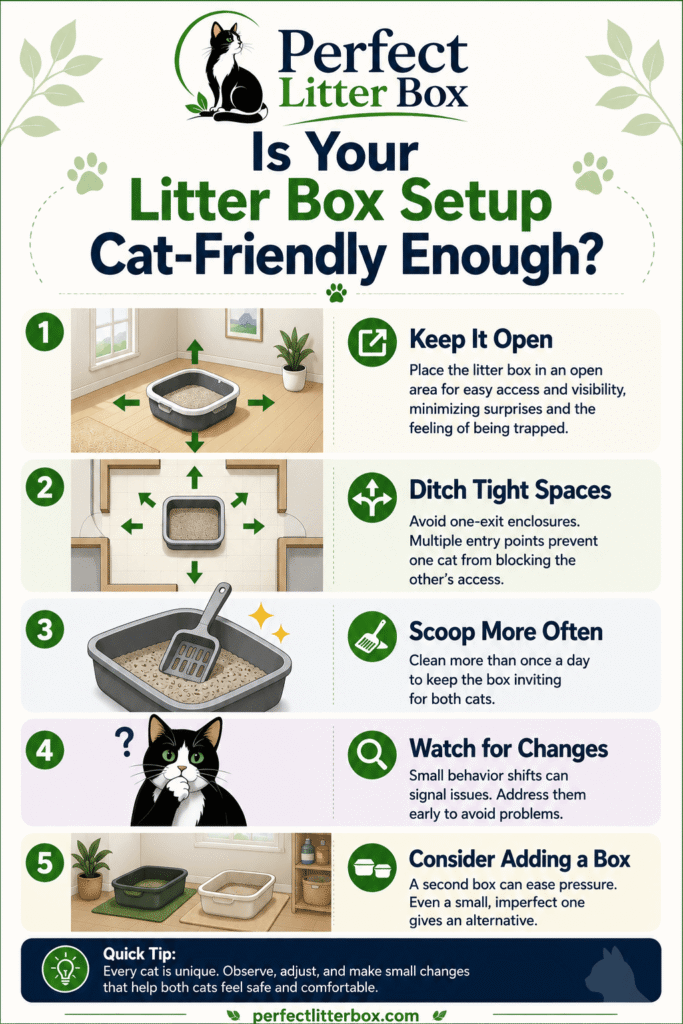
Keep the Box in an Open Area
Placement matters more than it seems.
If the litter box is tucked into a corner, behind furniture, or inside an enclosure, it limits how cats can approach and leave. That becomes a problem when two cats are using the same space.
An open area gives both cats clear visibility and an easy way in and out. There’s less chance of one cat feeling trapped or surprised while using the box.
Avoid Tight or One-Exit Setups
This is where a lot of shared setups start to fail.
If a box only has one way in and out, it creates a situation where one cat can block access without doing anything obvious. Even just being nearby can be enough.
Open boxes with multiple approach angles work better because they remove that pressure.
Scoop More Often Than You Think
With one cat, once a day might be enough.
With two cats sharing one box, that usually isn’t enough to keep it usable.
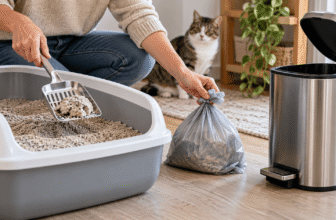
Scooping twice a day, or even more, keeps the surface clean and prevents buildup from reaching the point where one cat refuses to use it.
This is one of the simplest changes, but it has the biggest impact.
Watch for Subtle Behavior Changes
You won’t always see obvious problems right away.
Instead, look for small changes:
- one cat waiting before using the box
- using it at very specific times
- walking away and coming back later
These are early signs that the setup isn’t working as well as it should.
Catching this early makes it much easier to fix before it turns into accidents outside the box.
Add a Second Box If You Can
Even if space is tight, adding a second box somewhere else can relieve a lot of pressure.
It doesn’t have to be large or perfect. Just having another option gives each cat a backup if the shared box isn’t ideal at that moment.
If you’re not sure where to put it or how to set things up properly, this guide on how many litter boxes per cat and how to set them up walks through it in a practical way.

FAQ
Can two cats share a litter box if they already do it without problems?
Yes. If both cats are using the box consistently and there are no signs of hesitation, avoidance, or accidents, the setup is working.
It’s still something to keep an eye on. Sharing can work for a long time and then change if the box gets too dirty, the environment shifts, or the cats become less comfortable around each other.
How many litter boxes should two cats have?
The usual recommendation is three litter boxes for two cats.
That gives each cat options and reduces the chance of conflict or avoidance. It also helps keep each box cleaner, since the use is spread out.
If that’s not realistic, even adding just one extra box can make a noticeable difference.
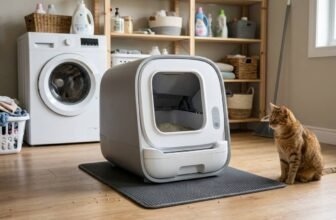
Can an automatic litter box replace multiple boxes?
It can help, but it doesn’t fully replace the need for multiple boxes.
Automatic litter boxes remove waste quickly, which keeps the box cleaner between uses. That can make sharing easier, especially in smaller spaces.
Some cats still prefer having more than one location, so it depends on how your cats behave.
Why did my cats suddenly stop sharing a litter box?
This usually comes down to a change in the environment or how the box is being used.
It could be:
- the box getting dirty faster than before
- tension between the cats
- a change in placement or routine
Even small changes can be enough to make one cat start avoiding the box.
Can sharing a litter box cause health problems?
Sharing itself is not usually the issue, but a dirty box can lead to problems.
If the box isn’t cleaned often enough, bacteria can build up and increase the risk of infections. Avoiding the box can also lead to accidents outside the litter box, which creates a different set of issues.
Keeping the box clean and watching for behavior changes helps prevent this.
Final Thoughts
Two cats can share a litter box, but it only works when the setup supports it.
If the box is too small, not cleaned often enough, or placed in a tight or awkward spot, problems tend to show up sooner or later. Sometimes it starts with small changes in behavior, and sometimes it turns into full litter box avoidance.
When sharing does work, it usually comes down to a few things. The cats are comfortable with each other, the box stays clean, and the setup gives them enough space to use it without stress.
If you’re working with limited space, the goal isn’t to force the situation. It’s to make that one box as easy to use as possible. A larger box, better litter, and more frequent cleaning can go a long way.
And if things start to feel off, adding even one more box is often the simplest fix.
Pay attention to how your cats are using the setup. They’ll tell you pretty quickly whether it’s working or not.